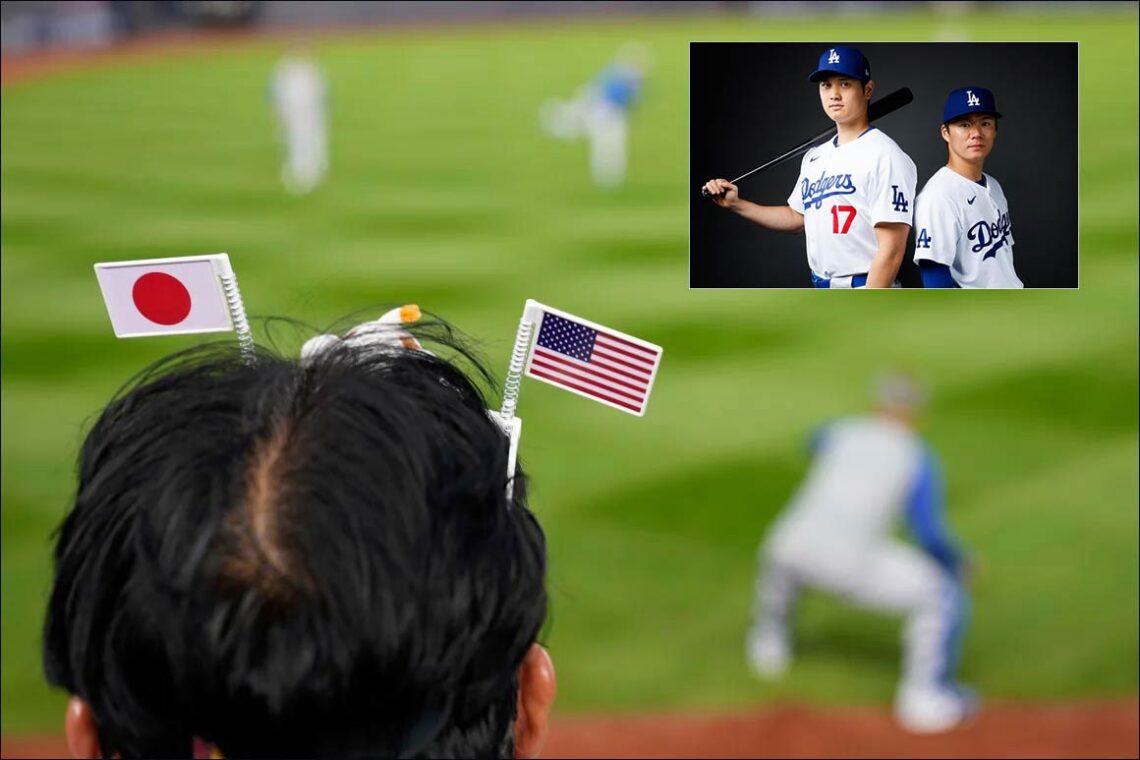
I enjoyed watching the Japanese baseball players Yoshinobu Yamamoto and Shohei Ohtani on the Los Angeles Dodgers baseball team last month. They played crucial roles to help the Dodgers win their second straight World Series pennant two months ago. They were heroes not only in Los Angeles but also in Japan.
Two years ago I had a similar feeling while watching the South Korean baseball player Ha-Seong Kim play shortstop for the San Diego Padres at Petco Stadium. Congrats to Kim for making it into the big leagues in this “American” sport! I like it. South Koreans and Americans alike should celebrate.
A Japanese sumo champion is to be expected. An American one, not so much. That is what makes it so much more special when that happens. When Hawaiian-born American Akebono Tarō won the yokozuna (grand champion) in sumo wrestling in 1993, it was a victory for both the United States and Japan. I firmly believe that.
Japan, South Korea – solid allies of the United States with significant cultural cross pollination, it would seem. But I am sure you can find standout American Tae Kwon Do practitioners, going in the other direction. And I admire that. How much such cross East-West cultural expertise was exchanged between Asia and the United States before WWII? I know Theodore Roosevelt would practice judo between 1906 to 1906 in the White House when he was President, but there was not much otherwise. In fact, anti-Asian sentiment was rife in America at that time, especially on the West coast.
There are many more non-American MLB players from Latin America than from Asia – approximately 30% versus 1.4%. But our relations with Latin America are much less important than are ones from Asia. Players from Venezuela or the Dominican Republic are a dime a dozen, and baseball in places seems to be as endemic to those countries as in the United States. One cannot say that about baseball and South Korea. The United States does not care too much about the countries south of the border. Foreign affairs for the USA yesterday and today has mostly meant looking east towards Asia or west towards Europe, not south towards Latin America. South Korea and Japan are major partners who help to serve as lynchpins for our national security policy against mainland China in Asia. The Dominican Republic and Panama are not. We fought important wars in Asia, and will probably again. Latin America not so much.
I have always had a soft spot for cosmopolitan experts who were able to excel in activities outside of the nation of their birth. Remarkable individuals like Yoshinobu Yamamoto and Shohei Ohtani. In the same spirit, I enjoyed it when Daniel Barenboim proudly played Richard Wagner’s music in Israel. In some quarters, this was highly controversial. Even as Wagner in his time was an aggressive anti-Semite, his music was not anti-Semitic. “Wagner’s music is not Nazi music,” Barenboim argues. No Israeli Jews are forced to come to the concert hall to listen to it. Instead Israelis buy tickets and come to see Wagner’s operas. “Music knows no borders. It belongs to no nation, no ideology,” Barneboim asserts. Many Israelis agree. Wanger lived in the century previous to the Third Reich, and just because Hitler was a fan decades later should not determine whether anyone else can listen to Wagner’s wonderful music.
In July 2001 director Daniel Barenboim announced to the audience at a concert in Jerusalem that he would like to play an encore of Wagner — specifically the Prelude to Tristan und Isolde — and invited anyone who objected to leave. This is a moment: Barenboim is directing German musicians from the Berlin Staatskapelle in Israel playing Richard Wagner’s music, among others. A small number of audience members walked out in protest. Others shouted things like “fascist,” “concentration camp music,” and “disgrace.” However, the majority of the audience stayed and gave the performance a standing ovation after the piece was played. The event ignited a national debate in Israel. Some members of the Knesset even proposed declaring Barenboim a persona non grata unless he apologized, though the motion failed. “As a Jew, Wagner’s music hurts my feelings. This is really ‘problematic.’ I feel uncomfortable!” Wah! You big baby. Don’t listen to it then. I stand firmly with Daniel Barenboim. The Prelude to Tristan and Isolde is some of the most sublime pieces of music ever written and performed, in my opinion. More people should listen to and enjoy it, Wagner’s anti-Semisitm notwithstanding. It is not the music’s fault that Adolf Hitler was also a fan of it. See the big picture.
In 2018 Radio Israel broadcast parts of Wagner’s Götterdämmerungopera over the airwaves. But after much criticism the radio station apologized, claiming an editor “erred in his artistic choice” by playing that piece. They reiterated the station’s longstanding policy not to play Wagner’s music out of consideration for listeners, particularly Holocaust survivors. “Ah, my feelings!” I find that offensive! Wah. There is no end to what thin-skinned hotheads like this might find “offensive.” I’m outraged! Everyone is so quick to take offense.
Maybe that brings up what I DON’T like. Let me be specific: The extremist Jews one finds in parts of the West Bank—engaging in vigilante violence or, in the most infamous case, assassinating Yitzhak Rabin—and the armed Palestinians of Hamas, with its cult of martyrdom, are mirror images of the same religio-ethnic-political fanaticism. They represent the closed, tribal mind at its most destructive. They are everything Daniel Barenboim is not.
Here is another criticism of Daniel Barenboim, who tries for Israeli-Palestinian outreach: his West–Eastern Divan Orchestra. This is a musical group of Israelis and Palestinians (among many others) who try to move beyond politics to perform classical music together. But the extremists on both sides of that issue criticize anyone who might join that orchestra. It is as if Israeli Jews playing chamber music with Palestinian Muslims were somehow a betrayal of the blood-soaked history and identity/religion of your tribe. Small-minded.
Similarly, I have disliked when the tennis world recently sought to punish Russian tennis players collectively for Vladimir Putin’s actions in the war in Ukraine. What role do Daniil Medvedev and Andrey Rublev occupy in Russian politics? Do they have any say in the dictator Putin’s foreign policy? No, they are tennis players. But there is guilt by association. Or there are persons who will have nothing to do with Israelis because of the conflict in Gaza – the Israelis are persona non grata. They are “cancelled.” Guilt by association. I saw recently that Ireland, Spain, the Netherlands, Slovenia, and Iceland have decided not to participate or broadcast Eurovision 2026, due to the European Broadcasting Union’s decision to allow Israel to compete despite the ongoing Gaza war. Dumb. Painting everyone from one country, or the same ethnicity or skin-color, with the same brush. I dislike all that. It is intellectual laziness. Too much easy emotion, not enough rational thought.
An acquaintance of mine who is an American Jew told me she could never visit Germany because of the Nazis and the Holocaust. As a Jew, she could never step foot in Germany; it would be too emotional for her, even in 2025. As if all of Germany and German culture was defined by the events from 1933 to 1945! That, to me, is amazingly short-sighted. Parochial. I have argued with her about this for decades. I am a history teacher and am better read than most in the events of WWII. But there is still plenty about Germany and German culture which I esteem and even love. It goes way beyond Kaiser Wilhelm II or Adolf Hitler; we start with Georg Philipp Telemann and move on to Johann Sebastian Bach, Johann Wolfgang von Goethe, Ludwig van Beethoven, Caspar David Friedrich, Arthur Schopenhauer, Heinrich Heine, Robert Schumann, Johannes Brahms, Friedrich Nietzsche, Sigmund Freud, Rainer Maria Rilke, Albert Einstein, Franz Kafka, Dietrich Bonhoeffer, Viktor Frankl, Anne-Sophie Mutter, Boris Becker, and Steffi Graf. The same dynamic is perhaps even more true for Russia today and yesterday.
What do I like? I like a cosmopolitan attitude which regards the whole of a culture and country. To see what is of value in Germany or Japan or Russia, despite whatever might have happened in WWII or later. A thoughtful person should be able to separate a people’s cultural inheritance from the crimes of a regime.
That is why I like Donn Draeger so much.
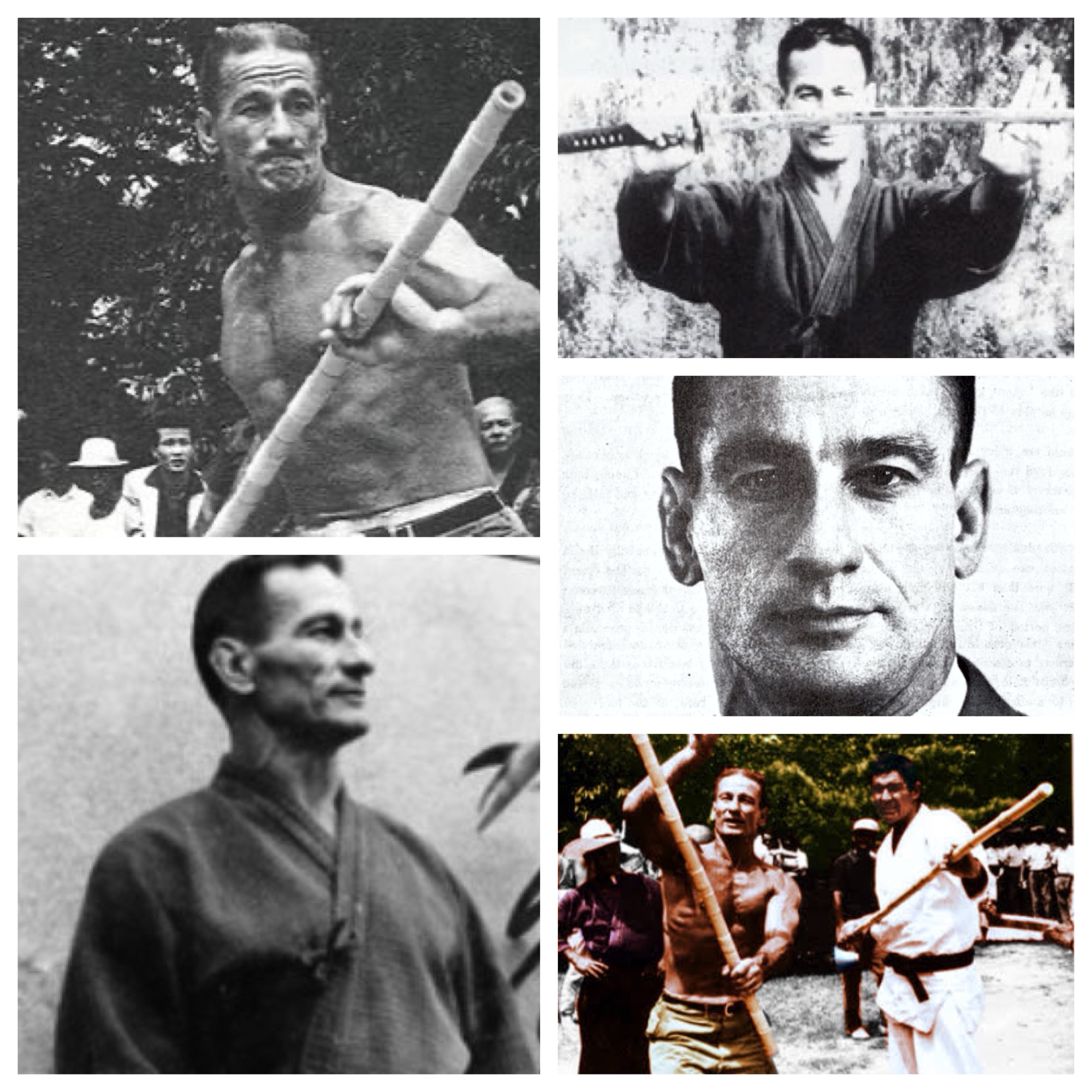
Drager was born in Milwaukee, Wisconsin in 1922. Even as a child he was attracted to the martial arts and studied judo. But when Japan attacked Pearl Harbor, Drager joined the Marine Corps. He rose to the rank of major in the war fighting against the Japanese. Draeger was known for physical toughness, weapons knowledge, and leadership in combat in the Pacific Theater. Drager fought in the Iwo Jima campaign, which saw some of the most savage jungle fighting in human history. I am sure Drager saw many Japanese killed, and saw many of his fellow Americans killed in turn. Americans and Japanese demonized the other in WWII, and I am sure he heard more than his share of rants against the “Japs.” KILL THEM ALL! I suspect, at least, temporarily, Donn Draeger imbibed some of that hatred for “the enemy.” Considering the context, it would be almost impossible for him not to.
But after the war, and despite all he had seen and done, Draeger retained a passionate interest in the fighting arts of Asia. He moved to Japan to study them, and Draegor lived most of the rest of his life there. He studied Judo (Kodokan-trained, high dan rank); Koryū bujutsu (classical Japanese martial lineages); Yabusame (mounted archery); Shintō Musō-ryū jojutsu (staff art) — he became one of the highest non-Japanese authorities; and Kendo, iaido, sumo, and various weapons systems. He also studied and became proficient in Indonesian, Thai, and other martial arts. Draeger spent much of his life publishing academic accounts of all the fighting arts he studied in Asia. For many Westerers, Draeger’s scholarship was how they were introduced to the martial arts. Draeger seems most famous for choreographing the James Bond fight scenes in the 1967 film You Only Live Twice, but I seriously doubt that it was he himself was most proud of.
Perhaps most importantly, Draeger earned the respect of the Japanese. Even as a soldier who killed their countrymen in the war, Donn Draeger comes to be respected by the Japanese budō masters as almost one of their own. I am sure over time Draeger EARNED their respect. This is most unusual in the insular Japanese culture. The Japanese in their island culture are not known for flattery, or acceptance, of “outsiders.” But over years and decades, I suspect the Japanese got a good close look at Donn Draeger inside and out and respected who he was. He learned the Japanese language. Drager lived with them; they liked and respected him. Draeger took budō as seriously as they did. He had close Japanese friends and mentors, many of whom were major figures in classical and modern budō. These were not casual acquaintances; they were teacher-student relationships that evolved into deep personal friendships, which was extremely rare for a foreigner in postwar Japan. This does not surprise me in the least. You take someone extraordinary like Donn Draeger and introduce him to someone like Otake Risuke (大竹利典), the Head instructor, Tenshin Shōden Katori Shintō-ryū, and each will quickly come to recognize a kindred spirit in the other, place of birth and language barriers notwithstanding. Draeger and Risuke will resemble the twin branches from a single tree, shaped by different national winds, nourished by the same earth of martial study. Draeger’s reputation in Japan was exceptional for a non-Japanese, and in some circles he was regarded as the foreign expert who truly understood Japanese martial traditions from the inside. Draeger contributed significantly to the study of Asian culture and combat traditions. His death in 1972 cut short an extraordinary career that bridged East–West martial arts understanding. I was only five years old when Draeger died, but I would have been honored to shake his hand.
Let us be clear: the story of Donn Draeger is a victory for both Japanese and American societies, in a delicate post-war era. It is through thousands of acts like this that the wounds or war heal, and former enemies like Japan and the United States become friends. I am sure there are WWII vets from the Pacific Theater in the United States post-war who spent the rest of their lives bragging about killing the hated “Japs” in the Leyte Gulf or Okinawa. Draeger, a Pacific War combat vet, too, was not one of them. This is a subtle but important difference, in my opinion.
Or let’s take a look at Isoroku Yamamoto, the Japanese Admiral most famous for launching the Pearl Harbor surprise attack which led to Donn Draeger joining the United States Marine Corps and going to war. Here he is:
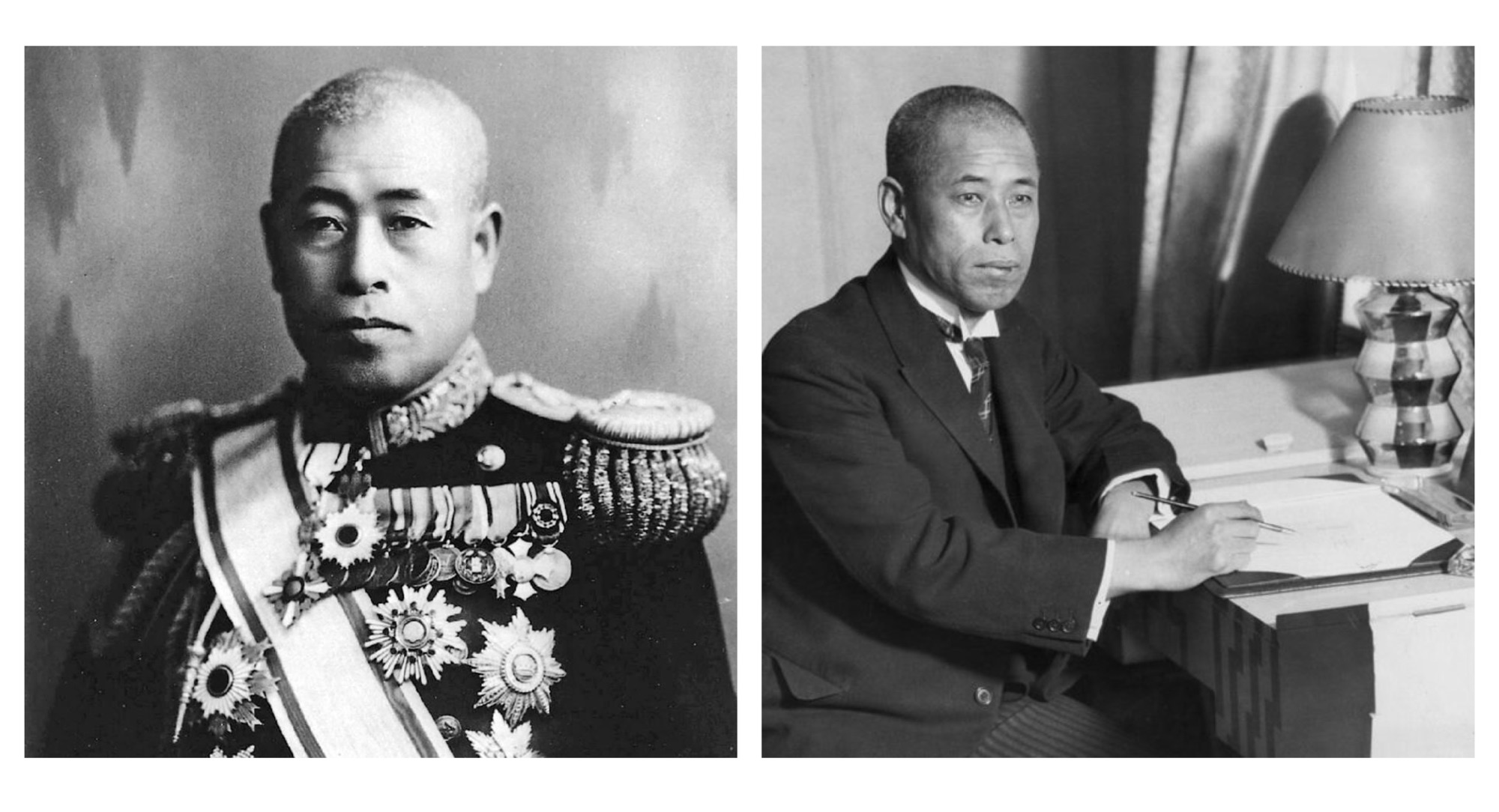
Yamamoto was one of the few senior Japanese military officers who had significant lived experience in the United States. Yamamoto attended Harvard University as a special naval student in the 1920s, and was a naval attaché in Washington DC later. He became fluent in English, learned to socialize easily with Americans who he found confident, wealthy, informal, and resilient, not decadent or weak as Japanese militarists often claimed. In Cambridge, Yamamoto gambled frequently (poker and bridge were favorites) while enjoying whisky with his Harvard compatriots; he loved American culture—especially baseball. Yamamoto also traveled extensively across the U.S., observing factories, shipyards, and oil facilities. He was particularly impressed by the scale of American industrial activity, in particular with oil production. Yamamoto claimed that if the Japanese Navy were ordered to attack American forces, he would enjoy success for the first six months and then be ground down by greater American resources. He was tragically correct.
The Japanese high command ordered Yamamoto to attack Pearl Harbor in December 1941, even if the admiral had serious misgivings. Maybe if more members of the Japanese high command had Isoroku Yamamoto’s experience with America and Americans, the war would not have happened. The American military finally assassinated Yamamoto by shooting down his airplane in April 1943 when he was flying to Rabaul to inspect forward bases in the Solomon Islands. There could have been any number of fanatical Japanese militarists whose deaths in WWII would be a boon for humanity (and were). But Yamamoto’s was not one of them.
In all of history, how many peoples have been as badly served as the Japanese by their leaders in deciding to attack the United States in late 1941? Look at that country by late 1945!
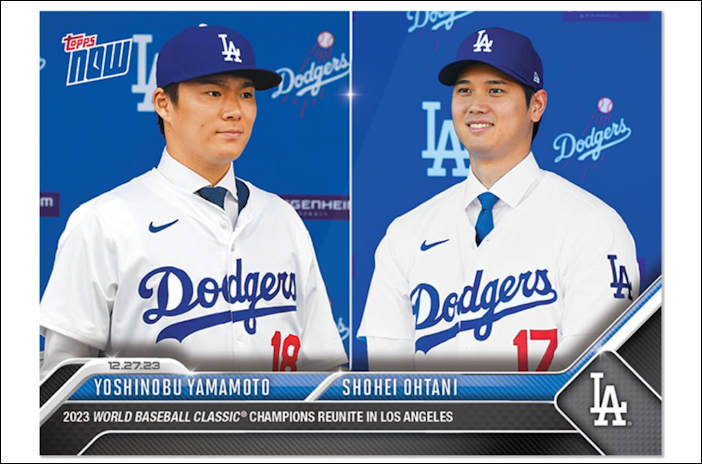
But then look eighty years later at American-Japanese relations in 2025. Witness how standout Japanese players like Yoshinobu Yamamoto and Shohei Ohtani rank among the best players in the “American” sport of baseball. Take notice of the fact that the World Series is almost as much watched in Japan as it is in the United States. This is progress. It should be celebrated. It is not as if the governments or elites therein in Japan or the USA decided to have some token cross cultural exchange not shared by the mass of the people. No, the people of Japan seem to like American baseball, to one extent or another. It has seeped into the larger culture over time. Good.
So let me clear: I do not object to a Polish Jew fighting in the Warsaw Ghetto against the Nazis, so long as he can still take pleasure in – perhaps even sit down at the piano to play – Bach’s Notebook for Anna Magdalena, and can appreciate Goethe’s Faust: enduring cultural achievements from the neighboring country to the west. One can hate the individual policy of a country carried out by its government, while still appreciating the underlying humanity and positive aspects of that nation. I have for all my life hated and opposed the ideas and policies of Stalin, Brezhnev, and Putin. But I have a deep and abiding love for Dostoevsky and Tolstoy, Tchaikovsky and Rachmaninoff. You can be both. I always respected that during WWII the BBC would still play the music of German composers, even as the British nation was engaged in a life-and-death struggle with the Nazis.
There are the individual policies of nations and their leaders. Then there are universal languages spoken by cultures through art. No country or culture is all bad, or all good. And to be able to fight against the bad in one country while embracing and excelling in its good, like Donn Draeger did, is most impressive.
The opposite is a small-minded parochialism which cannot rise above the muck and strife of everyday human meanness and violence – two scorpions stuck in a bottle, trying to sting and kill each other forever. This state of affairs is too often the reality of the human condition, true enough, but it does not have to be. One can rise above.
Regard Yoshinobu Yamamoto and Shohei Ohtani! Japan and baseball. Americans and budō.



One Comment
Ashwin Rebbapragada
Cultural exchange between nations is very important. We can learn so much from different nations and cultures. Each nation has their unique traditions, music, art, philosophies, literature, etc. It’s good to learn from others and see their perspective (we don’t have to agree with others completely). The United States made lot of contributions to art, music, television and film, literature, sports, etc. Finally, I appreciate your knowledge of classical music, sports, and different cultures. Your post was enlightening and enriching.