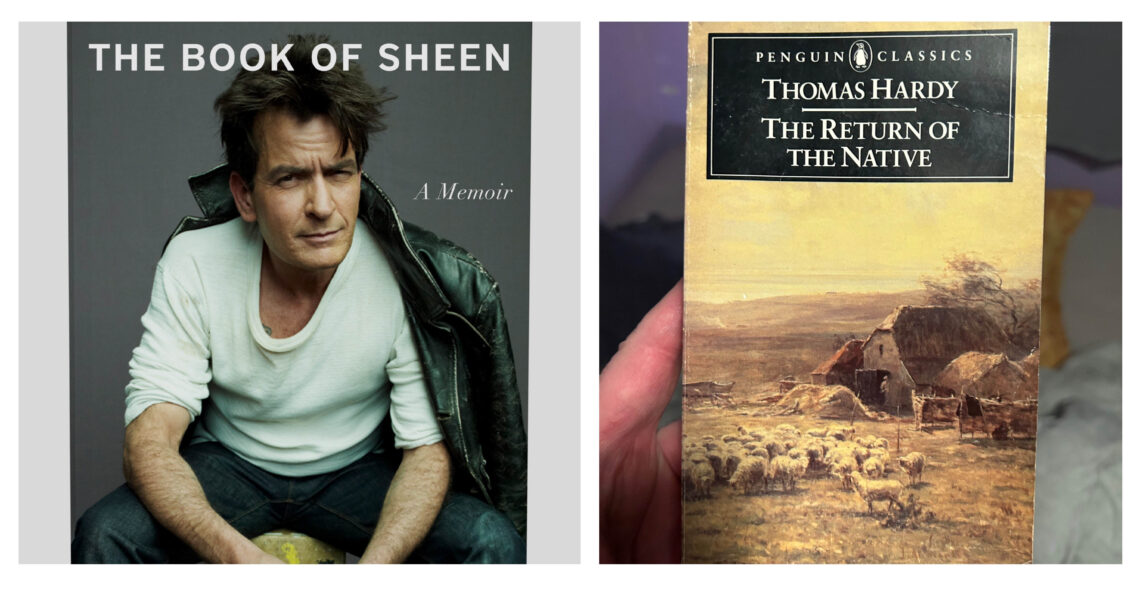
Yesterday I was at home after work and found myself on the verge of finishing Charlie Sheen’s recent autobiography. I don’t regret reading his book, although towards the end I was heartily sick and tired of his tales of damaging drug abuse, salacious porn/sex, and multiple failed marriages. (I imagine Sheen was tired of it, too.) Reading biographies is almost always worth my time, I find. In the past year I have read the life stories of not only Charlie Sheen but Ione Skye, Tess Henry, Alex van Halen, Suzy Favor Hamilton, Frank B. Gilbreth, Liara Roux, Rick Bragg, Carrie Otis, Jimmy Carter, Laura Delano, Patrick Mouratoglou, Molly Roden Winter, Charles Bukowski, Mikal Gilmore, Ronda Rousey, Jenna Jameson, Josh Brolin, Charlotte Shane, and Pamela Anderson. I enjoyed and learned from all those authors and their lives, more or less, depending on the person and the story.
I am a little surprised at compiling that list. I did not know there were so many names on it. All of their stories had something to teach me. Sometimes more, sometimes less.
But last night when I was finishing Charlie Sheen’s sordid tale of Hollywood celluloid, I had a moment. I paused. I asked myself, “What are you doing, Richard?” True, I cannot argue with what I have already said: I learn about people and the world from biographies, and so I have no apologies. But here we come to the point: Is my reading diet a bit… thin? I read all of D.H. Lawrence, Fyodor Dostoyevsky, and Franz Kafka’s novels while I was at UCLA, and those books were not on the syllabus. I read those outside of class for my own pleasure. And it didn’t stop when I graduated from college. I have been a lifelong reader.
What about now?
I used to see these famous old books that everyone else talked about and which weighed about five pounds each. They are the Classics and their authors were the Giants: Charles Dickens, Victor Hugo, and Leo Tolstoy, … or modern authors like Milan Kundera, J. M. Coetzee, and Jonathan Franzen. I read them all. I drank deep and long from the well. It took much time and energy to cover that landscape. I found the time and energy. I invested it. Reading those books changed my life. I became a different person than I was before. I became who I am today.
I still have the goal of reading four books a month. I usually accomplish it. But yesterday I asked myself the following questions:
“Is your current reading ambitious enough? Are these biographies mere entertainment? Are you reading serious enough literature?”
“What about the classics? Is your reading diet ambitious enough?”
“Are you reading ‘difficult’ books which stretch you and can change you at a fundamental level? Or are you reading more manageable and ‘thin’ books after a hard day of work but which you completely forget two weeks later?”
Those are eminently fair questions. I did not like my answers.
So I went downstairs to my library and picked out “Return of the Native” by Thomas Hardy. I loved Hardy’s Jude the Obscure when I first read it around 1999, and I find myself longing for something similar now. I could use a dose of Hardy’s cool, devastating pessimism—the richness and density of his characterizations, the precision of his plotting, the power of his climaxes. Reading one of those deeply evocative novels lets you see the world through another’s eyes; for a spell, you can live inside their skin and set aside your own cares and preoccupations. Decades later I still remember the most vivid moments of the best books I have read. I want more of that. My reading should be equal parts enrichment, equal parts pleasure. We already have way too much pleasure-seeking in our country nowadays, making ourselves semi-slaves to it, and not enough education and enrichment. It is a junk food media diet which sickens, not enriches. Thomas Hardy is a good move against that trend.
So I read the first three paragraphs of Hardy’s “Return of the Native” and here they are:
A SATURDAY afternoon in November was approaching the time of twilight, and the vast tract of unenclosed wild known as Egdon Heath embrowned itself moment by moment. Overhead the hollow stretch of whitish cloud shutting out the sky was as a tent which had the whole heath for its floor.
The heaven being spread with this pallid screen and the earth with the darkest vegetation, their meeting-line at the horizon was clearly marked. In such contrast the heath wore the appearance of an instalment of night which had taken up its place before its astronomical hour was come: darkness had to a great extent arrived hereon, while day stood distinct in the sky. Looking upwards, a furze-cutter would have been inclined to continue work; looking down, he would have decided to finish his faggot and go home. The distant rims of the world and of the firmament seemed to be a division in time no less than a division in matter. The face of the heath by its mere complexion added half an hour to evening; it could in like manner retard the dawn, sadden noon, anticipate the frowning of storms scarcely generated, and intensify the opacity of a moonless midnight to a cause of shaking dread.
In fact, precisely at this transitional point of its nightly roll into darkness the great and particular glory of the Egdon waste began, and nobody could be said to understand the heath who had not been there at such a time. It could best be felt when it could not clearly be seen, its complete effect and explanation lying in this and the succeeding hours before the next dawn: then, and only then, did it tell its true tale. The spot was, indeed, a near relation of night, and when night showed itself an apparent tendency to gravitate together could be perceived in its shades and the scene. The sombre stretch of rounds and hollows seemed to rise and meet the evening gloom in pure sympathy, the heath exhaling darkness as rapidly as the heavens precipitated it. And so the obscurity in the air and the obscurity in the land closed together in a black fraternization towards which each advanced halfway.
These first three paragraphs were so dense that I had to read them another two times slowly and carefully. This is a different reading than what I had become used to!
I can imagine my high school students trying to read that passage and failing. I can also see the average adult in America doing even worse. It is writing and thinking almost from another civilization – the pre-Internet world of newspapers and novels, the age of print. To a denizen of the social media world language like Hardy’s is almost unintelligible. I have read that many college students even at elite universities arrive on campus lacking the stamina or habit to read full-length books, and so their professors don’t assign them; reading skills among young people can’t decline when they were never really taught and practiced. This is a problem both in the schools and in the larger society. How we use language has clearly changed. The media ecosystem has changed. The world has changed.
I have not changed.
Or at least I hope I have not changed too much. Especially when it comes to reading.
What is at stake? Much. It is worth comparing reading smaller digital postings on a screen versus reading a longer novel printed on paper– then versus now.
A personal anecdote: After around the age of fifty I started to wake up in the middle of the night occasionally and be unable to fall back asleep. If I picked up my phone in the darkness and looked at the news or whatever, it would be hard to fall back asleep. There is something about the digital screen and modern media which excites the brain, looking for a “dopamine hit,” as you scurry from one discursive online posting to another. I found that whenever I looked at my phone in the middle of the night, I could rarely fall back asleep. So I made a new rule: no screens, only paper. Instead of reaching for my phone, I would reach for a book. After twenty-five or thirty minutes immersed in a single, continuous narrative—words printed on a page rather than flashing on a screen—my mind would begin to settle. The simple act of reading quietly on paper slowed my thoughts and calmed my brain, while the glow of a digital device only stirred it awake.
At bedtime I also try to recharge my phone in the corner of my room away from my bed and instead keep a book on my bedstand. I will read as I get ready to sleep. That is such a better way to wind down the long day, calm my teeming brain, sink into one continuous story, and thus gradually fall asleep. I have read that digital devices in bedrooms are a major reason why so many people, especially the young, suffer sleep difficulties. I believe it. That is a real problem. Parents are urged to force their children to store their digital devices outside their bedrooms at night. Not a bad idea.
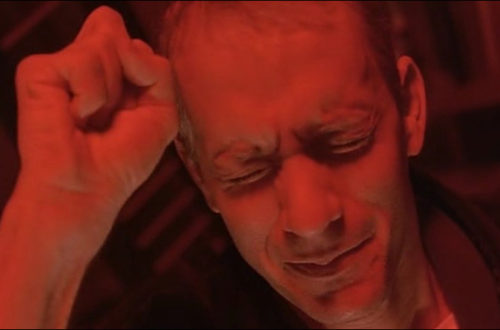
Here’s how it works in practice: I bought a rechargeable LED reading light designed for use in bed. I don’t even need to get up or turn on the overhead light in my bedroom when I wake up in the middle of the night. I simply reach for my reading light, wrap it around my neck, switch it on, open the book beside me, and I’m all set. I lose myself in the sustained narrative of a novel, rather than laying there stressing about losing sleep (ie. insomnia); I know I will fall asleep eventually. I am patient. I read comfortably until I nod off. This is what it looks like:
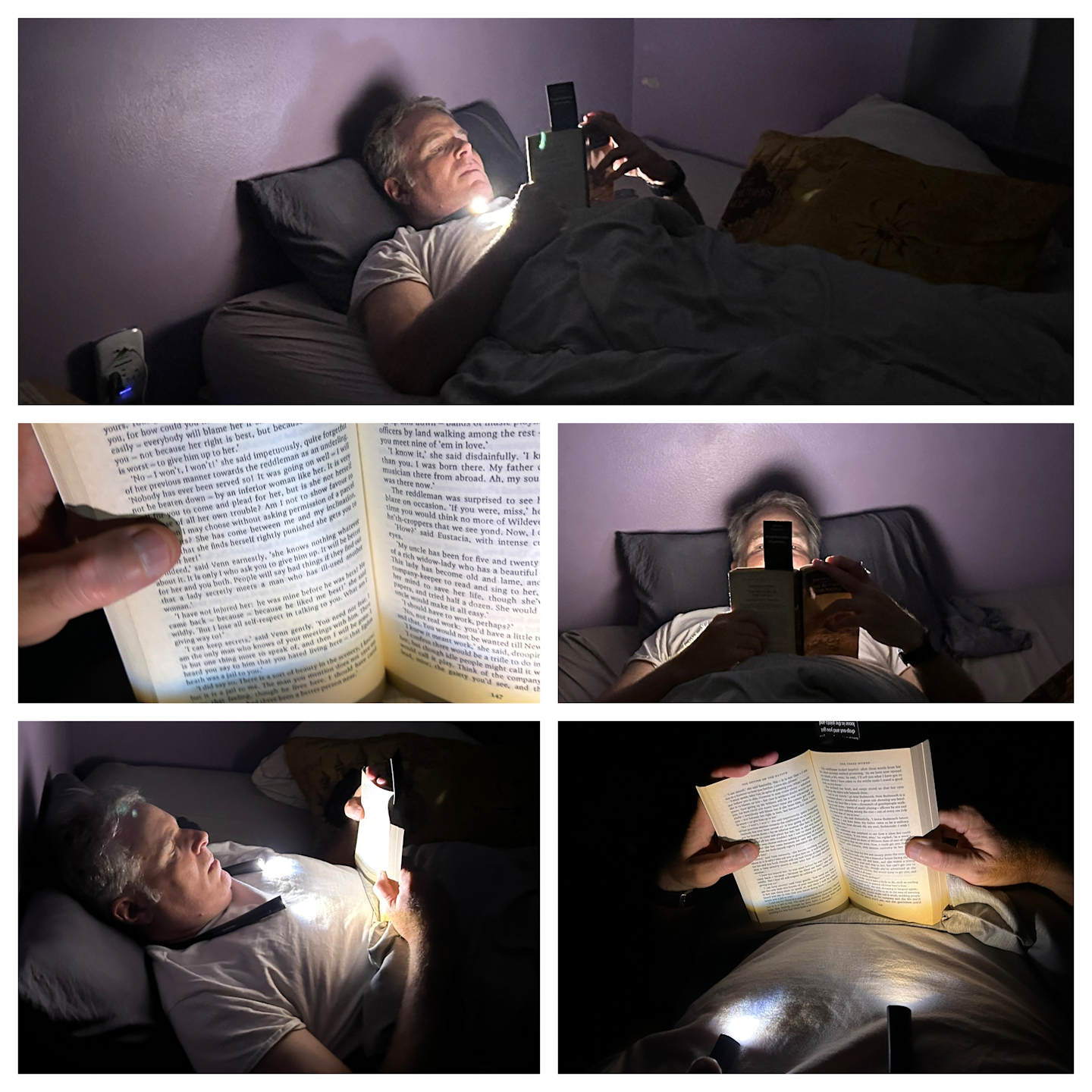
Humans have been reading books at night in this way for centuries, and they have been doing it for much longer than they have been staring at screens full of digital data. The book is the better, more healthy choice.
But there is still the problem of what a person is reading, and I reproach myself about my book choices. I reflect: “What am I doing?” “How am I spending my precious time and energy?” Famous men like Theodore Roosevelt and Winston Churchill were famous for their ambitious and wide reading. It is not going too far in saying that they became famous men because of their reading. (Roosevelt supposedly claimed he started and finished a new book every day.) Is there some reason I cannot read as ambitiously and widely? In a recent essay, I claimed I was “old school.” The last thing I would ever want to be is a “doom scrolling” digital device devotee being led by the nose by addictive social media algorithms. I would eschew digital narcotics; I refuse to live a “thin” intellectual and emotional life, if I can at all help it. I crave the richness and depth of classical literature found in novels printed on paper, not the shallow shimmer of short-form videos — those sparkly pixels dancing across silicon screens like the seductive shadows on the wall of Plato’s cave. In 1765, 1875, or 1905, people read books; it was a culture of print. Today we inhabit a world ruled by image and sound, an aural-visual civilization where the written word has been eclipsed by the flicker of the screen. A person can read Thomas Hardy for free online, but it is easier and quicker to watch a YouTube video. Which one do you think most people will choose nowadays? Where is all the money and energy invested?
The below video explores well how our society has evolved from the world of print to a different one shaped by spoken and visual technologies —
— I look at this as a step backwards, not forwards.
Stay with the older print culture and the classics, Richard. Keep distance between yourself and the Instagram/TikTok culture. Listen to edited and published audiobooks while driving (the old). Avoid podcasts where speakers just talk randomly for hours (the new). There is a huge difference. Make intentional choices about what you read and, as a result, who you are. “Garbage in, garbage out.” That is worth remembering.
Don’t automatically reject the new just because it is new, Richard. But remember why the classics have lived on for so long. Go to where you get the most value and payback for your precious time and energy, and plant your flag there. Why settle for the easy and accessible? The mediocre or worse? Embrace a challenge and look for difficulty instead. Great literature creates literary lies in order to access deeper truths about humanity than can be found in history or biography. Go to those stories you will never forget. That is where you belong, whether it be fiction or non-fiction.
“Where do you live, Richard?”
“What are you doing?”
“Can’t you do better than that?”
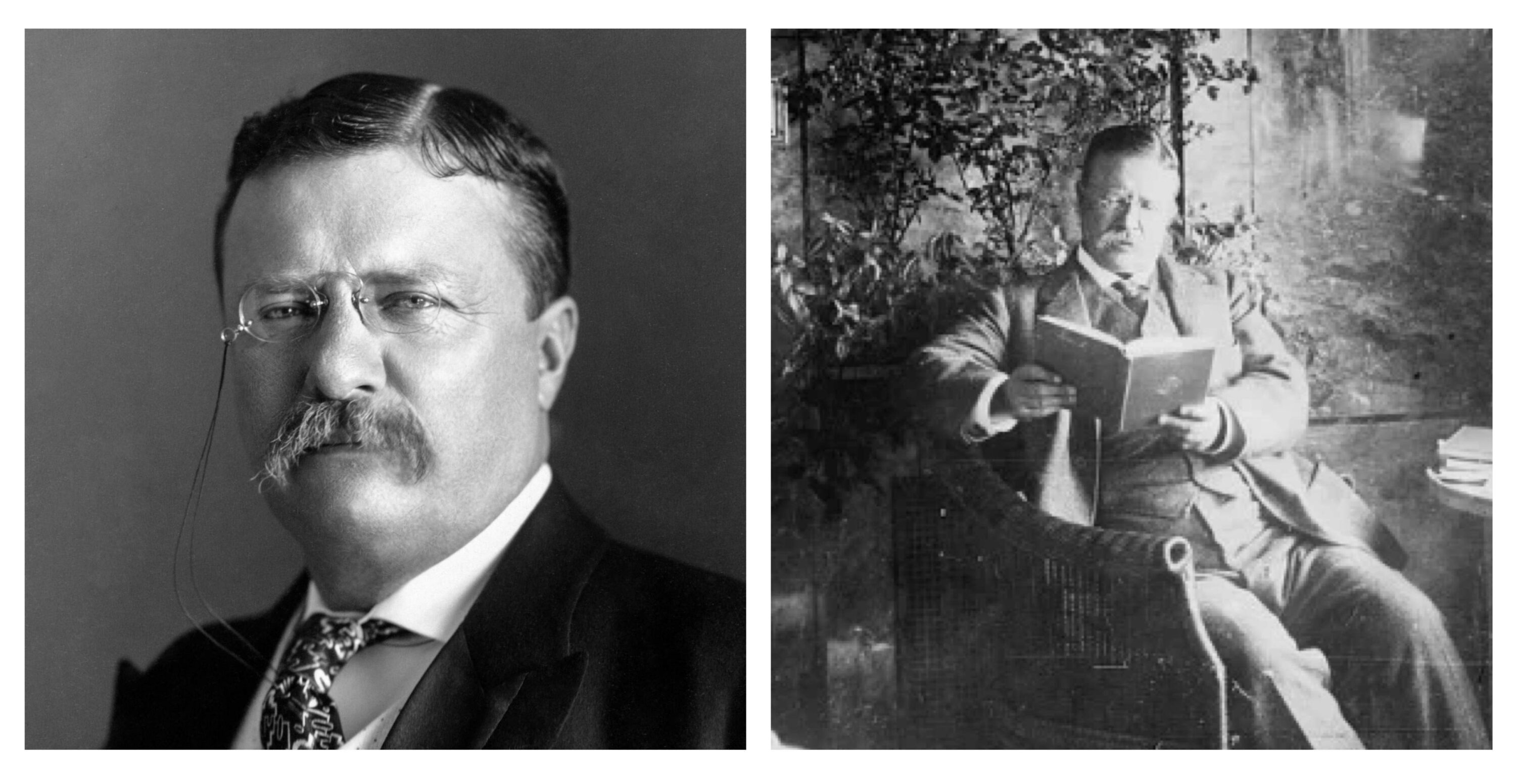
“I am a part of everything that I have read.”
“Personally, the books by which I have profited infinitely more than by any others have been those in which profit was a by-product of the pleasure; that is, I read them because I enjoyed them … and the profit came in as part of the enjoyment.”
Theodore Roosevelt

One Comment
Ashwin Rebbapragada
I am deeply impressed with your passion and dedication for reading and learning. I like how you read different genres and different topics. Thank you for sharing about your reading habits. You read from challenging authors. Good recommendations.