I have always thought – and said out loud – that I did not really think someone like baseball player Shohei Ohtani or tennis superstar Carlos Alcaraz were really all that big a deal.
So one can pitch and hit a baseball supremely well, and the other covers the tennis court like a gazelle and hits the cover off the tennis ball. They are among the best of the world – if not the best – at their respective sports. The two generate huge profits and are paid accordingly. They are almost household names globally.
Big deal.
In the end, they are playing a sport with a ball. Nothing much more than that. I suspect nobody will remember them much a decade from now, other than the usual sports aficionados.
This is precisely the point in my story where a friend will laugh and interrupt me to say – “You are about to say something really heavy and philosophical, aren’t you Richard?” – and, yes, I am.
I don’t particularly esteem professional athletes. Not really.
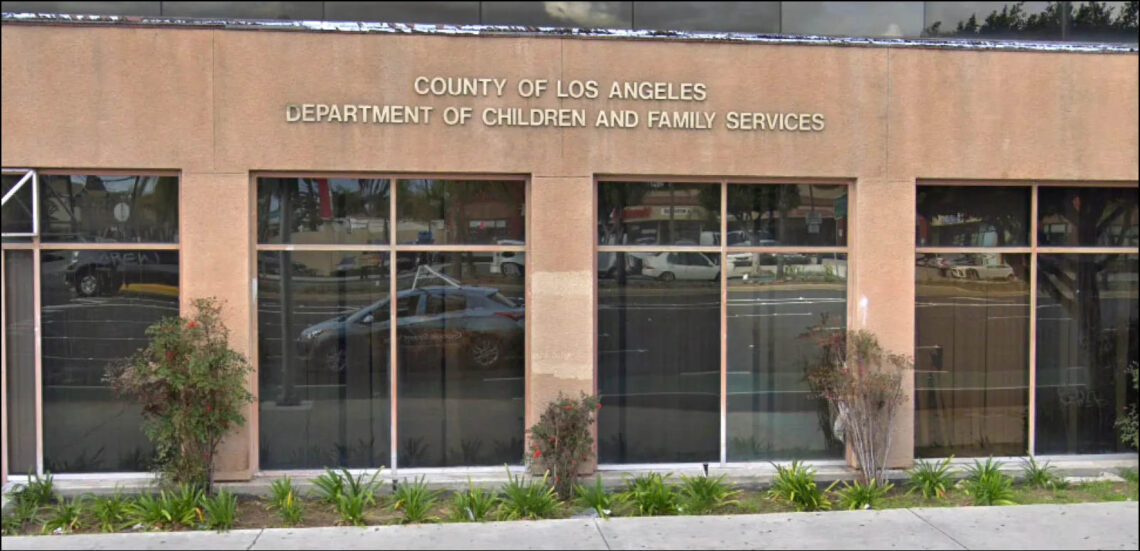
I esteem a social worker who can save a helpless child who is trapped with abusive parents. A three year old who is attacked by psychopath parents is completely unable to protect himself. If a teacher, or someone else, notifies the authorities, and a social worker starts poking around and finds out a nightmare is taking place behind closed doors and gets that child removed from the home of a monster – that person is a hero, in my eyes. They might save a life. A child’s, or a baby’s, life. A completely defenseless person.
True, nobody cares much about social workers or what they do. True, they get paid next to nothing. But social workers have the opportunity to be a hero in a way which is so much more meaningful than someone swinging a stick at a ball in sport. Social workers are my heroes, or at least they have the potential to be.
Ironic, isn’t it? Professional athletes are lionized and paid as if they are the most important people in the world. It is the same with other celebrities – actors, singers; online “influencers” – who seem to be the elite of our society and garner enormous amounts of attention and money. When in the end, they are just entertainers, not more nor less. We give these people way more credit than they deserve, in my opinion.
But social workers deserve way more credit than they receive, in my humble opinion.
This has been my stock story for decades.
But recently I have come to reconsider.
I have a friend who adopted three children. The backstory: About fifteen years ago, there was a family led by a violent Los Angeles gang member who was eventually arrested and deported back to Mexico. His partner, a U.S. citizen born to Guatemalan immigrants and living as his common-law wife, was addicted to crystal meth and on her way to state prison. The young children from this miserable family had been equal parts neglected and ignored, while also being exposed to some seriously traumatizing shit in their earliest, most vulnerable stages of life. They had been damaged. So the Los Angeles authorities took the children away from their biological parents. Rather than going into the misery of a “group home” (ie. orphanage), the government found adoptive parents for these children. My friend and his wife took three of them, but there was one other child who was adopted by a man who is a social worker in LA and his husband. These children are currently of approximately high school age.
I was at a party in LA recently celebrating the graduation of one of them, and all the siblings and both sides of adoptive parents were present. Over a beer and lunch I told that one guy that social workers like him were my heroes. “Thank you!” he chirped, appreciatively. I am glad I said that. I don’t know any other social workers; I had never previously had the opportunity to thank one. He and his spouse had taken in a needy child who had had the bad luck to be born to horrible parents, and they took on the considerable burden of raising this little boy. What else is there to say? These are two men who seem to recognize what is important and what is not, to put it mildly.
But then the social worker went on to tell me about his job. He said he has a relatively small number of long-term homeless individuals on his case load. He works in Los Angeles, the place with the worst homeless problem in the United States. The social worker went on to lament bitterly how he spent endless hours day after day trying to help these drug addicted and/or mentally ill persons to improve their situations, and thereby maybe get them off the street. There was temporary housing. There were other programs to help. Recovery and re-integration into society. The California and Los Angeles authorities spend many billions of dollars on programs to help the homeless. But his clients wanted none of it. They almost always refused offers of aid. The chronically homeless on his case load preferred to live on the streets, he said. He explained to me how his clients were usually their own worst enemies. He lamented that all his efforts were next to useless. The bitterness and frustration with which this social worker spoke were almost scalding. I was taken aback.
And I get it. I do. I can certainly see that this kind of work is almost the epitome of futility. A person might as well go hit their head against the wall. Even the noblest intentions and the finest tools fall short when a person is unwilling, or unable, to be helped.
So there was my dream of the good a social worker can do in the world – rescuing an abused child. And then there is the reality of actually working full-time in that job for twenty years. There would appear to be a huge gap between my dream and real life.
It is not dissimilar to being a teacher. You have the best intentions to help your students. Then there is the complicated reality of why all too often that is beyond your power.
Which is maybe why so many more people would choose to become a professional athlete or Hollywood actor rather than a social worker or K-12 teacher.
I get it. I do.
But I still have more respect for the latter rather than the former.

“I don’t particularly esteem professional athletes. Not really.”




One Comment
Ashwin Rebbapragada
A really insightful and thoughtful essay. Many of society’s biggest heroes work silently and quietly. Some heroes never get any recognition. A very moving and thought provoking essay. It’s sad real heroes don’t always get adequately paid. But it’s good you are discussing them and putting a spotlight on them. Hopefully, social workers, teachers, and other professions will get more recognition and help.