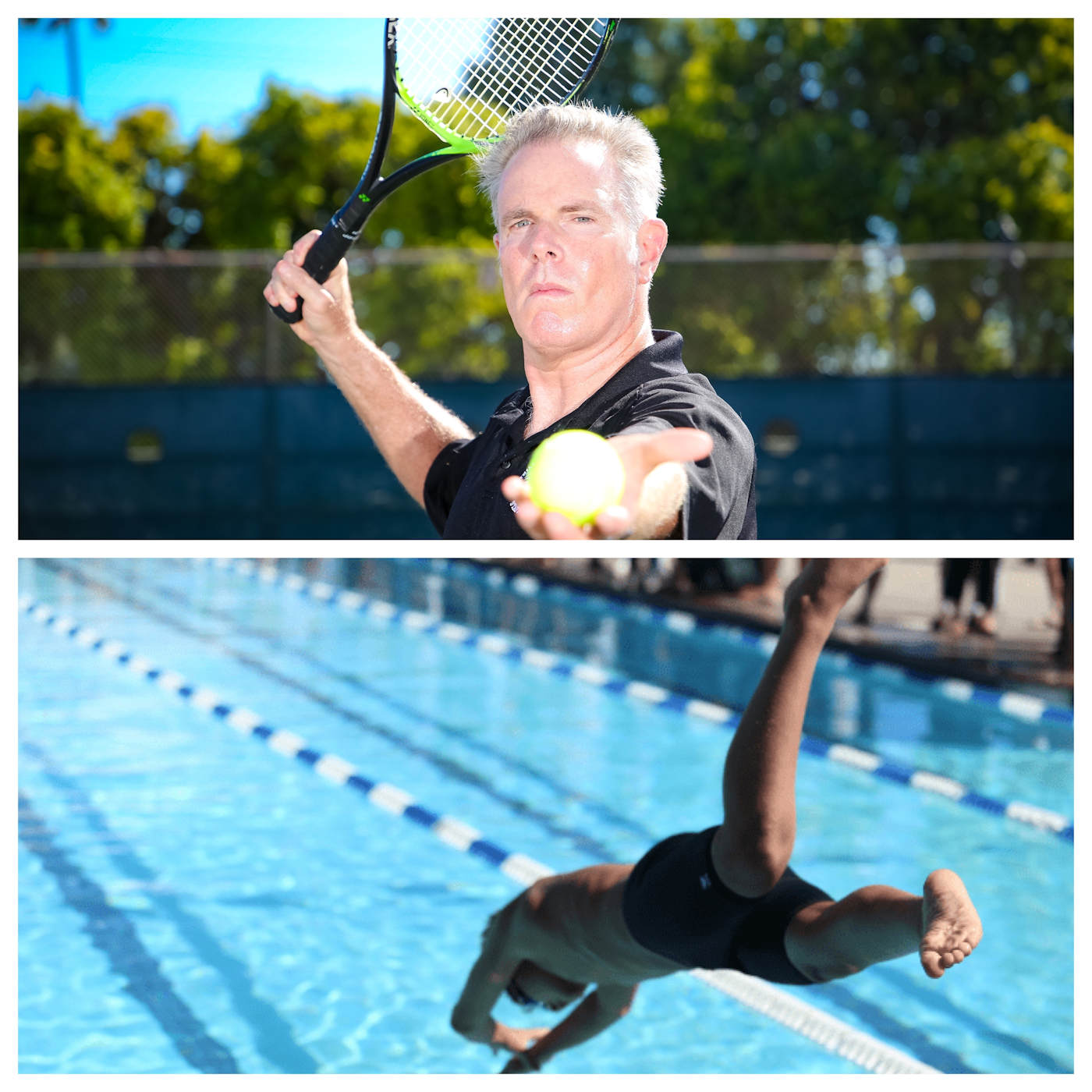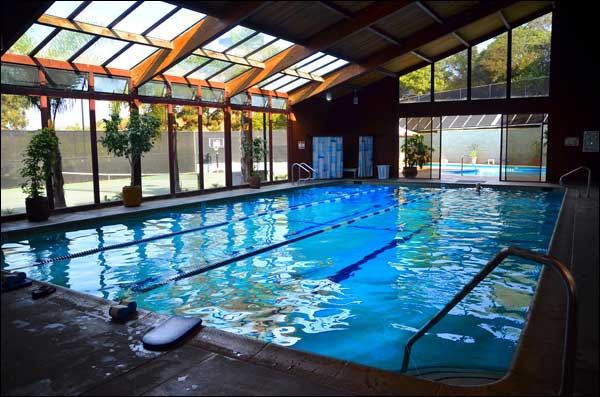
I started swimming back around 2012 when I suffered a serious tennis injury.
I had to find workouts off the court, and my tennis club had swimming pools. So I got into the pool and started swimming laps.
My brother was a serious surfer when he was younger. And my sister was a varsity swimmer in high school and a “master’s swimmer” as an adult; she has forgotten more about swimming than I ever learned. So I was the worst swimmer in the family. I could swim just fine, but I had never made a study of it.
But I was willing to learn. I was willing to swim hard and wanted a solid workout. With time I could improve.
Since then I have swum thousands of miles in the pool. I have learned to like swimming. It fills a particular niche in my workout routine. It occupies an important but specific place in my life. The point of this essay is to explain this.
I don’t swim to become faster, not really. I don’t swim to compete. I swim for recovery from what happens on the tennis court. I swim to heal my body. I swim to relax my brain after work and reset my overtaxed central nervous system, in addition to easing stressed muscles and strained tendons. I engage in “recovery swims.”
That does not mean I don’t get exercise. I do. My shoulders, back, and core muscles all benefit from swimming. I will spend between 30 to 50 minutes in the pool. My heart and lungs get stronger from the aerobic exercise of swimming laps.
From one point of view, swimming is boring. One goes back and forth and back and forth, not unlike a hamster running circles on his wheel in a cage. More experienced swimmers than me suggest switching up the strokes I use into “medleys” – do backstroke and then butterfly, and then move to freestyle and breast stroke. I understand what they are saying, but still. You are going back and forth and back and forth forever. It can be challenging to make that exciting.
On the other hand, I am not in the pool for excitement. I am there to calm the mind and attend to the body. I purposely never learned to do flip turns, as I often stop at the end of a length and stretch my shoulders or massage my quads and glutes. There is something wonderfully healing about being in the water, and recovery swims for me increases circulation to working muscles and speeds removal of metabolic byproducts. I almost always leave the pool feeling stronger and healthier than when I got in it. Swimming lowers sympathetic stress, improves vagal tone, reduces cortisol, and improves sleep that night. The pool tends to encourage introspection and deep reflection: I come up with some of my best lesson plan ideas when I am swimming laps.
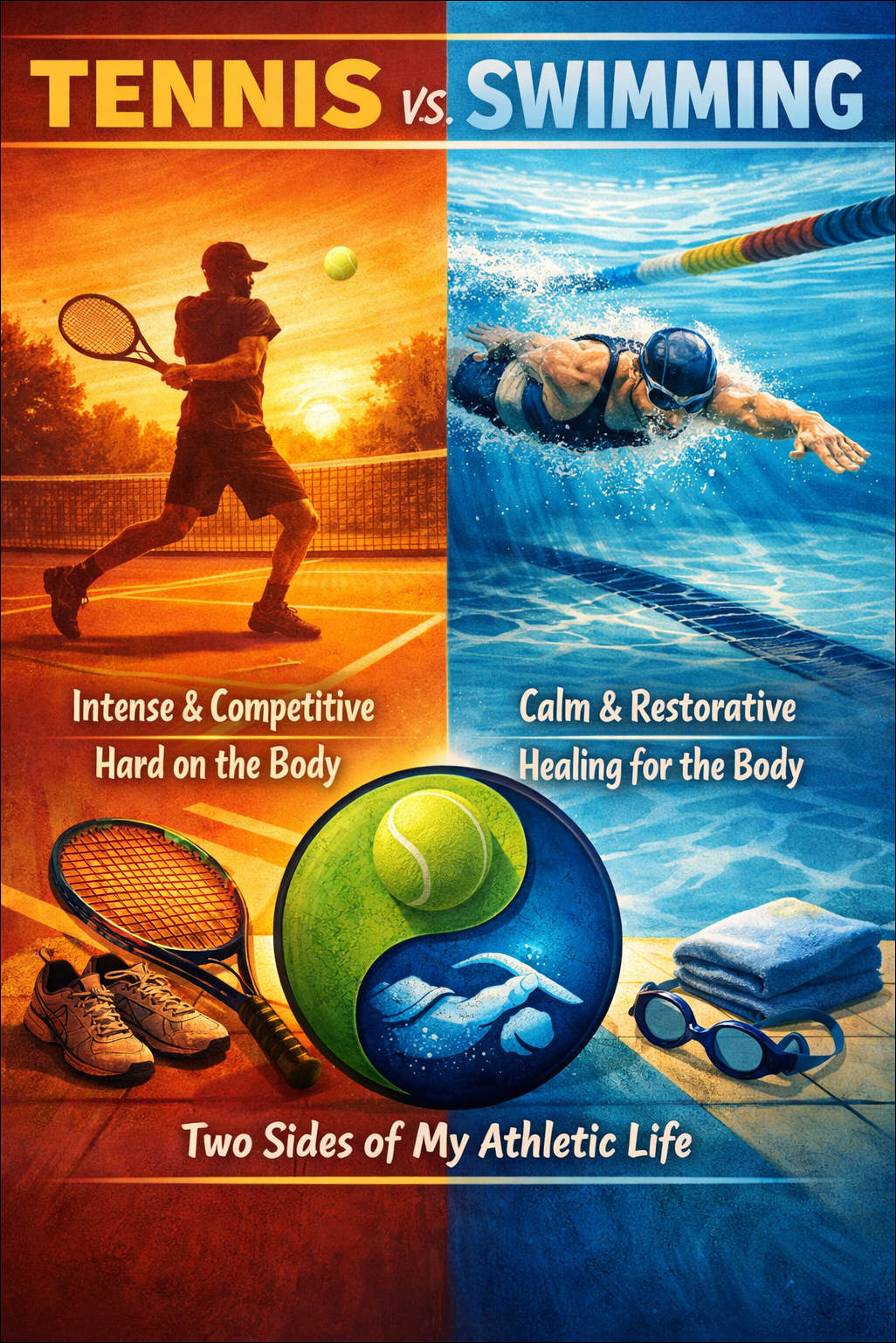
Tennis is the opposite. It is fun. It is highly intense, and I have to focus 100% on hitting the ball cleanly. It is social: I play with my friends. But sprinting on concrete is not a natural act for people my age, and I struggle with injuries. In short: I love tennis but it is hard on the body. Tennis is like that girlfriend you love but who treats you poorly. Tennis breaks my body down. I often limp off the court. But it is like I am a boy again playing a sport with a ball with my friends. I love it. Tennis is all sorts of fu n. The ball unexpectedly hits the net chord and dribbles over, and one sprints for it and hits a winner. We all laugh and enjoy the weirdness of that point.
Swimming is the flip side of tennis. You go back and forth and back and forth. It is individual, not social. It is not “fun” like basketball or tennis. But the water is gentle and healing, and swimming helps me to recover from the tennis court. It supports my parasympathetic system. If tennis is stimulating and competitive, swimming is relaxing and restorative. I “red line” my body on the tennis court. I don’t in the pool. A gentle swim helps to flush my legs of lactic acid and puts zero stress on my aching joints the day after a big tennis match. Swimming builds me up after tennis tears my body down. I could never do much yoga because I found it too boring. But swimming for me approaches a form of yoga in the water.
That is not to say I don’t exert myself. I swim some ¾ of a mile per session, and my muscles do get a workout. My core stabilizes my body as I perform the strokes, and my arms and shoulders propel me through the water. My lower body gets less of a workout, but it is not nothing. My swimming form and conscious breathing in the pool have gotten better over the years, with the help of this YouTube channel and plenty of practice. I swam so many miles during the Covid lockdowns when other sports were unavailable that I suffered an injury in my left shoulder which took years to fully heal: I would not be getting overuse injuries like that from swimming if I was not actually swimming. But my goals in swimming are limited; I am almost 59-years old. I am never going to pay for coaching to become a better swimmer, or enter a masters swim meet and race others – or even time myself to gauge performance. I rarely swim as hard as I can. I am in the pool for recovery from a sport which is more of a priority for me: tennis.
That being said, I am surprised more tennis players do not workout in the pool. Swimming is the ying to the yang of tennis: having that balance in your athletic life helps your overall performance. I recognize that many mature adults lack a solid base of swimming technique, as did I when I started. But you can learn it as you go, and you are not there in the pool to seek competitive glory. The worst you have to deal with in swimming moderately hard is damaged hair and dry skin from too much chlorine exposure – that is it. After a certain age it is all about longevity and sustaining health and fitness. And in that context exercising your heart and lungs by swimming laps while offloading all stress on the joints in the healing water… well, that activity is your friend, not your enemy.
Or at least it has been my friend for many long years.
I have never loved swimming the way I have loved other sports. Yet over time I’ve come to value it deeply. I feel its absence acutely when it disappears from my life. The tennis court and the swimming pool are two sides of the same coin, each essential to rounding out and completing my athletic life.*
* In addition to weight-lifting, road-biking, and Tai Chi Chuan.