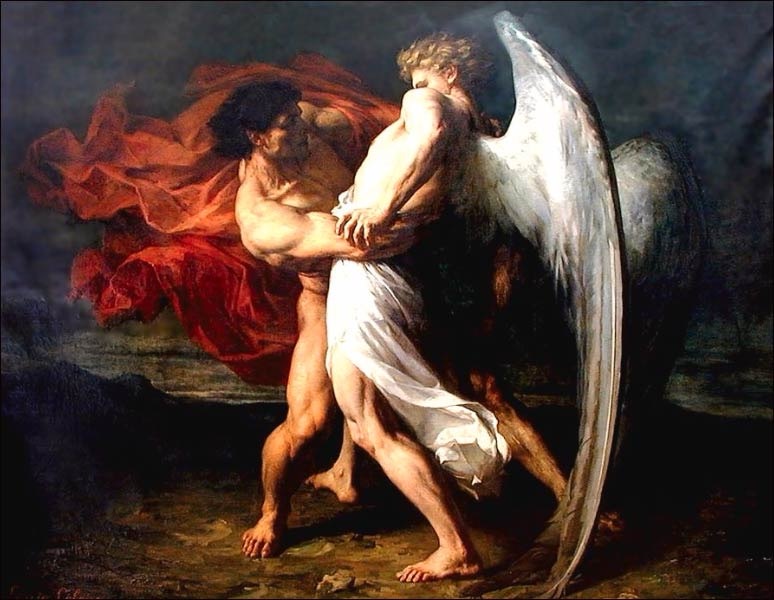
Struggle is the way. Difficulty is not a problem but the point. One struggles and one grows. It is an active process, not a passive one. One needs to wrestle with a thorny problem. School should be where one learns to do this.
Cheating has always been a problem in school. The Pandemic and remote learning gave energy and momentum to cheating in American schools, in my experience. But ChatGBT has taken it to a whole new level, especially in the universities. The idea is to use technology to “hack” the learning process, getting good grades without having put in much effort.
I have heard of students bragging that they should receive a diploma, not in engineering or history, but in using ChatGBT to do their academic labor for them. I suppose using AI in education exists along a spectrum: using it to do basic research, having it tutor you in a math problem, and allowing it to give you multiple points of view on a subject. There are reasonable arguments to be made in favor of AI in those circumstances. Then you have rank cheating: a student “pasting” the class assignment into ChatGBT and “copying” the answer and turning it into the professor. Here is this seven page midterm take-home essay. It would require hours of labor to complete. A lot of sweat. AI can do it for you in mere seconds. And you won’t get caught for plagiarizing.
Having ChatGBT write your essay for you is so easy. You can avoid having to struggle – the need to think. Thinking in school (or outside) is harder than is generally understood. The temptation to cut corners by plagiarizing would be huge for young people (and not only young people). It is not that students are necessarily any less virtuous or honest than previous generations; it is just that they have more powerful technological tools to cut corners – to cheat.
This is a real problem.
Because wrestling with a humanities essay prompt or physics problem set is the point. That is the price of admission for college students; short cuts defeat the whole point. Using AI to do your homework is like sending someone else to the gym and expecting your muscles to grow. And so ChatGBT has the potential to ruin American colleges. Why some professor would spend an entire weekend grading a pile of research papers written by a robot and not a human is beyond me. Why not go ahead and bang your head against the wall? I have read that professors are quitting their jobs. “I did not get into education for this!” they rightly claim. They argue ChatGBT has ruined the educational mission at their school. I get it. I sympathize.
I have even read that much of the Internet now is content written not by humans but by (ro)Bots – the Dead Internet. AI bots pretending to be human beings litter social media with mindless drivel. Gigabytes of info is posted by AI and it dwarfs the amount of info regular human beings could post. Social media becomes nonsensical. What is real? What is machine produced?
Has the Internet lost its “human” feel? Has it become mostly machine generated drivel?
Have machines recently become much more intelligent? Have humans as a consequence become much less intelligent?
Like in so many other ways, I am less interested than I might be in this latest AI development. Because I am 58.5 years old. AI is more a problem for the next generation. I will retire soon. I cannot control these larger trends in education or the Internet. Recent events have only reinforced that conviction.
I was a bit embarrassed two weeks ago when the right wing political activist Charlie Kirk was murdered because I barely knew who he was. I recognized him vaguely as a sort of shit-stirrer on the far right. But my daughters knew all about him. When Kirk was assassinated, my younger daughter immediately called me on the phone, breathless at the shocking news. She had to remind me who he was. At the time I wondered, “Who was shot? Why do I care about this?” But I knew a lot more about Charlie Kirk in the week after his murder; he was going to be vastly more influential in death as a martyr, than he ever was in real life as a provocateur. My older daughter told me that with her boyfriend she planned to watch an upcoming online debate between Charlie Kirk and Hasan Piker (a sort of left wing shit-stirrer). After his death I read in The Atlantic Monthly that Kirk supposedly was “one of the most influential unelected people in America.” Nevertheless, he was not on my radar before his death.
In my defense, Kirk focused his conservative proselytizing on young people on college campuses both in person and via social media. I have turned my back on social media, seeing it mostly as a toxic cesspool, and I am not a young person. So I was far from the demographic Charlie Kirk was targeting. The same with all the “podcast bros” (Joe Rogan, Theo Von, Logan Paul) who supposedly had a decisive effect on the 2024 election of President Donald Trump: I had only a vague idea this was a force in the electorate. I did not move in those circles. I am 58-years old. Out of touch with younger voters. I read the Wall Street Journal and New York Times. I don’t listen to podcasts. I read long-format “traditional” print journalism. I don’t get my politics from YouTube or TikTok videos. But my daughters do. I dislike shit-stirring provocateurs engaging in “gotcha politics” for the audience; I regard Charlie Kirk and Hasan Piker as attention seeking firebrands wanting to score points against the “enemy,” instead of open-minded debaters objectively searching for the truth, no matter where that leads. In contrast, my daughters find the idea of an online debate between Kirk and Piker appealing. The clash would be fun to watch (even for those who don’t know or care much about politics). It is “entertainment,” in the 2025 digital ecosystem.
So there is a generational divide between them and myself. I am “old school” – a more staid “legacy” print media. My daughters are “new school” – a more combative social media, mixing it up. They grew up on ubiquitous short-form streaming video guided by clever addictive algorithms. Thankfully, I did not. I grew up instead with books. I did my best to transmit the cultural legacy of reading to my daughters, but with the advent of “generative AI” the situation is more dire than ever.
The world has passed me by, clearly.
Fair enough.
But one last thing:
The wrestling match I have had with complicated ideas and personal dilemmas on my blog remains essentially unchanged 29 years after its beginning. I don’t really know what I think about a topic until I take the time to write it down; the discipline and the pain of translating a vague idea into intelligible prose is the point. I struggle; there is a wrestling match; I come to conclusions, even tentative ones; I grow. Even with less than 100% success I learn and arrive at more clarity than previously. The struggle is the point. The obstacle is the way. Anything worth doing should be difficult, and I don’t want to make it easier with ChatGBT. I want my writing to be all me, even if the end result is inferior to what it could be with AI assistance.
I want it to be mine, not AI. This is a human speaking, not a robot. My words. My flaws. My virtues. My voice. Me.
It will be a cold day in hell before ChatBGT writes an essay which appears on my blog.
“Whoever touches this, touches a man,” Walt Whitman wrote about his highly intimate poetry.
In a different way in a different medium, and with less physicality, whoever reads my blog posts gains a similar insight into many of my deepest thoughts.
But there are no short cuts. If you think using AI to cheat your way through school will result in anything like a real education, you are mistaken. A week later you will hardly remember the words written by AI that you barely looked at before turning in to your professor as your own thinking. Six months later you will not remember the topic of the essay, or even the class. Your brush with “learning” will have been cursory and slight.
Writing the essays is the point. That is where you learn. The effort is the price of admission. That is what results in the learning. If you have AI do it, you learn nothing, or next to nothing. You have to invest effort and intention into your learning. You have to put in the work. If you outsource your thinking to AI, it might be easier but the victory will be a pyrrhic one. You could take a more sophisticated take and allow AI to help you think better. But it might be easier just to plug in the question, take the answer AI gives, and pass it off as your own.
I tend to dislike this new world with ChatGBT in it. It is too easy. Too quick. It encourages intellectual laziness and its kissing cousin, unthinking orthodoxy. Too much easy access to information and too little assimilating it into knowledge. Perusing pages and pages about the French Revolution online without really reading them is much easier than actually understanding what happened, why, and how the French Revolution continues to affect us today. Access to information is easy today, but learning is as hard as ever; one has to convert information into knowledge. Again, it is an active process, not a passive one. As my first ever .sig statement back in the first emails I sent back in 1996 at the dawn of the Internet stated:
“Where is the wisdom we have lost in knowledge?
Where is the knowledge we have lost in information?”
That is from a TS Eliot poem “The Rock”. It was published back in 1934. That was long before the digital revolutions of the late 20th and early 21st centuries which seem to be undoing much of the progress in literacy achieved since the time of the Gutenberg Press.
Yes, bring me the old ways. They are tested and true. The idiosyncratic take. The passionate amateur. The most important facets are intellectual curiosity and a desire to learn, coupled with action to make that happen. Every real learner is at least mostly an autodidact, if not entirely.
Blood, sweat, and tears – that is where any growth worthy of the name comes from. No short cuts. You have to find your own way. Be nobody but yourself. Put in the “hard yards” and perform as well as you can. Don’t outsource your thinking/writing. That does not lead you anywhere of note.
But maybe that just highlights how archaic this media format appears to be – the personal blog, an individual’s own hosted website. It smacks of the “Internet 2.0” of twenty years ago. In contrast, we live in a world of AI and social media: mass networks of millions of persons. This results in the “hive mind” and a lack of individuality, in my opinion. Young people especially (and not only young people) are too aware of the smelly orthodoxies of this moment in the age on social media, and they make sure not to violate them and endure scorn and ridicule of their peer group; everyone is watching, and that is not healthy. As Michelle Goldberg opined on the negatives of social media, “We should know less about each other.” She claims it fosters unnecessary conflict. Goldberg is right. As a result of this, the pressures of conformity and orthodoxy have never been so strong as they are nowadays, in my opinion. The penalties for taking an unconventional take on any given subject have never been so severe. Your views can be declared “unacceptable.” You are effectively banished – a sort of social death.
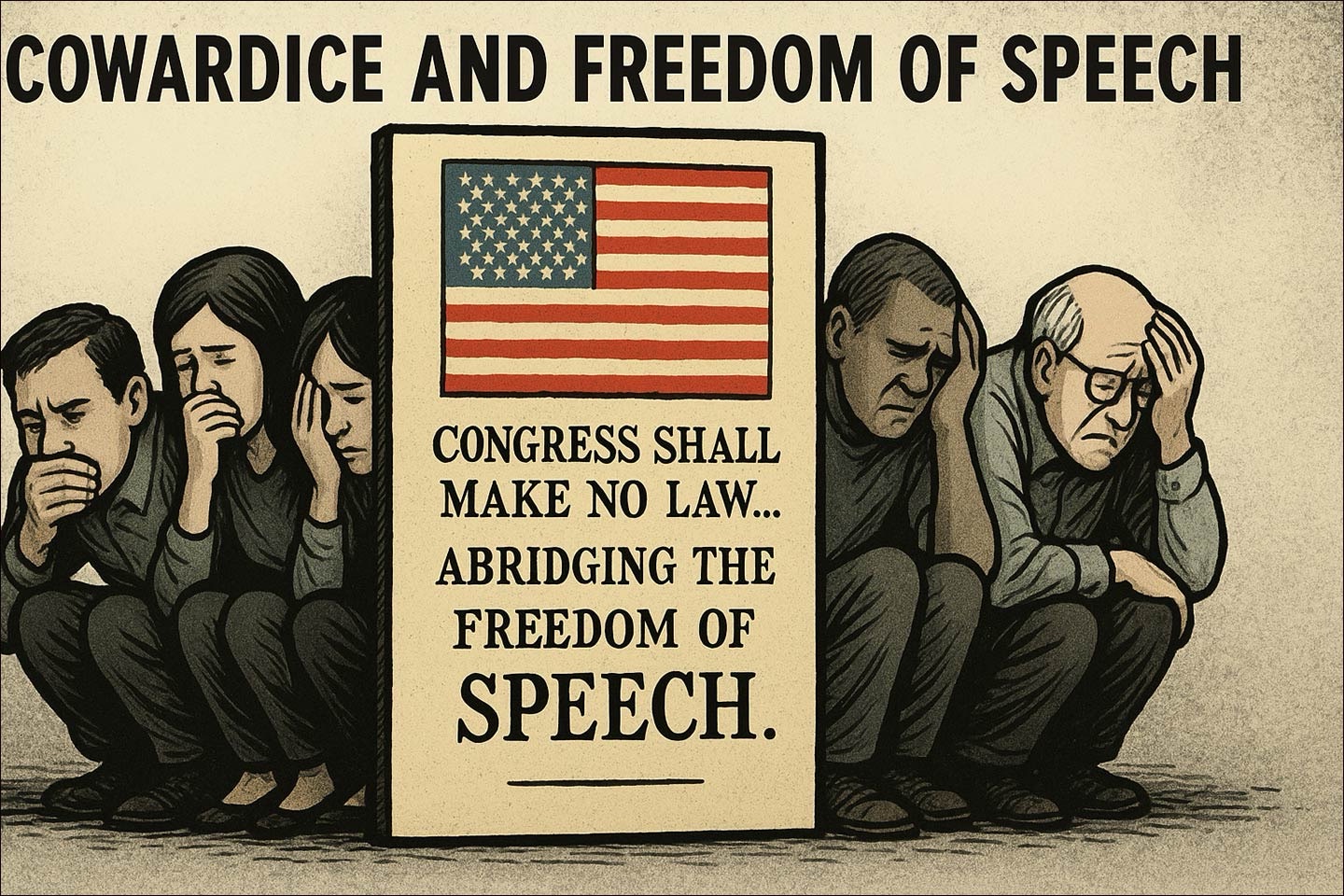
The results are predictable. Almost everyone in the United States in 2025 recommends a person to protect their privacy. In a polarized nation with low social trust, almost anything you say online can be held against you. Your reputation could be besmirched; you could be fired from your job. In popular parlance, you are “cancelled.” So we Americans are urged to password protect our social media accounts for protection from public view (and public criticism). Better yet, use an anonymous login so nobody will know it’s really you. Then you can be safe. Especially for teachers and others in the public eye: don’t make yourself a target. I have personally been told this. My entire webpage could be seen as reckless as hell in today’s America. Maybe when I first started this project back in 1996 it was not dangerous, but now it is. Because what you say can be used against you, the 1st Amendment be damned: such are the times we live in. “Free speech” seems not so free nowadays, threatened by the illiberal left (Scylla) and the illiberal right (Charybdis). Andrew Sullivan gloomily argues that we live in a “post-literate, post-liberal era.” I tend to agree.
It is not even that the law has necessarily changed in the United States. The people have changed. What has changed in the last ten years is that so many Americans have become combative assholes. Intolerance inevitably follows; “cancel culture” comes knocking. And it is not really that many people out of the whole population – just a small vocal minority who basically insisted the following: “Call it what you want—but there are CONSEQUENCES for your words, not CANCELLATION.” This is relatively new. I’m not buying that argument.
Because I am old school. I am out in the open with my words and opinions. I’m not going to password protect anything. As it was back in 1996 when I began this experiment, so it will be in 2025 and moving forward: this is who I am, warts and all. I will not engage in subterfuge. I will not be a wussie like so many others: I will not hide. 100% candor. This will not change. There is a point to what I am doing, and I won’t compromise. So I will keep it simple: I will say what I think. No apologies.
Only that is armor against those who would “name and shame” their “enemies” in 2025.

“Hate speech does not exist legally in America. There’s ugly speech. There’s gross speech. There’s evil speech. And ALL of it is protected by the First Amendment.”
Charlie Kirk
“I think it is unbelievably dangerous for government to put itself in the position of saying, ‘We’re going to decide what speech we like and what we don’t, and we’re going to threaten to take you off the air if we don’t like what you’re saying.’ ”
Ted Cruz
“If people can’t speak freely, then they are not free.”
Kathleen Parker





One Comment
Ashwin Rebbapragada
First of all, I liked the painting of Jacob wrestling with the Angel. As usual, I enjoyed your thoughtful and insightful essay on learning, education, and personal growth. We should learn to develop our authentic voice and not depend on A.I. or other tools. We only get good at something through effort, practice, patience, and endurance. We can’t find substitutes for our own intellect and own reasoning. It looks like many students are trying to find shortcuts to learning and writing.
Perhaps young people can benefit from this analogy. Young people like movies and video games. Do you want to watch a film where a film maker really struggled and worked hard to develop a script, plot, storyline, etc. or do you want to watch a film where a film maker took short-cuts and used A.I. for everything? Generally, when people watch movies they prefer to see originality, creativity, hard work, diligence, etc. Movie fans don’t like film makers who blindly plagiarize and take short-cuts to develop their movies. Another analogy is video games. Do you want to play a video game where a developer took great pains to make a quality game or do you want to play a game where the developer was sloppy and found easy ways to make a game? The thing is, you don’t want anyone to cheat you or take short-cuts when you are the customer. So, maybe students should learn to take the hard road themselves and appreciate the value of hard work and developing fresh ideas.
We don’t develop skills and knowledge by lukewarm efforts and by cheating. We never find ourselves and never reach our full potential by taking the easy road and depending on other sources to do our work and our thinking. One final thought, if you really work hard, be diligent, and be patient, maybe your final product could be much better than A.I. or what someone else produced. Don’t cheat yourself. There could be greatness hidden within you. Our talent is discovered by thinking, reflecting, and discipline.