Even when I was a little kid I was attracted to the martial arts.
I first was able to sign up for a karate class at Newport Harbor High School when I was in fifth grade. My mother would drop my brother and me off there on Saturday mornings and come back an hour later. I was so impressed by the instructor who seemed as fast as a cat and as powerful as a bull. Could I ever be like him?
Then a year or two later I signed up for a Shotokan Karate class at Orange Coast College, and I would take the bus for an hour just to be able to attend. There were no martial arts classes near where I lived, and nobody in my family or circle of acquaintances practiced them. I was seeking it out on my own, and my parents thought my interest was a bit… weird.
But the bug had bitten me, and I wanted more.
In my freshman year of high school I signed up to take Hapkido classes in a dojang way out in Westminster. God, I loved that place! But it would be a full hour back home on the bus. Taking classes there was inconvenient, to put it mildly. So when I transferred to a different high school, I stopped going.
Up until college I had taken numerous martial arts for a year or so, but I never stayed long enough to progress past a point. My life was changing so often that it was difficult to put down roots in any single studio.
That changed a bit in college. I had more control over my activities, now that I was an adult (more or less). I jumped head first into the university system Hwa Rang Do club at the University of California at Irvine. I practiced everyday, and often for hours per day. That worked out well with the university clubs which at times and in places a bit resembled a cult.
My parents were not impressed. My mother did appreciate the spiritual side of the martial arts, but my dad just thought it was weird. And my mom almost fainted watching me compete in the finals of a Los Angeles kickboxing tournament, with other competitors being knocked unconscious. And my father was not thrilled when I broke my ankle in a martial arts class when I was 19-years old. He was not thrilled at all. My father focused on how I had gotten hurt and had to hobble around on a cast for months, not how I was growing stronger and more mature in ways obvious and not obvious. One of my Shotokan instructors had broken his arm in sparring and wore a cast while teaching, and at the time I thought that was totally bad-ass. Breaking my own ankle a few years later was less fun.
But I loved the martial arts. Part of it was the fighting, and the male vigor of being able to handle myself in a fight. But I was also attracted to the Zen aspects of the Asian fighting arts. I so much respected my instructors…. these stoic Korean masters who had spent most of their lives in rigorous training and seemed unflappable in even the most extreme moments. These men, smaller and older than me, were role models. They may have been some of the most lethal people you could ever meet, yet they were also the least likely to lose their composure or start a pointless fight over pride or wounded ego. (As Lao Tsu claimed: “The best fighter is never angry.” True power comes from control, not rage.) They were incredibly grounded – these men were invariably calm, kind, and humble; they were gentlemen. I was of course open to their ministrations about how to throw a punch or block a kick, but I was even more open to the lessons they would impart about discipline, respect, and self-control — how they comported themselves, how they treated others. I always tried my best to listen to what my instructors said, but I never failed to follow their example. Several of them I warmly remember decades later, especially Gil “Peter” Kim. Towards only one or two do I have the total opposite feeling (ie. the “cult” aspect of college martial art clubs I mentioned previously).
I had all sorts of interactions with men in positions of authority over me throughout my youth, but those Korean martial arts instructors gave me the lessons that were among the most valuable and which stuck. Perhaps this says as much about me as it does about them; I searched these instructors out. The message and lifestyle they were selling I was interested in buying. The path reveals the teacher when the seeker is prepared.
Nevertheless, by the end of college I was gravitating towards a career in law enforcement, and so I moved naturally more towards firearms and training with weapons rather than with empty hands. So I turned away from the martial arts.
And then adult life happened for real. Women and romantic pursuits took up time. Becoming a teacher took up time. I was always physically active in one sport or another, but not in the martial arts. I got older. I moved from place to place for jobs. I got married. I had kids. I built an adult life. Martial arts became a background interest, not a foreground one. I entered middle age, and then more than that.
I came back around to martial arts in 2010 when I enrolled my oldest daughter in Tae Kwon Do classes:
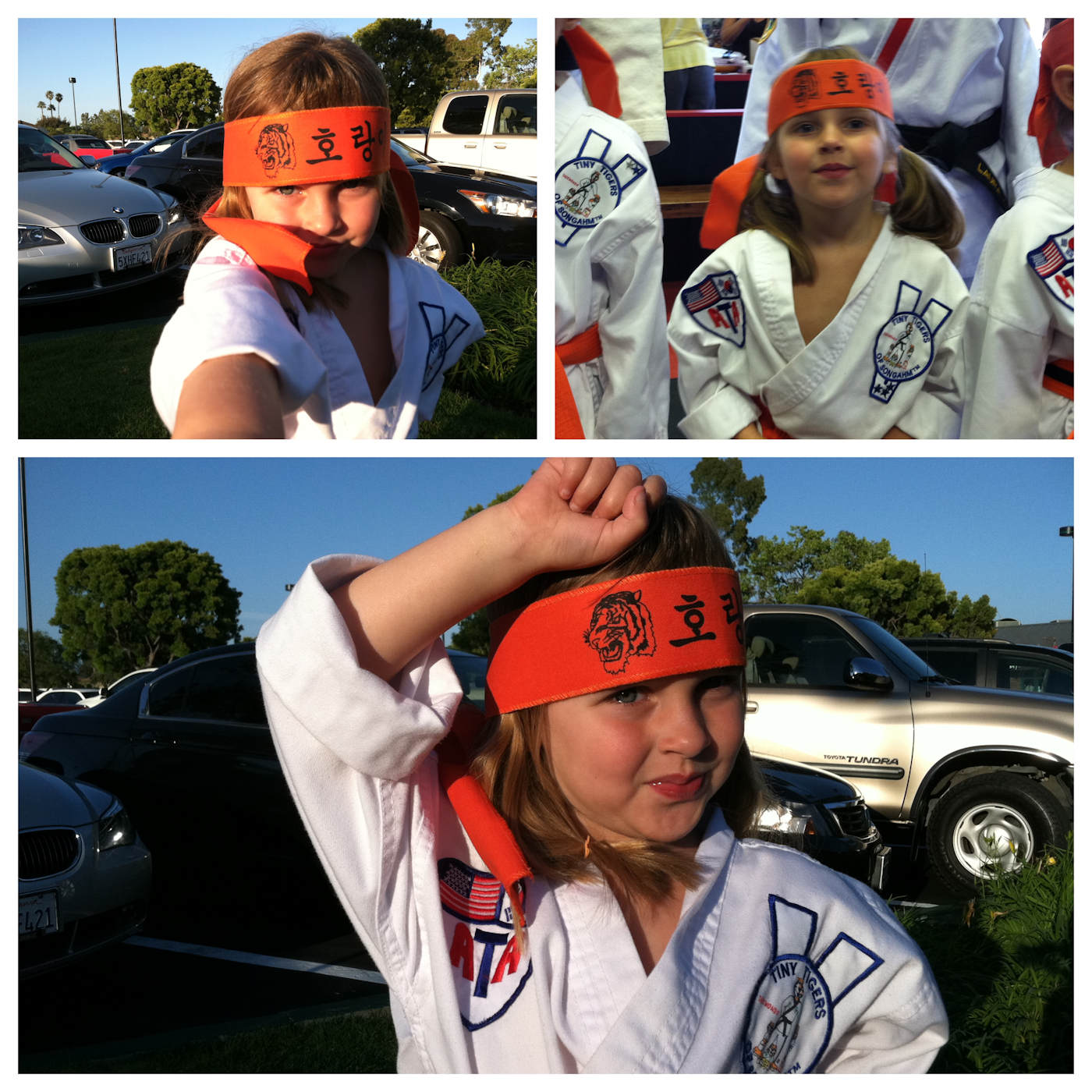
I did this because daughter Julia exhausted me so much at that time that occasionally I needed a break. So I would bring her to lessons and go sit somewhere nearby for an hour of peace and quiet. That lasted a year or so.
Later another father called me to complain that my other daughter, the younger one, played too rough with his daughter. (My daughter was in sixth grade at the time.) I received that strange phone call, thought about it a bit, and then enrolled my daughter in a local boxing class. That worked fine for a year or so. But then I got a good look at many of these middle school-age boxers who were my daughter’s peers and I did not like what I saw. These wannabe boxers were often wannabe thugs. (I would overhear them brag among themselves about getting suspended at school.) I did not like that vibe for my daughter, not at all. So I moved her into a Thai Boxing studio with a more healthy zeitgeist where she could learn to kick as well as punch. She thrived.
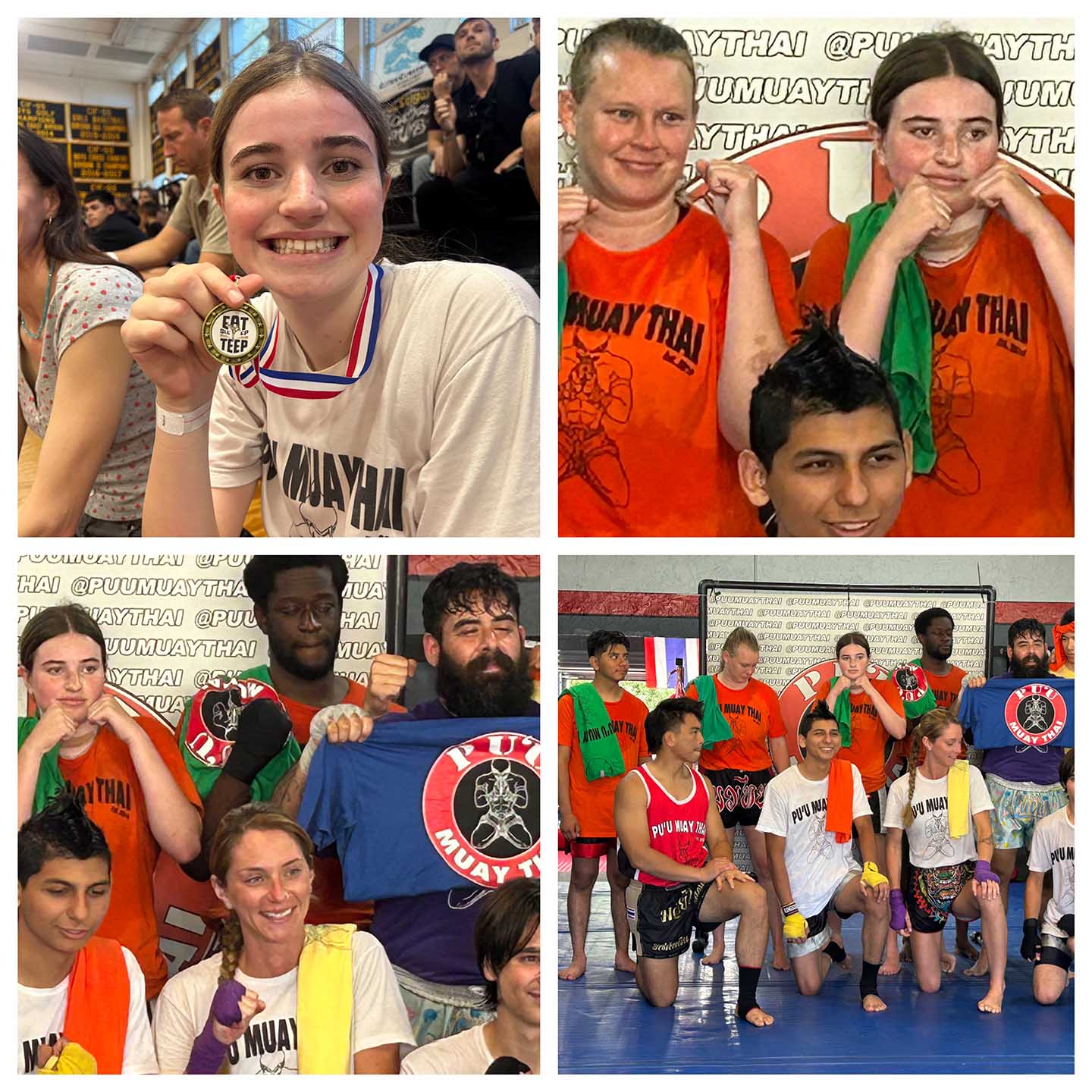
The martial arts world had changed by then. By 2024 everything was Brazilian Jiu Jitsu and Thai Boxing. Mixed Martial Arts was where all the energy and attention was, not the traditional martial arts. It saddened me. Martial arts stripped of their Zen roots felt reduced to mere fighting – nothing more. In my view, something essential had been lost.
And I became interested in getting back into martial arts, now that my daughter was in it. I signed up for a Hapkido class locally and studied for a few months. But I was a tournament tennis player in my mid-50s, and that was already pushing my body to the brink; I recognized seriously studying a martial art was going to push me over the edge. Throwing kicks above the waist and sparring with men half my age was absolutely going to result in injury, possibly a permanent one. Maybe I could have played competitive tennis alone, or done martial arts alone; there was NO WAY I was going to be able to do both: this I learned by trying to do both for a time. Almost my entire social life revolved around tennis, so that would remain the priority. So I stopped the Hapkido, sadly.
I am too old, I told myself. It was pretty much that simple. You are too old, Richard. My daughter wanted me to attend her Thai boxing gym alongside her, and there was a student or two my age there. But I felt I was too old to put boxing gloves on and spar, rightly or wrongly.
I don’t regret that decision. If I were 20 or 30-years of age, I would sign up to study Shotokan Karate or Korean Hapkido tomorrow. I would be “all in.” There are few things I would rather do more. If I could go study with the magnificent Bong Soo Han (photo of my notebook) in Santa Monica in 1987, I would be ecstatic. (I did visit his studio once back then.) But that era was far gone, and Master Han was long dead. I realized this sort of intense physical activity is no longer appropriate for my station in life. I made my choices when I was younger, and now I live with them. And of course I had so many other athletic interests that sweating on the martial arts mats was not a crying need for me.
But still. The old itch was there. I wanted to be a martial artist. Discipline, self-control, Zen-like equanimity… long-term practice on technique towards the arduous goal of acquiring perfect form… the seeds sown in my youth were still present in the fertile soil of my personal psychological makeup.
But I would think to myself with sadness the following:
“I am too old. I have incipient arthritis in my left knee, and tennis already exacerbates that. Throwing kicks is not advisable for me anymore. I have to use that knee for the rest of my life!”
I would almost despair in these thoughts. The best seemed all in the past, without much hope for the future. I felt old and incapable.
But I still had Ginchin Funakoshi’s texts in my room. The books “Moving Zen” by CW Nicol and “Zen in the Martial Arts” by Joe Hyams still resided in the small bookshelf near my bed. Their vital messages remained close to my heart, and they helped to make up key aspects of how I thought a man should live. Along with my father and a few others, my martial arts instructors had informed much of what masculinity ideally looked like. The walls of my room had quotes from Morihei Ueshiba or Mas Oyama. It was not a coincidence I had enrolled my younger daughter in Thai Boxing. (Unfinished business on behalf of her father?)
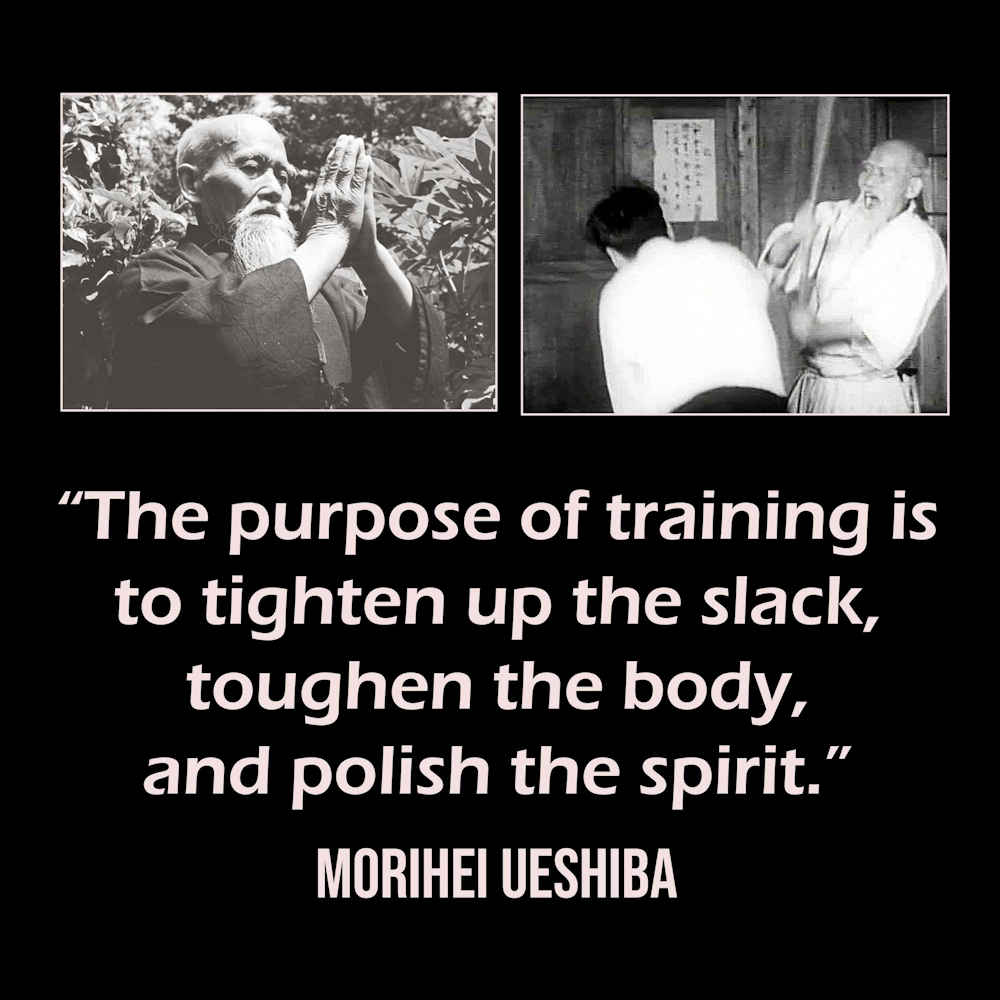
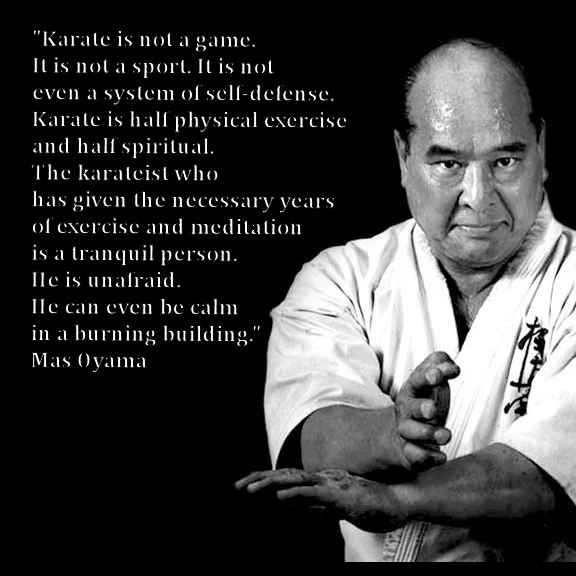
In short: I was a martial artist without a martial art.
I would be happy with almost any martial art; it does not matter so much which one, I thought, as they all seem to travel by different paths only to arrive at a similar destination.
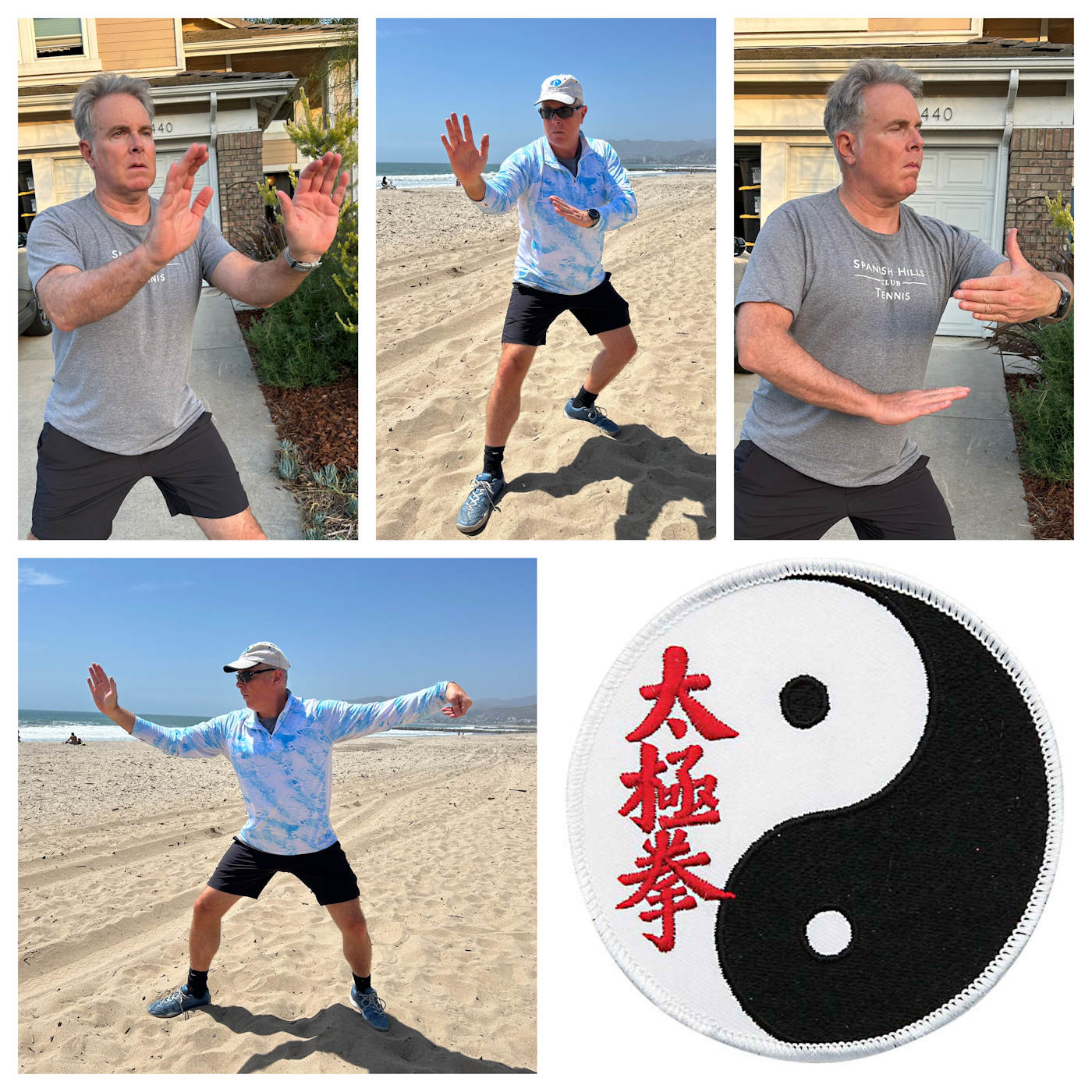
That is how I came around to the study of Tai Chi Chuan.
Tai Chi is about the least practical martial art out there. It is so “soft” that it has become known as exercise done by old Chinese people in the park for health and fitness more than for martial prowess. That is not an unfair assessment. But it is not a comprehensive view of Tai Chi Chuan.
I will turn 59-years of age this spring. The chances of me needing to fight off an attacker at my age are exceedingly small. I care so much less about unarmed combat applications of a martial art than I did when I was 15-years old. But I care about the spiritual aspects just as much or more than I used to. And the slow “soft” movements in Tai Chi are within my power to perform. This will not hurt my body; I can do this. Past a point everything else was immaterial. I could find a martial arts home here.
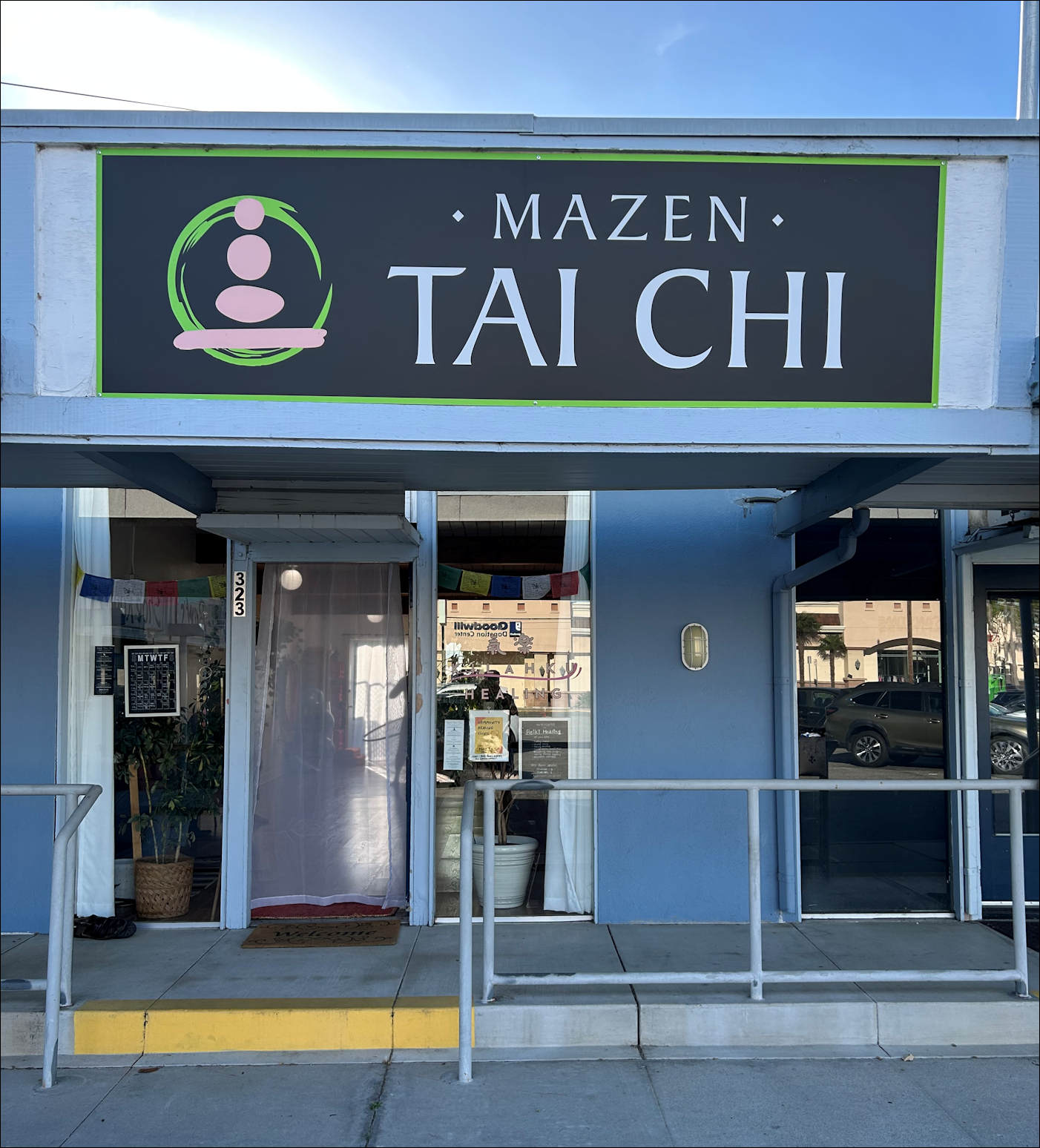
So I found a Tai Chi studio locally. I signed up and paid for classes. I attended them.
It has been a rough introduction. All my experience in “harder” martial arts made me worse at Tai Chi than if I had no experience at all. The steps were different, and I moved the wrong way. My stances were too deep. My movements were not “soft” enough. It did not “flow.” Even when I tried to move as slowly as I could, I moved too fast through the forms. I might have been the worst Tai Chi student ever, or at least I felt that way.
But I also knew that learning new things can be hard, especially at the beginning. I knew that I could memorize these Tai Chi forms just like I learned karate kata before. Time, patience, effort, money – that was what was needed. On the verge of retirement I had more of these than I did in my youth.
I know what I want: moving meditation. Right now I am so busy remembering where to move my legs or arms next that I am not relaxed at all in performing Tai Chi Chuan. But that should change once I get the sequence of movements thoroughly memorized. Give it time, Richard! My body will know what to do.
It is all about the movement. Aligning my body with my mind as I move both through space. I get some of this through tennis, but not enough. Tai Chi Chuan can help me to sink into a state of relaxation where I can encourage my parasympathetic system to bring me into that Zen-like state. Swimming also helps in this, but Tai Chi should be better. I know this to be true in my gut; I see what I need lying before me. Tennis, swimming, and Tai Chi are all different expressions of one’s physical ability to move well and feel vital. Each element should support the others, working in synergy toward a balanced, complete system. Tai Chi is not enough exercise by itself, but I get more than enough exercise in other places. But the practice of Tai Chi brings to me important elements that others cannot do so well: a settling of the mind, a calming of the spirit, a returning to center. How important is that?
So wish me luck, dear reader. It is all pretty new. How much I want to have a few years of uninterrupted study with the same instructor in the same martial art! When the student is ready, the teacher appears – so runs the Zen saying. So I will hope this is what has happened.
How long will it take me to learn the initial 10 movements of Tai Chi? (I am ½ done right now.) Then the 24 in the Yang style Short Form? Or the 108 movements in the Long Form?
I intend to find out!
So help me God, Amen.