A buddy of mine recently told me that a friend of his – a bit older than us, maybe in mid- to late 60s – claimed that the only real priority he has left is “to take care of his health and his friendships.”
Wow.
That really made me think. That statement has been on my mind for a few weeks.
Health and friends are the indispensable aspects of life one must protect as one ages, the man’s argument runs.
I think I agree.
As I look to turn 59-years of age, I could care less what almost everyone thinks of me among the larger public. When I was a younger man, ego and reputation loomed larger. I was more sensitive to the opinions of others. I was building my teaching career and professional reputation, and I wanted to impress. That was important to me. But by the time I was around 55 that had changed. My younger daughter sometimes will tell me I am a “popular” teacher at my school. I might have cared more when I was 35 or 40, but I care not a jot anymore. Popularity is fickle, and it is often based on rumors and incorrect information. I would like to be friendly with my students and I often am, but I’m their teacher, not their friend. What I care about in the end is this: “Am I delivering instruction absolutely as best as I can? Am I doing my job?” After that, the opinions of 17-years old do not matter too terribly much.
And at this advanced point of my career, the opinions of others teachers or administrators matters even less, since I interact with them so much less. Public opinion is often just wrong, or mostly wrong. And almost everyone is so busy worrying about themselves they have relatively little left to think about you. I stay in my lane.
Work is work. I will put the job in a box until I retire, and keep it there. I am intentional; I compartmentalize. Anything else is a waste of TIME and ENERGY – two things I know now are not infinite. So I will save my precious time and energy for what really matters – health and friends.
Neither do I care too much about money. By this advanced point in my life, my lifestyle is what it is. It is unlikely to change too much. Money is just money. I am not super ambitious; I live within my means. I want peace and health, not ambition or fame. My desires are few and humble by this point. I will have a pension and other resources; that should be enough. Even if I was given a huge sum of money, I don’t think it would change me too much. By now I am who I am. I suspect child actors who become celebrities are almost always ruined by too much fame and money at an early age. They are too young to deal with the attention and it goes to their head. I am the opposite side of that coin.
I am not really building anything nowadays. What I am doing is sustaining. I am still a high 4.5/low 5.0 NTRP tennis player, even as I age. I am in excellent physical condition. Age might wear me down over the years, but I will stay plenty strong into my late 70s and 80s. I see my tennis buddies in the generation above me and they are “good to go.” They are my role models. Gentlemen like Steve Debbis, John Merrill, and Bob Benton. They cultivate their tennis friendships, and they stay active and capable on the tennis court: this happens through intentional action. They take care of themselves, socially and physically. I will try and do this, too.
HEALTH
What is the point of working three or four decades to be able to retire, if you are in poor health and cannot enjoy your retirement? That is a good question. I see people in their 60s who smoked and drank their whole lives while never exercising, and they look like they are on death’s doorstep. And I see the opposite with people much older who are doing very well heath-wise. Some have inherited unfavorable genetics, and so they get sick and die relatively early. But we do have some control over our health as senior citizens, and I plan to control what I can control.
First order of business, I play to stay on top of my blood tests. Cholesterol, blood sugar, etc. If any problems arise, I hope to jump on them soon with professional medical advice. So far I need take no medicines of any sort. No statins, insulin, antidepressants, whatever. That will not last forever, I suspect. But let’s put off that date as much as possible. I have had instances of basal skin cancer, and I suspect they will be cutting those out of me for the rest of my life. Sigh. But that is not a grave problem. Larger ones will appear, sigh. “Keep your eyes open, Richard.” Don’t be that idiot who is reluctant to go to the doctor. You have been that in the past. You have almost always been that, to be honest.
Next, I will narrow my focus and be careful with how much attention I pay to politics and current events. At 24-years old I was almost endlessly curious about the wider world and “wars and rumors of war.” My brain was young, eager, and elastic. Now my brain is tired, overwhelmed, and cautious. So I will be careful how much I allow my mind to focus on news of slaughter and chaos in some foreign land I have barely heard of, or of intractable imbroglios between disagreeable people — or the constant churn and stink of political life. Shit will happen, and I am sorry for it. But I am not taking the problems of the world onto my back to carry. You will not catch me “doom scrolling.” Time is limited. So is energy. So use your precious attention, Richard, where it counts. Narrow your attention down to what is most important. Everything else is of secondary importance, or less.
Because too much stress is a damaging emotion. Chronic stress keeps your brain always in a “fight-or-flight” mode which not only reduces the quality of your life but is a silent killer with damaging physical manifestations. It cumulatively takes a toll. I found parenting to be stressful, especially when my kids were young. I dealt with it. Politics in my country have been dysfunctional and increasingly dyspeptic; that can be stressful. I found the Covid-19 epidemic also to be stressful. For over three decades I found teaching to be an exhausting and stressful career, if an often rewarding one, and it just got worse as I got older and the public school system started failing during and after the pandemic. But all that is receding as I approach retirement. My kids are almost grown. I am almost done at work. Adult life has been stressful, sometimes hugely so, but that is improving with time and the stress is less. One of the great aspects as a man growing older is that the testosterone in the blood stream is so much less than it used to be, and so one is able to mellow out and “go with the flow.” In many ways, men are better for it. I think I am.
Let me explain: I play younger tennis players whose bodies are so much more capable than mine but often completely lose their temper during the stress of competition; their tennis game correspondingly falls apart, and they invariably lose. Older players, while physically less capable, are usually emotionally more stable. We old guys know how to suffer on the court, because we have so much more experience doing it. We rarely lose control. We are mentally more strong where maybe we are physically less strong. That is a silver-lining of aging as a man. I would never want to be 30 or 40-years old again. The angst! The frustration! The anger! The testosterone! I am now almost 60-years old. The landscape looks very different today. I like it. Or maybe there are pros and cons to aging, as there is with almost everything else.
I have used the adjective “less” several times with respect to myself as an older adult. But maybe “less” ends up being “more.” Is this not wisdom, or something close?
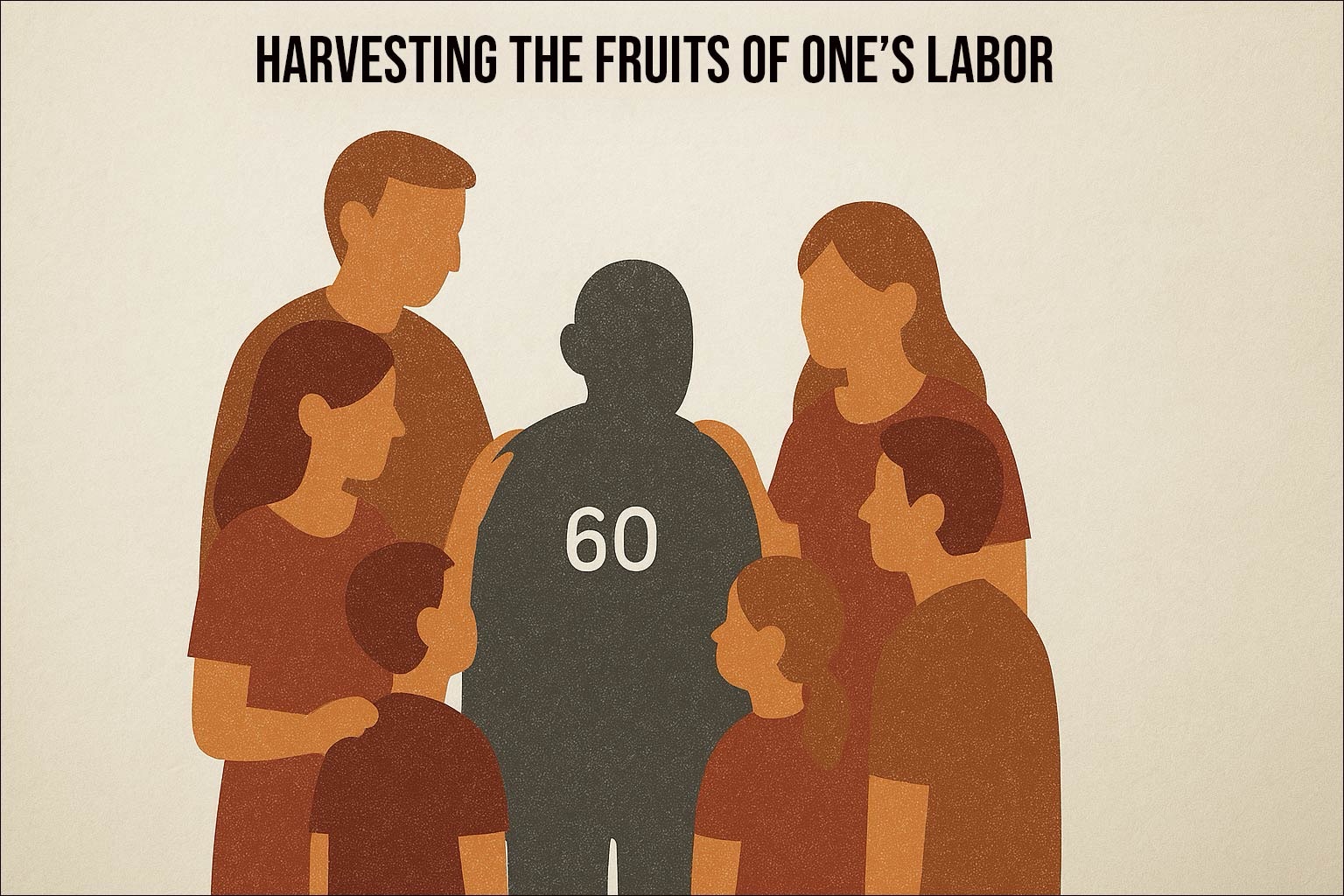
So, Richard, try to live up to this statement: “Don’t lose your peace of mind and allow yourself to become stressed out, unless something really important is at stake.” And very few things are of the utmost importance. There are problems, then there are PROBLEMS. So let it all slide off your back. It’s just another day. “This too shall pass.” Roll with things. Do not allow your equilibrium to be thrown into disorder and chaos. Peace of mind is crucial. Hold onto that. So be careful to whom and what you give your attention. After all these decades of working and raising a family, it is time to start harvesting the fruits of your long labor. You’re in the autumn of your life, and that is the time for harvesting, not planting. It is time for silence and peace, not acrimony and noise.
So maintain, Richard. Keep doing what you have been doing for the past almost two decades. Tennis. The road bike. The heavy bag and kata. The gym. The pool. (Especially the pool.) Eat a bag of spinach every day. Sautéed chicken breasts and plain brown rice as your staple diet. Read four books per month. Write almost every day. Take care of your family, health, and friends. Live within your means. Remain grateful for what you already have, be open to what the new day might bring, and resign yourself to suffer what must be suffered. Your life will not last forever, you know this. Regard the world and yourself with EQUANIMITY. Enjoy the time you have left. It is running out even as you write these words.
And your friends. You have had friends since elementary school who are still an important part of your life. My oldest friend is Mike Janicin, and we met in 1976 at the beginning of fourth grade and are still close. Then there are all the friends from high school and college. Add to that the tennis friends going back decades; the buddies on your weekly Wednesday night doubles match, the USTA teammates you go to sectionals with. You play tennis matches with these guys almost every weekend, and then you enjoy a beer and laughs with them afterwards. It is important to not only have longstanding friends who live far away and with whom you visit three or four times a year, but also buddies locally who you hang out with once or twice every week. So important.
Who else? Your wife. Brother and sister. Your daughters, and your nieces and nephews. My cousins. Extant aunts and uncles. My father. The sum of all these connections, friends and family, is my “social capital.” These are the people who would notice, and care, if I fell apart or disappeared. They would help me, if I needed it. We have each other’s backs; we care for one another. I am amazed how many people have almost no real friends at all. Don’t be that person, Richard. Don’t allow yourself to become isolated. This is a particular risk to men more than to women, in my experience, and for older men more than for younger ones. Friends and family are so important. But these personal relationships require attention and maintenance. Take care of your friendships like you take care of your bank account and your bodily health: it is that simple.
Life is good, overall. I have a reason to get up in the morning now, and I will work to have one even when I’m retired. Passion and purpose in my life – now and in retirement. People who care about me. Good health. Solid friends. If I’m lucky, good fortune. And hopefully peace of mind and enough money to live. Stability and peace — once you hit a certain age, that’s all you want or need.
Keep it simple, Richard. Or at least try to do so.
First things first:
Health and friends.
Stability and peace.