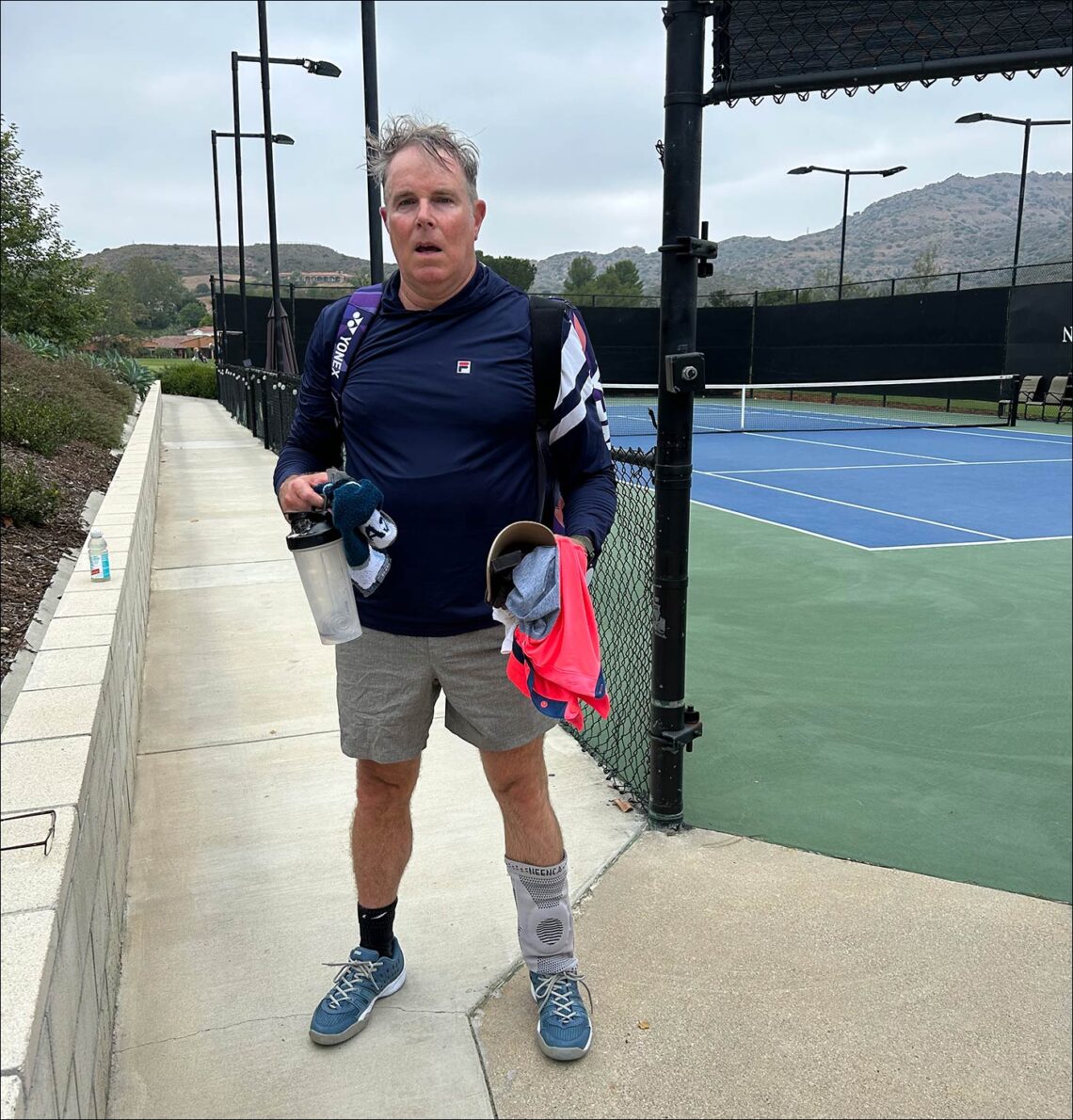
I had an intense tennis match yesterday. In fact, it was the second weekend where I redlined it in order to win a close match, and left the court limping and exhausted afterwards. My clothes were drenched with sweat, but I don’t think that captures the effort it took to win. I was left utterly spent. It seemed hard to think afterwards.
Don’t get me wrong. I enjoy this. It is partly what I signed up for and want: the competitive fire. I arrive to a big tennis match in a very intense competitive state – high arousal, narrow focus, strong will to prevail. I am focused on one thing and one thing only: competing, winning. There is a total temporary suppression of distractions, and I might leave the court barely remembering my own name. Many athletes experience something similar when they are performing at their best, or trying to do so. Metaphorically, it is like this: I want to drive a stake into your heart and defeat you. I want to impose my will, exploit weakness, and win. The need to play at a certain level inspires the best tennis I can conjure, and that makes competition invaluable. You could not be as good as you are without the pressure testing which comes from going head-to-head against someone else. “As iron sharpens iron, so one person sharpens another.”
In yesterday’s match I might have arrived too amped up. I did not play well for the first few games. But after whatever nerves I had were burned off, I settled into the match and sunk my teeth into it. We lost the first set 3-6. Then the tide turned as my partner and I found a higher level. We won the second set 6-3 and the super tiebreaker running away with it. Despite falling behind, we were not going to lose that match. I sunk my teeth into it. I would not let go, if I could at all help it.
I think this is maybe testosterone: controlled aggression, laser-lock on competition. I AM ON FIRE! My heart is pounding almost out of my chest. The irony is that I might feel incredibly aggressive internally, but when you watch me I mostly look calm. Inside I might be fiercely competitive, but outwardly I look relaxed and economical. The energy was there, but it wasn’t spilling over into tension or anger: there is that fine line between controlled aggression, and out of control aggression. If you lose control, you are fighting yourself almost as much as your opponent. That is to be avoided at all costs. When I see my opponent lose his cool and throw his tennis racquet in a fit of rage, I think to myself happily: “Put a fork in him he is DONE!” 99.9% of tennis players compete worse when they lose control like this. It is not about being aggressive only. It is about igniting the jet fuel of controlled aggression in pursuit of the best possible outcome. One learns to do that over time.
Interestingly, many older competitive tennis players become more competitive. Or rather, they learn to manage their emotions better, and that gives them greater mental toughness and stability on the court. This makes them better competitors. Older players like this still want to win, but they stop burning nervous-system resources on anger and emotional drama. The intent remains sharp; the emotional turbulence diminishes. Younger players can lose their focus and their level drops, in my experience. Older players, in contrast, have learned how to suffer on the court while trying to play their best to win, and that is because older persons tend to have so much more experience suffering. They have learned to regulate emotions better, even strong ones. If not physically stronger than younger players, they tend to be mentally stronger. In short: experience matters.
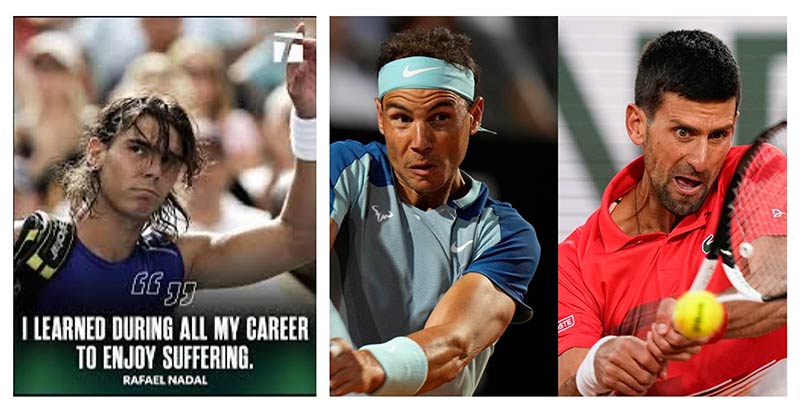
I love going all out on the tennis court. I want my opponents to do the same. Together we will have better tennis than we would otherwise have. Rafa and Novak, and their famous five-hour marathon matches, are my role models. That is why I abjure mixed-doubles: the women do not bring that same competitive fire. There are two women I know personally who do. They play like men but are unusual, noteworthy. Men want to rip the heart out of the competition during the match but almost immediately afterward are ready to share a beer and laughs. Women, in my experience, don’t enjoy that dynamic. It is too much for them. Women’s tennis at the recreational level has a different feel. Which is fine.
At 59-years of age and still competing seriously at 4.5 tennis, my challenge isn’t finding competitive fuel. I already have plenty of that. I listen to Nine Inch Nails while driving to my match, and I feel my entire nervous system preparing to go to war. The challenge may be learning how to access that same killer focus while spending less energy getting emotionally amped up. Tai Chi would put it this way: “Relaxed body, quiet mind, unwavering intent.” But I rebel against that. I have to get pumped up to be ready to suffer on the court. What is the proper mix? My best tennis is not played in a meditative trance (ie. yoga “namaste”). It’s played with a certain edge. I feel challenged, engaged, and determined. The heart rate is up. The competitive instincts are activated. I love that feeling. I look forward to it. When I wake up the morning of a big tennis match, I enjoy that nervous feeling in the pit of my stomach. I use it. I like to compete and prefer to do it in front of a crowd. “I am going to impose my game and win this match.” Love it!
Here is what I sent to my teammates as team captain yesterday before our big match (which we won 4-1):
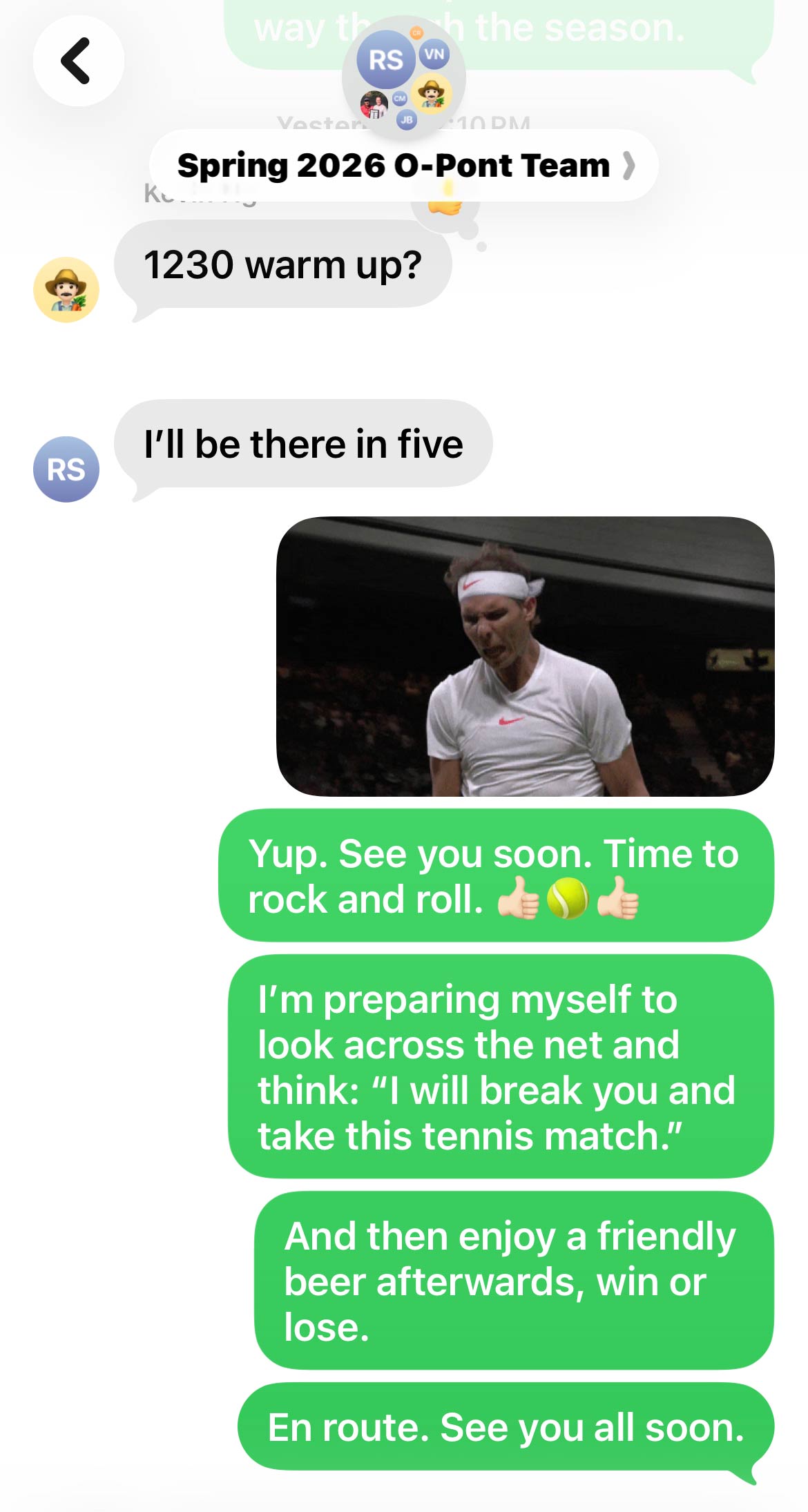
This is usually my mindset in driving to a big match. (I don’t bring that same intensity to tennis matches which are more social than competitive.)
But I wonder. This can be true: a little fire helps; a lot of fire hurts. The trick isn’t extinguishing the fire. It’s controlling the flame so it produces power rather than smoke. Hours after my match my wife noticed my left eye was twitching. Other muscles were on the verge of cramping. I have had fasciculations on and off in my left biceps for two weeks now. (What does that tell me?) Hours after the match was over, my brain was still primed and ready. My nerves were stretched taut, too taut. I was walking very gingerly on sore joints and muscles. I felt an overwhelming need to go to sleep early; the body told me, “The machine needs to shut down now!” I was exhausted, body and soul. Maybe I was too exhausted?
Is this sort of exercise healthy? Unhealthy? Both?
I was better able to endure this five or ten years ago. My recovery now is slower, much slower. It can leave me wiped out.
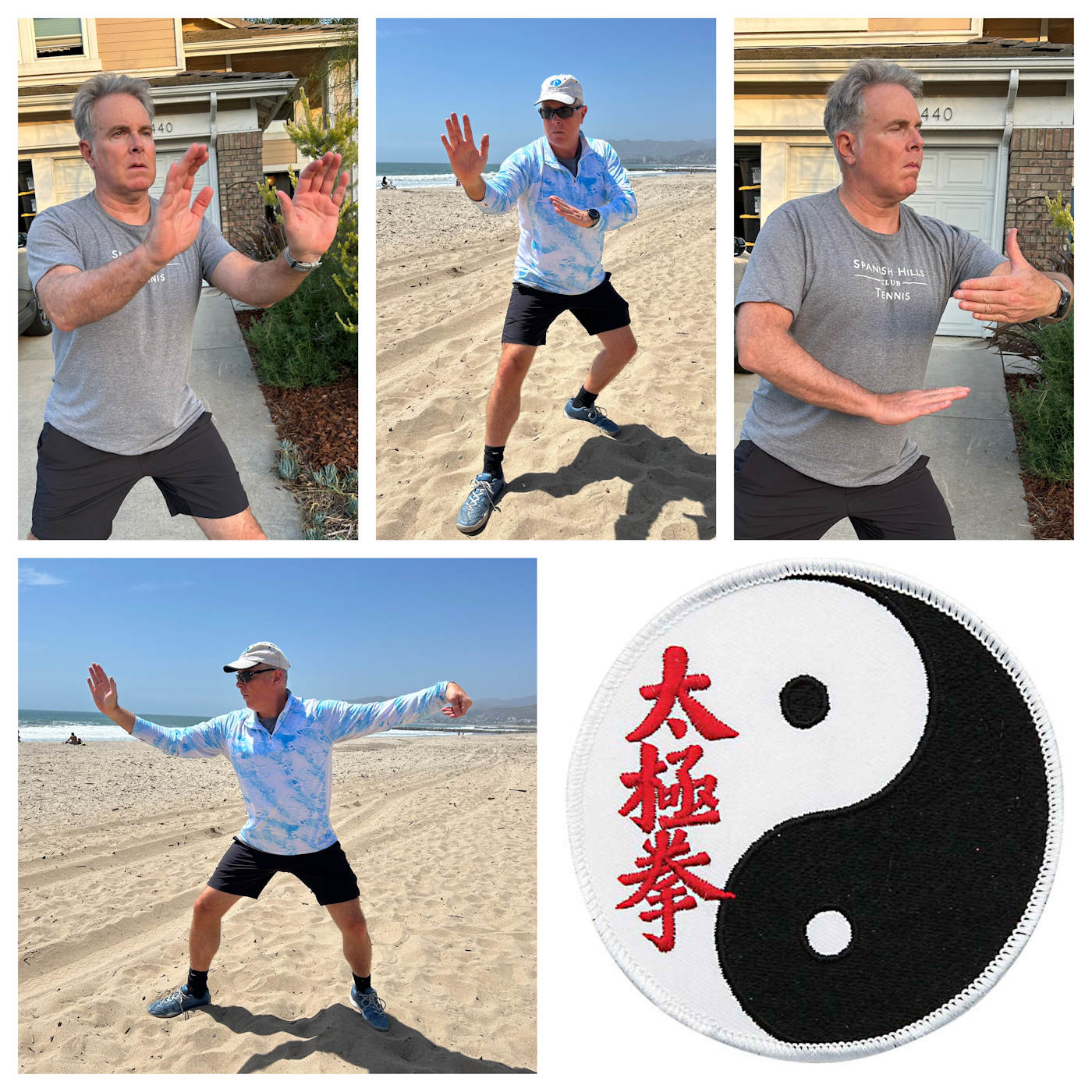
Maybe I need some balance. In fact, I know I need some balance. That is why I have my recovery swims and Tai Chi Chuan: to counterbalance the Yang with some compensatory Yin. The old Chinese adage runs:
“Draw the bow fully when it is time to shoot.
Unstring the bow when the battle is over.”
A lot of successful athletes know how to draw the bow. Fewer know how to unstring it. I have written much recently on my blog (link) about teacher burnout, Central Nervous System fatigue, recovery concerns, all with retirement on the horizon. I recognize I must manage myself differently than I did ten or fifteen years ago. My body has changed, the brain has changed. I should learn to manage this change, or the change will manage me. So Tai Chi can serve as the counterweight. Not replacing myself as the competitor but balancing me. That’s a pretty literal expression of Yin and Yang. Not choosing one side but allowing both to have their place. Tennis expresses the fire. Tai Chi protects the furnace.
One comes easier to me than the other. But everything is better when you have balance. It is something to work on, Richard.
Sustainability, equipoise, peace.
This goes way beyond only the tennis court.
Amen.