Dear Jim,
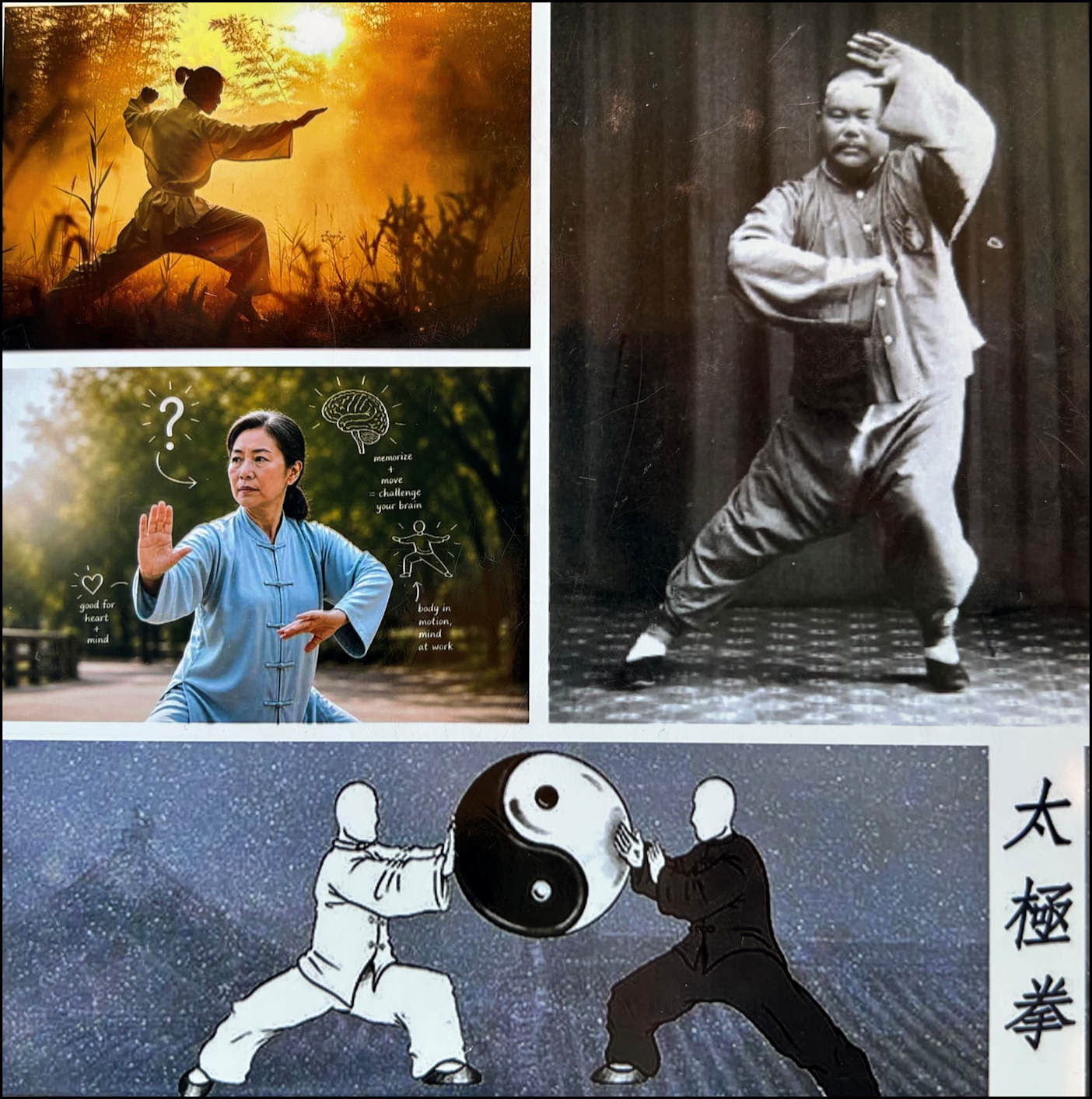
Yesterday during one of our summer visits, I performed for you the initial Tai Chi form. You looked at me quizzically afterwards and asked, “What does this do for you?” I suspect you saw me perform a short set of semi-elegant movements, and then wondered how learning or practicing these added value to my life.
That is a fair question.
Here is my answer:
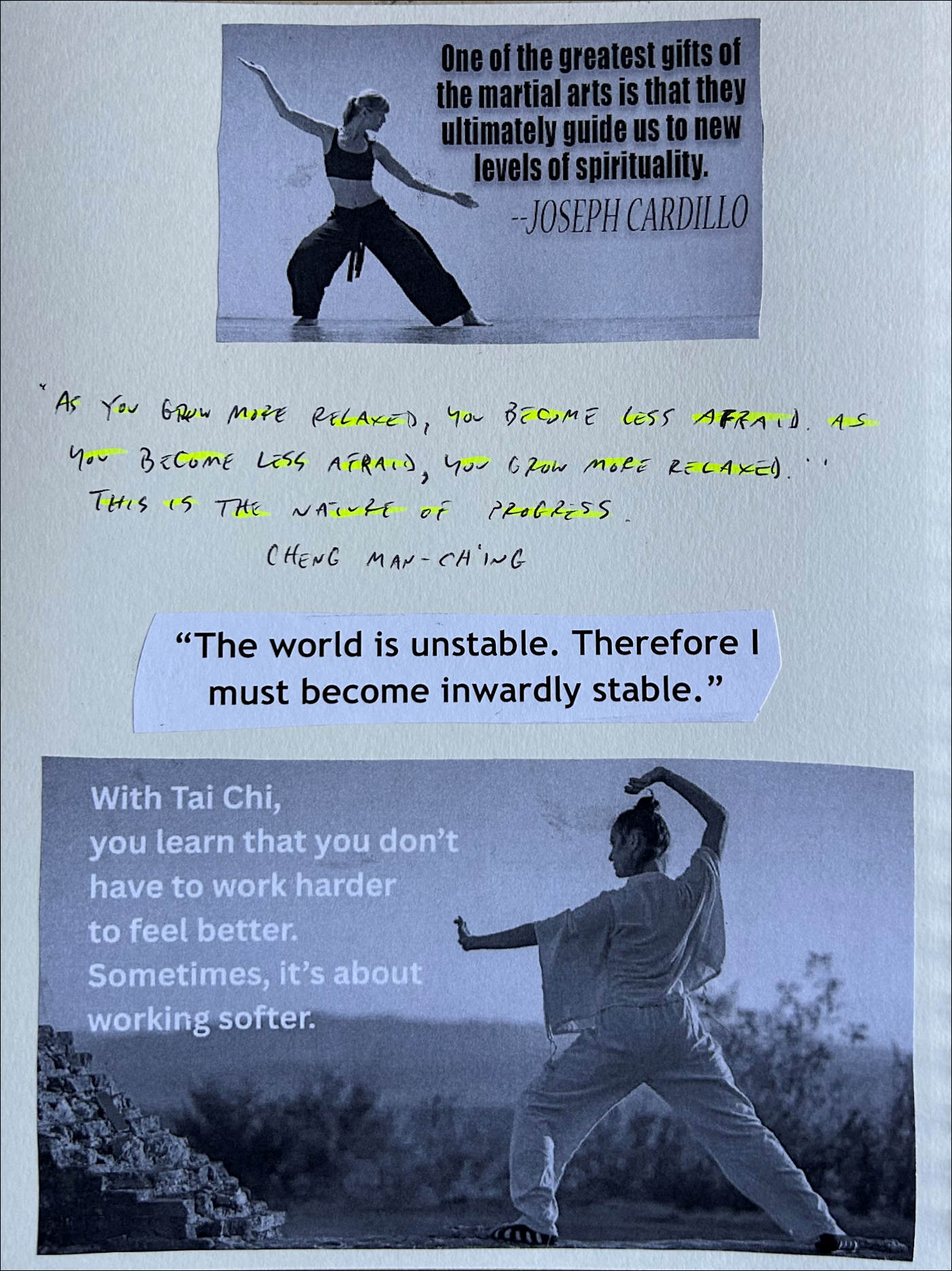
Tai Chi Chuan has become the counterweight to the rest of my life, Jim. I already have decades of tennis, swimming, biking, weightlifting, and hard-style martial arts. Those activities taught me how to generate force. Tai Chi is teaching me how to eliminate unnecessary force. This is important.
It has improved my balance, body awareness, posture, breathing, and ability to relax while still moving with intention. At my age, that’s incredibly valuable. It helps me recover from the harder things I do instead of competing with them. I’m traditionally inclined to go all out at 100%, but that is yielding diminishing returns nowadays. At 25, adding more intensity might have been the answer. At 60, balance might be the wiser investment. Through conscious effort I can move my body and respond to stimuli not “harder” but “softer.” In this way I hope to live smarter and with more balance.
I’m skeptical of mystical claims about “chi” or supernatural fighting ability. Most of the elderly I encounter practicing Tai Chi would be better served in running away from an aggressor rather than trying to use what they have learned to defend themselves. No, it is not primarily about combat. Instead I see Tai Chi as a sophisticated system of efficient movement, structure, and nervous system training. I’m interested in what can actually be tested and felt. I’m still only a beginner.
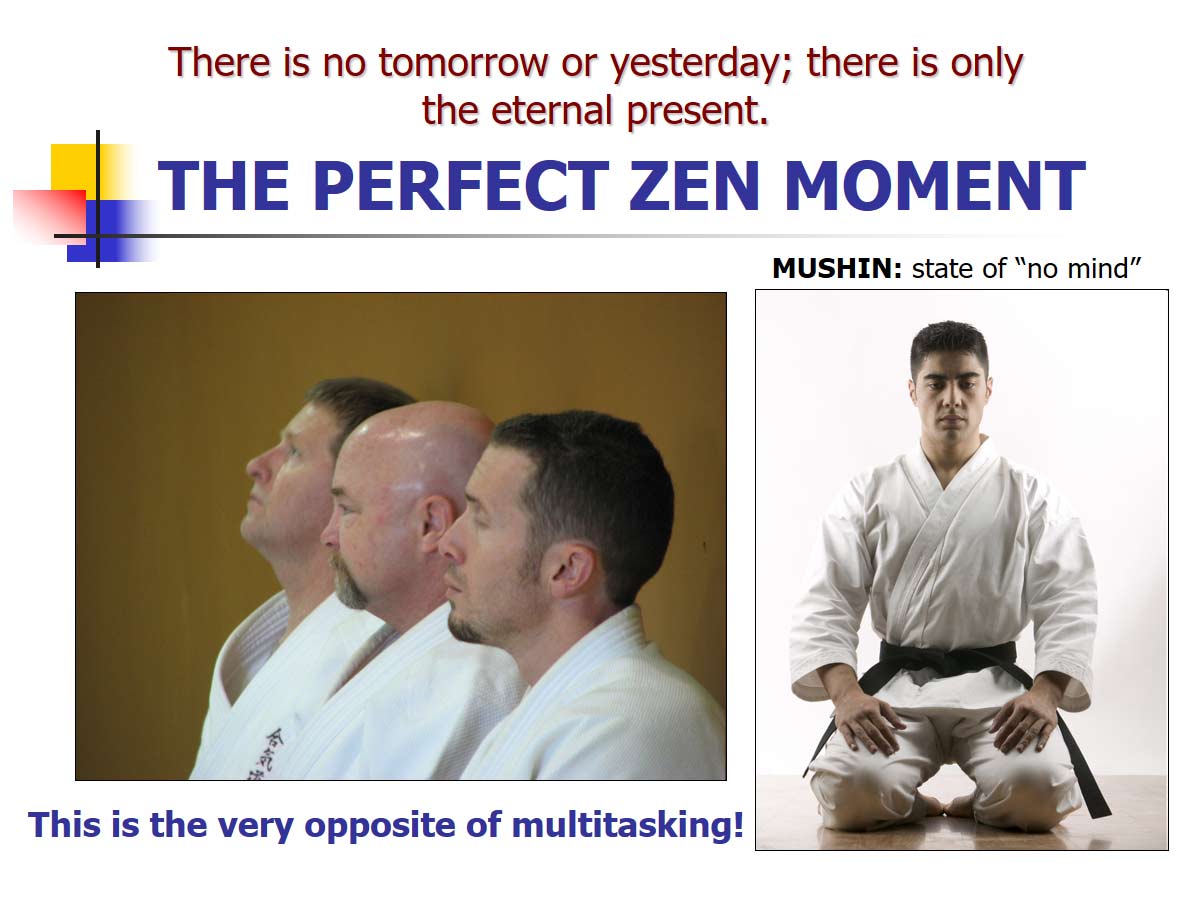
It’s also become a kind of moving meditation. Not in the sense of emptying my mind, but in quieting it. For twenty or thirty minutes, I’m completely focused on one thing. That’s increasingly rare. In a world of disembodied digital distraction ruled by artificial intelligence, social media, and ascendant anxiety, I want to live more like an embodied Zen monk focused inward on my breathing and movement – intention and calm. The year might be 2026, but I can try living like it was 1626, at least in this way. This too is a conscious decision – an attempt to regain equilibrium in a technologically advanced society which often feels chronically (frantically?) dysregulated:

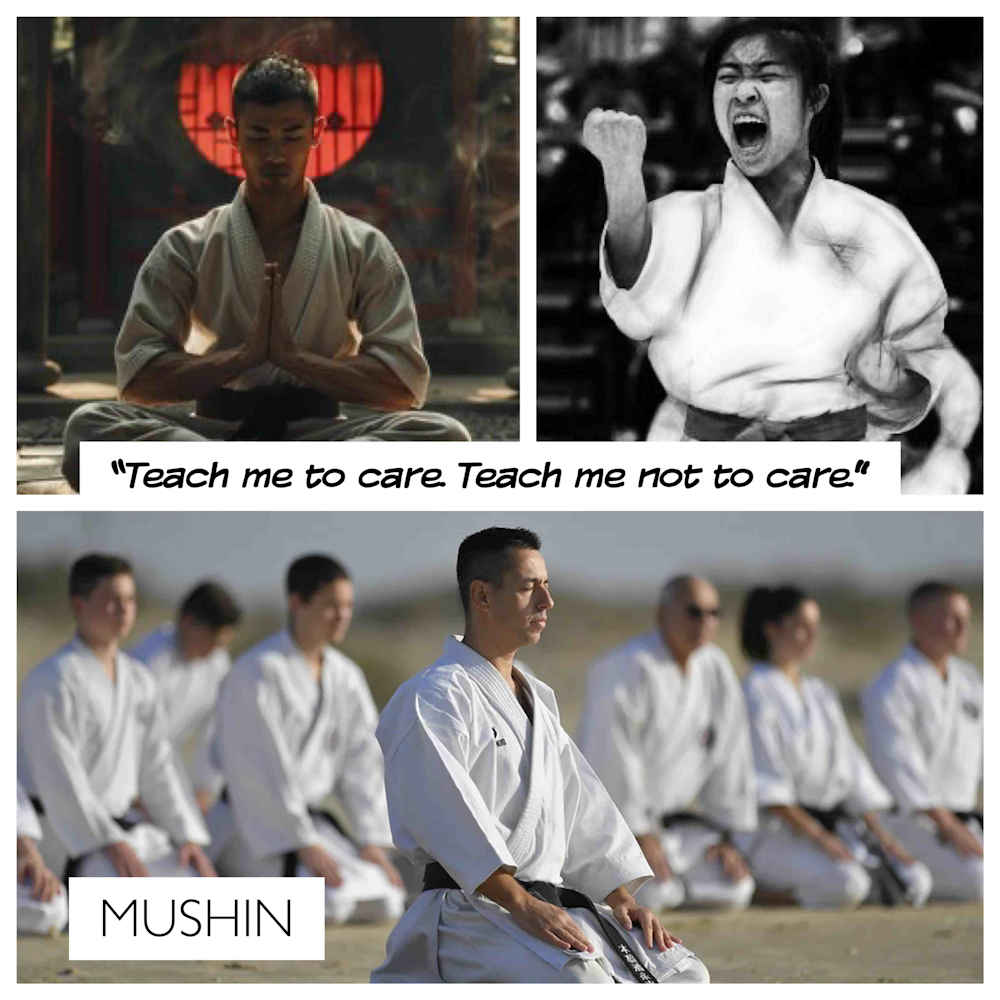
My earlier martial arts training taught me to love the grace of efficient, powerful movement. When my attention narrows and the body begins to move naturally and elegantly, I feel completely present. (Mushin, “empty mind.”) I have missed that feeling.
I’m grateful to have found it again.
I hope Tai Chi remains with me for the rest of my life, adding another dimension to one already filled with many other long-term interests and passion projects.
It is probably no coincidence that I arrived here at this stage of my life. As I get closer to retirement, I’ve realized Tai Chi is an investment in longevity. I don’t just want to be strong today – I want to move well when I’m 70, 80, and beyond. Tai Chi is helping me build that foundation. I only had to grow old enough to appreciate something like this. It took awhile.
Tai Chi is my way of “unstringing the bow.” I’ve spent much of my life striving, competing, and achieving. Tai Chi is the deliberate practice that seeks to balance that inclination. It doesn’t replace my competitive intense side – it complements it. Tai Chi protects what I’ve built so I can keep doing the things I love for many more years.
Or so I will hope.
Jim, I hope this answers your question.
Your Friend,
Richard