Rich Geib Frequently Asked Questions
(FAQ)

Below I take a stab at answering some of questions I get asked the most frequently! This FAQ has gotten ridiculously long, as I keep inserting questions over the years as they are asked of me. Some of the more prurient questions I have left out in consideration of good taste. Some of them I have left out for privacy's sake. Some of the more ridiculous questions have been included below in the hope that people will read them here and never ask me again.I have created this page so that you, humble reader, may know the slant of my mind. My thoughts being much prone to wandering, to read this URL is to come as close as you ever will to being inside my head. If you should manage to read this whole page, you will know me better than many who have known and associated with me for years. It is perhaps a hopeless task to dress a man in words and make him live again in print; nevertheless, I endeavor here to do my best.
At any rate, I hope you find something useful or interesting, or perhaps which even makes you laugh. Developing this FAQ has provided me with untold hours of creative entertainment! Being so fun to write, I suspect at least a few readers will find it equally fun to read. Enjoy!
Here I stand naked in front of the world, so to speak. Knowing this, it is unreasonable that you should wish to continue.
"Ecce Homo!" Questions or comments?, I do my best to get back to everyone who e-mails me, but, HEY!, we all get busy sometimes.
Behold the man!
last updated March 13, 2000

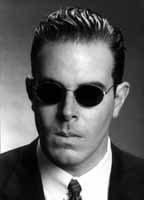
Q: Why are you wearing sunglasses in your picture? Is there something wrong with your eyes?
A: Why not sunglasses? There is nothing wrong with my eyes.Q: In all your pictures you are wearing ties. Are you really so preppy/conservative?
A: Hell no! It's just an act! I never wear a suit if I can help it! I might wear some kind of tweed professorish-thing to work, but if I wanted to wear a grey or blue suit to work everyday I would have become a lawyer like everyone else in my family.Q: Would you pose naked and post the picture on the World Wide Web?
A: Sure! I already have!On my main welcome webpage to my site, I initially wanted to post a picture of myself standing there completely naked except for that pair of sunglasses while holding an open laptop to cover my groin. I was dissuaded from doing so by friends and family.
Q: Rich, Your webpage is so extensive! Don't you have a job?
A: Sure! I did the majority of it at night while I was a full-time teacher near downtown Los Angeles. Most of the time instead of watching "Friends" or "Seinfeld" I just wrote and thought in my spare time. However, the first ten months I spent putting up the foundation of my webpage were intense and sometimes it cut into my sleep.Q: How old were you when you started this webpage?
A: 28. But there are portions on it which in one way or another date back to college.Q: Would you do it again?
A: Sure! In a minute!
Q: Don't you like TV?
A: I hate the damn thing! Yet I know if I had one in my room, I would watch it and more often than not waste my time. So I have not owned a TV for some ten years.Q: Is that a problem?
A: Not really. But sometimes between not watching TV and not liking to watch sports I feel like a stranger in my own country. I remember my students freaking out once because I thought Nick van Excel was one of the "Power Rangers." Or I will be in line at the grocery store and I will pick up a copy of "People" magazine and not have the slightest idea who are half of the famous rock stars or celebrities of the moment. In such a moment (as I said) I might feel like a stranger in my own country, but at the same time in looking at "People" magazine or something similar I have the sneaking suspicion that learning about those "celebrities" would probably not be worth the effort.Q: You don't like sports?
A: I love sports and have played them all my life. I just don't like to spend hour after hour on my ass watching them on TV! It's boring! It's like a drug!Q: What do you do at night if you aren't watching TV?
A: I like to read, write, and think. I like to stay up all night contemplating life, liberty, and the pursuit of happiness.Q: Why do you like to do that?
A: Well, I enjoy reading, thinking, and writing because I can do it anywhere, it costs nothing, it is enormously rewarding, I don't need a license or permission from anybody to do it, and, most importantly, it is fun! The best things in life (love, literature, knowledge, art, music, community) are free. Yet at the same time they are enormously expensive in terms of effort and concentration. I think one of the biggest fallacies of our time is that you can buy happiness and fulfillment. If it were only that easy!Q: But I think you do yourself a great disservice if you do not watch or even know about important cultural events such as "Seinfeld" or the NBA Playoffs! These are important events which give us as a society words and images that serve as a sort of cultural shorthand between people, providing a sense of community and belonging.
A: I am less and less interested every year in belonging to a community, as you define it, based on television or sports events or celebrity trivia. The idea that we as a society need a television show to provide us with a common point of reference to talk about around the water cooler at work sells us short as human beings with rich inner lives and imaginative insights to offer each other. I can only speak for myself, but I can think of about five thousand more interesting and more fruitful ways to spend any precious brain energy I have left at the end of the day than watching television. (And more directly speaking, I have often felt -- when a TV is running in a room -- as if an open sewer was backing up into the room.)In the end, I am only partly interested in the exigencies and quirks of our society and the people who just happen to be walking the earth right now. I am more interested in studying through art and philosophy and history that which links mankind over the ages. That to me is interesting and enriching; the caprices, circumstances, individual tastes, adventures of this actor or that public figure or this company pale in comparison, to put it mildly. If this is the flavor of our public culture, I want little or no part of it.
Q: How is surfing the World Wide Web any better for you than watching television?
A: Often it is no better, since it all depends on where you go on the Web. But that is the difference: the Web is not centralized, and it is not pushed at you like television. You can actively go onto the Web and choose what you read and view without being held hostage by TV advertising. Instead of sitting back passively and just watching, you have active control of the process. That, in my opinion, is a HUGE difference!Q: In many ways it feels like in you I have stumbled upon my long lost twin. A kindred spirit, at the very least. How I marvel (and envy) your education!
A: It makes me nervous to hear people talk about me like that - I blush a little to hear you say you "envy" my education. Trust me, we are all ignorant, myself as much as anyone. We are just ignorant in different areas. But thank you for the nice thought.A teacher friend, upon recently checking out my webpages, told me with some astonishment, "I cannot believe how well-read you are!" Such a comment makes me feel nervous and uneasy; many are the persons you will find out there who are so learned as to make me look ignorant in comparison. I told my friend as much, and she countered, "Maybe. But there are also only about a billion people who are less learned!" Both statements are probably true.
Q: In places you sound somewhat opposed to our modern world of regulations and bureaucracy.
A: True enough. I have made my peace with this world of accountants, middle-managers, bankers, salesmen and assorted other bean counters, licensers, hypocrisy and greed, but I am no lover of the status quo. Yet I honestly do not claim to know a better way to run the world. And I enjoy the comforts of technology and civilization as much as the next person thanks to those who grease the wheels and keep the machinery of modern life running. Nevertheless, I cannot help sometimes thinking I would be happier in a post-Apocalypse "Mad Max" world. Well, either that or the world of "Little House on the Prairie."Q: Isn't that kind of strange, or, at least, unusual?
A: My last roommate used to call me a "weirdo." He would come into my room and see me reading "The Brothers Karamazov" in Spanish translated from the Russian and incredulous he would bark at me: "You are a weirdo! Scratch your nuts, grab a Budweiser, go to a baseball game - be a regular guy!" I strongly objected to such a characterization, as I scratch my balls whenever they itch and did pilfer many a Budweiser from the refrigerator when we lived together.I am as big an idiot most of the time as the next person. Some of the time, I am even a bigger idiot than usual. I don't want to sound too aloof.
Q: Do you have any hobbies?
A: No. I do my job as well as I can - that takes major amounts of time. I do my best to stay in excellent physical condition - that takes major amounts of time. Finally, I listen to music intensely, read with all my concentration, write as strongly and perceptively as possible - and that takes all the rest of my time. I enjoy my friends and family in off moments. Where would I cut corners to have a "hobby"? I already wish there were more hours in the day!Q: This is an interesting, stimulating, and slightly intimidating website. This might have been a bit over ambitious, but you're actually sincere and serious (but not too much).
A: There is no reason to be intimidated by my website. Look, any personal webpage of consequence is a bit like a real person - clever and dull, brave and cowardly, beautiful and ugly. And so it is with my website. I think it sufficient here to report what I am, what I think, what I feel - all in the expectation that readers (any reader) will find my account at least remotely interesting.Q: It sounds like you have some basic differences in outlook with that friend of yours with whom you used to live. Does that ever constitute a threat to your friendship?
A: If he and I were to ever really sit down and argue politics or the concept of the ideal life, we might end up in a heated shouting match and even violence - we differ that much! But part of the subtle but important art of friendship, in my opinion, is knowing how to rise above such partisan differences and see the essential humanity of the other person. I see it as did Thomas Jefferson: "I never consider a difference of opinion in politics, in religion, in philosophy, as cause for withdrawing from a friend." Yet it seems in real life this is not so easy to do, and plenty of friendships end over these "differences of opinion!" The caluminating passage of sluttish time can afflict in a thousand minor cuts and scrapes which can combine to deface and tear down the edifice of even the most august friendship. Dr. Samuel Johnson advises us never to let a day pass without repairing our friendships which so often require self-command, maturity, patience and great generosity of spirit. I think he is right.Yet I am lucky enough to be able to say that my best friends today generally are the first friends I ever knew. This is an aspect of my life which yields ever-greater dividends with the years. As Jefferson again described it, "I find friendship to be like wine, raw when new, ripened with age, the true old man's milk and restorative cordial."
Q: But the famous 19th century Prussian General Karl von Clauswitz tells us: "There are no permanent friends; there are no permanent enemies, only permanent interests."
A: That is not permanently true. Look at how Jefferson and John Adams were leaders of bitterly rivalry political parties yet still remained the best of friends until they both died on the 4th of July in 1826! Hearty and generous spirits can rise above narrow self-interest and partisan differences.Q: Aristotle thought that goodness of character was the basis for a real and stable friendship.
A: I tend to agree, although the vague nature of "goodness of character" makes me a bit suspicious. I prefer Dr. Johnson's more specific and concrete requisites for a "real and stable" friendship: self-command, maturity, patience and great generosity of spirit. Do you understand me better now?Q: Yes. But Richard, it is the most difficult thing in the world for a friendship to last until the very end of life. Either it ceases to be mutually advantageous, or people's political views change and affect their relations with one another. And another thing that changes, he added, is a person's character; it gets altered, by the blows of misfortune or the increasing burdens of age.
A: Well said! What you say it true, but the phenomenon is perhaps not as rare as you make it out to be.Q: But how does it feel to be a "weirdo," as your friend describes you?
A: I have no problems with it. However, whenever I read the engagement announcements in the newspaper and I see a happy attractive couple about my age with the man working for an investment firm and the woman a doctor or something, I feel a little envious and isolated from the "mainstream." When I am in my hometown of Newport Beach, CA, and I run into some tanned and fit housewife in the parking lot of the supermarket in her Land Rover with her 2.5 freshly-scrubbed kids seat-belted into the back seat, I feel a little alienated. In such a moment, I wonder if I would not be happier selling copier machines or something. But mostly I feel OK.I read somewhere that a sense of alienation from the larger society is as indispensable for the writer as it is for the bank robber. I think there is truth in that.
Q: I am a writer for an alternative newsweekly. I detect in you a similar outsider's contempt for assimilation and mainstream culture.
A: I do not feel such a contempt; rather, I chose a different path in life than most. I never was personally attracted to the role of political-socio rebel Moses-on-the-rock yelling at the deluded and misguided multitude á la the "alternative" press. It is not my style. At least most of the time.Q: Somebody told me they thought you "talked too much" in your webpages.
A: Well, then let them go to somebody else's webpage that has more "X-files" information and/or naked pictures of Pamela Anderson, since that is what they are probably looking for anyway! It is not that kind of person for whom I wrote this webpage.I wrote these webpages for people like this or that - and sometimes for other teachers. I have noticed that often the more educated visitors are the ones who appreciate sections like the "Thoughts Worth Thinking" ... 'tis found most noble by the noblest. If a person can read one of the most famous love letters in history and remain unmoved, I do not much care about their opinion. I would in these webpages (and this FAQ, especially) try to frame my opinions with nuance, a moderation of my own personality, and some respect for, and faith in, my intended audience. This will either agree with one's palate, or not. End of story.
Q: No, no, I like that you are actually articulate! It is refreshing to see some intelligent commentary and writing on the web versus inarticulate rantings and links to "nekkid chicks"! I think I've scanned the majority of the page and will cruise by for the updates now and then.
A: Cool! I will try not to write anything too stupid!Q: It's proper, I suppose to address someone you never met in a first letter as "Mr. Geib." But having spent an hour or two at your Web site I seem to know more about you than about most of my friends.
A: Please call me "Richard."Q: As you wish. Finding your site is one of the spectacular spontaneities of this World Wide Web. In typical fashion it was pure serendipity: I stumbled across it while trying to get information to confirm the year of the Tiananmen Square protests. A Yahoo search turned up your China pages. I skimmed through, found confirmation of the 1989 date, but was compelled to read more--find out who put this site up and why. I was struck by your response to an e-mail from "Erin." I liked not only when you said but how you said it. It was balanced, thoughtful -- and informed.
A: Thank you. I first saw that message as I telnetted into my California account from a public Internet terminal in downtown Hong Kong, and it enraged me so much I spent a good part of my time in China formulating my response. Re-reading it months after having written it I see the flaws in the essay (re: repeating myself) but my heart, I believe, was in the right place.Q: I soon found this was the tip of an iceberg. Before long I discovered your FAQ. I was struck by your sense of perspective: someone complains that you are too indulgent with going on about yourself. No one's forcing you to stay you appropriately respond. You don't like to waste your time with TV, but you don't rant and rave against it and tell other people they should feel the same way. Kudos to you!
A: Thank you!Q: Usually when I run across "long winded" sites such as yours it is the work of some ideological extremist with an axe to grind. They go on and on attacking some perceived religious or racial or government group -- or all the above. I found your long-windedness instead clearly personal and compelling. Perhaps cathartic.
A: Thank you again! All of us sometimes, and most of us always, live in a forest of our illusions. Perhaps this webpage is an attempt through the written word to gain a higher level of self-knowledge and emerge some from the darkness of this forest. That is never easy to do; the struggle never ends. We just become perhaps less ignorant - if we are lucky and work at it. "Nobody in this world," proclaimed recently deceased writer Leo Buscaglia's father, "should go to bed as stupid at night as they woke up in the morning, and so you've got to learn something every day."Only knowledge is power and freedom; and the only pleasure that lasts is the pursuit of knowledge through learning and the joy in its discovery. They can take all your possessions away and put your physical body in jail forever, but the mind remains free to all those who would exercise that freedom.
Q: The mind can make us free! I like that!
A: So do I! I had one of the most powerful moments in my life recently during a beautiful, golden sunset at the Thomas Jefferson Memorial in Washington D.C. I stood there at the base of the monument and stared straight ahead along with Jefferson's statue across the reflecting pool of the National Mall at the concentration of pure power in the the White House, some half-mile in the distance. I then looked up at the Jefferson's thundering words inscribed in marble on the side of the Roman Pantheon-style edifice, "I HAVE SWORN UPON THE ALTER OF GOD ETERNAL HOSTILITY AGAINST EVERY FORM OF TYRANNY OVER THE MIND OF MAN!" Along with Jefferson, I think freedom chiefly a function of the mind and spirit, with the rest necessarily following behind like cold weather precedes snow.Q: You seem to like Jefferson a lot!
A: Thomas Jefferson -- notwithstanding the many areas in which I vigorously disagree with him -- has always been for me the ideal of what the life of the mind can be: vibrant, dynamic, alive. What I would not give to spend one evening's dinner at Monticello listening to Jefferson over fine wine ruminate on politics, music, philosophy, science, history, architecture!They say you can tell a lot about person by their heroes. You may judge me accordingly.
Q: Are there any people whom you especially like to visit your webpages?
A: In particular, I extend a warm welcome to "newbies," or people new to the Internet and World Wide Web. Also, I very much like to see elderly persons cruising the Web. I read an article recently about how many retirees ease loneliness and a sense of isolation with computers and have taken to the online world like fishes to water despite having to learn new technologies, etc. To those in the autumn of their lives and perhaps braced by the chill of loneliness, I consider my webpages a special gift from me to you. You are not alone in the world.And if you are ever in need of a kind word or thought, just let me know and that "word" will soon be on its way towards your corner of the Internet. That goes for persons elderly and otherwise.
Q: There are a lot of pretty lonely people in the world, eh?
A: That is sad but true. It seems to me many people live lives which are bitterly lonely; and anything which ameliorates such a tragic isolation is a good thing, in my opinion. I think a lot of these kooky millennial cults that pop up here and there find recruits in persons who feel their needs are not met by what they see as a "soulless consumer society" and so resort to extreme measures in looking for self-fulfillment. It is up to each one of us to seek out and find what works for us -- and hopefully that will not take the form of joining a cult or in sacrificing your autonomy to some self-professed demagogue-messiah! But it is all a sign of the times...Perhaps my webpages could make one websurfer per day feel a little less alienated and lonely in front of their monitor at work or at night before they turn in. That would make it all worth it. That would make me feel good - make all the work worth it. I get a goodly amount of e-mail from stressed out overachiever college students on the edge which truly frighten me! It seems so wrong to be so young yet so despondent! "Faith! Courage!" I want to scream importunately at them across the vast stretches of cyberspace.
We humans are such an embattled lot, and I just want to cry when I see the hard and lonely lives some people lead. I have lately been thinking a lot about what a heroic act it is simply to survive and to be a decent human being in this world where there is so much pressure to be the opposite. I wonder if it are not such small everyday victories like that which keep the world from going completely to hell!
Q: Lonely hard lives as the reality for many, eh? Do you think this is a new phenomenon, or the same as it always has been?
A: I think it has largely been thus always. However, in today's society more and more people move around constantly and live alone. In 1900, only 5% of U.S. households consisted of one person living alone. Today 25% of Americans live alone, and individuals live more and more unconnected to others. I am one of the 25% of Americans who live alone.Q: In living alone do you get lonely?
A: Just because I live alone does not mean I am lonely. And I could not imagine living in a crowded situation with everyone in my business; I read about those neighborhoods in cities or rural areas where people live in a fishbowl with no secrets or privacy and I think it would be my idea of hell. I think it is better to have a good blend of community and solitude. I tend more towards solitude and become more so with each year.Q: I agree with you that isolation, a sense of lack of profound contact with other human beings, seems to be the disease of our time.
A: Just because I live alone and enjoy solitude more does not mean I lack "profound contact" in my life. My friends mostly all have wives, families, careers, etc., and to see them less often is natural; but when I do see my friends it is twice as sweet for being twice as rare. As I get older, I have less of a need to live in the company of others like when I was a child; but that does not mean that my friends and family are any less important to me than in the past. And I have strong connections with many of my students.Q: But living so alone must have its costs!
A: Because solitude can be difficult does not mean it is unworthy. Yet I have read studies recently claiming that living alone brings with it negative consequences: that woman who feel "isolated" are three-and-a-half times as more likely to die of breast, ovarian or uterine cancer; that men who feel their wives don't love them suffer 50% more angina; that male medical students who don't feel close to their parents are more likely to develop cancer or mental illness years later; that heart patients who felt unloved had 50% more arterial damage than others who felt the most loved; that unmarried heart patients who live without confidants were three more times likely to die within five years; and that heart-attack survivors who live alone were more than twice as likely to die within a year.This all gives me reason to pause and think. However, another part of me thinks that the most "comfortable" life is not the one I want to live. If I wanted to live a "healthy" life, I wouldn't work with teenagers as a teacher. I reflect on the trauma and tediousness which often is teaching and the daily stress... the adrenaline, noradrenaline, cortisol and other stress hormones that routinely flow through your body in the hundred minor crises which develop in a classroom everyday. That is the stuff which will kill you! Yet I would not change my choice of career. And who wants to live forever?
Q: I believe the net effect of modern technology has been to pull us into our homes and into darkened rooms by ourselves, where we're not interacting with other human beings. The characteristic of modern technology -- this is partly television and partly the Internet -- is to privatize our leisure time and thereby weaken our civil society as we become strangers to each other.
A: I think you overestimate both the effects of technology on things such as friendship and citizenry and overrate the need for people to live in each other's laps to belong to a community. But I think you may have a point: The world is smaller yet more splintered every day, as I hold a conversation about art with someone in Buenos Aires via a worldwide communications network yet don't know the name (or even face) of the person living in the apartment next to me! People searching for happiness, and having trouble making human connections! On the other hand, I never was big on getting to know my neighbors - none of them ever showed much interest in discussing philosophy or poetry! (And remember what I said about my idea of hell being to live in a dense inner-city neighborhood or small rural town where everybody was into everybody else's business.) I like my solitude and my privacy! I like living in Los Angeles where even surrounded by people you are alone! I never wanted to join a bowling league or participate in a reading club! I like bowling alone!Q: But is this webpage - which is public and not private, after all - not an offering to your neighbors?
A: Yes, but it is the public offering of a rather introverted neighbor who was always better expressing himself with words than anything else. I would offer it to them in the same way Petrarch and Boccaccio held public poetry reading of Dante's poetry in the Florentine piazzas as the Dark Ages came to a close and the Renaissance began.I read recently of a remarkable individual who got a donation of thousands of books of poetry and then proceeded to drive around the United States in a van for six months handing them out for free on the streets and cafés to the ordinary citizenry. This webpage is my way of doing the same thing. I, like Emerson, feel like hugging a stranger when I see them reading a famous book on the train!
Q: But it is posted to the World Wide Web! You offer your webpage also to those who are neither countryman nor immediate neighbor?
A: Of course. I would humbly present this very personal webpage to all citizens of the earth - to anyone who would take the time to read it.Q: There is in man's nature a secret inclination and motion towards love of others, which, if it be not spent upon some one or a few, does naturally spread itself towards many, and makes men become humane and charitable; as it is seen sometimes in friars.
A: Maybe you are right! Perhaps if I were married and had a family I would not have this webpage!Q: Every man who reads knows how to read has it in his power to magnify himself, to multiply the ways in which he exists, to make his life full, significant and interesting.
A: I completely agree.Q: I used to read philosophy, history, etc., but now it seems that I only have time for technical and work-related literature. I'll come back here from time to time to get nuggets from great thinkers of the past and present. (Don't tell me to read books instead. I know!)
A: Yes, that happens when we become adults and have all the responsibilities, duties, etc. of career and family. Your comments remind me of some men who when they were young found nothing more sublime in the world than to write love poetry to a beautiful woman, wine and dine and seduce and fall in love with her, etc., but when they reach middle age discover that they prefer making money and amassing prestige and power. Such men come to prefer a trophy wife or to simply buy sex rather than have to earn it through actually becoming emotionally involved. But you never truly get the pleasure or the pay back unless you put in the work and personally invest yourself.Not that I say any of this applies to me! I just am trying to say - in a roundabout way - perhaps we all need to discipline ourselves and make room for the arts and that which is tender and best in us. I understand fully well that by the end of the long, awful workday many or most of us aren't looking to be uplifted, except perhaps into bed, through "difficult" reading and thinking: this of course dictates so much of the trashy television and pithy novels produced by the commercial powers that be in terms of supplying an existing demand and giving the people what they want. However, if one is (as the expression runs) what one eats, then the same is doubly true for reading and thinking: "For as a man thinketh in his heart, so is he." My mother described the direct relationship between what one chooses to run through the mind and what comes out thusly: "Garbage in, garbage out!" As Emerson claims more grandiloquently, "What is life but the angle of vision? A man is measured by the angle at which he looks at objects. What is life but what a man is thinking of all day? This is his fate and his employer. Knowing is the measure of the man. By how much we know, so we are." So the dreamy idealist in me hopes that we might fill our minds with better thoughts and nobler ideas rather than with the "trash" which is so drearily omnipresent in contemporary America's "entertainment" culture and its drugs of choice -- celebrity worship and easy money. As Thoreau once said, "Read the best books first, or you may not have a chance to read them at all."
Q: I noticed a typo here and there. It doesn't look good; and even small mistakes distract the reader, and at worst detract from the argument.
A: Give me a break! This is a one man operation here and I have no editors or proofreaders. I would urge you to read my webpages without an overly captious eye; don't let minor errors cloud the larger effect.Q: Fair enough! What do you sound like?
A: I sound like this.Q: What is your motto?
A: The following phrase by Johann Wolfgang Goethe: "One ought, every day at least, to hear a little song, read a good poem, see a fine picture, and, if it were possible, to speak a few reasonable words."Q: I see you like classical music. Do you have any advice on enlarging my tastes beyond what I hear in the elevator? I listen to a lot of classical music which I don't like.
A: That makes two of us! I listen to a classical music station when I answer my e-mail at night and half the time I barely pay attention to what they are playing - and God knows a lot of it is pretty terrible (Stravinsky, Schoenberg, etc.), but they do play lesser known gems that grab you by the throat! I write down the names and then later go buy that music. That is the best way I have found to expand your knowledge of classical music. Going to the store and blindly buying unknown music from a composer you like often just results in a waste of ten bucks. This I have learned the hard way. And don't ever buy those pathetic "Mozart for Breakfast" or "Dvorak for Dummies" compilations! Take your time and learn the music whole.Q: But isn't your whole "Thoughts Worth Thinking" section nothing more than a compilation of some of the most famous literature, philosophy, and art?
A: Ouch!! You have a point! Yet it is the nature of the web that I am not going to be able to list many of the works in their entirety. Who is going to read the entire "History of the Peloponnesian War" or "Federalist Papers" on one URL? I have tried to give readers a taste hoping that they will go out and becomes gluttons.Q: You seem to really like classical music. Who is your favorite composer?
A: That would have to be the master, Johann Sebastian Bach.Q: Why?
A: Well, that is a hard question to answer in a few words. It is very personal. The more perfect instances in J.S. Bach's "English Suites" and other pieces for me hearken back to a time when music was tenderly severe - an ancient discipline mastering feeling, an art proud and austere while not descending to pity or bathos, challenging me to raise my own mind to reach its level. As poet Adrienne Rich lauded the music of Bach, "...A too-compassionate art is half an art. / Only such proud restraining purity / Restores the else-betrayed, too-human heart." Unique in this time of art (especially music) lacking integrity and profundity, Bach does not pander to his audience nor does he offer the cheap thrill. I envision Bach laboring his whole life in relative obscurity as a rural church organist searching out and expressing through the terminal end of his numinous music the dim outlines of the Forms and Ideas and Forms of Plato, the God of Christianity - the vague and veiled truth looming in the penumbra of the human soul.Bach's repertoire covers the gamut of emotions and is a hearty meal one does not devour and process lightly or quickly. The felicities of the structural logic in Bach's best music gives rise to qualities we perceive as atmosphere - introspection or loneliness, melancholy or exuberance - depending on the certain moment in a piece as profoundly varied as "The Goldberg Variations." This complexity is why I have listened to the genius of Bach my entire life without in the least tiring of his music. I needed to study certain of Bach's most difficult and abstract works -- "The Art of the Fugue," for example -- in what has probably amounted to thousands of listenings over years and even decades before I began to truly appreciate it as it should be appreciated.
Q: No Beethoven in your Top Ten list of music? No opera? Have you lost your mind!?!
A: I prefer the more complexly delicate chamber and court music performed for small intimate gatherings to the more bombastic operatic and symphonic works written for larger public concerts. In other words, I prefer nuance and subtle polyphonic counterpoint in music to the overweening force of emotion and dramatic showmanship.This is of course a generalization; rest assured the music of Beethoven, Rachmaninoff, and Tchaikovsky often issue forth from my CD player. But my heart of hearts resides with the old masters Bach, Pergolesi, Mozart, Vivaldi, Couperin, Handel. I rarely - if ever! - will listen to an opera by Rossini, Puccini, Berlioz, or Wagner from beginning to end.
Q: Do you like the 20th century atonal classical music of Alban Berg or Arnold Schoenberg?
A: Yuck! That cacophonous music sets my teeth on edge, gives me a headache. No, I don't like it much. Harmony has been the glue of Western music since the Middle Ages; and with the advent of atonal music, I see classical music in the 20th century as having entered a new Dark Ages where extreme abstraction has caused it to lose its audience. It as if having a pleasing melody is retrograde and passé! Why?Honestly, I can after various listenings achieve a certain intellectual appreciation for a piece of modern atonal music. But it never will, like Beethoven or Mozart or Wagner, make me cry at its beauty or tragedy. It will never raise me up so high, like Handel or Bach do in their best sacred music, that I look down on heaven! Atonal music is entirely an intellectual appreciation, in my opinion.
Q: Do you ever go see live classical music concerts?
A: Yes, unfortunately. There is nothing more depressing than going to a classical music performance and looking around the audience and seeing only two or three persons my own age - in a sea of gray hair and coke-bottle glasses of a great multitude of elderly people! What is it about classical music that makes young people today spurn it? Is it because it takes patience to properly appreciate? Is it because subtlety and finesse are lost in an age where music is loudly "in-your-face," designed for immediate gratification, and written to appeal more to your gut rather than your soul?Q: You referred to Plato? I tried reading some of his stuff and it was pretty hard to understand.
A: That's true. But it is precisely because it is hard that I like it. Francis Bacon said that some books are "to be tasted, others to be swallowed, and some few to be chewed and digested." I like those few books which takes years to read well. There are a handful of books which I have read many times in my life and never failed to find fresh insights and wisdom as I mature myself. That is why I like books like Plato's "The Republic", Dostoyevski's "Crime and Punishment" or Tolkien's "The Lord of the Rings" and dislike almost everything by John Grisham, Danielle Steele and Sandra Cisneros or writers like them.Well, it is not like I dislike them; I simply find them to be lightweight. Their books are like Chinese food that pass through my system in a couple of hours and leave no trace in their wake. Their art does not nourish for a long period of time, and I never hurry to return to them.
Half the time I absolutely hate what Plato has to say; I am never indifferent.
Q: Com' on, Rich! All that stuff is ancient history (re: Plato, Dostoyevski) and does not speak to us in our unique social circumstances. We need to look at authors primarily in a social context. Haven't you kept up with all the latest theories of Derrida and company?
A: I think the idea that all text is "social" and must be "deconstructed" and understood apart from the intention of the author one of the most desiccating and dispiriting ideas to recently come out of postmodernist miasma of the universities (and that is saying a lot!). I have little or no patience for all those fashionable theories of academic criticism which are so divorced from real life and contain such contempt for ordinary readers; we struggle desultorily amidst a flood of clever literary critics, and then good books die on the vine due to a drought of serious readers who simply enjoy reading! How did we get to such a pass? Who will lead us out of this dessert?I am a romantic in that I look for authors who speak directly from their soul to mine and seek to pierce the veil of this world into a parallel universe, where truth is beauty and beauty is truth and lives forever. This is why I like Shelley and Keats so much. It is difficult literature which is hard to understand and requires me to really raise my own level of thinking up to that of those authors, but it gives me a lasting enjoyment and spiritual nourishment which I do not get from reading the newspaper, Time magazine, Tom Clancy, or Alice Walker. And I firmly believe we can read enjoy literature without having to "decode" it.
Q: Your laggardly approach to self-intellectualization leaves a great deal to be desired. All right-brained wussy glop and sentimental idealization. You need tons more analytic and "real world/how things really happen/how things really get done" fodder for your brain to chew on.
A: I have lived in the "real world," as you call it, ever since I graduated from college and bitterly have found it to be mostly a great disappointment. As a child they tell you that love makes the world go around; I have discovered that business and taxes mostly do that! So much of "how things happen" in this world revolves around mere appearances, pointless striving, chasing of money, etc. I should like to concentrate on what is ultimately more important in the spiritual rather than material world. It are the forms and ideas which last, not objects and possessions.And my "self-intellectualization"? I don't even know what that means!
Q: Greetings; I have some questions to put to you, it is up to you to answer them. I hope that you have the time, but if not, no loss... When you think about writers, do you ever compare? For example, do you have favorite, or at least, some that you esteem higher than others? If so, what is your value system?
A: I have no secret scientific "value system" for rating or comparing writers. I think that a bit foolish; and I have never gotten too excited about the battles on who should belong to the literary canon (even as I regret the politicization of literature). The best writers speak to my soul and I respect that connection enough not to look too closely into why that is the case. Art in the highest realms, in my humble opinion, is a sort of miraculous human conversation across the centuries where we can pierce the veil of the merely physical world and see into a parallel universe where truth is beauty and beauty is truth, imitations of immortality being made accessible through use of the imagination. Although patterns emerge, I think it is ineluctably subjective to rank writers able to do that; there is no such thing as a neutral "values system." So I can only speak for myself.It would be difficult to say who is my favorite writer.... each is special in his or her own way. I think Shakespeare the most amazing through the sheer volume of his eminently readable prose and verse; it all begins with him. (To sit down and read in one sitting all of Hamlet is for me a singularly terrifying experience!) Perhaps Steinbeck is the closest to me personally, and I live in somewhat the same area as did he and feel him in the hills of California and laconic wisdom of the men and women I meet in the streets and so much of what is right and true in the world. Whitman sings the body electric with his barbaric yawp; Emerson rarely fails to leave me simmering; Montaigne is a never-ending font of wisdom; and I never fail to return to Plato and the eternal questions he raises. The same with Dostoyevski and Tolstoy and a constellation of minor geniuses... but always I return to the English Romantics of Keats, Shelley, and Byron when in need of inspiration. Franklin, Jefferson, Lincoln, Pericles, via Thucydides for me make the most inspiring res publica reading. I could go on all day. All serious reading being re-reading, I chew and chew again on many of these difficult thinkers and poets year after year without tiring of them or feeling that I have exhausted or fully understood their genius.
On the other hand, many are the readers and thinkers I do not like. Although I read them, I do not come back to them again. I prefer to let my silence with regards to them speak my judgement.
Q: The first thing naturally when I enter a person's study or library, I look at their books. I get the notion very speedily of their tastes and the range of their pursuits by a glance round their book-shelves.
A: I agree with you completely! And I do the same thing!This can also be a source of amusement: Look in the library of a beautiful house lavishly furnished with the best furniture and accouterments, and you most likely will also find a substantial library of quality leather-bound "classics" lining the wall. Nine times out of ten you will find the tomes are for decoration more than for use, as it becomes apparent the owner has never even opened the vast majority of these books. It is folly to think you have acquired great learning by simply buying a large library. On the other hand, it is obvious that to inspect a man's library you see a portrait of his mind. In their library one descries a person's interests, quirks, and beliefs much better than one would do through their conversation! You look at the books on the shelves and feel a sense of accomplishment in what you have read, as well as humility in the books you haven't.
But then, you ask, what of a person who has no books in his room or house? Yes, there be some such people, but I have problems taking them seriously past a certain point. "A room without books is like a body without a soul," as Cicero said. Aldous Huxley correctly claimed, "The proper study of mankind is books." And a society without any book learning is never going to progress past a certain level.
Q: You know what? I spent twelve years in the American educational system and I studied nothing of Plato. Is he really that important a thinker? Is the historical city-state of Athens that important to us?
A: Look at what other seminal thinkers have said about the literary, artistic, and political legacy of ancient Greece. A. N. Whitehead said, "The safest general characterization of the European philosophical tradition is that it consists of a series of footnotes to Plato." Oscar Wilde claimed, "Whatever, in fact, is modern in our life we owe to the Greeks. Whatever is an anachronism is due to medievalism." Shelley, in his grandiose way, tells us, "We are all Greeks..." Of course the modern American multiculturalists would claim that the African, Asian, and pre-Columbian Native Indian cultures are as important in the civic religion of the United States as ancient Greece. That is ridiculous.I was never taught anything about Plato until college either (and I learned precious little about him even there). And this fact, in my opinion, is as powerful an indictment of the modern American educational system as can be found. We have currently in the humanities a curriculum characterized by style over substance, cultural criticism instead of literary criticism - all overburdened with political considerations and rampant mediocrity (and worse). But again there is always the library. Longfellow tells us, "The student has his Rome, his Florence, his whole glowing Italy, within the four walls of his library. He has in his books the ruins of an antique world and the glories of a modern one." But then a person who can read but doesn't hardly claims any advantage at all over the rank illiterate. "The man who does not read good books has no advantage over the man who can't read them," exclaimed Mark Twain.
After his inauguration as President of the United States in 1933, Franklin Delanor Roosevelt went to see Oliver Wendell Holmes Jr. at his Washington DC home. A retired Supreme Court Justice, Civil War hero, and aged 92-years old at the time, many considered Holmes to be the greatest living American. Roosevelt found Holmes in his study, pondering over one of the dialogues of Plato. "Why, Mr. Justice, are you reading Plato?" asked Roosevelt. What he wanted to say is this: why, at your age, are you studying Plato? "To improve my mind, Mr. President," Holmes replied. How perfectly put! You can buy a Plato's "Symposium" for almost nothing at a used bookstore and benefit greatly from its timeless poetry about the ennobling power of love, but most people are unwilling to put in the time and effort to read a difficult, complex writer. John F. Kennedy once wrote: "A man may die, nations may rise and fall, but an idea lives on." But the ideas only live on if new generations take the time to learn them. Enough said.
Q: We would do better to ignore and move beyond Plato. He is a totalitarian, fascist, and a sexist!
A: So it might seem at an incomplete investigation of his philosophy. Plato is almost all things to all people who read him closely, as almost all present day polemics can find their roots in a book like "The Republic". "Plato is philosophy, philosophy Plato...," Emerson tells, "Out of Plato come all things that are still written and debated among men of thought." I think Emerson correct in spirit if not in fact when he took Omar's compliment to the Koran and awarded it to "The Republic": "Burn the libraries, for their value is in this book." An education without a foundation in Plato will always be woefully incomplete, in my opinion. And like all complex thinkers of any depth, Plato resists being buttonholed in one category or another; nuance and subtlety have a way of cutting across ideological borders and partisan lines. And one learns even from one's enemies, if they have something to teach.Q: But I was taught in the university that such an idea was "essentialism," and is nothing more than the ruling class's way of defining truth to its own advantage. In the real world, every group has its own consciousness of truth, which it then tries to impose on everyone else. We need to aid the powerless of the world by undermining old authors like Plato!
A: Hogwash. And, yes, I plead guilty of the "essentialism" your professors taught you was a sin. I ultimately care only about the permanent things of humanity and think them to be pretty much the same in all cultures and times. The shapes and appearances change, but the soul of the matter stays the same throughout different historical periods and divers societies.Q: A wonderful stylist of course, is Plato; but have you ever been convinced by anything he said?
A: Very little -- but that ultimately does not matter very much. Plato and Socrates (whom we see only through the eyes of Plato) set the mold; it is left for us to wrestle with this and then to fashion our own ideas and beliefs -- living "examined" lives of contemplation and struggle. Remember what Justice Holmes said about improving your mind through study...Q: What about Derrida? Sartre? Foucault? What about Lacan, Kristeva, Baudrillard and all the other most "advanced" and fashionable literary theorists from France?
A: They only make me wonder how the long and distinguished French literary tradition could have descended to such drivel from the lofty heights of Zola, Dumas, Hugo, Rousseau, Voltaire and Montaigne. I consider all that French intellectual verbiage so much sound and noise signifying nothing. Or to put it more plainly, look at what you have when you take away all the jargon and artificial pseudo-speak language: nothing. I think one could get as insightful a point of view in talking with the bartender at the local watering hole. I have studied their ideas enough to have come to that conclusion.Jacques Lacan, for example, borders on the absurd descanting on the power of the penis in the following unfortunate psychobabble:
"It is thus that the erect (male) organ comes to symbolize the place of climax, not in and of itself, nor as an image, but insofar as it is the missing part of the desired image: that is why it is equatable with the square root of minus one of the highest significance produced, of the climax which it restores by the coefficient of its utterance in the function of a lack of signifier: (-1).''No ordinary blockhead could think up such nonsense; for this, we need a European intellectual! I can see Voltaire turning in his grave and spitting with contempt over how the mighty intellectual tradition of France has descended to such gibberish. No wonder the world no longer speaks French! Clear writing should be the result of clear thinking; the converse is also true, as evidenced by the preceding quote.
And it is not only French intellectuals. For example, I just read the following literary gems in a scholarly publication devoted to protesting the American globalization of commerce and politics. A Masao Miyoshi, trying to define globalization, calls it "an untotalizable totality which intensifies binary relations between its parts." Saying the power of capitalism around the world can withstood, Enrique Dussel writes, "The globalizing world-system reaches a limit with exteriority of the alterity of the Other, a locus of resistance from whose affirmation the process of the negation of liberation begins." Chinese author Liu Kang defines nationalism thusly: "An ensemble of discursive practices, functioning through interaction between historically changing fields of struggles and habits of discrete dispositions, in which ideologies are legitimized and delegetimized." Look at that ! We should not be surprised if the ideas of such thinkers have lost touch with reality in equal proportion to their prose.
Creating mountains of abstractions in the breezy lairs of their intellects, the activity of too many scholars today has descended into game playing with linguistics that has lost sight of what is really important, and they have forgotten how to transfer any real understanding they do have to others. They have lost the ability to speak to people and communicate their ideas effectively and artfully; most interestingly, they have effectively silenced themselves by over-specializing and employing the jargon of the other five professors who can understand (even if no one else can) what they are trying to say. And these are the "intellectuals" supposedly holding the standard for our civilization today! How sad. And these trends -- so often having been ensconced in American university faculty departments, exported from there through the academic world, and then being ignored by everyone else -- have their origins originally in France...
Q: But France is a great country still! As Charles de Gaulle proclaimed, "France is not France without greatness!" The world can learn much from France today --
A: -- How?!? What, besides cheese and wine and clothes, does 20th century France have to offer for imitation? A glorious military record? A fluid class structure? An economic policy based on reality? The 1998 World Cup victory?Let us be frank: the glory of France lies in its distant past and not relative present. There is nothing more sad at the end of the 20th century than watching the French wallow in an identify crisis ("la fin de l'exception française") amidst an English-speaking sea of globalization. This reality makes for painful memories of Napoleonic glory in an age when "intellectual" and "French" were synonymous.
Q: That's interesting - but such a view probably won't make you popular in France. Hey!, didn't you buy me a drink once at "Bob's Frolic" in downtown Hollywood off Wilcox St. and the Boulevard?
A: It's entirely possible.Q: Was that you on the table there doing the Macarena?
A: Not a chance in hell that was me.Q: If you could ask God one question, what would it be?
A: Why do men reach their sexual peak at 18 and women at 37? Is it a joke, or is God trying to mess it all up for us?!?"I love younger men," said singer/entertainer Madonna recently. "They don't know what they are doing, but they can do it all night long." Very perceptive.
Q: That reminds me. Do you know where I can get any of that Viagra drug which supposedly increases sexual potency for men? Didn't you use to sell it in the back of that bar "Bob's" in Hollywood?
A: No. And you cannot prove it.Do you take Viagra?
A: Yes.Q: Do you worry about the side effects?
A: No.Q: Would you throw away your Viagra if it caused tooth decay?
A: No.Q: If it caused horns to sprout from your head?
A: No.Q: If it caused asteroids to smash into earth, devastating cities but not yours?
A: No.Q: We men are such beasts! What we won't do for sex! But it seems kind of pointless to take drugs to increase your sex drive. I mean, most men are incredibly horny as it is without artificial assistance. For example, can you imagine President Clinton taking Viagra?
Q: The idea is frightening! Have you ever bought and used Viagra?
A: No, I haven't. I strongly suspect my money and time would be more efficaciously invested in romancing a woman with wine, song, and attention.Q: What do you admire most in people?
A: Idealism, tempered by a strong dose of reality.Q: What do you admire least?
A: Illiteracy.Q: What is the worst thing that has ever happened to you?
A: Lose respect for myself of lose hope in the future.Q: What is the best thing that has ever happened to you?
A: Enjoy the fruits of some project which cost years of effort to complete. Fall in love.Q: I am a screenwriter who lives in Hollywood. I never heard of that "Bob's Frolic" place you mentioned. Do you ever go to any of the popular Hollywood retro-style cantinas like Skybar, Tempest, C Bar, El Carmen Café, Akbar, Lola's, or Les Deux Cafés?
A: No, never. Those places are full of cellular phone bearing "industry" people hanging out to exchange information about scripts, deals, hirings and firings. "Bob's Frolic" is populated by booze hounds, illegal immigrants, heroin addicts and wannabe rock-and-rollers. They are very different scenes; and I always felt more at home at "Bob's" where I can just sit in the corner peacefully and enjoy my drink without the pressure and stress of all the "right" people looking each other up and down appraisingly.Have no idea about any of those places? Think about the aristocratic salons of 19th century Romantic novels where witty people came to make clever conversation and hear the latest buzz about who is hot and who is not: I would prefer to be any place but there.
Q: But all us young people who move to Hollywood are trying to make it big somehow in the entertainment business! You and I are of a generation that was raised on movies, computers and video games! Why end up trapped in some low paying dead-end job you loath?
A: Yes, we did grow up that way. But I do not loath my job.Q: But why not get rich and be powerful as a part of the entertainment industry which is our country's biggest export extending to every corner of the earth where one finds televisions, VCRs, or CD players? Why not be at the heart of the global message center? Why not one day pay cash for one of those big houses up in the hills with the pool and the panoramic view? Why not be a player with your name in the news shows?
A: Because I do not want to.I don't want to hang out with the rich and the powerful and live in a palace. I do not want to be a "celebrity" or have my life smothered under the klieg lights of the rapacious mass media. I didn't go to Hollywood to "make it big" but to teach in the ghetto. And nothing would make me more happy than to perhaps one day write a book people still find worth reading five or six decades after it was written.
Implicit in your question is that we are what we earn, our body and spiritual worth equivalent to our gross net. Perhaps it is true with some people are conditioned to accept that our identity is tied to our jobs, of course. In this respect, I am no different. I am a teacher, and that affects vast regions of my non-professional life. Nevertheless, I could never make the next leap to believe, as do some, that the value of a human being is estimated by what he or she can buy and then consume. Money, power, prestige -- these may or may not be good things, but they do not in of as themselves guarantee you happiness or fulfillment. Maybe you lose sight of that, Mr. House in the Hollywood Hills with the Panoramic View.
Q: Write a book?!? Man, books are so passé! So boring! Video and music and images and the beat is where it's at nowadays --
A: -- enough already! We agree on next to nothing, and nothing will come of nothing. Let us agree to disagree and follow our disparate paths. You like to frequent the scene at Skybar and I prefer the crowd at "Bob's Frolic." That say's all that need be said.Q: I see you grew up in Newport Beach? You must be a rich kid!
A: Yes, I was lucky enough to grow up in an upper middle-class household. But there have been times in my adult life when I have been very poor and that is a deeply humbling and humanizing experience. Everyone should be poor at some time in their lives as the world appears very differently from that perspective. "The poor man is never free; he serves in every country," said Voltaire. We Americans especially lose sight of this.Q: Would you apologize for welfare fraud, street crime, child neglect and other misbehavior by some poor people?
A: I would neither apologize nor defend poor people or their actions per se and I am neither a district nor defense attorney. I would only suggest that while life is not easy for anybody, it is perhaps hardest and saddest of all for the poor. Using my own eyes, this is what I have observed.Q: Are you defending affirmative action or rationalizing gang violence by claiming --
A: -- Stop it already! Don't try to introduce the morass of politics into this. I simply said I felt empathy for poor people struggling hard to make it day-to-day. I want to neither attack or demonize nor defend or rationalize the poor. It is more complex than that.Q: That sounds like cowardice! Are you for the Right or Left? Rich people or poor people? Why don't you take a stand on the issue?
A: Because that all too often means in practice committing to either conservatives who would lift not a finger to improve a lamentable situation or radicals who would make it worse that it was before. It are those with your attitude of regarding politics as combat which bring out the worst in man the political animal and make politics so often among the most miserable of human activities ("The best lack all conviction, while the worst / Are full of passionate intensity," according to Yeats; or as Confucius tells us, "The gentleman is easy of mind, while the small man is always full of anxiety."). So many writers determined to drive their rhetoric into our hearts! So many thinkers trying to cram their ideas down our throats!And I have spent considerable time working and living with both the poor and the rich, and I cannot imagine that one is essentially any worse or better than the other. I refuse to see the situation in the context you place it in.
Q: Well, I am not a big believer in political labels. What exactly do you mean when you said you were "conservative?"
A: Well, I would have to say that philosophically I am somewhat conservative in contrast to many other more bumptious "conservatives." You will hardly see me listening to Rush Limbaugh or Pat Buchanan. The Los Angeles Times editorial page, for example, has a "Column Left" and a "Column Right" with mostly polemical writing from the extremes of both sides. I dislike the "Right" view as much as that of the "Left" most of the time; I am strongly opposed to both the multiculturalism of the left and religious nativism of the right. To put it more plainly: I greatly appreciate common sense and insight no matter from where on the political spectrum it may come.In fact, I think I get more hostile e-mail from the mad militiamen in the mountains of the Black Helicopter caucus than from the fire-breathing "workers of the world unite" social justice revolutionaries. May a plague of common sense fall on both such political temperaments!
Q: Who scares you most between the social justice revolutionaries and the millennial mountainman militia-types?
A: That is hard to say. Do I hate Beelzebub or Lucifer more? Is extortion worse than fraud? Yet I think the mouthbreathing-types on the far Right scare me more. The other day I received a severely critical e-mail from someone who ended their missive, "For Christ and Constitution...." after castigating me for not putting "America First" blah blah blah. This latter-day Know Nothing nativist Buchanan-partisan crank was about as unattractive an intellect as I will likely encounter in this world. These right-wing extremists coaching their language in Country and God strike me as sacrilege to both those august ideas.Q: Did you flame that person back?
A: No. One simply cannot talk common sense with such persons. I am more and more saving my brain energy for more edifying conversation via the Web.Q: I sense some ambiguity in your so-called Republicanism...
A: I am a California Republican with libertarian leanings; I am not a Dixie Republican from South Carolina on fire for Christ. I like less taxes, live my life just fine without the government telling me how to feel or what to think, and agree that the United States should be on guard with respect to defense matters in a dangerous and unpredictable world. The Kennedy-esque romanticism of the 1960s means next to nothing to me; LBJ's Great Society and FDR's liberalism appear, at best, an anachronism: I came of age in the time of Ronald Reagan and his "big tent" conservatism! I generally approve of the direction America took towards the end of the Cold War, and I am profoundly unmoved by the few but loud critics of Reaganism. End of rant.But I am not sympathetic with the social activism of the fundamentalist Christian wing of the Republican Party. To be more specific, I am not in disagreement with the current gun control or abortion laws - as is much of the Religious Right, rabidly. I frankly do not care what odd people in the privacy of their bedrooms do to each other in San Francisco (ie. homosexuality) on a Saturday afternoon. I like smoke-free bars and favor a greater protection of the environment! I prefer Thai sweet rice and chicken to traditional steak and potatoes, South American pisco to Jack Daniel's whisky. I got off an airplane once in Charlotte, North Carolina, drove onto the Billy Graham Expressway (named after the popular preacher), and felt like I had just entered the Twilight Zone! Again, I am from California. I think I would last about two weeks as a teacher in some Bible-belt part of rural Montana before they lynched me.
At the end of the Cold War and consequent dissolution of the external communist threat, Republicans Jack Kemp and Jesse Helms took a look at each other and both exclaimed, "What are you doing in my party!?!" In this battle for the heart and soul of the Republican Party, I stand solidly behind Kemp on most issues. I don't always feel like my side is winning in this struggle. Enough said.
Q: Yet you said "philosophically" you were a "conservative?" What exactly does that mean?
A:Karl Marx, a profoundly radical and destructive thinker, once stated: "The tradition of all the dead generations weighs like a nightmare on the brain of the living." I disagree. Like Edmund Burke, I believe in a certain "wisdom of our ancestors" and in the unspoken contract between the eternal society of the dead, the living, and the still unborn. The sages and heroes and poets of the past: They are still speaking to those who would only listen to them! That is in part why I agree so completely with David Gelernter when he claimed recently: "History is inspiring. Bravery is inspiring. It is shameful that we no longer teach this to our children." I think humanity has learned some important lessons from a painful and tragic past which we throw away or ignore at our own peril. I suspect the bonds of law and tradition much weaker than commonly supposed: the wolf is always outside the door. The children of parents are the parents of children, the students of teachers are the teachers of students; it will never end, and this is what is known as "tradition" -- a dialogue in which many voices participate over time. But tradition is frail, as it depends on the constancy of human beings who can either forget it or refuse to pass it on.Q: But we live in the post-Holocaust world where "everything is permitted!" Philosophy must come to know, without any mitigation, why the world -- which could be paradise here and now -- can become hell itself tomorrow.
A: The answer to our future, in my opinion, rests in a careful study of human nature and history; and this leads me to rather dark conclusions. It seems clear to me the mad passions of men to blame; mankind is -- at some level, to a certain extent -- a vicious animal still, ready to go for the jugular. Chekhov says viciousness is a bag with which man is born. Who can argue with him? The never-ending monotony of man's inhumanity to man! How dispiriting it is! How wearisome!So experience and study have led me to conclude with more than a little sadness that we are what we are more than what we may be. As Plato claims, "...in all of us, even in good men, there is a lawless wild-beast nature, which peers out in sleep." The beast is always just around the corner. I am cautious, therefore, and a bit pessimistic about the human condition, deep down. I am therefore more disposed to see a certain amount of injustice and cruelty in the world as unavoidable and natural to we homo sapiens. But this being "conservative" is, of course, relative; and I am a flaming radical to the Right when I am with certain friends (The GOP machine) and a reactionary to the Left in certain contexts (Latin American authoritarianism, Eastern despotism). I respect the magistrate, priest and police officer; but in no way do I feel undue awe of those in authority merely because they hold power.
Power might be a dangerous thing, but I do not see it as inherently an evil thing. I am constantly torn between the radical attitude of Thomas Jefferson and the more conservative temperament of Alexander Hamilton. Hamilton usually wins out, but I would in no way do away with the Jeffersonian and a certain..... keeping those in power honest through vigorously challenging them. But the response to corruption and misuse of authority must be its reformation or replacement and not the abolition of power and law, as some anarchists would foolishly have done.
With neither people nor ideas do I believe in an inflexible hierarchy which affords no possible improvement; I believe in judging a man by his character and achievement and not by anything so circumstantial as skin color or parents or social rank or sexual preference or ethnic background; and I violently dislike the tendency extreme radicals and extreme reactionaries share in viewing persons always in classes and groups. I will take individuals seriously and respect their dignity if there be anything respectable about them. But I dislike the radically egalitarian belief that all people are or should be the same; I believe that some people and ideas are simply better than others. Or maybe it is simply that all of us are composed of certain relative strengths and weaknesses according to our native temperaments and talents.
Hence I have never been fond of those who preach complete equality in a return to the Golden Age of harmonious and tranquil relations (indeed I doubt such a time ever existed). Politics should be the art of the possible, and not the construction of the ideal or building of paradises on earth (a concept I do not believe in, this side of the grave) a lá communism, first or second comings of redemptive messiahs, other utopian collective movements/madnesses, etc. A certain degree of inequality in a society does not rank as a reason for me to rent my clothes and tear my hair (although I believe huge inequalities as dangerous and a fluid class structure desirable) and I would not jump into the dark ill-considered when it comes to radical reform simply because the present is imperfect and unjust. As bad as things are, they - in the United States, at least - can clearly get much worse; and I never would accept the radical overthrow of accumulated tradition and lawful order without great provocation and a plausible idea of what might come next. On the other hand, I am not opposed to common sensical and well-conceived programs of moderate and gradual reform which actually have a chance of success.
The reader will not fail to notice a certain ambivalence here... but I am, as the ornery ol' Ambrose Bierce, in his Devil's Dictionary, put it:
con·ser·va·tive : (k&n-'s&r-v&-tiv) noun. A statesman who is enamored of existing evils, as distinguished from the Liberal, who wishes to replace them with others.That says it pretty well, I think. It has been said that a Conservative is a man with two perfectly good legs who has never learned to walk. It has also been said that a Liberal is a man with both feet firmly planted in the air. Both claims are correct - in the extreme. But most people are a blend of both the Liberal and Conservative persuasions.
Q: But it is only through the overthrow - violent overthrow if need be - of the unjust and old that we new that mankind can return to the beneficent natural egalitarian way of life which modern civilization has corrupted! It is the inequality and greed in society which is the source of all other evils!
A: Yes, I have also read Rousseau. The radical 19th century Russian anarchist Mikhail Bakunin, who believed in equality above all, thought that universities should be abolished because they bred learned men who behaved as if they were superior to the unlearned, and this propped up social inequalities. This is the same radical thinking which motivated Mao during the Great Proletariat Cultural Revolution to brutalize and humiliate so many aging college professors and classical musicians by urging mobs to physically attack some, while forcing others to work long hours with the peasants out in the countryside. It is the same thinking which prompted that villain Pol Pot and the Khmer Rouge to evacuate the entire capital city of Phnom Penn at gunpoint and then once in the countryside to kill nearly all Cambodians who could speak a foreign language or wore eye glasses in their desire to start a new radically egalitarian rural society of collective bliss. Radical egalitarianism usually equals barbarism in practice; I cannot read Rousseau without thinking this.I believe that for those who have eaten from the tree of knowledge there is no return to paradise. I believe, along with Sir Karl Popper, that the only way is to struggle forward and search in the untidy world of reality rather than stifling any progress with calls for a return to the golden age of yesterday when life was idyllic. If we turn back towards a putative "state of nature" by use of the crude power of the State - if we turn back from our personal responsibility to advance human knowledge - then we will go directly the way of Pol Pot and Robespierre towards the beasts. The esteemed reader might detect my strong distaste for Rousseau.
This highly dangerous but intellectually distinguished trend of utopianism dates all the way back to Plato and his famous philosopher-king who would "restore us to our original nature, and heal us, and make us happy and blessed." It is in the end a cop out - an escape from the complexities and difficulties of today and terrors of tomorrow by use of the nostalgia of yesterday. It is the same thinking which led so many otherwise intelligent and reasonable Germans in Weimar to vote for Hilter so as to escape their national crises by means of the heady wine of romantic German myths of old. "What a mess we are in!! Why don't we give that Hitler fellow a chance to get the trains running on time!" All the rest is history, so to speak.
But this is not merely an academic exercise in seeking to understand the past; I see much the same dynamic at play in the tribalism of the contemporary Russian nationalists, Muslim fundamentalists, and American anti-governmental extremist organizations.
Q: But what about all the homeless people!
A: What about them?Q: Don't they just piss you off?
A: Sometimes they do. When I get virtually assaulted by some smelly wacko demanding money from me, I want to just knock the person on their ass! Obviously a lot of homeless are that way, in the words of Jim Washburn, because "they're such [drug] user assholes that they've burned every friend they could turn to for help." I have little sympathy for such obnoxious people. I have lived and worked in places where you could hardly swing a cat without knocking down such an in-your-face street person "demanding" something.On the other hand, many homeless are victims of circumstance, mentally ill, or simply weak. And when you see - as I did recently - a white-trashy mother and her young daughter wearing dirty clothes with the hollow, beaten look of the long-destitute etched into her face and living out of an old decrepit brown Datsun while the father begs for food on a nearby corner holding up a cardboard sign that says: "MY FAMILY IS HUNGRY - PLEASE HELP US GET FOOD!" you have to be completely dry of the "milk of human goodness" not to feel for them.
A lawyer I know refers to poor people in the following terms: "If they don't like it, let them go to law school!" Such Marie Antoinette reasoning does not serve our society well.
Q: It seems to me your being "conservative" has more to do with a particular way of looking at the human condition than any specific economic theory or political program!
A: You are very perceptive.Q: What would you do if you had enough money?
A: You mean like enough money to buy enough food so nobody in the world goes hungry, pave the streets with gold, pay off everybody's credit cards bills (imagine that!)?Q: No, not that much. Maybe ten or twenty thousand dollars.
A: Take all my friends to Baja California for some craziness in the sun. I would fly in Tom Jones and James Brown to sing live for us, tequila and beer would be the only permitted beverages, nobody would be able to wear undergarments, and the party would last for a week.Q: What do you normally do with any discretionary income?
A: Buy BOOKS! I am the same as Erasmus in the 16th century when he said, "When I get a little money, I buy books; and if any is left, I buy food and clothes."Q: Do you have many books?
A: I have hundreds and hundreds of them. They fill up my whole apartment.Q: Sitting there in front of your computer, which book do you reach for most often?
A: Believe it or not, the dictionary!Q: But you are an English teacher! Surely you have moved past having to reach for the dictionary!
A: Don't you believe it! One never rises above the need to consult with the dictionary! I reach for it all the time.Q: Thomas Jefferson claimed, "I cannot live without books." If you were put in jail with no access to books, could you live?
A: Of course I could live. But now I am old enough where I think if I were to live in jail without books, I would bring at least a large portion of the libraries inside my head. But it would be a hard blow.Q: Which books figures most prominently of all of those books on your shelves?
A: "The Satanic Verses" by Salman Rushdie. I choose this book not because of its literary value but because the author had a price put on his head for writing it. If the boneheaded Iranians mullahs would kill Rushdie for writing a book, let them come and kill me also!Q: Did you actually read that "The Satanic Verses?"
A: Yes.Q: Did you like it?
A: I didn't understand most of it.Q: Which are the books closest to your heart?
A: That would be hard to sum up in a few words. But there seems to be an area of some 60 or 70 books which I could not live without. Year after year I am reading from these relatively small number of books: Homer, Plato, Hemingway, Herodotus, Milton, Tolkien, Plutarch, Steinbeck, Shakespeare, Dickens, the Bible, Gibbon, Whitman, Aeschylus, Thucydides, Shelley, etc. and other numerous slightly lesser minds.I sometimes reflect with no little wonder how the greatest books of all are so few in number and cover not one whole wall of my apartment... so much wisdom crammed into so little space! I empathize completely with Emerson when he said: "I visit occasionally the Cambridge Library, and I can seldom go there without renewing the conviction that the best of it all is already with the four walls of my study at home."
Q: So you're a teacher?
A: Yeah. You gotta problem with that?Q: No, no problem. What is your favorite part of being a teacher?
A: The kids!, teaching literature and history to young fertile minds, helping the next generation grow up straight and true with adult love and concern.Q: What is your least favorite part of being a teacher?
A: Paper work, massive bureaucracy, poor working conditions, miserable pay, and students who are rude; but I think the hardest thing practically speaking is the stress. I have caught myself recently daydreaming about doing something less stressful. I am in the grocery store and I wonder how nice it would be to simply ring up people's groceries all day long. I am in traffic and I look over and idly speculate how simple it would be to just be a bus driver. You know, non-stressful relatively mindless jobs without huge amounts of responsibility - and I would make about the same amount of money! Then I tell myself that the grass is greener on the other side of the fence, etc. etc...Q: What is your favorite kind of student?
A: Those who are intellectually curious and have a natural enthusiasm. I like my students opinionated but not mean-spirited. I like it when they are precocious and self-confident in their abilities yet not above laughing at themselves.Some teachers are more interested in pleasing their students than in challenging them. I am not one of those. And I think the ideal teacher is somewhat of a benign tyrant, and I am not adverse to a spirit of competitive contentiousness in my classroom. As Milton put it, "Where there is much desire to learn, there of necessity will be much arguing, much writing, many opinions; for opinion in good men is but knowledge in the making."
Q: What is your least favorite kind of student?
A: Those who are bullies to other students! A painful fact for me about teenagers is that theirs is a very tribal society where people are often mindlessly cruel to one another; this seems the very nature of the beast of adolescence, and I almost always seem impotent to reconcile the various rivalries and petty feuds that spring up among teenagers in my classes. *sigh* I also dislike students who are apathetic. Apathy is the death of learning! I am driven to distraction by the girl who just wants to paint her nails and look in the mirror and the boy who only wants to go out and play basketball. Unfortunately, it are often such unsuccessful but "cool" students who are precisely the ones others want to emulate! Coming to school without much desire to learn, these lazy and unmotivated students proceed to waste my time and their own. I often wish that they would leave my class and go do what they really want to do instead of pretending that occupying a seat all day long equals an education. School for them is not about learning, it is about gossiping with friends and the social and athletic scenes. *sigh* Dr. Johnson has claimed, "Mankind have a great aversion to intellectual labor; but even supposing knowledge to be easily attainable, more people would be content to be ignorant than would take even a little trouble to acquire it." Looking out at students who are reluctant to invest the hard work required to learn deeply, I sometimes suspect he is right. *how sad!*Yet I have also seen turnarounds where such students suddenly catch fire and there is nothing more exciting! They go from "F" students to the top of the class! Enthusiasm and attitude are everything!
Q: What about those students who cannot learn?
A: In years of teaching, I have never met a student who "couldn't" learn; I have met many who did not want to learn. There is a big difference between the two.Galileo was correct when he said, "You cannot teach a man anything; you can only help him to find it within himself." Nobody is always ready to invest what is necessary to truly learn, and some people never are ready to do so. That is reality. I sometimes hear professor from some university education department -- who has not taught in a real classroom in twenty years -- harp about how teachers "must" ensure conditions that all students achieve success in their classes. This is pie-in-the-sky baloney! Good teachers flunk those students -- and there will be some in almost any group of adolescents -- who, for whatever reason, don't make the grade. Teachers who pass all their students are probably not doing their job as it should be done. I constantly tell myself I should fail more of my students, but I lack the heart. Think about what it is like to be told, "I fail you!" On the other hand, I remind myself it is often an indispensable form of adult love to be hard with a young person. Adult responsibility -- as any parent worthy of the name will tell you.
I have failed classes in my past and been told I had to try again and do better. That was very much a valuable learning experience, in the larger scheme of things. But so many people today are so afraid of hurting the "self-esteem" of students that they let them slide and slide and slide. This does them a disservice. This also partially explains how so many young people arrive at adulthood having "passed" many grades of secondary education without being able to read or write very well. The most corrosively pernicious trend in education today, in my opinion, is the fact so many American schools have made self-esteem and emotional fulfillment more important than academic achievement. Instead of learning how to think and read and write, students come to look at school primarily as psychological health and social life stop-in center where the whole world revolves around them and their "feelings." There is plenty of time in school to examine feelings and identity -- in an English literature class, for example, in a narrative essay or in poem -- but school should not primarily be a giant therapy session. School should be a place where young adults are challenged to perform their best in their academic studies so they can acquire the skills to succeed in adult life.
Q: But in the same vein of thinking, do you think a teacher who flunks large amounts of their students incompetent?
A: Probably, although maybe all his/her students are numskulls. But I think it would be at least an unambiguous strong sign that something is going very wrong. But the reverse is equally true: if a teacher is passing all their students and yet they are two or three years below grade-level, something very much is not right.Q: I have a teacher who cannot teacher his/her way out of a paper bag and is driving me crazy! As a teacher, do you have any advice?
A: That's a tough one. I would try to appreciate the fact that I could even go to school in a world where most people are too busy trying to scramble to get food to eat and eek out a living. Concentrate on that. Education is an individual responsibility. And even when teachers are bad or biased, the library remains as the great treasure house of knowledge; as Samuel Niger put it, "A good library is a place, a palace where the lofty spirits of all nations and generations meet." Competent, enthusiastic and helpful teachers are always a help; but the responsibility for learning lies primarily with the learner.I was watching a movie about a ghetto school where one gangster in class shouts out, "This school sucks! I don't learn nothing!" A girl sitting to his left shot back at him: "It's your own damn fault! You can get an education at a drugstore if you want - there are books there!" I couldn't put it any better. Make the best with what you got and take responsibility for your own learning.
Q: I am a first year teacher struggling to learn the job. Do you have any advice?
A: Yes. Don't try too hard to be "friends" with your students. They already have their friends; they need you as their teacher. They badly need you in this role, and your failure in your job will stay with them for the rest of their lives!In fact, a good friend of mine is doing the first year teaching thing and having the usual rough time. I would appreciate it if you would send Kylie a short e-mail with a few encouraging words!
Q: When do you want to kill elementary school teachers?
A: When I have students who arrive at the secondary level who cannot read! On the other hand, when well prepared and thoughtful students arrive to my classes I want to take all their elementary teachers out to dinner at an expensive restaurant.Q: My God! How can someone not know how to read?
A: It astounds me. Like walking and swimming, I cannot remember a time when I could not read. I reckon there are some people whose brains are just not hitting on all cylinders. And there is the abject poverty where individuals who struggle to survive never look at books and reading and writing as much more than the machinations of an alien world. That thought depresses the hell out of me.Q: What is the deal, Rich? Is the Internet and technology going to save the educational system or destroy any literacy still present in our society?
A: In my opinion, it will do neither. Intelligent and curious minds will have a powerful new tool to help them and those who could care less about learning or exploring will not benefit at all. My "C" students will still be "C" students and my "A" students will still be "A" students. I get a little scared for some reason when I see administrators getting ready to spend billions of dollars on technology for the classroom - it runs towards that "throw money at problems" solution that has never worked in the past with education. Attitudes need to change first. Until they do, no amount of money or high technology will measurably improve the American educational system, in my opinion.I doubt the intractable old issues of literacy and learning will essentially change. For example, what does it matter that the great works of literature and philosophy are now freely accessible online when many people cannot read well enough to understand them? Or if they don't care? Yet for those who do care the Internet will undoubtedly be an invaluable tool for research and communication. I have found it invaluable of a number of different levels; I am almost more interested in the Internet as an idea than anything else. It seems to me a unique forum for intellectual disputation - even if most people use it more
for entertainment or business.
I look upon the rise of the World Wide Web with much the same fervor as Walt Whitman looked at the creation of the telegraph in the mid-19th century could serve to build a "vital public sphere of communication can foster free and diverse speech, a sense of community, and purposeful action." But a truly global computer network brings with so much more opportunity than a simple telegraph! When in human history has an individual like me been able to independently post my ideas to so large an audience (40,000 visitors a month) worldwide for so little money (400 dollars a month in access and usage fees - a big chunk of my disposable income, nevertheless)? Is it not an exciting time to be alive!?! (I sometimes think it would be fun to philosophize about the Internet from the larger picture of the Guttenberg printing press, telephone, pluralism, microchip, etc. for a few hundred pages. But then I also think it might be more worthwhile to write a good romantic love novel.)
I find the Web fascinating and often thrilling - and sometimes utterly strange! I do not look at the Internet - as some do - in a context of "how to keep Johnny from getting to the Playboy Web website" (In the words of Jon Katz). I am unable to attend ancient Athenian drinking parties with Aristophanes and Socrates; I have, however, been privileged to enjoy fruitful e-mail exchanges on philosophy, history, love and life via the Internet. I thusly see the Web at its best as a vehicle for the sharing of ideas and debate and discussion.
Q: But you seem to know something about computers. Didn't they teach it to you in school?
A: When I was in school, there was an equally large amount of hyped rhetoric and frenetic carrying-ons about the dire need for training "tomorrow's leaders" to become computer literate in a world of "dramatic new technologies" altering the nature of society. Consequently, school officials had us study BASIC where we dutifully learned to write little programs which made smiley face appear and blink on the screen. This instruction had nothing to do with any education I received in school which substantially contributed to my mature worldview or ability to think critically. Although mildly interesting, computer instruction was pretty much a waste of time. (And this condemnation of computer instruction in the schools comes from a bona fide member of the first revolutionary generation to come of age as computers became an integral part of everyday life. A unique time in human history, no? It was -- still is! -- exciting to be a part of it!)I think kids should learn about computers not in school but the way me and all my buddies did: screwing around with them late into the night in our own free time. We teachers have enough important stuff to teach without wasting time in class explaining how to use exotic non-essential tools like computers. Learning how to use a computer is easy; learning how to write clear English prose is hard. Learning how to think is the hardest skill of all; so let me re-phrase my earlier assertion and argue that schools should not push computer instruction when it does not teach them to think rationally and logically. To learn to think critically and independently, and to communicate to others something insightful is the work of a lifetime. Conversely, you can train a monkey to copy files, surf the World Wide Web, and play video games.
Q: But having so much information at their finger tips! It revolutionizes learning! Students today can --?
A: -- Information is not necessarily knowledge or wisdom, and too much information simply confuses the mind (especially the young mind). It does not matter how much information by itself can be accessed; it matters how much information can be effectively assimilated and internalized into your life and that is why teachers can be effective guides where computers cannot. Teachers serve as filters and interpreters, and this is important with children who lack a sense of context and the larger picture. Nine times out of ten, I get more out of an hour curled up with Milton or some other wise old sage than I get from three hours of Web surfing (and crawling into bed with a good book on a rainy day with nothing pending for the rest of the afternoon.... that is heaven!).Perhaps the most important thing you can do in an age offering a surfeit of information is to make decisions about what is worthy of your time. As Benjamin Franklin put it, "Dost thou love Life? Then do not squander Time; for that's the stuff Life is made of." And searching out diamonds in the rough while filtering out all the crap is a waste of time; there is a big difference between websurfing and book reading. (I try to communicate that to my students. Online life can be perilous for those not grounded in a thorough education which gives perspective and a sense of the "bigger picture" to a young person as information explodes around them.) The whole Web to date archived onto many terabytes of storage is not the equal of the hundred or so pages of Plato's "The Republic" and Milton's "Paradise Lost," in my humble opinion. More information does not necessarily mean better information.
I think in the first part of life we accumulate experience, and then later on one tries to get rid of what's unnecessary. In this spirit, I try to read only the very best recent literature (last +-200 years), as well as all the Roman and Greek masterpieces, Montaigne, Shakespeare, Milton, Emerson, the Bible. In the future, I hope to pare my reading down even closer to the vital core. I like Quaker immigrant William Penn's advise to his children about books and reading:
"Have but few Books, but let them be well chosen and well read, whether of Religious or Civil Subjects... reading many Books is but a taking off the Mind too much from Meditation. Reading your selves and Nature, in the Dealings and Conduct of Men, is the truest human wisdom. The Spirit of a Man knows the Things of Man, and more true Knowledge comes by Meditation and just Reflection than by Reading; for much Reading is an Oppression of the Mind, and extinguishes the natural Candle; which is the Reason of so many senseless Scholars in the World."That is what is meant by living a contemplative and thinking life. In contrast, the ability to quickly crunch millions of bits of information has nothing to do with thinking. Computers can only simulate the process of the human brain; they can only operate according to stores of logical instructions; and with respect to imaginative thinking, computers are a complete zero.
Q: I think a degree of space and isolation is required for a healthy sense of self. Don't you believe this is threatened by the constant stream of other people's opinions on computer networks in a wired world? Are we drowning in information?
A: No. I have a filter in my mind which allows me to use what I find useful and informative and discard the rest. In fact, most people always have had - and continue to have - such a filtering mechanism.If an individual doesn't have such an ability, they have much deeper problems than simply being "threatened" by too many "opinions". It goes much deeper than that - and the power of the world's knowledge at one's fingertips is worth any distraction! I doubt that a true intellectual would back away from the challenge and adventure presented by the Internet. But the true worth of anyone's learning is not the amount of information consumed but the quantity of learning which results - the two are not synonymous by any means. True learning is the result of the processing and assimilation of raw information. As Roger Rosenblatt has said:
"Information is but one aspect of learning -- not as wide as knowledge nor as deep as wisdom. And though it may serve as the grounding for both knowledge and wisdom, information, in and of itself, is simply information."To have access to vast stores of information, in of as itself, does not ensure learning. To have a physics textbook on your shelf, after all, does not mean you know the physical laws of nature.
To truly study and really understand difficult material takes scads of time and enormously hard work! Those program courses ones buys through the mail which promise to teach you Spanish in "three easy weeks" by merely listening to audio cassettes are lies. There is no substitute for blood, sweat, tears - and many years of hard work. We teachers make students memorize poems, read "A Tale of Two Cities," learn the Latin and Greek roots of words not commonly used, listen to a symphony. We do this not because it always is fun or easy, but so that students learn to habitually exercise the gray matter between their ears. Train the to think critically and effectively, and then in adult life the brain can be used productively.
Q: Interesting - but back to education and the Internet. But what about students whose parents don't have enough money for a computer?
A: Again, I think, nine times out of ten, those households also don't have any books on the premises. I think the better investment would be made buying some books. And if a computer still is a priority, you can buy used 80486s for two or three hundred bones. If you are a student of mine, I will even come to your house at night, hook up your computer, and install any Internet software you need for free. Money shouldn't be an impediment - you might not be cruising the Web in a cadillac, but you will be getting where you want to go.Q: I am a parent. What books would you suggest that my child read?
A: That I cannot say. But I would guide your child to any books which cater to his or her tastes and let a natural enthusiasm take hold. I agree with Dr. Johnson when he said: "Whilst you stand deliberating which book your son shall read first, another boy has read both: read anything five hours a day, and you will soon be learned." But I would also say that the best thinking is the result of reading the best books. Don't waste your time on mediocrities!No child - nor adult for that matter! - can be taught to read or write; but mentors/cheerleaders/role models are indispensable when individuals teach themselves how to read and write. When it comes to affairs of the mind, I am a Protestant who does not believe in any sort of priesthood mediating between myself and the Word. Nevertheless, mentors/cheerleaders/role are invaluable no matter what form they might assume; and the lack of such mentors, in my opinion, explains illiteracy in contemporary America more than any other single factor.
Q: Can you tell the difference between students who are avid readers and those who only read only when they are forced to (if then!)?
A: Definitely! The critical divide I see between successful and unsuccessful students is the ability to read well; this gap which separates the two types of readers starts out small but quickly grows larger with time. Years and years of reading and more reading fundamentally changes a person as intellects grow stronger and imaginations expand; the result is evident in lettered and thoughtful young adults. Conversely, I often see that reluctant readers by high school already have certain opportunities closed to them by virtue of their poor reading skills. And I suspect those who grow up without finding joy in books rarely change their ways later in life. I like the way Gabriela Mistral put it:
"La faena en favor del libro que corresponde cumplir a maestros y padres es la de despertar la apetencia del libro, pasar de allí al placer del mismo y rematar la empresa dejando un simple agrado promovido a pasión. Lo que no se hace pasión en la adolescencia se desmorona hacia la madurez relajada."Volver la lectura cotidianidad, o según dice Alfonso Reyes, 'cosa imposible de olvidar, como lavarse las manos...' Hacer leer, como se come, todos los días, hasta que la lectura sea, como el mirar, ejercicio natural, pero gozoso siempre. El hábito no se adquiere si él no promete y cumple placer."
Either accomplishing this or not is what separates a truly educated person from someone who is not, in my opinion. If I were a parent, I would be worried if my child sat in front of the computer hour after hour. But if my child always had his or her nose in a book, I would be both relieved and proud
Q: Interesting. What would you do to improve the American educational system?
A: Abolish the education departments in universities and government and take all the money and give real life teachers the TOOLS to get the job done. Classroom teachers are the gatekeepers of learning and we currently have too many bureaucrats sitting in their offices writing position papers and too few teachers actually teaching young people. Learning takes place in the classroom and not in some office in Washington D.C. or Sacramento. And as for the "research" coming out of Education Departments in universities nationwide, 99.9% of it isn't worth the paper on which it was printed, in my opinion. I certainly have found precious little of it to be helpful in my classroom. Yep, too many chiefs and not enough indians. It surprises me sometimes that more people don't see the problem.And then I would graduate students from high school at 16 and send them to community colleges for general education classes; the last years and a half of high school are largely a waste of time, academically speaking. I would also move to collegiate block schedules instead of this factory-schedule everyday grind. And I would raise the standard of what is expected and then hold students accountable. Failing students would not automatically move to the next level in the disgraceful "social promotion" style that goes on today.
Q: What do "chiefs" and "indians" have to do with education? I don't understand!
A:Learning takes place between the teacher and the student. I read somewhere recently that the classroom teacher is the gateway to learning, the infantry of learning. Let me say it one more time: We have too many colonels and generals and not enough sergeants and lieutenants in the education war. The dramatic, in-person relationship of teacher to students will always be the essence of education. School boards and college education departments are peripheral to this and ought to humbly accept their merely supportive roles and endeavor chiefly to help improve classroom instruction by giving teachers the tools they need to succeed. But the opposite occurs in the form of tedious reams of official paperwork, petty regimentation, waste of time meetings, weak academic standards, lack of support and resources, poor pay, etc.The reality is that education in the United States is politicized far beyond what is healthy in the past 30 years and everyone wastes time arguing and speechifying about social ills or planning utopias rather than rolling up their sleeves and getting to work teaching young people how to think!
Q: You know what, Rich? There are two kinds of people in this world. There are those who go to meetings, and those who get things done.
A: I agree! Public education in America is besieged with the former and badly needs more of the latter.Q: This is not a critique of your site per se, but rather a thank you. Being a product of the American public school system, it is absolutely fascinating for me to be able to actually hear "nitty-gritty" and challenging accounts of morality and actions instead of being spoon-fed a politically correct version. Great of you to do so!
A: Thank you!Q: What do you like most about your students?
A: Many are honest and curious young people whose minds soak up ideas like a sponge. They are enthusiastic and almost always interesting. Their energy can be infectious and it can make you feel young.Q: What do you like least about your students?
A:The "pack mentality" where students band together and then turn on their peers who don't "fit in" or who aren't "cool." Young people can be cruel to each other in ways adults rarely are. Young people can also tire you out, as you try to keep up with their often unfocused, random energy.Q: What single facet of the function of a teacher do find most attractive?
A: Being (hopefully) the partial conduit of accumulated human civilization and wisdom to the next generation. Following in the footsteps of Socrates.Q: What facet of the function of a teacher do you find least attractive?
A: Being an authority figure.Q: You can avoid being an "authority figure?"
A: As much as I would like to, I think not. I am hardly one of those teachers who are at heart frustrated drill sergeants. However, most teenagers simply are not mature enough to make rules for themselves and obey them consistently (nor are many adults!). Through hard experience, I have found that setting firm limits to what is acceptable and punishing those who violate them is absolutely indispensable to being a good teacher.That is my least favorite part of the job. That and calling my student's parents. I would almost rather kiss a gorilla than call a stranger on the telephone.
Q: That "setting limits" stuff makes me feel uncomfortable. It sounds fascistic!
A: Oh, yeah? You obviously have never been the parent of a teenager (or teacher of them). It is my experience that young people (and old people too!) like to know what are the rules (provided they are reasonable) and then have them consistently enforced by authority.Q: You obviously have seen many, many young persons come through your classroom. Any suggestions for a man who struggles to be as good a father as possible?
A: I do not know exactly what to say. Although I have no children, I have worked as a teacher long enough to have a healthy respect for the challenges, trauma, and joys of parenthood. Yet I would perhaps repeat one maxim I read recently and which experience has driven home to me in my students again and again: The best thing that a father can do for his children is to love their mother.Q: Interesting. If the kids around you seem to be doing inappropriate stuff at the moment they are just rejoicing in being kids and so they should, but I guess you know that already.
A: I will try to keep as much in mind the next time my patience is at an end.It has been hard, but it has been fun - hellish as my students can be at times. One moment they love each other, and the next they're beating each other up or making faces while others are trying to work - no different than some adults I've known. Sometimes I go to professional "in-service" seminars and am astonished that my fellow teachers cannot shut up and listen attentively to the speaker. You think they would be sensitive to that! They are no different than their more recalcitrant students!
All I've wanted to do is be around students and to provoke and make them think; and the biggest thrill I get in life is watching their response.
Q: That's interesting how you talk about there not being terribly much difference between misbehaving children and adults.
A: Sure. I remember one psycho student who was arrested out of my class for having a large hunting knife, hand cuffs, and duct tape in his backpack. He had been threatening his classmates. One day a reporter is going to approach me and ask, "Mr. Geib, did you know Giovanni was going to be a psychopath years ago when he was in young class?" Sure, I knew. (Students, for violations less weighty than bringing weapons to school, are sent to the principal's office for breaking the rules. Adults, in a different stage of life, go to jail.) The converse is equally true. "Did you know Monica was going to be an inspiration to countless millions of struggling people?" Sure, I knew.I often speculate on the kind of adults my students will become in the fullness of time. Parents, teachers, friends, fate - they will help to shape the form of their characters, but you can see the essential personality already in young people. The tree might grow this way or that with the years, but the slant of the frame is there already. It is interesting.
Q: Aren't you worried about losing your job to some computer? I think computers are going to replace teachers in the future.
A: Really? As my hero Clifford Stoll said:"In the past, schools tried instructional filmstrips, movies, and television; some are still in use, but think of your own experience: name three multimedia programs that actually inspired you. Now name three teachers that made a difference in your life.I concur completely with Stoll. (FYI: Stoll is a serious computer jockey and astronomer and knows whereof he speaks.)"I do remember that whenever I saw an educational film in high school, it meant fun for everyone. The teacher got time off, we were entertained, and nobody had to learn anything. Computers and the Internet do the same thing - they make it easy for everyone, but damn little teaching happens."
Teaching and learning in the classroom (especially for children!) is a "human" activity, and will always be different than making widgets on the assembly line. As long as students and learning is "human" in this sense, I doubt teachers will be replaced by mechanical devices. Still not convinced? Look at the following quote by Thomas Edison in 1922:
"I believe that the motion picture is destined to revolutionize our educational system and that in a few years it will supplant largely, if not entirely, the use of textbooks."Television and the entertainment industry as revolutionizing education in a positive manner? How is that for irony!
Q: How can you say that perhaps far into the future technology will not have radically changed learning and enabled us to learn by taking pills, implanting cells or information in our brains, using the subconscious, etc.
A: You may very well be right. However, I wonder if we will not have lost something in the translation in such learning. I truly do not believe there can be such shortcuts; education is never free. They journey is as important as the destination in life; you cannot omit the former without gutting the latter. The best teachers or teaching aides open the door, but you have to enter by yourself.But who can say? Maybe they will find some way to learn calculus overnight by hypnosis or foreign languages through surgery. Perhaps they will discover the path to human happiness through pharmacology or biological engineering. In this 20th century we have made scientific breakthroughs enough to stagger the imagination of even the most scientific-minded of the 19th century! As Sir Francis Bacon claimed, rightly, "Time is the greatest innovator." What will the passage of time bring to the 21st century! Who can rightly say?
Some say we shall enjoy unparalleled understanding and knowledge through science and the reach of information technologies. Others say we will know less discomfort and greater leisure and pleasure through "progress." They may be right! Let the coming generations attain happiness and knowledge. They surely ought to ask themselves for what did their ancestors live, for what did they suffer? The branches move onwards and outward, but the human roots will remain forever the same.
Q: Let me get this right. I am reading the VERY EXTENSIVE website of a teacher who says that the Internet is overrated as an instructional tool?
A: I believe the Internet and its role in education is shamefully overhyped and exploited by politicians and school administrators. I think the Internet may one day play an important role in education, and it already is vital for professors and scientists exchanging data. However, learning (and teaching!) is a slow and painful process which often is no fun at all. That is the painful but honest truth. The idea that we can spruce it up and make it essentially more palatable to young people through computers is specious and seductively misleading. It leads to unrealistic expectations.I plan on using the Internet seriously in my work, although I doubt we ever will be doing serious hacking during class time. I plan to use the Internet as a tool which will SUPPLEMENT teaching that I hope will be outstanding in the same way I was taught by my best teachers, they by inspired teachers before them, etc. The end remains the same, even as the means change.
Q: Technology is the devil - a creeping totalitarianism no less dangerous than the Soviet or Nazi versions, only more insidious. People like you who buy into -- consciously or not -- the modern effort to clean up human messiness, to find a nice, rational, hygienic short-cut to a plastic (ie. false) happiness via technology. It is a specious "improvement" in our collective human condition. It is a moral cowardice and self-deception on your behalf not to speak out against technology, let alone to contribute to it as you have in this webpage. Technology is inherently anti-human.
A: Creeping totalitarianism? Soviets and Nazis? The devil?? Technology is only a human tool which we can apply or misapply to human ends that do not change over time. I don't care per se about technology; I care about how I can use it to improve my life. I do use it, obviously; but I don't use it for its own sake: it is for me a tool and not a toy. I don't see technology as the centerpiece of my life. I don't think my life would be all that different without it.My grandfather lived in a time mostly innocent of our relatively high-technology. I move smoothly in our world of omnipresent microprocessors and globalized digital communication. But I disagree that my life -- in any essential way -- is much different than my grandfather's; although I never knew him well, many persons have commented on how my grandfather and I are so alike in our adult lives: our shared passion for the art of J.S. Bach and P.B. Shelley, a tendency to womanize in our youths, the ability to recite by memory long passages of our favorite poetry extemporaneously. That is what is important in life, that tells people who we are; and the technology and other external trappings are mere window dressings of strictly secondary importance. So my grandfather lived in a time with less technology? So I live in a culture defined by a relatively higher technology? So what! I can show you the direct line from my grandfather to me.
I don't agree that technology is as important or tyrannical as you claim it to be and find such neo-Luddite arguments exaggerated. But I also reject the idea some people put forth that technology should be the inexorable pacesetter: that computers are the measure of all things, that man should conform to the machine. I see it as did Henry David Thoreau when he said, "All our inventions are but improved means to an unimproved end." Humanity changes yet always remains the same; there is the never-ending change of Heraclitus, the essential continuity of Parmenides: the same as it ever was, different than it ever was.
Q: You speak in paradoxes and contradictions?
A: Sometimes I do.Q: Wait a minutes! So you don't think books and the written word will be replaced in our society by movies, music videos, and video games?
A: Hardly! I think some of the very best movies qualify as art in the highest sense of the word, but those are relatively few in number. Books are the cornerstone of our civilization, and I don't see that changing anytime soon. As Emerson said, "In the highest civilization, the book is still the highest delight. He who has once known its satisfactions is provided with a resource against calamity." As Dr. Samuel Johnson claimed, "A book should teach us to enjoy life, or to endure it." I usually read three or four books at a time from different authors, different centuries. Knowing these books await me at the end of a long day makes life more livable. When I am disappointed or dispirited I invariably pull Emerson or Thoreau off the shelves of my library; upon hearing their words, I almost always feel better about myself, my friends, my country, and the world generally. Such authors speak directly to me and my struggle to be happy and to live a life of principle towards some definite purpose. They inspire me to fight on, even when the odds seems sharply in my disfavor and sadness and worries assail me from all sides.But I digress from your question...
Q: Shit, Rich! I mean, the world in the era of computer video games, global communications, and rapid technological and economic change no longer has the patience to read a compound sentence!
A: You are mistaken. I enjoy a good compound sentence and enjoy a good ¢50 word when used appositely; and there are many like me in the world. Moreover, I suspect 20 years ago the average Joe on the street was not so much better educated and eloquent than today. I suspect yesterday was not so happy as some might have you believe; and the techno-barbarians are not presently knocking on the gates to sack the libraries and burn the universities. Dr. Johnson reminds us, "Though it is evident, that not more than one age or people can deserve the censure of being more averse from learning than any other, yet at all times knowledge must have encountered impediments, and wit been mortified with contempt, or harassed with persecution." How true!Q: It is a mistake to think that books have come to stay. The human race did without them for thousands of years and may decide to do without them again.
A: You may be right! Maybe a new Dark Ages will descend on us! But wherever a few books survive here and there, they will just be waiting in cave or abandoned cellar for a new generation to discover them. It is a hard thing to eradicate books and literacy from the world entirely.Q: I think it is insightful how you talk about the future and the present. In a thousand years maybe we'll fly explore other galaxies, the cut of jackets will be different, we'll have discovered a sixth sense, maybe even developed it -- I don't know. Bit life will be the same -- difficult, full of unknowns, and happy. In a thousand years, just like today, people will sigh and say, oh, how hard it is to be alive. They'll still be scared of death, and won't want to die.
A: I agree with you. Completely.Q: Do you enjoy the books you read in the classes you teach?
A: I read a lot of literature for my job which doesn't interest me too much. It is appropriate material for students in adolescence, but as adults we should strive for more and challenge ourselves - really push the envelope. I don't dislike what my students read. But I would not be reading it on my own. Still, I bet it is better than a lot of the cheap thrillers and romances what I see in the aisles at the supermarket. And I have no control over the books which are assigned in my literature classes.I totally agree with Robert Maynard Hutchins when he claimed over 50 years ago: "We have been so preoccupied with trying to find out how to teach everybody to read anything that we have forgotten the importance of what is read. Yet it is obvious that if we succeeded in teaching everybody to read, and everybody read nothing but pulp magazines, obscene literature and Mein Kampf, the last state of the nation would be worse than the first." And the situation is much more grave today than it was in Hutchin's time! How many copies of Howard Stern's autobiography did they finally sell? We should look to more from the best literature than entertainment or political consciousness raising.
We should read for instruction as well as for entertainment. (Unfortunately, we in the United States seem to be a culture much more in tune with "entertainment" than "instruction.") Any book which I read merely for entertainment I consider a waste of precious time, as I usually forget all about it within a week or a month -- the same goes for movies and other works of art. It is like Chinese food which passes through my system within an hour and leaves hardly a trace that it was ever there. I can think of many "blockbuster movies" and "record selling" popular rock music songs from my lifetime, for example, which nobody will remember one hundred years from today.
Q: But those cheap Harlequin romances which sell by the gazillions are the only real romance being written and read today!
A: You may be right! I like the irony! And what does that say about our culture?Q: Do you like hardcover or paperback books more?
A: Neither. But I do prefer older books which wear their years on them rather than brand new ones which scream "factory mass production." I like books with personalities.Q: Books with their own personalities? What in the hey are you talking about?
A: Perhaps my favorite book is an old and musty copy of Emerson's "The Conduct of Life" that travels with me in my car and from which I read almost everyday. I bought it from the Berkeluow's Used Book Store in the Haight-Ashbury District of San Francisco, and the soft delicate leather bound book is almost 90 years old and fairly wreaks of all the agelessness of the words of wisdom found within it. I behold this great book with a spirit of reverence and treat it with considerable care and attention lest it fall apart. Conversely, I look upon the stacks of slick hardback copies of Donald Trump's "The Art of the Deal" fresh off the presses in the bookstore as symbolic of all the imperious arrogance and superficiality of that man. Such a book is not and never will be my friend.Does that make it any clearer?
Q: Yes, thank you. I heard you are teaching at a new school. Does that school have a lot of technology?
A: Yes. But the reasons why the school provides an excellent education to its students has to do with factors that only tangentially have anything to do with computers.At my present school, I look at the students straining and complaining under the weight of two hours of homework every night. I look at the teachers pushing, pleading, cajoling, threatening their students to do better and achieve more. THAT is what makes the education profound. Show me a computer which can do that.
Q: It is different than being a teacher in the inner-city?
A: I am still in culture shock! It is so different that I hardly know where to begin explaining. Nearly everyday I give thanks in having been offered a job in my present school.Q: I see you taught in a troubled inner-city as a new teacher. Now that you are an experienced teacher, would you be willing to give it another try?
A: No way. When children are coddled and undisciplined in the schools, they are the first to suffer, the teachers second, and families most of all. I learned life is too short and precious for that; I get tired just thinking about trying to do that job again.Q: You spoke of your frustration in finding so few of your Pico-Union students without computers at home. Well, duh, fuck it, THEY ARE SURVIVING AND TRYING TO PROVIDE FOR THEIR CHILDREN'S FOOD AND CLOTHING AND HOUSING AND ELECTRICITY AND HEAT. I know that you know this too, but you just sounded so much like a whiny white boy gone to the ghetto and complaining.
A: I didn't care so much about my students not having computers as their not knowing how to read - or so many of them not caring about learning how to read. If they don't learn how to read, the chances of them making it out of the ghetto are next to nil!My reaction to the insanity of that whole area was to get a giant broom and sweep it all clean... but that we call "vigilantism" and is against the laws of the land which mean so little there. That may be "whiny white boy" talking, or it might just be common sense from a person who gave a shit. I'll let you decide.
Q: I don't have time right now to read your story about teaching in Pico-Union in complete detail, but I have read enough to know I am in a very similar situation as to the one you describe. It's been a horrifying, learning experience. Thank you for sharing yours, I don't feel so alone.
A: You are most welcome; you are not alone. Make a plan, get teaching experience; and then get out and teach someplace better. You are not the first to have gone down this particular path, and you will not be the last.Q: Tonight I spent an hour reading your L.A. inner-city blues teaching experience. Even though I am in Sacramento, 3,000 miles away, the situation is largely the same. Your web page comforted me -- we are not alone. It reminded me how it is healthy to be angry at the broken glass on the yard where the children play, about the drugged mothers who won't come pick their children up from school. I share your frustration that the children are so behind. When I taught Kindergarten last year I was struck how these five-year-olds in my care knew less than my three-year-old niece in Vermont. These kids come to school never have seen a book, let alone having been read to!
A: That is recompense enough for the fifty or so drafts I made of that page! I sat there in my classroom outraged as I struggled to do that near impossible job, and for years I let germinate in my subconscious the story I would one day write and tell to the world. "The world must know!" I said to myself, seething in the indignation of outraged youth.My boss there, principal Esther Rivera, did her job about as best she could. She certainly was certainly not responsible for the gangs, poverty, illiteracy, welfare, etc. of Pico-Union, Los Angeles. She did not make LAUSD district policy but merely implemented it. But I still feel angry somewhere there in a classroom in that poor-excuse-for-a-school with no experience whatsoever and let me twist in the wind; and it gives me enormous personal satisfaction to know that, years after the fact and a stage or two later in my own life, some 1,000 people per month still read about how pathetic the circumstances were at her campus. This page is my revenge, and revenge is always a dish best served cold.
Q: Do you like to be praised for your webpages?
A: Sure! It beats getting slammed. But I would be less praised and more understood, if I had my any say in the matter.Sometimes people write me saying, "I didn't like what you said about this political issue or that contemporary problem! It upset me! It made me feel anxious and uneasy!" Of course I welcome reader opinions; but I did not make this webpage primarily to get people to like me but to express what I think and feel. If that hurts some people's feelings... well, that does not bother me overly much. Anyone who stands up and speaks honestly from the heart will incur the wrath of certain persons who bitterly disagree with them. That is natural. But it is worth it in the long-term to stand up and say your piece, in my opinion. Not every disagreement in opinion is a disagreement of principle.
Q: It must float your ego to get hortatory e-mail!
A: It does not impress me or inflate my ego much, since I do not judge myself and my writing against Joe Blow on the Street (or his opinion of what is "good") but by the old masters who hold my deepest respect. As such, it can be very painful to reflect about the quality of my wepbages. Some parts are not so bad, but it is a long way from what it could be. So it goes.Q: OK - back to your job. What do you like most about your new school?
A: I finally feel like I am just one more scholar (in my own humble way) in a learning community. I feel like I am in a place devoted to learning and the life of the mind. In my last school, many of the teachers were more youth counselors or social activists than independently curious scholars pursuing the truth. To be specific, many teachers in that old school shared the socialist orientation that the point of human life (and school) should be the satisfaction of needs or the actualization of potential; this is subtly but importantly contrasted with my view that life (and school!) should be a test or a challenge, and that it is when we are tested and challenged that we truly achieve. I always set very high standards (challenging them!) for my students and enjoy watching them sweat, bleed, and cry to meet them, but some teachers (the "socialist" minded) have claimed that I crush the less talented and unmotivated by setting the academic bar too high. I am unmoved by their arguments.I am also relatively unsympathetic to the similar argument, put forth now and again to me, that young people are "damaged" by being given work that is "too difficult" for them. In my experience, young adults are more often than not bored in school by work that is uninteresting and rarely challenging. My students may never take a fancy to the subjects I teach, but I hope at least they can see I will not waste their time in how I teach them: I rarely assign rote exercises or demeaning busy-work, and almost all essays are open-ended where students can employ creativity and individual initiative in their answers (ie. there is no one "right" answer). I will work my students hard, and I will work hard myself as their teacher -- I never ask of my students a level of intensity I am not willing to equal! But exhausted students can then rest happy at the end of the semester knowing that through the blood, sweat, and tears they learned something of value. The teacher (myself!) can rest easy and satisfied knowing he taught his fingers to the bone. In my experience, if you challenge students to perform above what they are accustomed to they often respond. And what about those who didn't? Well, they probably were not going to respond anyway! And if I set the standards high for myself with ambitious goals, I also get excited! This enthusiasm translates into more commitment and better teaching on my behalf.
I lend a ready, sympathetic ear to all my students who have problems in their familial or social lives, but I never lose sight of the fact that my primary obligation is to TEACH them the liberal arts (ie. language and history) that I am licensed and paid to teach. Life is serious, life is real. No excuses. Enough said.
Q: How is the new job going?
A: Stressful. I am teaching in both the English and social science departments and so that means two sets of curriculum, bosses, meetings, etc. I feel overextended, and my apartment is a mass of scattered papers, books, etc. in preparation for classes. Thank God I don't have a family also clamoring for my attention! But I am growing both as a learner and a teacher, and that is everything to me. So it goes well, thank you.Q: What do like least about it?
A: The extreme preoccupation with grades and test scores. Never having cared much about those when I was a student, it is at times hard for me to understand why a person becomes undone and despondent over a "C" on a test or essay. And the idea that grades or test scores properly gauge a person's education or learning (much less intelligence!) is one of the strangest ideas I have ever heard! In my experience, those who have the highest grades in my classes are those who work the hardest, not necessarily those who have learned or know the most.
Memo to Parents: Much as I appreciate your enthusiasm, it is not helpful to attack me with respect to your child's grades. How can your child do better? That's easy: Do ALL homework, study harder, perform better on tests and essays.
*sigh*
Assessment is perhaps the least favorite part of being a teacher for me. I am a Romantic, and would teach for the love of my subject and desire to proselytize love poetry and the philosophy of the ancients to my students for free (if I didn't have to eat and provide a roof over my head). But all too often teaching in reality is a job for me, school too often for my students simply a way to someday get a good job. An education could (should!) be so much more!
In my own experience, philosophy and literature of the highest rank which I encountered transformed me and, hopefully, enriched my life. I was no longer the same after reading, pondering, and internalizing it. How do you give that a grade? If I had my way, I would not give any grades out at all!
Q: But then how would we hold young people accountable for their learning? How would we motivate them to strive and achieve?
A: Yeah, yeah, yeah... I know all about that! Let's change the topic; this is not something I really want to get into.Q: That is fine with me! Let us move on. There seems so much press about teenage boys committing violent crimes, abusing drugs and alcohol, getting their girlfriends pregnant, etc. As a teacher, how would you propose to solve these problems?
A: Teenage boys made hyperkinetic by torrents of testosterone coursing through their quivering bodies will forever be dangerously prone to reckless and anti-social behavior - I was no different myself at that age. I think the best we adults can do is engage that amazing energy in tightly scheduled days of school, sports, studying, school, sports, studying, school, sports, studying.... until at the end of the day the boys collapse with fatigue in their beds. That is the best way to channel adolescent energies into positive paths. In my experience, it is when teenage boys get bored that they start getting into fights, abusing drugs or drinking, chasing girls, looking for trouble, etc.And every teenage boy in his life needs at least one adult male presence who if he loves and respects he also fears. This is important, I think. James Q. Wilson, the UCLA professor emeritus and social critic, has observed that it is mothers who establish the moral tone of a community, but fathers who enforce it, and that the absence of fathers -- through divorce, abandonment, drug abuse, violence, and just plain parental malpractice! -- is a big factor in the chaotic social climate of the most troubled inner-city neighbors. When armed teenagers, drug pushers, and vagrants are permitted to set the tone in public parks, it is not the police who lose. It is the poor urban families who lose their backyards. And it are not only poor urban areas which suffer this blight.
Q: Of course you have met many fathers who are superb role models for their children?
A: Of course. I can tell a lot about a child by meeting their parents.Q: Still there will be some that continue to act out and become more seriously involved in illegal activities?
A: That is probably true. I heard recently the following which puts it well: "One type learns from books. One type learns from observations. And one type just has to urinate on the electric fence himself." There are those who never learn and just keep on urinating on the electric fence over and over. That is why we build prisons.Q: That all sounds very macho. I'm not sure if I like that.
A: Well, I'm sorry about that. But I just mentioned certain "truths" about masculinity as I have learned them. To ignore or deprecate them is to only create more problems - too many feminists try to feminize men or disrespect masculinity and we all see the negative consequences of that. We need to embrace and honor what is masculine the same as the feminine.Men are the way they are and no amount of gnashing of teeth will change that. I sometimes hear men bitching about women and I think that is equally counter-productive - the "why can't women be more like men?" and "why can't men be more like women?" arguments get us nowhere. The sexes will never truly understand each other, yet we should always respectfully work towards acceptance and appreciation. Attitude is everything.
As Camille Paglia recently claimed:
Masculinity, much as bitterly anti-male ideologues like Gloria Steinem, Marilyn French and Susan Faludi may detest and fear it, is something real, positive and, yes, natural. When it is denigrated and denied in a culture, boys spend a lifetime trying to be men. It is other men, not women, who set the rules of manhood. Women's complaints will always be endless, since men can never be women. Men who listen only to women have castrated themselves.I like how she says that. Very insightful.Q: I am a mother who fears sometimes for my two boys who seem continually bent on self-destruction. In your opinion, do I worry too much? Is it going to turn out OK for them?
A: I do not know. But I was a very aggressive young man and my father still bitterly recounts all the phone calls he got from me telling him I was in the emergency room again with yet another concussion or broken bone. And my brother was worse than me! "You make these beautiful babies," my father still laments, "and then they proceed to destroy themselves!" But he does overstate things; boys will be boys, and you have to let them. I, in the end, grew up to be a mostly sensible adult. With a little luck, your boys will also make it safely into manhood.Q: I think you gloss over the risks of being adolescent, for both boys and girls. You say that sports and studies will keep them away from dangerous activities. Is that not cutting the Gordian knot? Is it that simple?
A: I never said involvement with sports or academics is some sort of magical bullet providing immunity from "dangerous activities." In my experience, plenty of young people (and not so young people!) start running with the "bad crowd" and get into drugs and the drug culture (with violence and often crime accompanying it) not so much because they love drugs as that they have failed to find what they need in worship, good works, spiritual exercise, and the discipline of living a good life. They live lives free of challenge or purpose, their routines revolve around material comfort and shallow self-interest; and so of course they are bored out of their skulls. In looking to fill the vacuum inside themselves, they start looking around; these are teenagers into experimentation and rebellion, after all, and are in the process of establishing their own identities and resolving inner conflicts. But too often they have been raised to expect never to have to suffer. They want a pill for every ill. They regard pain and alienation as abnormal and intolerable; it are drugs that offer a cure to the curse of being human. Drugs promise a release from the guilt, embarrassment, and the rejection. Drugs are easy; all you have to do is acquire and ingest them. You feel better for a spell. They help you cope with the boredom. They calm you. They pep you up. Why not?And so for many teenagers drugs are a crutch, an easy-out, a way to find an identity. Drug taking is often a way to find acceptance in a culture -- the drug culture, a way of coping. You'll have friends with which to share something. You'll have an identity. You'll have an explanation for the many troubles you had long before you discovered drugs and druggies. The dynamic is no different with the gangs and the gang subculture: it is all a Faustian agreement where a young person would sell their soul and risk everything in search of a purported good. They are looking for positive ends, but they are looking in all the wrong places! As a teacher, I see this almost everyday in certain of my students. It breaks my heart, and often I am seemingly unable to do anything about it.
This explains, in my opinion, much of the unhappiness and discontent which spurs young people to join gangs or cults, see therapists, gurus, and spiritual advisors, or drug themselves into a stupor. The rate of suicide has for people fifteen to twenty-four has tripled since 1960! Drug abuse has gone through the ceiling in that same period! And look at how some teenagers today come to campus heavily armed and then try to murder as many of their classmates and teachers as possible and blow up the school! When a young person (or any person!) finds what they need through sports, art, politics, religion, or academics, they live lives with direction and set goals they can work towards; and this at least has the potential to help and not drag them down as they try to learn to live successfully and make sense of the world. Adolescents left to their own devices have less luck finding such paths. When adults don't take the time and effort to guide youth and inculcate positive attitudes and values in young people, then you have this cultural drift towards nihilism and a generalized confusion in the United States that I condemn time after time both in this FAQ and in my other webpages. (Much of this problem I lay at the feet of the baby boomers who preceded me, a generation of mostly failed teachers and parents! A generation stuck in the adolescent!)
I hope you understand me better now.
Q: Yes, bit it has always been the case that the kids who are so ready to throw away their lives are relatively few in number. But as seen in these recent school shootings, even a small minority can cause serious havoc!
A: True enough! Every time I see one truly screwed up teenager, I look back at all the other ones I see daily who are decent people headed towards successful, well-adjusted lives. Some violent, tragic incident occurs with teenagers and then the entire adult world hysterically throws up its hands and declaims, "What has the youth of today come to!?!" A bit of common sense is called for here, methinks. It is not like adults don't ever show up to their workplaces and shoot the place up! It is not as if adults never overdose on drugs or commit suicide! We should then be a little less disingenuous when it comes to teenagers and their trespasses.Q: Yes, bit it has always been the case that the kids who are so ready to throw away their lives are relatively few in number. But as seen in these recent school shootings, even a small minority can cause serious havoc!
A: There is no doubt about that, in my opinion.Q: But if you are pre-disposed to self-destructive or aggression and violence, you can find like-minded people in high school and they will validate your experience. You can become part of an isolated group that family and friends don't know about, and that group can exchange information on getting or making weapons or consuming drugs.
A: There is no doubt about that, in my opinion.I believe we have exhausted this sad-sack subject of seriously troubled teenagers. Let's move on!
Q: I agree, so let's move on. That's interesting. What is the single most important thing you try to impart to your students?
A: To be respectful and considerate in dealing with others. I cannot abide rudeness in students! There are many things we can't be in this world, through no fault of our own; but we can always be polite. It is not so hard!Q: Do you have any advice to former or current students?
A: Ahhhh.... Be you familiar, but by no means vulgar... give every man thy ear, but few thy voice... neither a borrower nor a lender be... to thine ownself be true...Q: - No! No! No! Something original!
A: Original? Well, I would suggest to my students that if they wanted to truly be unique, simply be a nice person in this world. That is the way to be the biggest rebel of all today! As my hero Walter Miller put it in our age of rap music and "in your face" culture: "Being truly nice is the true counterculture of our time."I wish more young people would be rebels in this way. As Dr. Charles Ross Parke wrote in his diary during the feeding frenzy of the California gold rush in 1850:
"Many human beings, like dogs, are mere followers. They lack the disposition to lead. They imitate. Such men are Christians, pagans, or devils according to their surroundings. Step by step, they go one way or the other."I wish my students would look deeply into who they really are and what they want to do with their lives and act accordingly - and not simply the follow the crowd or mouth the words that others speak without really believing them, following the path least taken, so to speak. And also that they find loving nights to follow happy days!
Q: When you were a student did you ever give your teachers problems?
A: I was pretty much a good kid, but I had my moments in middle school. Almost everyone has their bad days at that age, or so I have learned in being a teacher myself.I regret those few ungraceful moments with my parents years later.
Q: Did you get good grades in school?
A: I was not a standout student at all; I earned an amazingly diverse number of "F's" and "A's" in my classes. If I liked a teacher and a subject, wild horses could not stop me. If not interested, I would do absolutely nothing and stare stubbornly into the teacher's glare.In college, I was even more of an irregular student as life seemed to offer so many more educational opportunities than could be found in the classroom. And I hated my professional teacher education classes so much I almost did not finish the program - even after having invested years of my life and thousands of dollars in it!
Q: So you would whine then and say you did not deserve any of the bad grades you received!
A: No. I deserved the bad grades I got. I just refuse to believe they are very important. One of the most repugnant ideas of the current educational system is the equating of grade point averages and test scores with educational achievement, in my opinion.Q: Any chance of you going back to school for an advanced degree?
A: My father has urged me to do that - and even graciously offered to pay my tuition, but I have learned such a distaste for universities that I have been unable to bring myself to do it!Q: When you were a kid, what did you want to be when you grew up?
A: Believe it or not, I wanted to be a soldier or a policeman! That did not long survive seeing people die violent deaths or associating with those who caused people to die such deaths.Q: A soldier or a policeman?
A: Yep. The soldiering is a tradition in my family and the policeman comes from a naïveté of wanting to put violent predators in jail. It came from actually seeing murdered persons. I learned it is not at all so simple. I was young. I was idealistic. I would have been one of those persons that volunteered to go fight in Vietnam if I had been born twenty years earlier. Do you understand?The Danish philosopher Søren Kierkegaard put it best:
"At one time my only wish was to be a police official. It seemed to me to be an occupation for my sleepless intriguing mind. I had the idea that there, among criminals, were people to fight: clever, vigorous, crafty fellows. Later I realized that it was good that I did not become one, for most police cases involve misery and wretchedness - not crimes and scandals."Q: Are you a pacifist or something now?
A: No. I believe in evil as an distinct and independent force in the world, and not as mere accident or result of social circumstance. As I concluded after years of hanging around downtown Los Angeles: "It is a sad but true fact that in this world there exists violent and depraved individuals with whom the only profitable discourse may be had over the barrel of a gun." It is just that I prefer to give such persons a wide berth nowadays.Q: You are dehumanizing those people who grew up in violent circumstances and are only products of their environment!
A: I am dehumanizing them? You are patronizing them - not taking them seriously! We all are born with the freedom to choose our paths or change our ways if we have erred - especially in adulthood. I have all the sympathy in the world for some poor kid who grew up painfully in some Godforsaken place surrounded by abuse and chaos, but as he arrives at adulthood and hardens into a monster I think he deserves to be blown out of his socks next time he tries to take something (money, respect, life) from another person.This is what experience has taught me.
Q: What do you mean, "That is what experience taught you?"
A: When a predator wants something from and you and is not disposed to listen to reason, you had best find the biggest stick you can and hit the person as hard as you can. To stand there toe-to-toe with such an individual pleading that "surely there must be some mistake! I have done nothing to you!" is to surrender yourself as a victim. Fight for your life!Q: That sounds like a pretty American cowboy-ish take on violent conflict!
A: Really? I highly doubt it would be any different for somebody in the jungles of Rwanda, slums of Rio de Janeiro, back alleys of Jerusalem, or Algerian countryside. Murder is murder. And being a victim is the same everywhere - it is a truly international phenomenon which links untold millions today, tomorrow, and throughout history. Conversely, everyone has the right to defend themselves.Q: But truly it is never too late for a person to repent if they have done wrong to others?
A: True enough.Q: Your insensitive comment lacks heart. But heart is a feminine virtue. Heart does not glorify war, violence, or hate. Heart does not say killing the bad guy will solve the problem.
A: Heart is a human virtue, not an exclusively "feminine" one. And the heart must combine with the mind to create a balanced mix; too much of one without the other leads to imbalance and infirmity. Soft-headed thought is as dangerous as cold-hearted sentiment.Q: I am a feminist and see in your attitude about guns and violence the virus of the culture of honor which teaches males to avenger perceived slights and insults. We as a culture need to diminish the social disease of violence by combating the belief that only through aggression and lethal force can disagreements be settled. Too many young men today are raised by their fathers to use and value guns all through their lives.
A: I dislike strongly the extremes of the "culture of honor," as you put it, where men vainly fight ridiculous duels over personal insults to their "honor" - such as the one which took the lives of the brilliant Alexander Hamilton and Alexandre Pushkin so wastefully. But there are reasons why I would kill another man -- or woman, for that matter -- and guns are an excellent way to do that. I do not regret having learned about them. I would not regret teaching others.I hardly believe that violence is the best way to settle disagreements. Nevertheless, it is sometimes the only way. After working in the county jail and seeing the unbelievable people who live there, I promised myself I never ever would live without a gun - even as I have learned to dislike them intimately in adult life. Guns are effective tools for killing other people, and I hold it an important skill that I do not regret to have learned how to use them - even at a young age. My father taught me much of this and experience has only served to reinforce the wisdom his teachings. If I ever have a child - male or female - I will teach the same as my father taught me. If you would believe that anyone who has the least interest in owning a gun is criminal, testosterone-challenged, or an ill-educated redneck, think again.
I hope you understand me better now.
Q: We CAN as a society defeat macho codes of masculinity! The Vikings were once the most aggressive and barbarous of men, but today in Scandinavia you don't hear about squadrons of marauding berserkers!
A: True. But the 20th century descendents of the Vikings proved to be made of stern enough stuff in that fateful year of 1939 when the Soviets invaded Finland and the Nazis invaded Norway. The Scandinavians showed themselves able to shoot straight as they fought valiantly and fiercely against vastly superior forces. They had not completely forgotten how to fight!It is important to know how to fight. I learned that lesson relatively young and never forgot it.
Q: When I read about the debate over gun control in this country, I can't even take sides, I can't even breathe properly, because with children dying all around us I cannot believe we are even having a debate! I think your teaching your children how to shoot a gun is almost parental incompetence! You wouldn't teach your children to have sex, drink alcohol, gamble for money, or partake in other adult activities! Why then would you endanger the lives of other people by teaching children to use deadly weapons more effectively?
A: Your argument is a specious one in that you equate the ownership and ability to use a firearm effectively with being inherently a threat to the community; and you also mistake a chronic irritant to society such as gun violence for a full-blown crisis: millions and millions are the fathers past, present, and future who have taught their children gun discipline, responsibility, upkeep and marksmanship without any resulting deadly accidents or murders. Reading the newspaper or hearing of some knucklehead treating a gun as if it were a toy, I often think that MORE young people rather than less should receive this kind of instruction from their elders. In a thousand subtle but invaluable ways we do teach young people -- for better or for worse! -- through our examples almost every day how one should handle firearms, drink alcohol, make love, gamble, and comport oneself generally. Because young people lack life experience does not mean they are stupid; they have eyes, they can see.One afternoon when we were kids my brother and I were running around the house animatedly emulating Bonnie and Clyde in the middle of one of their bank robbery sprees. "They were self-centered cowards!" spoke my father to us sharply, making us stop dead in our tracks and causing my blood to run cold. Being so usually a placid and gentle man, my father very seldomly spoke to my brother and myself that way. "They shot people just for money! People with families, with children, people just like your mother and me! If someone shot us, would you want people to glorify their lives like that?" Now look at the nuance of the lesson as a child I am hearing: the example of this bookish man that reads Yeats' poetry to his children at the dinner table is upbraiding his sons for making light of gun violence but who also served as a soldier in war, taught his children to use a firearm effectively, and believed in standing up for yourself and what you believe. Yes! Our parents are our first and foremost teachers! Not only in youth but all throughout our lives is this evidenced!
Look: I sometimes meet people like you (usually affluent and naive, with someone else to fight for them) who have this attitude that guns -- no, all weapons! -- by themselves are evil things to be shunned by peaceful people of good will. Such an pie-in-the-sky attitude is not justifiable in a thorough examination of life on earth where there exist people who will harm you, if you let them. To love peace and abhor violence is one thing; to be a soft-headed dreamer and potential lamb for the wolves is quite another. And I fear with only people like you raising the next generation we would become a nation of mewling puking milksop men!
Q: As a mother of young boys and as a citizen of this country, I find your attitude towards guns to be incredibly irresponsible and dangerous!
A: We obviously disagree on this issue...Q: If you ever had children, would you teach them how to shoot a gun?
A: Yes, exactly as my father taught me.Q: Don't you see? Don't you admit that this is a terribly dangerous activity to be teaching children? You're equipping young people to become violent killers!
A: Well, as a woman you're equipped to be a prostitute. But you're not one, are you?Q: It are violent, macho men such as yourself who do so much damage to the world and humanity!
A: The world is equally burdened with brutal, vain soldiers who lack subtlety, and with spineless equivocators who lack vigor and fortitude. I believe in the "Golden Mean" between the two extremes where a person could act according to specifics of the situation. I like the way Plato, in one of his dialogues, defined the mix of an ideal education:
"The one [extreme] producing a temper of hardness and ferocity, the other of softness and effeminacy," I replied."Yes," he said, "I am quite aware that the mere athlete becomes too much of a savage, and that the mere musician is melted and softened beyond what is good for him."
"Yet surely," I said, "this ferocity only comes from spirit, which, if rightly educated, would give courage, but, if too much intensified, is liable to become hard and brutal."
I agree with Plato and think it bad to be "brutal" and "savage" like someone who is merely an "athlete," and equally bad to be too "effeminate" and "soft" like another who is only a "musician." I always idolized the many English classicists who survived the grinding misery and prolific death of the WWI trenches as soldiers to return to civilian life and go on to produce first-rate translations of Aristophanes or Horace. Wandering around the musty corridors of Cambridge University at all of 23 years of age, I wrote the following: "To my mind, this English soldier/scholar is almost a Renaissance man who is able to move skillfully through the mud and danger of wartime Europe as well as through the Greek of Homer or the 'Lives' of Plutarch."
This glowing opinion of the ideal of the English gentleman-officer has not changed at all in the years since. A mixture of hardness and softness, subtlety and directness, "atheletes" and "musicians" -- that is the mixture we need! As Thucydides eloquently placed in the mouth of a Pericles, extolling the soldier-scholar virtues of Athenian soldiers killed defending the city-state: "Instead of looking on discussion as an obstacle to action, we think of it as an indisputable preliminary to any wise action. Other men are bold in ignorance, while reflection will paralyze them; but the bravest are surely those who have the clearest vision of what lies before them, glory and danger alike, and yet go out to meet it." Those are the men we need! Indeed!
Q: You aren't another of those fellows who thinks life would be nothing without Plato and the ancient Greeks, or Milton or Boswell's "Life of Johnson," are you?
A: Yes, I am one of those persons!Q: Well, don't you think the violence in Los Angeles would greatly diminish if we could take all the firearms away from the gangsters and make one giant bonfire with all of them? What about gun control?
A: When Cain wished to slay his brother, he was at no loss for a weapon. The violence one wreaks on another is more the result of the murderer's intention than product of a dumb tool. I think if you burned up all the L.A. gangster's guns today, by tomorrow you will have only immeasurably increased the gunsmiths' business - and within six months or two years it would be just life like before. One needs look to first causes.I think the gun control advocates are so outraged by the so many senseless murders that they focus their anger on the mere weapons themselves rather than the deeper dilemmas of cruelty, human frailty, and evil. The only true way to stop the intractable violence, in my opinion, is to fight the prolific culture of gangsterism which seduces so many young people generation after generation in Los Angeles. I believe the greater willingness to shoot one another for next to nothing in the streets comes more from the fraying of civic culture and loosening of any sense of common morality in the past few decades than from the simple availability of these lumps of steel people use to kill each other. Almost every other household in Switzerland houses an occupant in the army reserves who keeps his military assault rifle in the closet. But the Swiss don't shoot each other down like they do in Los Angeles, even with such a high concentration of deadly weapons in the community. But there exists in some Americans - indeed, there has always existed - this stupidly wasteful "outlaw" mentality, and they reap what they sow.
Q: But I see you do not agree with the gun nuts. You don't belong to the National Rifle Association?
A: No, I will never belong to that organisation! I think the NRA are full of extremists with whom it is difficult to speak reasonably about the tension between individual freedom and societal self-protection with regards to guns. I don't favor private ownership of assault weapons, machine guns, grenade launchers, or flame throwers. I recently wrote a philippic against what I consider to be the worst aspect of the Democratic Party: the ACLU. I am just waiting for the NRA -- an organization which embodies the worst of the Republican Party -- to send me something so I can roast and post them on the Web, too.I try to take a common sensical stand on firearms in a society where it is becoming harder and harder to do so. The controversy over gun control, in my humble opinion, is like that surrounding the issue of abortion where the two sides that form the parameters of the public debate are equally unreasonable and extreme. Common sense on that contentious topic is like water in the desert!
Q: You know, I often wonder what it is that gives the Americans that ... mentality they have. 'Americans' in general give me the idea of being very ... stupid. No offense! I just would like a reaction. Are you all really th`t plain?
A: Well, you read my webpage. Do I seem stupid? I am as American as the next person.Q: Yes, but there is this lack of advanced linguistic theory, cultural criticism and textual analysis! Americans are so ignorant of all the latest research coming out of universities! Such puritan prudery! The utter lack of polish and charm! I am from Paris and the intellectual life here is so much more --
A: -- enough already! I do not agree that a Parisian coffeehouse intellectual is any more capable of offering up insight and wisdom than the average man off the streets of Baltimore. I empathize completely with Buckley when he said that he would rather be ruled by the first two thousand names in the Boston phone book rather than the combined faculties of Harvard or MIT.I do not place much value in building theoretical constructs of the intellect; and once I find something to be true in my heart, I try not to question it excessively and instead choose to believe it faithfully and try to comprehend it. Man knows the things of man in his heart, as the Quaker William Penn claimed, if he takes the time to look into it; and I also wonder if too much reading encourages a person to lose touch with what is most important - hence the so many senseless scholars populating the cafés on the Boulevard St. Germain-des-Près in recent decades blathering emptily about the fundamental emptiness of man in a godless world, snarled as they are in the cul-de-sac of despair and defeat.
I believe in the knowledge which comes from living a decent and upright life as Howard Fast describes in his novel "April Morning" where in 1776 a colonial American tells his son the following:
"We are plain people. Not poor - for we are blessed with more than a necessary share of the world's goods, and we have a good house with good furniture and good food on our table, for which we thank the Lord in His mercy - but plain and thrifty people. Yet we, your mother, myself, my father, and my grandfather - we have always prided ourselves that we are in a sense the people of the Book. My brothers and I were raised, and I make every effort to raise my own children, not as blackguards and loafers, not as soldiers or tavern sots, but as thoughtful and reasoning creatures, men who honor the written word, who respect intelligent writing, and who, like the ancient philosophers, look upon argumentation and disputation as avenues toward the deepest truth. I am a farmer who tills the soil to earn his daily bread, but there are three hundred and odd books in this house, well thumbed, well read. Nor are my neighbors unlike me. That is why, Adam, we are what we are."That is the same legacy my mother and father leave for me. And I would compare the wisdom of humble American farmers with that of Parisian intellectuals in their aristocratic salons any day to see who has prospered and brought more lasting change to the earth over the last 200+ years. I would try as much as possible to combine native common sense with cultivated refinement and intelligence.
A combination of heart and mind, I think best; like Boethius asserted, "As far as you are able, join faith to reason." One without the other is impotent. There are truths the heart feels to be correct; but the intellect then must struggle long and hard to encompass and understand them. It is rarely easy.
Q: As my old English teacher used to tell me, "What you feel in your heart must travel to your brain and be made sense of and understood there before it can travel down to your hand and then out onto the paper.
A: How true! We know not what we truly feel until we have taken the time to think about and write it down!Q: I am from Ireland and having visited your country once or twice, and having spent considerable time talking politics amongst 'the American youth', albeit having sojourned (and worked!) in New England, I do not believe that free speech is possible in America since so few young people are aware of the current affairs in their own country, not to mention of others', thereby making the preponderance of ideas a little difficult. This is not an attack, just an observation from someone who feels that that is a very sad state of affairs for one of the richest countries in the world to be in.
A: You are perhaps right that many young people in the United States would much prefer to listen to the latest vacuous rock band or TV sitcom than to learn about the world which surrounds them or past which preceded them. But be careful about generalizing about "young Americans"; I fit that category and you will observe that I am not untraveled, unlettered, nor unaware of the state of affairs of the world. Nor are many of my compatriots unlike me.A highly literate Spaniard once wrote me, "How American your webpage seems to me, the confessional impulse, this assertion of self, the insistence on justification." This is most likely a more acute cultural observation than the one you make.
Q: I am from a Muslim country and travel around the world very much. I came to your pages to try to find something , someone's thoughts what has been going on in The American society, where "Americans" values and priorities are is the reason why I stayed all night along reading your "educational" things, experiences, thoughts. Reading it by my bloody eyes.
A: I hope you found something of value in my webpages to justify your "bloody eyes." (My advice to you is some "visine" for the eyes and a good night of sleep.) If you were searching for something about "America," let my voice then stay with you in your travels to other countries; but keep in mind that I wrote these webpages as a human being first, an American second.Q: I really enjoyed your web page, in my every day life it's not often that I come across such intelligent people. Where I'm form ignorance runs rapid, and it makes me sick. In school I consistently am ridiculed for my beliefs (I'm into the Wiccan brand of witchcraft). I love how you quote poets and authors, they are the basis of our society and people don't realize that.
A: There are all kinds of intelligence in the world, as are there a multiplicity of manners of ignorance. I most gently advise you neither to overestimate my putative "ignorance" nor underestimate the "intelligence" of the people in your everyday life.Q: I notice many different strands of contrary traditions in your philosophy. You in places praise the emotionally Romantic tradition in history, in others the rational Enlightenment. You sometimes talk of the Judeo-Christian familial hierarchy and the Law, in other places you speak like a skeptical Greek in search of intellectual freedom and discovery of truth.
A: Of course you are right - the moody Romantic rose up in opposition to the rational Enlightenment, the Jews thought Hellenistic culture was profoundly immoral and posed a direct threat to Judaism, the early Christians looked upon the earthly power of Rome to be anathema and inexorably corrupting to the City of God, the rise of Socialism came in reaction to the dawn of Capitalism, etc. etc. But we in 1998 can rise above all these particular dialectics and find individually some happy middle ground in the synthesis of all past creeds and movements. The various strains of philosophy and aesthetic taste throughout history swirl endlessly in my mind and I pick and choose what I find to be most useful and true, and I discard the rest. To answer your question: I do not look at competing ideas as an either-or, zero-sum game.A wise man will adopt into his philosophy anything which he finds useful from any culture or historical period. Ethics and aesthetics, language and religion and the arts, the legacy of our past -- all these "liberal arts" are what one studies when one tries to form a broad social vision and philosophy of life. But all that has changed in the last fifty years: in place of religion and philosophy we have substituted psychology and sociology to our great detriment, in my opinion. We used to study about truth and justice in the schools; now we learn about women in the work force and recycling.
But to answer your question more directly: I admire and respect the long tradition of the Law in the Judeo-Christian tradition and use it as a guide always. But if my reason and/or conscience were to lead me to find it mistaken, I would break that Law. Jefferson has said the following:
"I am not an advocate for frequent changes in laws and constitutions, but laws and institutions must go hand in hand with the progress of the human mind. As that becomes more developed, more enlightened, as new discoveries are made, new truths discovered and manners and opinions change, with the change of circumstances, institutions must advance also to keep pace with the times. We might as well require a man to wear still the coat which fitted him when a boy as civilized society to remain ever under the regimen of their barbarous ancestors."Although even more cautious than Jefferson, I agree heartily with him in principle. One need keep up with the times and resist the urge to become a curmudgeon. As Burke claimed, "A State without the means of some change is without the means of its conservation." Whether it be on a personal or collective basis, an orderly reform is preferable to a riotous revolution, in my opinion; and the former can obviate the need for the latter. But then every once in a few ages, only a revolution will do the trick.
Q: I see strongly the influence of that Edmund Burke fellow in you!
A: You are very perceptive.Q: You studied the "liberal arts" in college?
A: Among other things -- and I think it sad how more people today study the financial arts (in terms of Masters' in Business Administration) than the liberal arts. Everyone makes jokes about how you cannot get a job with a liberal arts degree. But what is that compared with the tools with which one lives life. I learned much in college, but I have learned much more since I left the university. My tastes in learning are pretty catholic.But my reading has taken a strange turn in the last years where I read less and less wholly new works and instead re-read the most important sections of absolutely critical books. For example, a quandary or question arises in my mind and then a moment in history or particular thinker and his commentary in response. So I pull out a tract by Voltaire, place in my CD player the courtly "Les Nations" by François Couperin, and in my imagination I hear the wry, ironical voice of Voltaire conversing with Frederick the Great over dinner in Berlin or find myself at the foot of the "Sun King" Louis XIV at Versailles, as court composer Jean Baptiste Lully directs the royal orchestra for His Majesty's pleasure. In listening to Robert Schumann's "Manfred Overture," I am transported to the Swiss Alps where Lord Byron hosts Percy Bysshe Shelley and his wife Mary Shelley in 1816 and the poets tell ghost stories ("Frankenstein") over nighttime bonfires on the shores of Lake Geneva amidst the political reaction of Metternich and the curious wonder of the Rise of Science - back in the day when men and women had much less formal education yet greater literacy. And so a piece of music might move me to break out a poem or tract of philosophy from my library, and vice versa. Francis Beaumont and John Fletcher capture it well in the following poem:
Thus my evenings speed by in busy but profitable exploration. It is the time of the day by far when I am most alive.That place that does contain
My books, the best companions, is to me
A glorious court, where hourly I converse
With the old sages and philosophers;
And sometimes, for variety, I confer
With kings and emperors, and weigh their counsels;
Calling their victories, if unjustly got,
Unto a strict account, and, in my fancy,
Deface their ill-placed statues.
Politics, music, philosophy, math, poetry, history, religion, science - they all come together at the highest, most abstract levels to conjure up a vision in my mind of where we human beings have been in the past which helps to give meaning for me as to where and who we are today. And when I learn more, that vision becomes deeper, more colorful, and more richly meaningful. The brain is like a dynamic web, with all the most valuable and individual thousands and thousands of bits of learning related to each other in one organic whole. The mind seeks to synthesize and make sense of the whole from its parts, to integrate knowledge and understand the complexity of God's handiwork. Even after a lifetime of reading you will not even approach understanding the entirety, but if you remain a steady, focused learner you will always know more tomorrow than you did yesterday. That is something.
Q: In other words, the process is more important than the goal, eh?
A: Exactly! You don't have to be smarter or better read than anyone else, you only have to make yourself better than you were previously. It is all about concentrating on filling up one's own cup, not on how much your neighbor holds in his cup.Dr. Johnson claimed, "A desire of knowledge is the natural feeling of mankind; and every human being, whose mind is not debauched, will be willing to give all that he has, to get knowledge." Prove that your mind is not "debauched," and give your "all" to "get knowledge."
Q: So it would make sense that you are a teacher!
A: Indeed! My personal life as a thinker and professional life as a teacher are almost completely enmeshed! For example, I recently finished teaching Christianity and am now teaching Islam. At night in my free time I was reading a book about Paul of Tarsus and his portion of the Gospels during the pax Romana; now I am reading about the phenomenon of fundamentalist Islam and its refutation of Western modernism. It is an existence revolving around the life of the mind, and I find that very rewarding; I teach a topic during the day, and then I learn more about it at night. Even when you feel poorly or have suffered some reverse over which you have little or no control, you can always learn something new and find satisfaction in that at the end of the day. That much is always within your control. A great consolation, it is.Q: What you say makes good sense. Reading in general is one of my methods of recuperation; consequently it is a part of that which enables me to escape from myself, to wander in strange sciences and strange souls.
A: I agree! Well said.Q: But talk so much about history! I have hated history ever since I was a schoolgirl! History is nothing more than the crimes and misfortunes of mankind, and I say poetry is better than history because it is more serious! Poetry is chiefly conversant about universal truth, history only with the particular!
A: History is much more than only crimes and misfortunes of vain and sinful human beings, believe me.The only history I find remotely interesting or important is that which can be assimilated and made sense of in terms of the poetry of all human existence and learning from the time mankind first started walking on two legs (and even before that!) up until this very moment. Poetry and history -- at the highest level -- are virtually indistinguishable. Or at least this is how I see it. I think a great danger in this time of rapid and complex change is that people get the impression that we are all that counts: that we can learn nothing from the accumulated wisdom of the centuries of human history. It leaves young people without a compass or any valid points of reference to react to the challenges of today which will determine the shape of tomorrow.
People often ask me whether I prefer to teach History or Literature. I cannot rightly answer the question, since I see them as the twin sides of the same coin. How can you teach the one and not the other without impoverishing them both? We have today divorced the various academic disciplines and separated them in various colleges which eye the others with suspicion and hostility, like rival armed camps competing for influence and clout. In the old days of Greece, Aristotle was both a noted physical scientist and philosopher of politics, ethics, and aesthetics. Franklin and Jefferson were men of affairs and letters, influential authors as well as devoted scientists, both serious statesmen and artists. But today we artificially divide knowledge into categories and "subject areas," losing in the process the larger picture of it all, in my humble opinion. How long has it been since a thinker had the audacity and ambition to claim, "ALL KNOWLEDGE IS MY PROVINCE!" It is discouraging. It is dispiriting. Thinkers seem to artificially limit what they think they can know.
Q: That's interesting. I heard you were in the 1994 Northridge earthquake. Was is scary?
A: It was sort of like having a freight train pass through your bedroom. It was loads of fun.Q: I heard you were in the Los Angeles riots, too.
A: Yes, and that was also lots of fun. Lots of smoke and people running everywhere.Q: The riots were fun?
A: No, they were not.Q: What do you think in the end those riots were about?
A: Free stuff for poor people. When I would ask my students what a riot means, many would shout out, "Free stuff!" That and a bellyful of hate and rage.Q: Surely not all your students felt that way!
A: Of course not. One will find as much diversity of character and morality in poor people as among anyone else. In my experience, even in the worst places one will find many decent and hardworking individuals. It makes me mad when people write off an entire group. As Ovid said, "Do not lay on the multitude the blame that is due to a few."Q: Damn! My computer just crashed! What should I do?
A: Don't get upset! The crash of your computer is God's way of saying that it is time to get up and stretch a little. Everyone's computer crashes from time to time. (especially if you have a Mac)Q: Rich! This FAQ is too long and I cannot focus any longer on the words! My concentration span is only ten minutes! AHHHH!! It burns!!!
A: This is God's way of telling that you watch too much @#!$^?*&%*@!# television! The proper remedy is to throw your TV out the window and make a visit to the library! You would be surprised how much better you will feel.But for now, go visit the bathroom, grab a cold drink out of the fridge, and then come back and sit down. We still got a long way to go before we are finished.
Q: OK, I'm back again. I feel better now! Can I use some of your material for a research paper?
A: Of course. I hate the idea that someone could "own" an idea! But put it in your own words and don't be cheesey and copy it straight into your paper as if you came up with the idea. I suspect a whole generation of students is getting through school "cutting" and "pasting" away their reports off the World Wide Web and probably not learning very much on their own.This notwithstanding, I think imitation the most sincere form of flattery and I am happy to contribute in my own small way to other people's work (as long as it is their own work). If you look closely, you will see writers and thinkers echoing each other's words throughout history and being greatly influenced by each other. This is natural. Goethe once said that 1,000 people wrote his books. As Northrop Frye has claimed, "Poetry can only be made out of other poems; novels out of other novels." Thus has it always been. The following quote was attributed to Voltaire: "Originality is nothing but judicious imitation. The most original writers borrowed from one another. The instruction we find in books is like fire. We fetch it from our neighbors, kindle it at home, communicate it to others, and it becomes the property of all."
Q: I have noticed the echoes of old poems in the works of new poets!
A: Of course... look at how the African American poet County Cullin -- a great proponent of the Harlem Renaissance, that magnificent explosion of music, of poetry, art and just plain good fun in the 1920s -- writes to the famous Romantic English poet Keats (who died some 100 years earlier) in his poem "To John Keats, Poet, at Springtime":
I cannot hold my peace, John Keats!
There never was a spring like this.
It is an echo that repeats my last year's song
and next year's bliss.
I know, in spite of all men say of beauty,
you have felt her most.
Yea, even in your grave, her way is laid.
Poor, troubled, lyric ghost,
spring never was so fair and dear
as beauty makes her seem this year...John Keats is dead, they say.
But I, who hear your full, insistent cry
in bud and blossom, leaf and tree,
know John Keats still writes poetry.
Joseph Brodsky has said, "A poet writes to please his predecessors, not his contemporaries." One will see in much of the greatest art this playing, arguing, conversing between poets and prose-writers past and present. This is normal, and I am no exception (and I too know John Keats is not dead! Long live Keats!).
The great visionary poet and artist William Blake said that poetry and art were ways to converse with paradise. I agree with Blake that life should be lived as poetically as possible in order to raise us up high enough through the power of the imagination so as to gain a glimpse heaven. As Emerson ably described the ecstasy of the true literary enthusiasm: "If a man is inflamed and carried away by his thought, to that degree that he forgets the authors and the public and heeds only this one dream which holds him like an insanity, let me read his paper, and you may have all the arguments and histories and criticism."
Q: Jeez... I don't know, Richard. Guns and poetry... you sound like a pretty complicated person!
A: You are probably right.Circumstances combine so that at times I find myself at cop parties full of ultra-aggressive policemen who talk excitedly about high-speed pursuits, furious gunfights, and violent criminals. Other times I am forced to go to writing conferences with mostly female teachers who talk and talk and talk about emotions, relationships, and student development in what amount to group therapy navel-gazing sessions. The one favors an excessive introspection which seems to paralyze any possibility of effective action; the other leads people to act impetuously and unwisely. One is entirely too passive and wants for fire in the belly; the other is all bluster and action lacking sophistication and subtlety. Both cultures represent the polar opposites of my life and lay claim to my heart, but I feel "at home" in neither. I try to lay a course between the two, but they is little middle ground they share. It is difficult...
Q: You sound like a Gemini with this schizophrenic dual personality!
A: Yes, I am a Gemini! Maybe that is it!Q: Do you have a mailing list?
A: Hell no! I figured this webpage is vain enough for TWO people, thank you.Q: Why don't you have an on-line diary?
A: Not that I have anything against the practice, but I don't think anyone really wants to hear about what I had for dinner or what happened to me today. If I have the urge to write about something, I will find a context and place for it in my webpages, thank you very much. However, by no means do I have something to say everyday and I am not a big fan of stream of consciousness emoting. As Tolstoy once told some young poet, "When a man has something to say he must try to say it as clearly as possible, and when he has nothing to say it is better for him to keep quiet."Q: Do you ever get writer's block?
A: Sometimes I have not the desire to create. But, no, I don't ever get into a tizzy because the prose does not flow.I always try to go with the flow where the creative process is concerned, but it's so hard to completely understand what underpins it. I have times when I just can't do it at all, especially if I'm distracted, upset, or very tired. Creation is often exhausting, because it takes so much out of your head, heart, and even physically from your body. I simply wait until my energy recuperates and then ideas do not fail me.
When at a loss for words Hemingway used to go look over the rooftops of Paris at night and say to himself, "Do not worry. You have always written before, and you will write now. All you have to do is write one true sentence, and then go on from there." I think it is that simple. And you must have faith and let the urge to create come naturally in its own good time.
Emotional blows, however, can cause more damage to your inner world, methinks. I used to be an avid poet who wrote verse incessantly - it was part of the air I breathed, the way I processed the world. Then a serious love affair failed, and I have not written a line of poetry since. It has been some five years now. So the answer to your question is rather complex.
Q: Are you famous?
A: Not even close!Q: Has your webpage ever been written up in the print media?
A: Yeah. Twice. And both times I only found out about it after people e-mailed me saying, "We saw your picture in the paper and had to check out your site..." I find reading such a message to be unnerving. I wish someone just scribbled off an e-mail to me saying, "Mr. Geib, whether you like it or not we are going to write an article about your webpage..." Common courtesy.Q: What did those reviewers have to say?
A: Not much. One compared my front page to the Monarch of Oz, and the other articles were similarly unimpressive. They talked about me and made deductions about my personality and what makes me tick. I was not impressed. One could learn more by simply reading my webpages directly and drawing their own conclusions. It is ridiculous to try and explain the philosophical bent or life story author of this webpage in a few paragraphs; an individual of any complexity is not one person, but many people -- the interior richness of life! -- and I am no exception.I have always thought second-hand post-mortem explorations of somebody else's personal life through their art sort of stupid and beside the point. Comes to mind the specter of the author Jorge Luis Borges being presented with a biography of himself and remarking that it was probably fine, but that he was not interested in the topic.
Q: I have noticed very few poets have biographies. They seem to be content to leave their art as their biography.
A: It is hard to generalize, but I have seen that trend, too. Especially in a medium as emotionally charged as verse, what is left that you can say better about yourself, your passions, and your ideas in prose?Q: What about elsewhere on the web? Where else out in cyberspace are you reviewed?
A: I check that out once in a blue moon, shamelessly vanity surfing the World Wide Web. I have been claimed by some as an ACLU-style free speech activist, military aficionado, new age spiritual-type, and inner-city teacher battling the odds to save souls. That is funny!, because I don't look at myself primarily as one of those. In fact, to reflect thusly is a source of no little amusement to me! I am clearly not the man they think I am. They are talking about some other person. A careful, perceptive reader will not fail to note that I have multiple identities and allegiances. Their overlapping mutiplicities do not trouble me -- although it seems to trouble others at times.But it is all about connecting with other people. In my opinion, you know your writing has been effective when others see themselves in you and empathize with your humanity. I like it when readers claim they feel like they "know me" after they have read my webpages: when they see in me certain feelings, values, beliefs and opinions which they share. They might not "know me" in the conventional sense, but after any significant jaunt through my webpages they will know me in all that is most important to me. I have always wanted visitors to my webpages to feel like they could sit down and drink a beer with me afterwards without feeling like a stranger.
That is what the written word should be all about: communication straight from my heart to anyone who would lend me their ear for an hour or two. I hold such a reader/writer communion to be almost sacred, and as such scrupulously try to avoid writing anything stupid or nonsensical and thereby waste my esteemed reader's precious time. I think I usually succeed; and that much is not so easy to manage, but it gives me a deep and lasting pleasure and satisfaction.
Q: Why don't you have any graphics of awards, webrings, links, etc.?
A: Because I want this to be a semi-private affair. I am not overly concerned about being part of a "online community" or other collective force. Not that there are not many valuable and worthy such communities, but that I have always been a loner and my webpage is no exception.Instead of people coming to my site and then bouncing right out immediately, I would urge them to take off their jacket and stay awhile; the total value of my site taken as a whole is more than that of its individual dismembered parts. I sometimes wonder if the Web does not militate against sustained concentration as people simply surf the World Wide Web and let momentum carry their thoughts and not vice versa. They say the average websurfer looks at an average seven URLs and then clicks away someplace else. This is perhaps not the best aspect of the web.
Q: Anything else interesting?
A: Well, I recently found out that the Los Angeles Police Department Internal Affairs had a "Sgt. Velasquez" investigating my webpage for almost five weeks in what must have been the most petty and pathetic investigation in history. They were calling old employers, etc. trying to find out about a certain webpage I wrote. They thought a friend of mine who had made some private comments on that page about his job as a cop in South-Central Los Angeles worked for the LAPD (he doesn't) and wanted his head on a platter (they didn't get it).It makes my blood boil to think of the police man hours they expended investigating my homepage! In the violent Pico-Union neighborhood near downtown where I used to work as a teacher, people routinely die violent deaths with nary a cop in site. But only a mile or so away, there sat some detective in a cubby hole of the Parker Center poring over my webpages (I heard they printed large portions of it out on paper). It would be laughable if it were not so pathetic. The arrogance of LAPD bureaucrats who would jump over mountains to screw one of their own kind is the stuff of legend. Now I can put some fact to the legend.
I have new respect for the First Amendment protections that every American enjoys with regards to freedom of expression. I see the wisdom of Madison and other Founding Fathers putting into law ironclad protections enabling individuals to express opinions which might prove uncomfortable to the powerful. It allows me to look upon the LAPD's investigation with contempt, where in a country like Mexico I might be physically at risk for criticizing the police.
It is a strange feeling to be investigated.
Q: Wait a second! They investigated your webpage for that long and never even e-mailed you!?!
A: Yep. I would have answered their questions immediately and the whole affair would most probably have ended. But that would have been too logical, I guess.Q: Wow! The mindlessness of bureaucracy can be pretty astounding, eh?
A: Tell me about it! It is all about image and covering your ass. I have no doubt that was the LAPD's motivation in all this.Q: I just took a new job in an area not unlike the Pico-Union area where you used to work. Do you have any advice for me towards not getting murdered?
A: My advice to you is the following: never ever show fear, never look anyone in the eye, and always keep moving. I spent years living and working in such environments (wearing a tie no less!), and while I never lost sight of where I was neither did I feel an omnipresent fear for my immediate safety. And that has everything to do with the aforementioned rules.Q: But surely if you run across the wrong person at the wrong time, those rules can be of little help to a person!
A: True enough. If you cross paths with some hardcore individual, then you are in a world of hurt! There admittedly are factors one cannot control in life; but I believe with Machiavelli that fortune is like a mighty river which -- while it might rage and even flood uncontrollably across the countryside -- is well worth attempting to direct through vigorous human efforts:
"I am not ignorant of the fact that many have held and hold the opinion that the things of this world are so ordered by fortune and God that the prudence of making may effect little change in them, indeed it is of no avail at all..."I believe... that it may be true that fortune controls half of our actions indeed but allows us the direction of the other half, or almost half. I would compare fortune to a river in flood, which when it breaks its bonds, deluges the surrounding plains, tears up trees and dwellings, here washing away the land and there building up new deposits. All flee before it, everyone must bow before the fury of the flood, for there is no checking it. Yet though this be so it does not signify that in quiet times men cannot make some provision against it, building levees and dikes so that when the river it may follow a channel prepared for it or at least have its first onrush rendered less impetuous and harmful."
It is worth it to take an active approach and finesse the situation; it simply won't do to be passive and just sit there nonplused until you get hammered!
Q: But surely I can stay away from those dangerous neighborhoods and significantly reduce the risk of crossing paths with some violent predator!
A: True enough. If such a concern is paramount for you, I suggest you stay away from places like Pico-Union.Q: Do you have a resume on-line?
A: No.Q: Are you going to put one on the Web?
A: No way. Smacks of desperation.I hate resumes - like you can accurately sum yourself up on one piece of paper. They also remind me of looking for a job which is very possibly my least favorite activity in the world. I feel like a salesman trying to sell myself, and I know better than to buy that product!
You will never see a resume on my website and you will never see one of those cheesey "UNDER CONSTRUCTION" graphics.
Q: I visited your Windows95 Sounds page and liked some of the audio files. Could you e-mail them all to me in a *.zip file?
A: Sure. Just e-mail me and ask for it. The file is 599kb in size.Q: Do you ever feel vulnerable putting up some pretty personal information on your webpages?
A: Yes, but it is all pretty much ancient history.Q: I'm wobbling between feeling as if your site is shamelessly unreticent and wishing I'd done one just like it.
A: "Shamelessly unreticent?" Interesting combination of words. Let me think on that one a bit...Look, it is true I reveal much of myself in my webpages, and not a few persons have warned me of the dangers of doing so. But I think we hear, so that we can speak. We read, so that we can write. We think, that we might learn. I chronicle the slant of my mind in these pages, and there is not a little pleasure in this creative process. I am who I am and would hardly alter my opinions because others read them. I incline naturally towards candor; and I would not be ashamed to write here what I am unashamed to think.
Q: We ultimately count for something only because of the essential we embody, and if we do not embody that, life is wasted.
A: I agree with you!Q: It is obvious that you spent some time and effort writing about sections of your past? Why?
A: I wrote about that so that I could be free from it. There is something in us humans that makes us want to hold onto ourselves and everything and everybody familiar to us ("The world is too much with us; late and soon / Getting and spending, we lay waste our powers..."). Writing down some of what has happened to me was my way of acknowledging the past and then letting go. It is like sloughing off the old skin and making way for the new.It is a good feeling to let go and simply be open to what life throws at you next.
Q: Why don't you just collect all this writing and put it in a book, try and publish it, and make some money!
A: Because I don't want to. I want people to read it free of charge and THINK and hopefully find something interesting, beautiful or helpful."Freely have I received," Martin Luther claimed of his writing, "freely given, and want nothing in return." I offer up my webpage in the same spirit.
Q: But people never appreciate things they get for free! They only really value things for which they have to pay!
A: I don't believe that. I believe good ideas and quality writing always have a way of shining out sooner or later. In matters of ideas and art, I am a Social Darwinist: the best shall win out in the end.Q: We're living in an information society now, and every idea is valuable. People who provide freeware or shareware on the Net for others to download are just so stupid. What a waste of effort! As for others such as yourself giving people ideas for free via the Net, you'd have to be a half-wit. Why let someone else profit from your ideas?
I personally applaud independent software writers who seek to make a buck without working for some huge company by going it alone online with Shareware products. I have even bought a program or two online that way. And those people who are willing to write software and place it on the WWW for free are some of the more selfless people out there, in my opinion. Philip Zimmerman for years posted - and still posts - PGP this way and so has given individuals the power to encrypt data to the point that supposedly no government can crack it. Profit is not for everyone the overweening motivational force in life which it seems to be for you.Q: Without money, there is no freedom. Without money, there is no art. Say what you want, but it's true: When you walk in the door with money in your hand, people start listening.
A: Van Gogh was able to pain due only to his brother buying him brushes and canvasses. He was broke almost all the time. Does this mean he produced no art? Edgar Allen Poe died a penniless drunk in the gutters of Baltimore. Like Van Gogh, he was almost always improvident and impecunious. Will you say he created no art? Your argument is reductionist!Look, I am no genius or authority which everyone quotes or reads, but people visit my website and use "my ideas" (many original sources, some Rich Geib opinion) to write reports or research papers, hopefully learning something in the process. Nobody is making any money off "my ideas." Yet I would add my two cents to the evolving intellectual mix of my time and the future - typing in famous historical documents onto the Web late at night for free and maintaining this site with my own spare cash - in order to hopefully further this humanity thing we are involved in. (Et lux in tenebris lucet!) I am more than re-paid by the odd e-mail telling me: "I thank you for the work put in to your most excellent "Thoughts" section, but also for clearing a bit of the grime off my worldview." That kind of "thank you" no amount of money can buy.
The more I think about it the more I dislike the selfish tone of your questions. By nature I am a generous person who spends no small amount of my disposable income cash buying school supplies and books for my students to read over vacations. And I can hardly forgive those thinkers and artists who are niggardly with their ideas. And I hardly feel as if I have to justify myself to you or anyone else!
Q: Sorry, sorry. Let's move on. Your site consists of numerous webpages. Which one is most special to you?
A: That is easy. My mother's obituary. I put that page up after my mother died and I advertised it on the search engines under "Stage-4 Adenocarcinoma Lung Cancer" because that is exactly what I went looking for in October of 1995 when my mother was first diagnosed with that terminal disease. I searched and searched the World Wide Web and found many impersonal sites for doctors with graphs, etc. that told me very scientifically and comprehensively that my mother was a dead woman and that she was going to die painfully. It was a sobering experience which provided me the information I wanted in the most dry and unsympathetic manner possible.Consequently, I wanted others in the future who might be in a similar situation to see something which puts a human face on a deadly disease and offers some degree of dignity and grace to what it means to die. As a result, I have received dozens and dozens of e-mails from relatives of patients and patients themselves of that disease telling me how beautiful they thought the webpage was, sometimes writing the e-mail through tears. Many were in exactly the same position I was in October of 1995, stating in their e-mails to me: "...I just found out that my mother has Adenocarcinoma lung cancer today and I found your beautiful site and can tell how special a person your mother was and how very much she was loved. My family is devastated right now, but can you tell me how it was like and what treatments...?" This kind of human interaction is twice blest; it blesseth him that gives and him that takes... I would like to think it helps people in some small way.
As for me, I like visiting it now and again to look at my mother's smiling face now that I no longer can do so in real life. "...to shine on those who sit in darkness and in the shadow of death, to guide our feet into the way of peace."
Luke 1:79
Q: I just lost my brother to cancer about six months ago and I still sometimes have a hard time with it. It helps to know that I'm not "the only one" in the world who is in this kind of pain. Thanks for being there. "Give sorrow words. The grief that does not speak whispers the o'fraught heart and bids it break."
William Shakespeare
A: It was my pleasure. You are not the "only one," trust me; we are all in suffering made equal.Q: Seven hours ago I lost my mother to cancer. I was just wondering how you dealt with the pain of losing her? My mother was diagnosed a little over a year ago with I believe the same kind of cancer your mother died from. It was in her lungs and they thought the chemotherapy had gotten rid of all of it. But 6 weeks ago it came back first in her brain, then spreading to every part of her body. I was with her when she died along side my father and sister also my 13 year old niece was there. I hope you don't mind the ramblings of a man in mourning, but I bet you've walked the same road I'm standing at the beginning of. Any help would be appreciated.
A: First of all, I am very sorry for your loss. I too was at my mother's side when she died, and that was a very good thing ultimately - even if it hurt like hell at the time. I think the only thing I can tell you is to hang in there and be strong for your family. You have all the time in the world to assimilate your loss into your experience later on. Be strong, be open to feel the loss, rely on your friends and family, and roll with this blow. Your mother still lives somewhere as long as you can remember her smile from when you were a child, the lessons she taught you all during life - and is teaching you even now in her death.I will say a prayer tonight for your mother's soul. Even in moments like this, life is good and worth living. Don't think anything to the contrary.
Q: My family also lost our mother a year ago to lung cancer. This is what brought me to the beautiful tribute to your mother. And I am sure that you found, as we did, that the process of losing someone is very painful. And yet, it is a profoundly touching experience. At no time had I ever felt so spiritually connected to my family and the larger network of life.
A: I agree about the intensity of losing someone close to you, although it is difficult to put into words. Even in its most bitterly tragic moments, life is still revealing its beauty to you as your heart breaks; and we should keep our eyes open to this bittersweet beauty. We Americans think because something is sad, it is negative and to be shunned in favor of happier moments. It is a superficial view which does not serve us well in our real lives.Life often is terribly tragic and cruel, and sadness comes to all: anyone who has a modicum of life experience learns this, often much too young. But one need sit with the sadness until it passes. Repressing the tragic or sad does not resolve the feeling; putting on a happy face for the world and seeking to convince ourselves we are happy when we are sad solves nothing. You can run, but you ultimately cannot hide. One need ride the wave of loss and sorrow until it crests and becomes something else.
Q: Hello Richard, I am from Israel and ran across your beautiful and fitting tribute to an apparently remarkable person and mother, bursting with energy and full of life. I am looking for information on this form of cancer hearing about it striking my uncle, only 50, young like your blessed mother. I was moved to send you my regrets due to your mother's beauty and your love for her, but also because of the date of her passing, the same day Prime Minister Rabin was murdered here in Israel. They were both warm and loving members of your human race and great losses to the same. I hope they were able to meet on the way across. My greatest condolences.
A: I was not previously aware of that coincidence! Wow! And thank you for the very kind words with respect to my mother. The sentiment is especially appreciated because tomorrow is Mothers' Day here in the United States and I am not feeling so great about it. I just want to go hide and be alone all day tomorrow but such a nice message as yours is a salve to a still open wound.Thank you again; and I will say a prayer this evening for your uncle.
Q: How are you doing in the grieving process?
A: I am doing so-so. Curiously, my father says that suddenly he has stopped dreaming about my mom (as he was constantly doing), but now that time has passed I think about her more often. I look back at the totality of her life and make certain judgments from an adult perspective about what she did. She was a mother, and lived selflessly for her children. She was not perfect, but she did the best she could and raised three children pretty well. I have such a new respect for that! That is really where the future of humanity lies, in selfless fathers and mothers. All these little things my mother would do for me: pick me up from school and take me out to lunch, write me short letters, leave messages on my machine when I was away at college, etc. And all this she did all during my life -- not only in childhood. She would remind me, without actually saying so, that I'm someone's child and loved very much. I do not forget.But I am beginning to fit the fact that she is "dead" into my world vision. For example, I think about how I hooked up with my parents in Austria and had such a special time. Then I think to myself, "That was five years ago, when she was alive. But now she is dead and it all really is in the past." It is still hard to believe my mom is gone, and I miss her very much. But tomorrow is another day and then I will feel better. The awful memory of my mom's fading and then passing is no longer so bitter but rather is sad; and a sweet feeling comes over my heart when I think of my mom, her marriage, her life, and the job she did in raising me and my siblings. I realize now that it is the nature of things that we should live and then die; and I think Franklin is correct when he says that we are not completely born until we are dead. Life goes on, and we continue with our memories and regrets. It will not be too long before we also are dead.
Q: More than a year and a half after her passing you are thinking more than ever about your mother and her death? Why is that? That doesn't make sense!
A: Perhaps it makes no sense. But during the actual trauma of her dying and death (which took over a year) I think I was so busy being strong for my father and family that only now am I processing the events emotionally.I was so traumatized at the time that I was on autopilot for months. But I have my private moments with her now that everyone (thankfully) has stopped asking me, "How are you doing with your mom's death?" This is not necessarily a bad feeling - or maybe the sadness and the happiness are all mixed up. I relish my time with my mom now and am saying "good-bye!" to her in my own time and in my own way. Lots of bittersweet moments. I feel my mom's presence acutely most Friday evenings for some reason just as I am sitting down to eat. It is hard to explain, but I treasure those moments.
I think back when I was young and she was healthy, and also towards the grim end when she was in pain and drugged and quasi-demented. I sit with the memories of those last coherent moments with her, a strange and surreal pain-laden time for me (will I die like that?), which (in the words of Emily Dickinson) were...
...the hour of lead,
Remembered, if outlived, as freezing
persons recollect the snow.
First chill, then stupor,
then the letting go.
Q: I am impressed by your wide arrays of knowledge both in literature and music. But don't you sometimes find that as you become wiser, you become sadder? Don't you become melancholy after you read some poems?
A: Yes, perhaps with knowledge comes sadness. In Ecclesiastes it says: "For in much wisdom there is much sorrow, and he who stores up knowledge stores up grief." In my more guarded moments, I suspect privately that most knowledge worth knowing is gained primarily through suffering. But up to a point such suffering and sadness is no bad thing, in my opinion; and I would prefer some gravitas in life to the superficiality of those who live Walt Disney existences. I was present in the hospital room when the doctor broke the bad news that my mom had inoperable cancer. The doctor was loathe to go into details in front of my parents, etc., and I finally had to corner him privately and demand more information,"How long... Will she suffer... etc.etc.." As I see it, the bitter truth I know is better than the truth I suspect (or dread) to be true. Many of us Americans run away from our pain and sorrow, or covering it up with going shopping or eating chocolate or some other luxury; but we should embrace our pain and sorrow with tenderness to find out what is the deep source. Maybe then we can gain the insight that will liberate you from suffering.To return to your question, I would prefer to be weighted down with the burden of knowledge rather than remain "blissfully ignorant." "Where the light is brightest the shadows are deepest," exclaimed Goethe; and I think happiness and sadness (like hate and love) often intimately enmeshed. I think it eminently healthy to be profoundly sad once in awhile, to just embrace the sadness and appreciate its texture and essence rather than repressing the feeling. Even when you are unbearably sad, life is still showing you its beauty. Some of the most beautiful poems I know are terribly sad.
Q: Let's move on. What do other people consider your best section?
A: I cannot speak for other people. However, my father likes most of all my journal entries from Europe. He says they are "fresh and spunky." I might agree, but I nearly blush when I read some of the extemporaneous baloney I wrote as a hormonal young man adventuring in foreign lands for the first time. Yet reading those tales years later, I have to admit there is nothing like the enthusiasm of youth!I think people like my "Thoughts Worth Thinking" page best. But I can hardly claim credit for that; those are merely a compilation of the ideas and images of some of the most famous people in history. If I enjoy any success there, it is upon the shoulders of great persons innumerable who came before me and not in my arranging the flowers of their thought.
Q: I just wanted to drop a line expressing my deep gratitude for your web sight on Winston Churchill. There was a quote which I desperately needed from him and voila!, you had already posted it on your sight. Thank you so much for taking the time to put up your page, it has been of great service to me!
A: You are very welcome!Q: How did you learn Spanish?
A: In the country jail, UCLA emergency room, a thousand fast food restaurants all over SoCal, unbelievably cheesey Spanish language telenovelas, living in Los Angeles for ten years, past friends and girlfriends, etc. Oh yeah, my FM radio broke in my car and I never fixed it so I would be forced to listen to Spanish language talk radio. That was over five years ago.Q: Did you ever study Spanish in school?
A: No. I am almost entirely self-taught.Q: You taught yourself? How can you do that?
A: Why are you so surprised? It isn't like the Spanish language is a secret! And I didn't exactly lack for people to practice with in southern California. All it took was thousands of hours of concentration and years of patience.Q: Has Spanish helped you in your life?
A: Sure! When I go to Carl's Jr. or somewhere and I cannot understand the cashier's English, I can ask him in Spanish. Being bilingual got me my first teaching job and I can also talk to my father's maid for him. And I get better prices in Mexico and can bribe the cops better when they pull you over there. But there still is nothing like going down to Baja California with my friend Francisco! Most importantly, I have been able to read the famous Spanish poets from the Golden Age of Spain in the original language. It is like reading Shakespeare in a completely new and beautiful language!Q: You like interacting with the Latino immigrant community in Southern California? Many people don't.
A: I have nearly every day had positive and courteous interaction with immigrants from Mexico and Central America over many years. I feel very comfortable in the Latino community - the vast majority of whom are honest and hard working individuals just trying to make a living. I feel very differently about the street gangs which plague those communities.There is a pessimism born out of long-suffering with which I have always empathized: the idea that, in the end, every man suffers for the life he leads. The Mexicans supposedly greet their children upon exiting the womb, "Child, you have come into this world to suffer: suffer, endure and hold your peace." This is not a worldview shared by aggressively successful Americans pursuing business and affairs of state in their busy, prosperous lives. By upbringing and education I belong to this world, but I prefer the company of often poor and barely literate Mexican immigrants - and generally speaking find less interesting progressively Chicanos (Americans of Mexican descent) as they become more "Americanized."
Q: But surely you can never truly "fit in" to those Latino communities coming from a very different background.
A: Perhaps. But I have always liked being an outsider anyway.Q: But you are talking about poor Mexicans! What about wealthy Mexicans?
A: I have met wealthy Mexicans who received world-class educations at prestigious American universities, speak perfect English, and have fond memories of bracingly cold New England winters as young college students. They, despite their Mexican nationality, have more in common with those busy, prosperous Americans than with campseinos from their own country.Generally speaking, I prefer to hang out with the campesinos.
Q: You seem to have an appreciation for Mexico and the culture there. What do you think of the latest elections there where the Provisional Revolutionary Party (PRI) was defeated for the first time after seven decades of uninterrupted rule?
A: I have trouble understanding the larger political culture of Mexico. I know enough to realize that everything that matters happens outside of the view of the public and so am suspicious of what I read in the newspapers - although recent events indicate that might be changing. The concept of true political pluralism surely is heady stuff for Mexico and I wish that country well. When I think how they voted en masse against the sycophantic toadies and self-satisfied patrones of the autocratic PRI, I think to myself, "Good for them!"However, the more I think about it over the years the more I come to the same conclusion: the Mexican people are by and large very kind and decent (who if they only had one plate of beans would give you half), but the government is bad to its very soul. Corruption is as Mexican as tortillas de maiz - always has been, always will be. I would love to think this might change, but then Mexico without a smoke-and-mirrors political culture would be a place I would hardly recognize! All the talk of elections, Zedillo, GNP, foreign investment, PAN, and economic growth fail to convince me otherwise. We shall see. "Time will reveal everything," Euripides tells us, "it is a babbler, and speaks even when not asked."
Q: Do you think then America is any better than Mexico?
A: I think the question irrelevant. America is simply larger and more powerful - and that nearly defines the whole relationship. Better? Just different. And many Americans if they had only one plate of beans would let you starve rather than give you any. One campesina told me with some disgust that a person can live and starve in the streets like a dog in Los Angeles and no one will give a damn. On the other hand, that is hardly a rare spectacle in Mexico where large parts of the population still live in the feudal age -- in a country governed by elaborate codes of honor and rituals of respect, and an unfathomable corruption. Paradoxical.But I have come to greatly enjoy Mexico after I learned to appreciate it on its own terms and not look at it only through American eyes (ie. as dirty, poor, full of potholes, venal authorities, children begging in the streets, etc.). There is much we can learn from Mexico - I have personally enormously from stepping outside my own culture and looking back at it from the outside. A wise man takes what he finds useful from all cultures and assimilates into his own philosophy.
Q: What about the drug trade and all the problems it causes for U.S.-Mexican bilateral relations?
A: What about it?Q: Which country is to blame?
A: That is so easy I cannot believe you are asking me! Both are to blame. We Americans are to blame for not having anything better to do than waster our time and money getting high. The Latin Americans have no better way of making money than producing and selling death (drugs). The effects are equally serious and pernicious on both sides of the Rio Grande.Q: What do you most like about visiting a country like Mexico?
A: The more relaxed pace and cheaper price of living. I have a ritual upon crossing into Mexico where I take off my wristwatch, put it in the glove compartment of my car, and care not a jot what time it may be until I return to the United States. After a couple of days, I am completely relaxed and in-tune with the slower Mexican way of life. It is a nice contrast to the frenetic, hyper-competitive life in the United States!I eat ¢.35 fish tacos and sit and watch the world pass in front of me. I talk with the local bartender about any old thing for the entire afternoon. I walk along the beach and await the sunset. I let the old lady at the tortilla stand drone on and on about her family. In the United States, I could hardly think of anything I would be less likely to do! This is what I like most about being in Mexico.
Q: What do you least like?
A: In Mexican cities, as in most Third World locales, an obvious foreigner will be tailed by dozens of small boys trying to sell him every imaginable kind of junk. "Chicles!" "Regalitos!" It is most annoying! One tires of saying "no thank you, no thank you" over and over again to stubborn street urchins. No matter what you might do, in the eyes of many Mexicans you will always be a rich gringo to overcharge outrageously for some piece of tourist trinket/trash. They see you, and they see an opportunity to make some much needed cash which might be the difference between them going to sleep hungry or not, from keeping one's head above water or sinking. They see a dollar sign instead of a human being.It is the ironic inverse relationship with the gigante del norte I have noticed in Latin Americans: they hate and decry the power, arrogance, and meddlesomeness of the norteamericanos, but they desire and need the gringo's money, technology, and efficiency. Latin Americans during the Cold War complained about norteamericano intrusions into their economies and politics, but now they carp that the United States ignores the region and lets them starve through inattention and lack of investment!
Q: But as a teacher, you are hardly a "rich American"!
A: I know! But it is all relative: anyone who has more than the absolute minimum appears affluent to someone with next to nothing! To a Mexican campesino, my modest American teacher's salary is a lot of money. Ironic, no?Q: You said many Mexicans see a dollar sign instead of a human being when they see you. Do you see a poor person instead of a human being when you see a Mexican?
A: I can hardly generalize so much! And I have too much experience with Mexico and Mexicans to fail to see the humanity of the people there. But in terms of the context in which you have framed the question, I answer that I see a poor person scraping to get by who -- because of the tragic, semi-feudal nature of his country and its unfortunate history -- will most likely always be poor generation after generation after generation: having spent more than a little time turning this phenomenon over in my mind and inspecting it from a variety of different angles, this is how I see it. I would like to be idealistic and see a better future, but I am also pragmatic and see few reasons for optimism.There is really no exit -- other than immigrating to the north, which is why so many millions of Mexicans do so. A part of me thinks maybe the Mexicans should stay in their own country and fix their own problems once and for all instead of running away from them, but then I can see that would be futile and like peeing into the wind.
An educated gentleman from Columbia recently wrote me after having read much of my website. He had much to say about calls for social justice, the futility of political violence, and the general tragedy of Latin America over many centuries. He asked me for my honest opinion about what I thought should be done. "What would you do," he wanted to know, "if you were me?" Struck by the earnestness of his tone and nonplused by the complexity of the problems, I could find no happy answer. I finally in all truth answered him, "I would immigrate to Europe or the United States." That is the best answer I could -- and still can -- find.
Q: Let's change topics. Where is that "wisdom we have lost in knowledge" quote in your .sig file from?
A: From a poem by T.S. Eliot written at the very dawn of the Information Age. I read part of it one day while reading a book review about Bill Gates, found the poem three hours later, and it has been my .sig file ever since.Q: That reminds me: Don't you consider Microsoft the Evil Emprie and Bill Gates as the Dark Lord?
A: Microsoft is a large and successful software company and not the Nazi, Bolshevik, or Chinese Communist Party; and Bill Gates is a business magnate and not some latter day Adolf Hitler, Josef Stalin, or Mao Tse-Tung.I personally believe intellectual liberty and freedom of speech on and off the Internet will be alive and well long after Bill Gates is dead and buried. Besides businessmen and businesswomen, the Internet has its philosophers and poets who are as important in the larger scheme of things. In my opinion, persons like this, that, this, that, this, and that are as important in the organic development of the Internet as any investor or vaunted Captain of Business. Money is only so important; man does not live by bread alone. Baudelaire claimed, "Any healthy man can go without food for two days - but not without poetry." Baudelaire was absolutely correct, and computer nerds like Bill Gates who have no poetry whatsoever in their lives come across to me as stale and, more importantly, sterile -- in the long run, that is! They have all the money in the world, but they have nothing more permanent to hand down to future generations.
Q: You are wrong! Gates is MORE insidious than the other earlier and more crude political dictators! And most people do live by bread alone! Already weakened by the vast impersonal forces at work in the modern world, democratic institutions are now being undermined from within by the politicians and their propagandists and by sheer greed. The well-fed television watching young don't care about freedom; they only care about getting the hottest and newest gadget or making lots of money and having a luxury automobile and retiring young. If Gates offers enough bread in terms of money and perks, 99 individuals out of 100 will do anything he asks of them. Be a good little obedient employee, and Gates or someone like him will reward you. And if enough bread is daily given to the average man in America today's consumer culture in terms of a salary, he will in the end lay his freedom at Gates feet and be completely happy. He will have his pretty clothes and spacious home and computer toys and video games and a fast car and occasional casual sex and recreational drugs in a vacuous excuse of an intellectual and spiritual life in terms of mindless special effects laden movies and the utterly banal rock and roll music ("Love me, love me! Oh baby, oh baby!") and celebrity scandals of contemporary pop culture. He will be entirely uninterested in freedom and art and philosophy. The spirit of hope exemplified by the utopian ideals of human harmony and brotherhood will be replaced in him by the minutiae of technophilia and serious political debate will be stifled by grubby scandal mongering. He will be a comfortable slave unaware of the invisible walls which imprison him. He will be new evidence to bear out Juvenal's old truth that "people long eagerly for only two things: bread and circuses." Gates is as bad as Stalin or Mao, only a more subtle and insidious despot!
A: Yes, yes, yes... I have heard this argument many times from a hundred different mouths, and perhaps there is some truth to it. But I do think you go a bit far. Many individuals today do not shirk from freedom thusly, as not everyone cares so much about their salary and material goods. There are still plenty of people today who live for the beauty of art and poetry and wisdom of philosophy and religion. Your argument is too clever by half. In defining contemporary society this way, you mistake the forest for the trees. People made the same argument about John Ford and Andrew Carnegie and Civilization seems to have survived in the United States despite them. Let us agree to disagree.The more I reflect on it, the more I think the idea that Microsoft and Bill Gates have the power to control our lives and thoughts is a total myth. Although I have used Microsoft software for my own purposes nearly everyday for the larger part of my life, I cannot see how Gates or his company has in any way influenced my views on politics, art, or life in general. Apart from being a sort of influential prototypical engineering/business nerd, I don't see Bill Gates as a threat to my personal freedom or that of the world. Gates is a builder of businesses and innovative shaper of industry. He is not a man of ideas nor a molder of men's minds and philosophies. One day fortune and fate will lay low his business empire, too.
Q: Who cares if Gates doesn't have anything to do with philosophy? He is rich and powerful! Baloney talks but money walks!
A: Then you are entirely in synch with the cult of money and consumerism which rules our age. However, if you look at the bigger picture throughout history I believe you will find that philosophers - in a thousand different guises - are the ones that truly rule societies. As I read in Time magazine recently:
"They [the influential among us] have got other people to follow their lead. They don't necessarily have the maximum in raw power; instead, they are people whose styles are imitated, whose ideas are adopted and whose examples are followed. Powerful people twist your arm. Influentials just sway your thinking."And I would add that ideas and thoughts last much longer than personal wealth and power!
Q: You are wrong! We have come into an electronic dark age, in which the new pagan hordes, with all the power of technology at their command, are on the verge of obliterating the last strongholds of civilized humanity... unless we fight!
A: I am not ready yet to flee to a postmodern Monte Casino monastery and hide myself from the tyrannical onslaught of informational capitalists and their rampaging data networks, by any means. A new "electronic dark age?" I sometimes stumble across millennial thinking such as yours claiming the end is near with the electronic beast come slouching home to Jerusalem, and I am more than a bit amused! I read critics accusing technology and computers as "promoting a network society that devours itself, losing the sense of continuity of life across generations, and so denying the future of humans as a human species," claiming that "computers and global capitalism are the death of traditional society", etc, etc, etc... and I want to laugh at points of argument taken to logical extremes and then through hyperbole made thoroughly risible! A dose of perspective and common sense is called for here!An individual once e-mailed me claiming that all the information available through the Internet is useless unless it can be made over into knowledge, our knowledge trivial unless it can yield wisdom. Thus far, he got no argument from me. However, he concluded, "The great vice of the age of information is that it is complicit in destroying synthetic knowledge and thus wisdom." That is a leap I am not prepared to make. After all, as a young, cutting-edge teacher of the humanities on the cusp of the 21st century I integrate technology seamlessly into my classroom, but I teach the Western intellectual tradition as it has been handed down to me by countless earlier scholars in a manner essentially no different than theirs. Computers and digital technologies are new tools towards the implementation of old goals; I see it no differently than did Thoreau in the middle of the 19th century: "All our inventions are but improved means to an unimproved end."
Q: So you don't think Gates and his minions will simply invest billions of dollars and then gain a strangle hold on the 'Net and quash any --
A: -- Stop right there. The Web by nature defies centralized control and I predict the Internet is one battle Bill Gates will not win.Q: You dare to bet against the great Bill Gates! Impudence!
A: Jeez. The man will probably always be richer than Croesus (enjoy the irony of that one!) yet let us not ever speak of the legacy of a man until he is dead. Bill Gates is just a mortal human being like you and I. He may be powerful, rich, and all that dross; but let's not ascribe supernatural powers to him. And the winds of fortune are capricious as hell on this slippery earth!I have read that Bill Gates lays awake at night worrying about competitors and the future of Microsoft. He is the leader of the pack and all the others are sharpening their long knives for him. Why would anyone want to live like that?
Q: How do you greet the much heralded convergence of the World Wide Web and television?
A: With a yawn. I think it will happen, but if the WebTV content is as boring as it presently is I and many other people will be appearing at the Fox Network or MSNBC websites as infrequently as we currently turn on the boob tube/idiot box. The Web is big enough for everyone, and so I think TV can take its mostly classless act onto the Web without adversely affecting others.The Web has, in my experience, been typified by lots of open space, few rules, and a continuous sense of discovery. Gates and the introduction of popular culture (entertainment industry, TV) to the Web might to some degree "mainstream" the Internet and (ie. make it a bit like a virtual corporate theme park with slick brochure-cum-webpages as far as the mind can imagine), but there will always be people out there on the edge pushing the limits. But maybe the World Wide Web could use a few more brain
housewives and insurance salesmen and fewer system administrators, college students and professional writer/rebels. In the past few years the Internet has gone from being a "revolutionary" technology to a conventional staple of middle-class homes. Homemakers are trading Beanie Babies on the Net, businessmen are booking airline reservations via the Web, and kids are checking their homework online. Grandparents stay in touch with the newer generations, and those with niche interests can find people of similar interest worldwide. Author Bruce Sterling has said, "Web-surfing is a genuinely popular enterprise - it's like Monday Night Football or line dancing." I think this development is good! When I first got on the Internet, it was mostly the exclusive domain of system administrators, computer geeks, social outcasts, libertarians and hate groups. Not that I have anything against either sysops or those with a burning interest in some faction of political thought, but diversity of opinion and orientation is healthy in any collective setting. The artificial world of cyberspace, in my humble opinion, badly needed some of the lifeblood of the real world to make it more truly "human."
Yes, the World Wide Web clearly is threatened by the forces of consumerism. Yet while people like myself and many others still have access to the Internet, the Web will not be driven into a brain coma inducing, TV-like conformity dominated by those bloodless soul suckers in the mass media marketing industry who would make the Internet more a shopping mall than a library. Consider that a promise from me to you.
Q: But what about when the cable TV people offer bandwidth which makes video and truly interactive entertainment over computer networks a reality? Don't you think TV will swallow the Web as we have traditionally known it as "Seinfeld" and "NYPD Blue" move onto the Web?
A: Maybe. But I don't care too much either way. How does "Seinfeld" moving onto the web affect me and my humble webpage? Katz predicted about the coming victory of TV over the Web: "Websites will also become subject to TV's laws of commercial survival: Reach lots of people and make lots of money - or die quickly and brutally."I pay for this site out of my own pocket and am not subject to TV laws. I am content to make no money and reach only those who stumble upon my page by word of mouth and search engines (about 40,000 visitors a month, and that is quite enough for me, thank you.).
Q: With all due respect, it's still going to come down to the marketing dollar on the World Wide Web. Whatever else happens, however many millions of people go online, because of the way that we live over here in the West it's actually going to come down to how many dollars are spent on making that site or that thinker, bringing up their awareness, bringing up their profiles. It's all going to be about shouting and getting people's attention in a world where everyone is clamoring for your attention.
A: You assume that I want to have millions of persons visit my site as I try to raise my "profile" and compete in the consumer marketplace for attention. Let me be plain: I want no such thing! I don't want to be the center of attention or be a figure of public record. I like being a little fish in a big ocean. My ideal visitor discovers my site while searching for something else, and then he/she is pleasantly surprised and spends a couple of hours perusing everything. They decide to bookmark my URL and return once every couple of weeks to explore more during precious free moments. They arrive by 1's and 2's and not by thousands and hundreds of thousands. And that is the way I like it!When I first launched my domain in 1996, I assiduously registered all my URLs in the search engines immediately after I posted them. I wanted to get as many visitors as I could, but that has long since ceased to be the case. I have enough as it is now, and I rarely register any new URLs with search engines. So please don't try to buttonhole me into the business model for websites. My domain is a way for me to communicate with the world, and, almost more importantly, with myself. Again, I am not in it for the money.
Q: But then you will only have a niche in the online world? Don't you think that is limiting to you and your message? What about the vast majority of the world's population who don't even have phones, not to mention computes or Internet access?
A: What about them? Who cares about being only a "niche" presence?I have no ambition to be a major force on the Web or developer of new and clever ideas. I just felt moved to put some essays, pictures, and experiences onto the web for those who would like to check them out. I have tried to put up some accessible and original content that would make a visit to my website worth a person's time. It is very simple, and I would like to keep it that way. "A writer should write what he has to say," Ernest Hemingway told the Nobel Committee when he won the prize in 1954. It as simple as that. If I feel something in my heart, I try to understand it with my mind and then transmit it onto the page with my hand in the writing process. Enough said.
Q: You are a breath of fresh air, an oasis of all things beautiful on an ugly internet. No offense, but commercialism and Fox NewsAtTen will purge you though, we stand no chance against the unwary sucker ("consumer") who, en masse, insist on giving "them" all their money, making "them" richer, stronger, and ourselves weaker in the process.
A: I have set up my personal finances in such a way that my webpage will be around long after Fox NewsAtTen is gone. I might not make as much money as that show nor be "richer" or "stronger," but that is not the point of my webpage. This is not a competition; ultimately, I don't think Fox NewsAtTen and my webpages even have very much in common. And it is highly doubtful that I will ever pay dollar one to Fox NewsAtTen or be "purged" by them. They have not that power over me, a private individual. I am not for sale. I don't even watch television. What do I care that other people give Fox NewsAtTen all their money?Contemporary culture has become so sensationalistic and popularity seeking! I recently watched a movie where a rapaciously ambitious weather girl says: "You're not anybody in America if you're not on TV. What's the point of doing anything worthwhile if nobody's watching?" It is lamentably no different in politics. "Unless the media, particularly broadcast media, refer to an issue," explains UCLA Professor Shanto Iyengar, "it doesn't exist." That sums up much of what is wrong with America today, in my humble opinion. I don't want my site to be bombarded with visitors. I want to have Web surfers here and there stumble upon my pages and then unexpectedly enjoy some beautiful poems and pictures when they thought they were going to do something else that evening. I like the low-key approach.
Q: Fair enough! How old are you?
A: Not so young, sir, to love a woman for singing, nor so old to dote on her for any thing: I have years on my back thirty one.Q: Spare me the Shakespeare! Speak in plain English, please!
A: OK. I just turned 32.Q: How does that feel?
A: Surprisingly good! I think we tend to overrate the 20s in our youth-oriented culture. I found my 20s to be very difficult. You're supposed to be an adult - you have all this information on your side, but you don't have the experience to judge it. I look forward to enjoying this new decade now that I generally have a clue about life. I've taken the world's measure, and I fit in it more comfortably than I did 10 years ago. That is a good thing.Q: How is it being 32 compared to 22?
A: It is both much better and much worse.Q: Are you excited to start your third decade?
A: Yes. They say you spend your 20s understanding who you are and your 30s figuring out where you fit into the world -- like I just said. I am ready with a clean slate and a new decade!Q: Are you single?
A: Yes. Next question.Q: What is it that you like most about a woman?
A: I believe I have spoken about that elsewhere.Q: What about your likes and dislikes in general?
A: I also have discussed my likes and dislikes elsewhere.Q: Do you have any children?
A: God forbid! I have enough trouble taking care of myself.Q: What is your e-mail address?
A: I usually use rgeib@rjgeib.com and a couple other e-mail addresses posted to this domain. I also have an e-mail address not publicly available that I use for my friends and family and that electronic mailbox takes priority over all the others! As for work, my e-mail address is rgeib@mchschool.org. Amazingly, I also still get e-mail at the Los Angeles Unified School District at rgeib@lausd.k12.ca.us even though I quit that job years ago! It will probably take them another couple of years to figure out I am gone and cut off my access! And finally I have a couple other e-mail addresses that I never use.Q: Do you get a lot of junk e-mail?
A: I am getting more and more. The amount increased exponentially when I registered for "free" to gain access to the "New York Times" online edition. I am sure they immediately sold my e-mail address to about a hundred media advertising firms, and now these pathetic missives trickle into my electronic mailbox claiming I can "make big money online!" This junk e-mail seems to be even stupider than junk snail mail.And that is saying a lot.
However, I never get junk e-mail at that private address I hold reserved for only friends and family. That is another major reason I keep it out of public view!
Q: Do you actually read your e-mail?
A: Yep. Every last one of them. No matter how briefly.Q: Why didn't you answer my last e-mail?
A: I wanted to... but I just.... you know how it is when your mailbox fills up and you forget who you responded to and next thing you know there are more e-mails. Don't get me wrong, I love receiving mail (in English, Spanish - even in Spanglish!) and wish to be niggardly with neither my attention or consideration. It is just that responding to it can get so, well, tedious (especially after I come back after a week of not being online and there are eighty messages waiting for me), and everything there is to know about me is on-line anyway. Try e-mailing me again and pop off this time a little. Like, "HEY, Rich my man! Where the hell are you!" That should do the trick.If I still don't answer you, think about it. Was that e-mail you sent me the kind YOU would return?
Q: What is the first thing you do after reading an e-mail?
A: If it is remotely interesting, I trace its route through the Internet and/or check out the homepage of the provider in an attempt to determine the physical location of the sender. Often respondents make comments about URLs I hardly even remember writing, and so I have to go back and re-read what I once wrote so as to understand the context of the remarks.Q: How do you trace these routes through the Internet?
A: The vast majority of the time we leave electronic footprints that indicate our paths through the Internet. People have less anonymity/privacy of the Internet than they think! I get people sending me threatening/offensive messages obviously thinking that I cannot find out who they are and from where they originate. They are often mistaken; embarrassment has been the result more than once or twice on their part.Q: What do you usually say to those people who e-mail you or sign your guest book?
A: I generally thank them for their time and invite them to come back and visit my webpages whenever they want. I have a kind word or two for almost everyone. But often the e-mail piles up to the point where I am negligent in acknowledging all such respondents.Q: Do you get a lot of e-mail?
A: I don't get more than I can usually handle, I am happy to say. I get maybe fifteen or sixteen e-mails from perfect strangers everyday in addition to those my friends and family send me. However, it all begins to add up! I currently have approximately 55 MB of e-mail sitting on my hard disk!And I never fail to continually update my "How Is Life Treating You?" page with respondents from all over the world! I think it's pretty cool! Check it out!
Q: I see in your webpages you have several quotes from Supreme Court Justice Louis Brandeis. What do you think of convicted mass murderer Timothy McVeigh invoking Brandeis's dissent in the Olmstead ruling ("Our government is the potent, the omnipotent teacher. For good or ill, it teaches the whole people by example.") immediately before he was sentenced to death in justifying his killing of 168 people and wounding over 500 others in the bombing of the Arthur P. Murray Federal Building in Oklahoma City in 1994?
A: I look upon it as blasphemy! I can imagine ol' Judge Brandeis turning over in his grave cursing to the skies that a little learning is a dangerous thing! Let me answer McVeigh's out of context appropriation of Brandeis with another Brandeis quotation from that same 1928 ruling:"The greatest dangers to liberty lurk in insidious encroachment by men of zeal, well-meaning but without understanding."It has always been a fundamental tenet of American political thought that change in government come through PEACEFUL means, as democracy has always been about choosing the ballot box over the bullet.
The notion that violence is a technique of last resort, to be adopted only when all other attempts to attain justice have failed, is rejected by McVeigh and his other militia buddies who reveals themselves to be enemies of free society and not freedom fighters (as they would like to be seen). McVeigh and too many of his militia buddies in their towering haughty hatred of the government are possessing of a rare and dangerous kind of stupidity -- a stupidity of the heart. Fanatacism is the unhappy result, terrorism and bloodshed the consequence.
Before his comments preceding his sentencing, I did not care much whether they executed McVeigh or put him some hole forever. But in reading his remarks and observing his "tough guy" revolutionary/militant demeanor and unapologetic "iceman" pose, I think maybe this terrorist deserves to die. As the Mexicans say, "Muerto el perro, se acaba la rabia."
And McVeigh's specious comments highlight one of the most unattractive tendencies in the modern American character: the blaming of other people for our actions. As Marsha Knight, whose daughter died that morning in the Oklahoma City bombing, claimed after hearing McVeigh seem to blame the government for causing him to murder her daughter and 167 other human beings: "He may think it's easy to put it off on somebody else. But we all set an example by what we do." I would have retained maybe a tiny bit of respect for McVeigh if he had come clean and simply said, "I hate the U.S. government, and so I blew up one of its buildings!" Now I will hardly even pay attention when they kill him. Good riddance!
Q: Then it is safe to say you don't see Timothy McVeigh as a modern day Patrick Henry?
A: Hardly. The day I lose my vote, ability to seek redress against the government in a court of law, and right to speak my mind in public and online is exactly the day I begin to fight my government. Yet even if such a fantastic day were to arrive, I sincerely doubt I would resort to blowing up buildings full of everyday working men and women (with day care centers full of children no less!).Let's change the subject, please.
Q: Just a bit longer, please. You seem to support what I consider a barbaric policy contrary to the spirit of civilized behavior: the death penalty. Do you really think killing killers is an appropriate response to killing? Do you think the death penalty really deters criminals from committing murder?
A: I do not think it deters murder. But I support the death penalty with regards to the most heinous murderers for various reasons. I support it as a symbolic, ritual act which communicates to everyone - especially the family, friends, and acquaintances of the murdered - that it is wrong to unlawfully take the lives of others with malice and that we show our respect for the dead and proclaim the value of innocent human life by taking the trouble to execute murderers. You may think it contradictory to kill killers to show respect for life; but I consider it worse to simply chalk up another murder victim to uncontrollable crime and pay hardly any attention to yet another brutal murder as is the case in a contemporary America which is all too often desensitized to even the most violent acts.That a person could take multiple hostages in a robbery and then force them to drink chemical drain cleaner and consequently die horrible painful deaths and then afterwards have the gall to say they have the right to live is what galls and offends me! Such a criminal deserves to die! The pathetically weak sense of outrage to murder shown by many is what galls me! That a vicious murderer is convicted lawfully and then executed in as painless a manner as possible? It does not overly trouble me.
I would support the death penalty for only the most brutal and remorseless of murderers. Capital punishment should be to put a final stop to human killing machines who will likely keep killing, whether inside a prison, where they have little to lose, or outside, since murders are notoriously adept at getting released, whether legally or by other means. I look upon it as a drastic form of societal self-defense. I would never consider a public execution a happy event to be celebrated (as some do). On the other hand, I would save my pity for those who deserve it. I have chosen a career and lived in such a way as to avoid most murderers, but I have had some experience in that realm and do not speak only in the abstract -- so believe me when I say there are some who deserve death as clearly as any rabid dog. You might argue that a man is not a dog, and so his killing is something more grave. I would agree with you, but it is only a matter of degree. You might argue that for a society, in the interest of justice and self-defense, to match a depraved criminal's act of killing with a killing, to deny him even life, is for a society to lose its very civility. I would counter that society can kill a killer without losing its essential civility, and to argue otherwise is to be a bit too fastidious for my tastes.
For example, a Mr. Richard Ernest who prision officials said called himself "The Rainbow Warrior," was recently executed in Utah by lethal injection for stabbing another man to death. Held by thick leather straps and with intravenous lines full of lethal drugs flowing into his arms, this "warrior" Mr. Ernest was relaxed as he spoke his final words: "My love to my family and friends. And the Rainbow Warrior rules!" The rainbow flag is a symbol for the gay community, you understand; and Ernest was hitchhiking back in 1987 when he was picked up by a driver who he claims made homosexual advances towards him (a contention refuted by the evidence), and so he killed that guy and bragged about his feat later in prison. "Good riddance to him! I say. The day before that another man in Texas, who nicknamed himself "Animal", was also executed by injection for raping and killing an 18-year-old high school cheerleader, one of three people killed during a day long murder spree in 1986. This individual, a Mr. Jerry McFadden, 51, made no final statement. This execution, performed in the name of the "people," troubled me not at all as a citizen. I slept just fine that evening; I did not mourn their deaths. Like I said about such extreme cases: muerto el perro, se acaba rabia.
When I see people so concerned about vicious killers like these, I think perhaps they would like to adopt them and take them home to live with them? Maybe even sleep on a couch outside their bedroom?
Q: But the State sets the example! When they employ capital punishment as an instrument of revenge or as ritualistic ceremony they tell us that killing is an acceptable social tool!
A: But killing is and has always been an acceptable social tool within narrowly proscribed circumstances (ie: the law)! Why are police empowered to carry pistols and to shoot people sometimes? Why do we pay for and train large numbers of soldiers in the ancient art of killing other soldiers in war? Killing human beings who will not listen to any other language but brute force is an important behavior in any society I ever heard of; and to conclude otherwise is to be naive and to have an overly rosy opinion of mankind as a species, in my opinion. Writer John Updike has claimed that in a world "indelibly stained by Original Sin, peace depends upon the threat of violence. The threat cannot always be idle." Who, that has lived many years and looked around long and steadily around at the world, can argue with that?A police buddy of mine has shot two men dead in the line of duty. They were both tattoo-covered recently released ex-cons carrying guns on their persons - one who was in the midst of a robbery spree. These desperate men pulled their guns and one had already fired on my friend and consequently put him in a position where he was obliged to shoot him to save his own life. Society paid for my buddy's gun and training precisely so that he could defend himself and others by killing such a person. It is a hard burden the people lay on my friend the police officer in this; but I am much happier these armed and dangerous ex-cons happened to run into my armed friend the lawman than you are I (unarmed ordinary citizens) at some automatic cash machine in the middle of the night. Killing is an acceptable social tool, in my opinion. And they most likely will give my friend another medal for shooting this latest armed robber.
Q: Years ago I began to recognize my kinship with all living beings…
A: And?Q: I said then, and I say now, that while there is a lower class I am in it, while there is a criminal element, I am of it; while there is a prison, I am not free.
A: Then you will never be free, always in prison. It is very high-minded rhetoric you use which we rightly admire, but the kind of world you are looking for is not to be found this side of the grave. If you have been to prison and actually mixed with the "criminal element," you might have a different take on all this.Instead of trying to perfect the whole world and probably making things worse, I suggest you simply strive to live a life of principle yourself. You might find that hard enough to accomplish. And I think you have more power and reach in rolling up your sleeves and getting to work helping those immediately around you than with everyone in the world.
Q: OK. I am ready to change the topic. I see you passionately and eloquently argued against the Communications Decency Act (CDA). There are a great many of us that one may call "ultra-conservative" who are fighting tooth and nail to keep freedom of speech on the Internet. We are also doing everything we can to preserve our 2nd amendment rights: to keep and bear arms. Alas, so many who seek freedom of speech balk when we speak of the need to keep our teeth, as well as our tongues. What do you think? Do you support us?
A: Yes and no. I support being able to own a handgun, shotgun (as I do), or a hunting rifle. I do not support public ownership of assault rifles, machine guns, flame throwers, or grenade launchers.If such a theme interests you, check out this where I explain myself more fully. I find most "ultra-conservative" militia gun nuts almost as irritating as I do "ultra-liberal" social justice revolutionaries. They are the flip sides of the same coin.
Q: I guess it is all relative, eh?
A: Without a doubt. Thomas Paine was a radical firebrand in colonial America but well nigh a reactionary in Jacobin France before the onslaught of the Robespierre and Company. Paine fit in perfectly with a bunch of angry farmers in revolutionary Massachusetts but found himself languishing in prison awaiting Mdme. Guillotine during the Terror. Context is everything.A moderate conservative in the United States, I fear I might be a "subversive" in Pinochet's Chile in the seventies or Castro's Cuba or contemporary Singapore, finding myself in prison or worse. In Hitler's Third Reich, I hope I would have had the guts to go to a concentration camp. That is where decent people of conscience belonged in Nazi Germany.
Yet I am not one of those anti-authoritarian types who fought with my teachers as a child just to be a pain in the ass. Yet when Authority gets up in my face without justification and makes unreasonable demands upon my person violating the sanctity of my private space, I can be unbelievably stubborn. I am OK as long as I am afforded a measure of privacy and space; but when my sovereignty is infringed upon, my anger is towering and intense. For example, I was rarely a discipline problem in the relatively relaxed public school, but I spent one miserable year as a teenager in an authoritarian Catholic school where I was on the verge of becoming a bona fide "angry young man."
Q: Catholic school? What do you think of the Pope? If you met him, would you kneel down and kiss his ring?
A: No, man. I kneel down to no man on this earth in that way; such obeisance is why angry farmers started a revolution two centuries ago in New England and I see no good reason to resume the practice. The Pope may be an intelligent and highly spiritual man - the chances are very high that he is so. Yet the Pope is still a man who is prone to human error, and I for the life of me will never listen to him as if he were the Mouthpiece of God or the divine embodiment of the Universal Church. In the end, I will listen to his message and weigh it according to its merits or lack thereof as I would that of anyone else. But I will also disagree with him - be he Pope, or no - if that is where my thoughts lead me. And it will be a cold day in hell before I bow down and kiss his ring finger.I almost got into it once with a Catholic priest in the catacombs of Rome who pulled that I-am-a-minor-aristocrat-who-must-be-respected-because-of-my-collar attitude. In Italy, it is obvious many priests are so treated; but I was damned if I was going to feign obeisance to another man simply because he was a priest! I will treat him with no more or less respect than I would anyone else, and he will consequently earn or not any additional respect! And this priest was American! He must have spent much time in Italy, as he would hardly have gotten away with that arrogant attitude long on the streets of a city in the United States.
Q: You speak about rights you have under American law. What about other rights? What about the right to food, shelter, health and education?
A: I do not see the government owing those things to me. I only see as "inalienable" certain basic rights such as the liberty to think my own thoughts and choose my own manner of living - and the freedom from being terrorized by my own government or by enemies domestic and foreign. Food, shelter, health care... all these are responsibilities which I will provide for myself through the sweat of my brow and fruit of my labor. I do not look to the government to provide for my basic care and upkeep.There is a basic difference here. You seem to see "freedom" as a freedom from necessity which the government exists to reduce. This is the view of most socialists, persons who concentrate more on the "losers" of society who lack education, initiative, talent, etc and are offended by differences in outcome and opportunity between individuals in a society. Others define "freedom" as an absence of restraints or censorship imposed by government, and this is the view of most conservatives. I am torn between these two healthy points of views; but with every year it seem that often you could invest any amount of time, effort, and money on the lowest performing members of society without any marked improvement. Consequently, I think it a better use of limited resources to concentrate on those who have talent and, most important of all, motivation.
Q: Each according to his need, each according to his ability! Jesus and Mohammad tell us the poor have a preferential place in the house of God! Those who lack talent, motivation, and learning are no lower in the eyes of the Lord! They are also children of God, and they deserve more because their need is more!
A:I never said they were not also the children of God or undeserving of a place under the sun; but personally I prefer people who have spunk, talent, and expertise in abundance. Educators in America who share your priorities usually become "special education" teachers specializing in students with physical and emotional learning disabilities -- or they work in "disadvantaged" areas with low levels of literacy and achievement among the local population. They are concerned primarily with equality and meeting the needs of individuals and making the most of their potentials. In contrast, I see the work of the ideal teacher as challenging all students to meet very high standards and then rewarding those who meet those standards and punishing those who don't. Exceptional students may be "poor" or not, but all such students who excel in their studies deserve more attention than the others because nine times out of ten their effort and commitment is much greater than in the mediocre or worse students who lack "talent, motivation, and learning." This seems to me common sensical.All students deserve a certain minimum amount of attention, and the idea of huge disparities in achievement is unwelcome; but I am more interested in individual excellence than in collective equality in a school. This opinion would make me decidedly unpopular in my country (people would decry me as an "elitist"), but I must admit it is how I feel. With a certain indifference a teacher sees many Chevrolets and Yugos pass through the classroom, but those few Cadillacs make it all worth it. One lives for those Cadillacs! The ferociously Christian populations of Medieval Europe were made almost all equal in their simple, God-fearing lives; the Renaissance, in contrast, saw huge disparities of wealth and education in society. But the "Age of Faith" in Europe interests me very little, and I find cuattrocento Florence and its artists and thinkers endlessly fascinating. The pious Geneva of John Calvin or Iran of the Ayatollah Khomeini seem to me very dull, but I would give almost anything to be able to attend one dinner party with Socrates in Athens or Thomas Jefferson at Monticello! Does this make sense?
So as to Jesus, Muhammad, and the poor: take my values on what constitutes the ideal school, affix them to the larger society, and then you have the answer to your question.
Q: But you are a teacher in a capitalist country where the starting salary is $23,000 and entry-level investment bankers with the same education make $93,000. Surely that grates on you as an injustice!
A: It does at times. Nevertheless, I made the decision myself to become a teacher. If money were so important to me, I would have chose some other profession, like banking or law. I do not doubt I would have made a lot of money if I had put my energies into that route. Yet I currently have enough to survive and do not want for any of the necessities. I pay my way through life and am a burden to no one.It is really rather simple, and I like that way.
Q: Is it really that simple?
A: Well... I do feel pangs of envy when I drive by a beautiful house and think about how I never will live in such a place with a beautiful wife and children. But then I tell myself I have chosen another path in life and to make the best of that path by exploiting fully the advantages I do enjoy. Anybody can carp about the grass being greener on the other side of the fence. I strive to take responsibility for my life and complain as little as possible about my position.It is an interesting question that you ask... I have read so many books, but I feel as if I know less and less; and sometimes I even wonder if I have not unwisely invested my life's energy. The wisest man in history is reputed to have said he knew only that he knew nothing; and I know that to be a rhetorician's sleight of hand: we know what we know, and to know something is to know more than nothing. Even if we know less than we think (often the case) or have the humility to realize all that we don't even know we don't know (rarely the case), to know anything is to know more than nothing. If I have lost some of the vigor and brashness of youth, it has been replaced with other, more patient virtues more proper to a lifetime of reading, thinking, and learning. I realize this is what it takes: years and years of incessant reading and, more painfully, critical thinking and evaluating. I tell myself something good must come from a life of study and close attention to the world around and inside him -- deeper knowledge, even wisdom. But it is always woefully incomplete, and adequate or superior only in comparison. It never ends, and it never gets any easier.
One can look back and recognize progress, purchased with blood and sweat; one can transmit, or be the vehicle for transmission, of knowledge to others. This must count for something. But in the United States, if one does not make an ample financial score, then no matter what one's line of work or their accomplishments, one feels, somehow, a flop. If you are neither rich nor famous, our whole culture implies, you must be a chump! I wish this did not bother me, but it does. I have argued to myself the merits of my case countless times, but still I come up short.
Q: I'm a frustrated third grade teacher in N.C. who is going nowhere fast! Your article grabbed my attention while Net Searching for a job in the L.A. area. Well, more preferably the outskirts of L.A. (Especially after reviewing your article!)
A: And?...Q: In N.C. we teachers are treated as professionals but not paid as professionals. Living on $22,000 a year going on my third year is outrageous....not to mention the district (Charlotte) won't even pay for us to go back to school! I heard that California State will pay for teachers to continue their educations. I'm also interested in pursuing a Ph.D. in Literature or Education.
A: Sorry, it is no better here in California. Times are tough for teachers everywhere. As a professional teacher, you can improve and improve over the years and amass a mountain of honors, and still make the same modest salary as other teachers. You will most likely receive neither more nor less acknowledgment for your work.It will be a hard life being a teacher, one without much appreciation or material comforts. You study long years to acquire the necessary knowledge and wisdom, work long hours instructing often difficult students, are paid little for it, encounter many obstacles and suffer much frustration along the journey. But hopefully it will also be without remorse or regret.
Q: Rich, teachers are the bottom of the status scale in our nation. In other nations, they are near the top. The U.S. public has a ridiculous attitude toward the profession of teaching--we are consulted about nothing and blamed for everything. In what other profession are you told "You should be doing this for love, not for money"? In what other profession are you limited to a lifetime of making the salary of a locksmith? In what other profession are you assumed to be a jackass for choosing it, but expected to be a cross between Jesus Christ and Einstein in order to "succeed" in it?
A: What is your point?Q: It must be difficult to be a teacher in a country where that profession garners little respect. How do you treat that issue with your students?
A: Well... many Americans respect teachers as idealist and indispensable to the future - nowhere have I seen this more than in parents. However, not many want their children to become teachers themselves because of the low salaries. I think because teachers are not very well paid, many students unthinkingly hold them to be less than completely exemplary individuals - persons not to be taken entirely seriously ("If you are so smart, why are you only a teacher?"). Our heroes in America are more often sports figures or rock stars or entrepreneurs or CEOs or actors; we equate, in what has always seemed bizarre to me, personal worth with material wealth.I would hardly speak defensively to skeptical teenagers how in other societies teachers are considered among the most honored and respected people in all of society; or how Plato thought the teacher/philosophers should be the leaders of the country, and society would suffer until that time (a position of Plato's I violently reject). It won't change my student's point of view. So I just try to shut my mouth and do my job as well as I can, trusting that my students learn in my class and know it. When they get older, they might discover that Buying and Selling and Winning and Building and Marketing and Earning are not all they are cracked up to be, and then they might as adults look back upon their teachers with different eyes. They might one day learn that a man is rich according to what he is, not according to what he has. It is the fullness of heart and depth of life that makes one happy. A rock star, CEO, or successful entrepreneur might have such a depth of heart along with their material wealth, and they might not.
Q: Rich, I am in college and almost self-sufficient, but I grew up in a household where both my parents were teachers and I got a good look at the crap they put up with. There is the bureaucracy, the miserable working conditions, the low pay, the obnoxious students. I now ask myself why anyone would want to become a teacher?
A: I think you know the answer to that question. Or if you have forgotten already, go ask your parents!Q: No, wait a second! Why would I, or anyone else, earn a college degree and then get a teachers' license to prepare for an occupation that qualifies me for low-income housing? Why would I prepare for a career that makes me hold two or three jobs in order to support my family? Why should I want a job that requires me to take three or four hours of work home every night? Why should I take a job where I have to work in old, deteriorating buildings without heat or carpeting? Why put up with administrators and politicians who seemingly conspire to make you fail in your job?
A: You do it because you love the material you teach and cannot imagine doing anything else. The best teachers, in my opinion, are those who see it as much as a vocation as a profession -- similar to those who go into the clergy or become artists. They would teach almost for free. They do it for the joy of doing it rather than for the money.And I think you exaggerate the low-pay. I have never known a teacher that took three hours of work home every night, and neither myself nor most teachers live in low-income housing. We teachers are also re-paid in ways that cannot be accurately measured through the hash of cash; there are many kinds of riches in the world, and money is only one of them -- and not even the most important, at that!
Your summation of the life of a teacher is too narrow by two times. I am never in my life more happy than when I recite animatedly Shakespeare's love sonnets to my classes. My voice booms, my face flushes in a sort of literary ecstasy, I go on and on from memory, and I look my students straight in the eyes as I recite the lines. The students more often than not conclude I am a weirdo and some with nervous laughter dismiss me as such, but they will not forget their old English teacher who acted (and lived!) as if poetry were the most lordly of man's creations. They might gently mock me as the eccentric who refuses to own a television and spends most of his spare time reading, writing, and thinking, but the example will lay dormant in their minds perhaps to be re-examined in later life when adulthood brings to them the earnest import and tragic seriousness of life.
Q: But do you ever experience the pang of envy?
A: Unfortunately, yes. With not a little unease, I have noticed in the last couple of years the insidious sensation of envy creeping into my breast.... envy for one the well-paying job of another, a particularly felicitious period of my past, prestige and respectability of another in the eyes of society, beautiful and classy fiancée of a friend. I realize the disagreeableness of this emotion which is so intimately enmeshed with my dissatisfaction with myself, but I cannot help feeling as I do. Envy is insidious and a sort of continuous self-laceration: invidia festos dies non agit. Like Othello's towering jealousy, 'tis the green-eyed monster that doth feed upon its own meat. I seek to avoid the poison of envy and to enjoy that with which God has seen fit to bless me.Q: Othello? You speak of Othello? Get thee to a police station! Seek to make conversation with a therapist!
A: Let's not exaggerate things! It is a minor not major problem with me; I wonder if everyone does not feel some degree of envy in their lives. And I also recognize and am truly grateful for that with which I have been blessed.Q: Everything vexed and in opposition! Simplicity and complexity, with nothing betwixt 'em. God help thee, strange man, thou art confusing! What kind of man be this?
A: Sir, I am a true labourer: I earn that I eat, buy that I wear, owe no man hate, try to envy no man's happiness, be glad of other men's good, live content with my harm; and the greatest of my pride is to see my webpage grow and my students learn.Q: Your webpage "grow"? You make it sound like it is alive!
A: I like to think my webpage is like a garden which needs constant attention... a bit of pruning here, some growing there. Augustine Birrell said, "Libraries are not made; they grow." A good webpage is no different.It involves endless work, but the labor is the reward.
Q: Let's change the topic. What do you think about Ted Kaczynski, the suspected Unabomber?
A: I don't think much about him at all. Why?Q: Well, what do you think about Kaczynski's manifesto against modern technological society?
A: I didn't read it. And I didn't read it on purpose. A person need do more than blow people up to get my attention, and I suspect Kaczynski belongs more to the realm of deviant criminal psychology than decent political discourse.There are so many other worthy ideas and authors to read! Why waste my time on that guy? After all, I didn't read Charles Manson's autobiography either! Some guy on the Web wrote:
"Anonymous terrorist action designed to seduce world media is second in contemptibility only to torture... Maybe the Unabomber had some good ideas, but if he had to blow people up to get his ideas out, how good can they really be?" I like the way he put that. The persons I have known that I respect the most -- in brilliance of intellect, strength of moral vision, and in unimpeachability of integrity -- were never persons who inspired fear in me or made violence the center of their philosophy. Their strength was of the earth, as old and rooted in the soil as a great ancient oak tree... "Nothing is so strong as gentleness; nothing is so gentle as real strength," claims Francis De Sales, rightly.
But back to the Unabomber. Truthfully, I did briefly browse his long-winded jeremiad against the world when they originally published it in the "New York Times". However, I wasn't tempted to unravel Kaczynski's twisted ideas any more than I wanted to seek to understand the wacko theology of those Heaven's Gate people who committed mass suicide last year.
Q: But Kaczynski is simply a proud but dispossessed and alienated rebel fighting against a barbarous industrial-technological system run amok! He is a victim! I think the Unabomber should rank with Odysseus and King Arthur as an epic hero!
A: What a bunch of crap! Kaczynski is no heroic victim fighting the Machine in a lonely fight for a better world. He is a KOOK who kills people and then RATIONALIZES it! How is the world a better place now that Theodore Kaczynski has lived among and apart from us? I can give you many examples of how we are worse off. And what did he ultimately change?Kaczynski did kill 3 people and injury badly 23 in 16 separate attacks during a 17 year anti-technology bombing campaign between 1978 and 1995. He sent bombs to people in the mail and then cloaked his actions in words! That is COWARDICE! Anyone who thinks otherwise should try opening a letter bomb for a dose of empathy in terms of what it is like to be blown up. And make sure nobody else is around when you do so.
Q: But Kaczynski is alleged to have sent bombs and killed people! He has not been convicted yet!
A: No, he recently pled guilty as charged. Ask me about something else, please. I'm getting upset.Q: One more thing. The Harvard-educated Kaczynski supposedly crafted his homemade bombs over months with loving care and expertise, making components out of common items such as matchsticks, lamp cords and batteries - meticulously polishing his bomb parts to prevent any trace of fingerprints, etc. Don't you find that interesting? I mean, most such types are not so well educated and resourceful! Don't you find the story interesting of this former brilliant Berkeley math professor with an IQ of 170 turned homicidal mountain recluse? And his views! I mean, he was willing to kill for them! They must have something to them.
A: I find it remotely interesting, and more than a little repugnant and sad. And I no way conclude that since he is willing to die or kill for an idea it inherently follows that the idea is worth dying or killing for; many are the highly intelligent people who have killed and died for almost no good reason at all! The Nazi Third Reich was full of engineers and scientists engaged most industriously in the construction and development of concentration camps and gas chambers, crematoriums, etc. Many hyper-educated German doctors performed gruesome experiments on humans as if their lives meant nothing for the greater glory of the Third Reich. Intelligence and education untempered by human affection can create monsters, as history shows us.Just because someone is well educated does not mean they have a highly developed moral sense, by any means. And the well educated people in this world who are evil are more dangerous than the rabid dog knucklescraper types which fill our worst jails, in my opinion. As the creed of my father's alma mater Phillips Exeter Academy asserts: "Goodness without knowledge is weak and feeble, yet knowledge without goodness is dangerous." Which is more dangerous? An illiterate gangster with a handgun, or some deranged megalomaniac with sufficient scientific knowledge to assemble weapons of mass destruction? Think about it.
David Gelernter, the Yale computer scientist disfigured in a 1993 Unabomber attack, caught well the moral spirit of such a man in his imagining Kaczynski's version of the of the Lord's prayer: "May the Lord strike you dead, or better yet may I strike you dead and the Lord merely grant me the necessary skill with explosives." I have not the least respect for that kind of intelligence or resourcefulness (which could have proved so useful if the individual possessing it were not so warped and morally disfigured a wreck of a man). Intelligence alone doesn't mean a damned thing, as Kaczynski proves. You don't have to be smart to be a decent person. You don't have to dumb or uneducated to be a monster.
Q: You are correct: Kaczynski pled guilty May 4, 1998 to being the Unabomber and was sentenced to life in prison in a plea bargain with prosecutors designed to avoid the death penalty. At his sentencing, Kaczynski was unrepentant and claimed the government was trying to discredit his anti-technology views by discrediting him personally. What do you think? Should he die for his crimes?
A: I think life in prison without the possibility of parole an appropriate sentence. I like how Lois Epstein, the wife of University of California geneticist Charles Epstein who lost part of an arm from one of Kaczynski's bombs, cited what she described as the biblical precepts of her Jewish faith, saying that Judaism rejects a literal interpretation of the passage "an eye for an eye and a tooth for a tooth." She told the court at Kaczynski's sentencing, "May your eyes be blinded by being deprived of the light of the moon, the stars, the sun and the beauty of nature for the rest of your life." Susan Mosser - the widow of advertising executive Thomas Mosser killed in his kitchen after he opened one of Kaczynski's bombs sent through the mail at his northern New Jersey home two weeks before Christmas in 1994 - was less poetic in addressing the judge: "Lock him so far down so that when does die, he'll be closer to hell! That's where the devil belongs!"More introspective was Gary Wright, who still finds shrapnel in his skin from the bomb Kaczynski left outside a small Salt Lake City computer store where Wright worked in 1987. "Kaczynski stole my ability to fully trust in the people around me," said Wright, who was 26 when he picked up a burlap bag in the parking lot behind the building where he worked. "I lost my innocence to this man, and I fight a daily battle to find the carefree happiness of a child that was so unjustly taken away from me." What takes years - even decades! - of nurturing and growth in the active involvement of hundreds of people in the upbringing and education of a person can be cut so drastically short in one brief moment when someone squeezes a trigger or detonates an explosive! Rude egalitarianism of violence! Mindless leveler! And then what about the scars on the soul after the physical violence recedes into the past? "Pain, pain, pain" -- forever! The killing itself is one thing. How we process it and how it changes us afterwards on the inside is quite another. It is for these reasons I apotheosized healing and forgiveness!
I will say it one more time: Just because a person is willing to kill for an idea does not mean that the idea is worth killing for. Now I will refuse to expend any more mental energy on the twisted character of Theodore Kaczynski.
Q: Education is a weapon, whose effect depends on who holds it in his hands and at whom it is aimed.
A: Education can be a weapon, and often is of the most powerful of weapons without which an individual is relatively impotent. (Who is more dangerous? A muscle bound idiot with a handgun who can kill a few persons before running out of ammunition and being overpowered? Or a physicist who has the working knowledge to construct an atomic bomb which can flatten an entire city?) But if you look through centuries of history, those whom we most idolize and revere as most learned did not use their knowledge to hurt and kill but to lead and teach. In one way or another, the future is in the hand of teachers - in whatever form they might appear. And no teacher who aspires to walk in the footsteps of Socrates, Jesus, and Bhudda would speak of education as do you.An education – in the fullest sense of that word – should not be about learning to defeat your opponent or to amass riches but to control oneself and live a good life wherein we might make ourselves worthy of happiness and even happy. It is not so hard to make a bomb, detonate it, and thereby kill another man; it is immeasurably hard – a task which continually challenges the wisest of us! – to live a life worth living all the way until it be our time to die.
Knowledge is power, truly, and can confer on an individual or a society the ability to kill en masse; but wisdom is the knowledge of when to kill and when not to kill. (One could argue very convincingly that currently we have more power than wisdom on this earth!) People who kill others simply because they can are akin to the teenage boys who pull the wings off the summer flies because they are bored and want for entertainment! Look, any reading and consequent learning worthy of the name is not simply a game of the intellect which enables you to control or defeat another; it is, rather, a way of understanding the world, and once undertaken it often proves difficult to control or contain -- as does the genie once it escapes the prison of his bottle! If you think to use knowledge as an instrument to foist onto others so as to gain allies and defeat your enemies, then beware of that weapon having a dual edge that your pupils may use against you! You may very well educate another who proceeds to disagree with you. You kid yourself if you think there are fewer ways to understand the world (ie. your way) than there are people in the world.
Q: OK, OK, let us harp on that string no longer. You have a lot of "intellectual" stuff on your site. Do you view with favorable eyes e-mail from people who don't have college degrees? Do you welcome e-mail from the swinish multitude?
A: What a stupid question! College degrees! This culture of ours with so many "educated" people with elegantly framed diplomas hanging in their offices...Understand this: education is a way of life and NOT a piece of paper. I would MUCH prefer to receive e-mail from thoughtful individuals who had kept searching in their lives and might read the selections from my 'Thoughts Worth Thinking' pages with a curious and inquiring mind than someone who spent four years in a university, passed some tests, hardly opened a book again as they closed their minds yet considers him/herself "educated." How much can you learn in four years anyhow? As author Ray Bradbury has stated, "You must live feverishly in a library. Colleges are not going to do any good unless you are raised and live in a library everyday of your life." I strongly suspect if you passionately and voraciously read books from a handful of disciplines in your spare time over the space of four years you will be more "educated" than 90% of graduated college students.
We are ALL ignorant, just in different areas. I've read many a book in my day, but I can hardly change the oil in my car. Consequently, I hold auto mechanics in high-esteem and feel a certain embarrassment whenever I deal with them. In the same spirit an auto mechanic might explain the workings of an engine to me, I hope auto mechanics might enjoy my webpages.
A gentleman recently wrote to me: "I really like your pages on the net. Really deep stuff for me - a power plant worker from Kansas. I hope you don't mind..." He hardly need have qualified his statements. Shit, I think I probably much prefer receiving e-mail from power plant workers from Kansas than from some deconstructionist, feminist, or multiculturalist-type of our modern day intelligentsia! It is that kind of environment which produces Unabomber-think!
Q: Surely some of us are more ignorant than others?
A: You are probably right.Q: But the e-mails you receive from "power plant workers from Kansas" are probably not masterpieces of erudition.
A: So what! I get many e-mails (especially from young people) who have the enthusiasm of an amateur actively constructing an opinion or worldview. I often prefer to read something like that (misspellings and grammatical peccadilloes notwithstanding) rather than yet another bland and impeccably written editorial by warring spokespeople in "The Wall Street Journal" or "New York Times." In my opinion, it are the amateurs who make it interesting since they have not yet been conditioned to stay in the conventional ruts. It are the amateurs who are free to explore new and exciting territory.On the other hand, I have received unsolicited e-mails about art or politics which have been as ferociously insightful and well written as anything I've read in books or the "traditional" publishing. "Do you know," asked Emerson, "the secret of the true scholar? In every man there is something wherein I may learn of him; and in that I am his pupil." In this sense I welcome e-mail from anybody and everybody.
I get irritated when I read some "authority" pronounce the Web a new Tower of Babble devoid of content populated by the unwashed and unlettered masses. A true intellectual is not some curmudgeon clinging to authority, power, and musty notions of culture, but an individual of real vision, courage, imagination, and curiosity. Anton Chekhov put it well when he claimed: "A condescending, disdainful tone towards little people, only because they are little, does no credit to the human heart. In literature low ranks are as indispensable as in the army - thus speaks the head, and the heart must say it even more emphatically." With literature, the older I get the more I personally trust the heart and find the head unsatisfactory.
Q: You really can't expect prospective interlocutors to read this gargantuan treatise before being qualified to speak with you.
A: Nobody need be "qualified" to speak with me. What a ridiculous notion! But if you want to find some basic information about me, you will most likely find it and more here.Look, I will let you in on a secret: I keep up this FAQ to chronicle various running arguments that rage in my mind as much as to communicate myself with you. I get down in writing various points here, and then I can refer back to them when I expatiate at some later date. This FAQ is, in the end, a sort of writer's personal workbook; and recognizing it as such might be the key to understanding this whole dialogue.
Q: The one thing that has bothered me about the page is WHY?? I - a college freshman - just don't understand who you are and why we should spend time listening to you opinions? Have you published any books? Or are you a lawyer? WHAT?!?!?!? I find it hard to believe any o' person walking down the street, I need credentials and evidence of good will!
A: Virtually anything you might wish to know about me personally is on my website.Yet I would urge you to simply hear what I have to say, filter it through what you already know and have learned, and reject or accept what you wish. It is the thought which ultimately counts, not the author. If my ideas/opinions don't interest you, it hardly matters who I am. And I write these webpages because it gives me pleasure and I enjoy expressing my ideas/opinions and discussing them with others. It is all about communication and making something hopefully beautiful, useful, creative.... and a unique expression of myself.
Maybe you should pay more attention to the people on the street and less to your professors. I have spent much time listening to both types, and found that the person on the street often has as much to offer as any cloistered professor.
Q: But two-thirds of the world's population have never placed a phone call, much less gone online. The Web seems a little overhyped in terms of the free transmission of ideas worldwide.
A: True enough - but remember that only fifty years ago very few people had ever seen a movie or listened to the radio. We are just at the beginning of things here. Even in deeply repressive China from Beijing in the north to Guangzhou near the border with Hong Kong in the south, breathless news reports insist that the country's traditional greeting, "Ni chifanle ma?" - Have you eaten? - is being replaced. Now any forward-looking person asks, "Ni shangwangle ma?": Are you wired? The thing will snowball, as did other technologies before it.Q: What about all the promises to revolutionize marketing and changing the way economies work through the Internet?
A: I do not know. The only thing I buy online right now are book from Amazon.I have always been more interested in the Internet as an idea or way in which we can spread ideas and conversation than as a money making machine. I see it more important as a global forum in which individuals can browse publicly available information systems, exchange private messages, log onto remote computers - all of which opens vast amounts of free information to anyone with the desire and drive to look for it! I see this as a powerful tool for promoting the idea of open pluralistic societies as opposed to repressive and closed authoritarian ones.
There is a lot of truth in Josef Stalin's statement to Leon Trotsky's plan for developing a modern telephone system in Russian following the Bolshevik Revolution: "It will unmake our work. No greater instrument for counter-revolution and conspiracy can be imagined." And we certainly have come a long way since the inception of the mere analog telephone! Despots would like to use the 'Net to keep economically competitive in global market, but the Internet can also be a cultural and political Trojan horse which defies centralized control.
Q: I see next to nothing about the noted linguist Noam Chomsky on your website. It astonishes me that any contemporary intellectual would not make reference to him! What about it?
A: I was force-fed my share of Chomsky in college, and it was much of this Ivory Tower-creating grand schemes, rarified speculation, and overarching systems of all-explaining paradigms and empty categories which have so turned me off to much of what passes for modern scholarship. There are truths that lawyers and postmodern pundits like Foucault or Chomsky can make us forget, but philosophers and poets like Plato and Milton makes us remember. The spirit of Chomsky and the other sophisters, economists, and calculators currently ensconced in the universities has a lot to do with why I fled them in disgust never wanting to come back.In my opinion, this is the crux of the intellectual crisis in the West today: too many "deconstructionists" academicians and lawyers-for-sale and not enough lovers, poets, and philosophers of the heart and soul. What was the last novel written recently which you think will still be read eagerly 300 years hence? Think about that for a minute. Chomsky epitomizes all this for me. I dislike him for the same aloofness and detached professorial tone which has driven me away from Aristotle. Chomsky and too many ultra-specialized contemporary academicians remind me of Seneca when he described how if you cut anything into tiny pieces it just becomes a mass of confusion.
The modern mind groans under the weight of so many senseless scholars like Chomsky - so many facts, figures, charts, vainglorious "advanced" research of "trained" social theorists, so little understanding; so many "learned" words and extraneous paragraphs and so little knowledge of the Word. Like Plato and Spinoza, I believe that intuitive and spontaneous knowledge reveals more truth than a laborious acquisition of facts.
As Emerson said:
"In your metaphysics you have denied personality to the Deity, yet when the devout motions of the soul come, yield to them heart and life, though they should clothe God with shape and color. Leave your theory, as Joseph his coat in the hand of the harlot, and flee...A foolish consistency is the hobgoblin of little minds, adored by little statesmen and philosophers and divines."
Yep, too many anemic academic writers penning specialized treatises for the other 20 professors in their narrow field of study, drained of the lifeblood of truth and spirit of humanity. Nobody wants to read that crap; and except for those other 20 professors, nobody does. They remind me of the bloodless scholastic philosophers of the Medieval Age. I would argue a new Renaissance of wide-ranging curiosity and excited credulity to counteract the winter of our specialized and disinterested art and skeptical academics. Q: I agree with you in your judgement of modern scholars, constructing vast, airy intellectual constructs that glitter like spider webs in the penumbra of the mind but which mean nothing to real people living in the real world and helps nobody to live better or be happier. When a man employs himself upon remote and unnecessary subjects, and wastes his life upon questions which cannot be resolved, and of which the solution would conduce very little to the advancement of happiness; when he lavishes his hours in calculating the weight of the terraqueous globe, or in adjusting successive systems of worlds beyond the reach of the telescope; he may be very properly recalled from his excursions by this precept [Know Thyself], and reminded that there is a nearer being with which it is his duty to be more acquainted; and from which his attention has been hitherto withheld by studies to which he has no other motive than vanity or curiosity.
A: Vanity, that explains so much of modern scholarship. Professors get their tenure and then spend years collectively pull the oars of the ship of university, incestuously searching for answers to "problems" few others would even admit are problems.Q: Wait a second: Plato, Spinoza, Petrarch, Emerson... these are figures from long in the past and have no relevance to us today. They must be understood primarily in their historical context and cannot speak directly to us today in very different historical and cultural circumstances!
A: I completely disagree. When I read Plato, Spinoza, Petrarch, or Emerson I feel like they are talking directly to me across time and culture; and I have no doubt that was their intention when writing. Who cares today about the politics of Regency England in the time of Shelley and Byron? Yet their poetry tells us so much about the ideal and the dour face of authoritarianism. The immortal poets and philosophers make us acutely aware of the permanent things and speak directly to us of the human condition in all its splendor and its misery. Is love any different today than when Byron spoke of it? Has the essential nature of tyranny changed since Shelley originally penned "Ozymandias" at the beginning of the 19th century?I like the way T.S. Eliot wrote put it in "Little Gidding":
And what the dead had no speech for, when living,
They can tell you, being dead: the communication
Of the dead is tongued with the fire beyond the
language of the living.
Everyone of us comes into the world at a certain moment in the human history, inheritors of particular advances in human knowledge. This knowledge is always their successors' creation, according to Eliot, made by the living for the needs of the living. And so we add to the Great Poem, as Shelley described it, which all poets of all ages come together to construct. Not only is it the work of times past, but its writing progresses today and will continue tomorrow unabated -- a grand work in progress!
How will you live your life? What will be your legacy? What will be your contribution to this Great Poem?
Q: In this age of cynicism, nihilism, and mindlessness, that sounds somewhat vague, unprovable and romantic.
A: I am a romantic by taste and temper. This is why I feel so very alienated in this utterly un-Romantic Age in which I live. I have this credulous streak in an era of marked incredulity. It often makes me come across as naive or quaint.*sigh*
None of us can choose the age in which we live, I reckon. But all of us can control how we choose to live and view the world.
Q: It seems as though it is more of a perpetual question rather than a credo. What is expected is a concise statement in bullet form of the basics in your credo followed by a detailed defense of each belief subject to the type of scrutiny you would receive from a professor of political philosophy and or cultural history.
A: There is the germ of something good in that Credo section, but I consider the rest a mess which needs dire re-organization. I would love to get to work on it - and will sometime. As for now, I am too busy trying to earn a living.I always was very much more a believer in the mystical spirit of a Plato or Emerson rather than lying out my ideas in cogent and bloodless prose á la Aristotle; the world is already drowned in a flood of cold-blooded professorial treatises and I do not feel the compulsion to add to it all.
Q: It is nice to see a thinker who is a zealous autodidact, rather than a careerist ass-kisser for a change. I am a professional sociologist suffering in a university overrun by a grand alliance of structuralists, postmodernists, semioticians, cultural relativists, hermeneuticians, anti-humanists, historical fictionists, and radical skeptics. Yet instead of decrying the modern university, can you not empathize with my plight? Have you no pity?!?
A:I pity you very much indeed. My sincerest regrets, etc.Q: I'm a very late bloomer - I'm a 32 year old university Sophomore surrounded by mostly 19 - 20 & 21 year old kids. At times I think collegiate life in general is very cloistered, it has a tendency to perpetuate mediocrity, it loses it's focus on truth, it panders to prestige & power, and that it is basically full of baloney. At other times I forget all this when I meet a "remnant" of good people in the educational world and they keep me going.
A: Your experience mirrors mine very closely.Q: I never went to college and feel sort of bad about it? I have always wanted to go back, but you know how it gets with career and family. Any advice on how to further my education?
A: The idea that one must go to college to become "educated" is one of the strangest I have ever heard! If you want to learn, buy the books and start reading. The more you read, the more "learned" you will be - and almost all "difficult" books have excellent introductions which will serve at least as well as any professor's twenty minute lecture.You have the power to educate yourself without having to rely on anybody else. Want to learn about politics? Read Machiavelli and Thucydides; or read the very divergent positions of Hobbes and Locke. Economics? Read Marx and Adam Smith. Want to learn Spanish? Go find an old Spanish grammar book lying around. And so on and so on. The library is always available to those who wish to learn. Almost 200 years ago Thomas Carlyle said, "The true University of these days is a Collection of Books." It is no different today.
In my experience, many of the most original and potent intellects are autodidacts. All you need do is devote thousands of hours and years of your life to reading and thinking. It is that simple and that difficult. This idea that a person need go to school and pass tests to be "educated" is a complete and total fallacy. Learning is learning, whether it take place in a school or not.
Q: Who are these "warring spokespeople" to which you were referring earlier?
A: Oh, you know! The professional pleaders working as spokespeople in think-tanks, the lobbyists in Political Action Committees, the professors married to some ideological social cause... all the people committed to their positions and who have nearly a 0% chance of ever changing them - those who get paid not to think and never to change their minds. Right-wing organ attacks left-wing event; left-wing organ publishes a not-dissimilar attack; right-wing responds in kind... utter boredom is the unhappy result.I would prefer to read the prose of human beings, not humans paid to have fixed opinions (in the words of Katz). Academia and the traditional media has become so stodgy that many editors and professors wouldn't recognize an interesting idea if it bit them on the butt! It seems like the same small incestuous group of people arguing with each other and over again.... a scene fit for one of Dante's upper levels of hell!
Q: That's the truth! I haven't read a newspaper in months! Do you read the newspaper?
A: Yes, I read it cover to cover everyday. It is almost the highlight of my day! However, I am beginning to read it faster and faster as I skip the blather and search all too often in vain for something interesting and/or applicable to real life. Where is all the sex, death, or honest debate about the existence of God? The traditional media seems to have been corporatized and handed over to the mass-marketers and feel-good hucksters who would kiss a pig to sell a few more widgets.All the sensationalism and tabloid-press gossip is so dispiriting! When was the last time you were really excited about a newspaper article?
Q: Ummmmmmmmmm... some time back in the Bush Administration, I think. Rich, do you prefer e-mail from older or younger people?
A: Both. But I sort of consider the e-mails from younger people to be more important. There is often a callowness and lack of gravity in teenager's ideas (and a strangely attractive ingenuousness) appropriate to that age when people are starting to formulate opinions and a set of core beliefs. However, almost more than advice or instruction I think young people need encouragement and support. I will always have time (or I will find it) to liberally give both. This is an obligation that all adults have, even if some of us are too "busy" to fulfill it.On the other hand, I was thrilled to recently receive an e-mail from a Heikki Huttunen, 71 years of age, from Konginkangas, Finland, who answered my guest book question "how is life treating you?" thusly: "Enjoy every day! Another foot in the grave...." He then wrote to me, "Hello, you computer-wizard, young man. Go on! You're terrific!" That is so cool! A 71 year old guy surfing the Web like a pro! What spunk!
Q: You know, most senior citizens aren't just waiting around to die. We can actually learn a thing or two.
A: Good!Q: To get where we are today, I suspect we have all been raised at least partially on the shoulders of those who went before us. Do you agree?
A: That is very true for me - on a variety of different levels. And as an adult, I see such an investment is returned many times over when teenagers grow into adults in their own time and reflect in their person what you invested (I would right here record a debt I can never truly repay to my parents, coaches, and teachers for their investment of time, attention, resources, and love. There are pieces of them everywhere in these pages - imperfect and incomplete as they are! - which I hope not unworthy of their generosity and wisdom. All mistakes are purely my own.).Teenagers are not nearly as self-confident and "adult" as they would have you believe, and they need benevolent adult involvement as much as do younger children (even if they are not always gracious or polite about it). It is in setting an example and pointing to the good in life that we adults have power over young minds (and not simply carping about the bad). That is why I think one should ideally write for the young of today, the critics of tomorrow, and to be borne out as correct 100 years in the future.
Q: Teenagers can be a pretty caustic and ungracious bunch. Surely you receive some pretty obnoxious e-mail?
A: Sure enough. And sometimes I get that precocious e-mail with a tone smacking of sarcasm and bravado letting me know in no uncertain terms that they have seen through the bullshit of the adult world. I read somewhere that smart adolescents are desperate to prove to the world that they're in-the-know -- nobody's pulling the wool over their eyes! They prefer the comfort of sarcasm to the self-exposure of choosing a belief and risking being proven wrong or feeling left out. This can be annoying.Any argument which I respect opposing some action or idea should proffer an improvement on it. It is not enough to say, "It is all sucks!" A person should ground their argument in a larger world view which has a rational alternative to what is not presently ideal. Too many teenagers don't do this, in my opinion. Unadulterated teenage angst and sarcasm can be very irritating. It is the very heighth of sophomorism.
Q: But you are simply pooh-poohing youthful enthusiasm and idealism! Maybe they will be dedicated and intelligent enough to actually bring about a radically improved society through political consciousness raising and revolution! They are not doomed to make the same mistakes as their predecessors! They are not doomed to live in this hard cold world! They can do it!
A: That is possible, but I doubt it. I hold with the Book of Ecclesiastes where it says, "What is crooked cannot be made straight, and what is missing cannot be supplied." I instinctively don't believe in a perfected humanity and the living in experimental communes, etc. I think such are tragically doomed to failure, the result of our misguided longing for utopia. "Out of timber so crooked as that from which man is made nothing entirely straight can be built," claimed Immanuel Kant over 200 years ago, and attempts by man to fashion a Heaven on Earth in some future utopian society by any and all means necessary is inevitably doomed to end in only further cruelty, mass violence, suffering and finally failure. I think it ambitious enough to try to leave this world a little better than I found it. I empathize with Emerson when he tried to "leave the world a bit better..... to know even one life has breathed easier because you have lived. This is to have succeeded." I ironically think such limited personal goals also have a much better chance at success.I fear I have lost the fire of adolescence where the world seemed a very stupid place which I could cure if people only put me in charge. "And good riddance to that feeling!" I think now! A world run by teenagers is not my idea of utopia! Think about a community dominated by armed teenagers (ie. certain gang-infested inner-city neighborhoods) and that is my own personal dysutopia. And I have no grand answers as to how to put right what is currently wrong, unfortunately. Well, maybe some humble "suggestions" but no "answers."
Q: But you don't understand how young people have the most noble and pure points of view! We must follow them wherever they lead!
A: You sound like an adult who is trying to get teenagers to follow you for some ulterior reason. For what goal do you need teenagers to follow you? What are you trying to sell them?Q: Yikes! That is harsh! Do you even like teenagers?
A: Yeah, I am fond of very many - don't get me wrong! I have found that I like or dislike them at about the same rate as I do adults. Even in adolescence, you can seen the emerging adult personalities coming to the fore (adolescence being a stage of development for most). I either get along with them or not as individuals, not as an age group. I try to treat them as adults as much as humanly possible and that has garnered me the best results. But sometimes they don't act like adults and then come the problems.But most of all, I think young people need to be handled tenderly (if firmly) - "Be gentle with the young," Juvenal urged. I try never to lose sight of my own youth and the impossible confusion, explosive pleasures, dark grief, and eternal restlessness of adolescence which I suffered as a teenager. You are just learning certain hard life lessons in adolescence and an understanding and empathy of this by adults is important, in my opinion.
Q: Being a teenagers or an adolescent is really a devastating time of life. I think you do them harm if you tell them that the pain is only temporary and that things will get better. Kids know better! They see their father come home from work saying, "Some rat at work got the promotion I should have had!" They see their mother frustrated. They see that life isn't filled with happy things. You are telling them lies in telling them about happiness and all that!
A: Teenagers often see for the first time that the real world is not as simple as Disney has been telling them since they were babies; they see that there exists hypocrisy, injustice, cruelty, and evil in the world. But to fail to develop a broadly sophisticated complex social vision and personal philosophy on how to live life is to wallow in adolescent angst forever! It is to never make the transition from childhood to adulthood! I have always urged young people to look at the world as something which one needs to explore ambitiously and examine aggressively.Look, the world can be an incredibly bleak place. But the only thing worse than adults giving young people false hopes, in my opinion, is to give them no hope. An education - in the broadest and most important sense of the word - is the learning to live the good life, as the ancient philosophers defined it. It is a specious and dangerous argument to tell young people they cannot be happy in an imperfect world. Life is an opportunity where, with a little luck, we can make ourselves worthy of being happy and maybe even happy. But nobody will find happiness who believes it to be impossible. I think Lincoln was essentially correct when he said, "Most people are about as happy as they want to be."
Q: Are you really willing to spend your precious time helping teenagers with their homework for free?
A: It depends on the request for assistance. For example, the following e-mails I just ignored:
"IM JUST ABOUT TO READ THIS BOOK THE SCARLETT LETTER FOR SCHOOL. CAN U HELP ME WITH CHARECTER SUMMARYS, PLOTS AND MAIN EVENTS IN THE BOOK. THANKS IN ADVANCE"On the other hand, I spent about three hours helping the intelligent young lady who wrote me below giving her ideas and reviewing her rough drafts:
or even worse... "WILL YOU WRITE ME AN ESSAY ABOUT THE SCARLETT LETTER?"
"I was wondering if you could give me some ideas on how to approach my report for AP English Rhetoric. We have to write about the definition of freedom, its principal uses and abuses, according to Fyodor Dostoyevesky. The well known author of 'Crime and Punishment.'"She made good use of the advice I gave her; it was well worth my time to help this young scholar. I would do it again in a second (my busy schedule be damned!)
Q: What if you don't know the answer to the question?
A: Then I cannot help.Q: There sure are some smart teenagers out there, eh?
A: Yes, there are; and we should remember such individuals when we sweepingly complain about the lack of respect, values, education, etc. among the youth today. I routinely get e-mails from sharp college students commenting with great insight into complex themes based on very high levels of previous reading and requiring abstract thinking. Upon reading their e-mails, I wonder with astonishment and admiration that someone so young would be wrestling with questions so large! I reflect how, when I was their age, I was more interested in trying to seduce the beautiful brunette with the impossibly long legs sitting one row below me in the lecture hall.Q: Sometimes these kids write to you for advice on personal issues?
A:Amazingly, yes. I am amazed at some of the people who write me desirous of advice. I hardly think I am any kind of "expert" on life or living.Q: According to a recent report by the UCLA Higher Education Research Institute, current college freshmen in the United States spent less than six hours a week studying during their senior year in high school and are among the most politically apathetic on record! College students e-mail you, Rich! Do you think this augurs ill for the future?
A: I think you and everyone else doth complain too much. Surely there are some shallow and near-illiterate "college students" out there who can hardly perform adequately at the high school-level. Yet I hear from 20 to 21 year olds all the time who are intellectually precocious far beyond their years; at that age, I myself was more concerned with seducing co-eds than in paying attention to professors. And maybe if we adults didn't indulge in so much postmodern scientific skepticism and instead embraced the more passionate role of the prophet this would change. We have too much turned education and teaching into another dismal science when it should be looked at an art form and near-religious vocation. And then we are surprised when students are less than "engaged"?Q: In many ways young people today in America are uniquely privileged. They've grown up in a period of sustained prosperity and haven't had to worry about the draft (as their fathers did, in the Vietnam debacle) or cataclysmic global conflicts (as their grandfathers did, in WWII and the challenges of fascism and communism). Cable and the Internet have given them access to an almost infinite amount of information. Most expect to go to college, and girls, in particular, have unprecedented opportunities; they can dream of careers in everything from professional sports to politics, with plenty of female role models to follow.
A: True it should be an exciting time to be a young person! But I also see much loneliness and emptiness in many young people in America who have grown up without many engaged adults in their lives. Often their parents are divorced or work long hours. They are desperate for guidance but receive little of it from the older people who know better; and so they construct their own little fantasy worlds with their peers which bear little relation to reality. This escape from reality doesn't serve them well in growing up; if you live primarily in the "virtual" world of television, video games, pop music, and the Internet, then you are not really living at all. One needs keep it all in perspective.Q: It is indeed all very confusing. But you know what, Rich? I am one of those "politically apathetic" young people you spoke about. But I am really more confused than apathetic. The many problems in the world seem so complex and I hear advocates from all different sides making cases which all seem reasonable and fair. I don't know what to do or think! I don't know who to trust or follow! It all seems somewhat beyond me!
A: Any hired-gun lawyer or professional Sophist worth his or her salt can make an excellent case for or against any cause or idea - I am old enough to remember Western apologists claiming that the gulag was an unavoidable tax upon the "just" socialist society! I can only urge you to read broadly, think deeply, and then filter the information through your life experience and native intuition in the hopes that knowledge and a closer understanding of the truth might be forthcoming. If you wish to become an optimist and understand life, you should not believe what others say and write but observe and discover for yourself. Strive mightily to understand the world and what goes on in it and then reach deep down and make a stand. Work hard at it! Look back upon your heroes and those who have inspired you in the past with their examples and messages, and then decide what you - and only you! - really believe to be the truth of the matter. As author Jack London urged:
"Don't loaf and invite inspiration; light out after it with a club, and if you don't get it you will nonetheless get something that looks remarkably like it... WORK all the time. Find out about this earth, this universe; this force and matter, and the spirit that glimmers up through force and matter from the maggot to Godhead. And by all this I mean WORK for a philosophy of life. It does not hurt how wrong your philosophy of life may be, so long as you have one and have it well." Cynics say most young people today don't want to lead interesting lives, they only want to watch them. Prove such a person wrong! As the Muslim saying goes: "The world belongs to God, but he loans it to the brave."
Q: Let me get this straight: you would rather a person have a wrong than a right philosophy of life?
A: No, but I would rather a person have a wrong philosophy than no philosophy at all. The people who live mindlessly and have no personal belief system or credo are those who exasperate me most of all!Look, it can all be a painful and never-ending process, this searching; but there is no alternative if you want to be a considerate and thoughtful person who would deign to have anything intelligent to add to the world - seeing clearly the light of truth instead of the misshapen shades and shadows of error in our intellects. As John Keats so well put it: "I am certain of nothing but the holiness of the Heart's affections and the truth of the Imagination." After a long and arduous introspection, what does your common sense and judgement tell you? What is ultimately most important? What do you feel in your heart? Stand up and say it to the world!
One should take sides, but remain his own man; I always disliked the aloofness of the Swiss who would remain neutral to the crises of the world (and even profit off them). Naturally you will get things wrong, but then you can correct them in time with the coming of greater experience and understanding. As George Orwell lamented the "smelly little orthodoxies which are contending for our souls," we must to ourselves and visions of the truth be faithful:
Dare to be Daniel,
Dare to stand alone;
Dare to have a purpose firm,
Dare to make it known.Q: But I see these politicians around the world on CNN speaking loudly and angrily into the cameras! Is it unsettling to see so much contention and hostility!
A: Be philosophical: such is politics, and theater and passion is never far removed. Moreover, keep things in perspective: think about earlier in this century with villains like Lenin, Hitler, and Mussolini haranguing the world and screaming at their audiences, as if barking gunpowder. It could be – and has been – worse!Q: But the media and skeptics seems so practised at tearing down those who appear to be heroes but then end up with feet of clay!
A: I would advise using your gut instinct to see past the mudslinging and character assassination of all these pundits and critics seeking to screw other people over towards their own greater profit and power. "If you give me six sentences written by the most innocent of men," boasted the machiavellian Cardinal Richelieu, "I will find something in them with which to hang him." One bit of advice: Trust your instincts on people and look at the larger picture when considering individuals caught up in the caluminating maelstrom of public life.You are growing up savvy in the Information Age. I admonish you to use the appropriate sophistication in your filtering and interpreting of information.
Q: But all these various pundits and commentators seem so threatening! The economists tell us the next great financial crisis is imminent, environmentalists prophesize the coming global ecological meltdown, moralists predict the end of morality as we know it, technologists tell us science will turn our world upside down, etc. It makes me shirk from even trying to understand where we are and where we are going!
A: I would take all these "experts" and their messages of apocalyptic simplicity with a grain of salt. Look at Lord Salisbury's sagacious advice:
"You should never trust experts. If you believe the doctors, nothing is wholesome; if you believe the theologians, nothing is innocent; if you believe the soldiers, nothing is safe. They all require to have their strong wine diluted by a very large admixture of insipid common sense."This is all of course a part of becoming a sophisticated "consumer of information," as it is cold-bloodedly called today. And the advent of the Internet and World Wide Web and the consequent explosion of available information only makes such a sophistication in filtering of points of view more important than ever!
I believe one should study the lessons of the past in history, the universal human condition through literature, the various opinions and assertions of contemporary thinkers, and then by means of concentrated ratiocination filter it all through the lens of your own personal life experience and common sense. This hopefully might result in an approximation of the truth in a given matter; and there is unfortunately no other more simple path in this, in my opinion.
Q: I am trying to make it as a writer. I am confused as where to start and who to emulate? There are so many writers I like! There seem so many different trends and schools of writers? Where should I start?
A: I think you should ignore them all and remain true to your own unique vision of art. As you are an individual which the likes of which this world has never seen before nor will see again, try to translate that uniqueness into your own prose and poem. If you can do this, rest satisfied - and bother yourself not at all about the adulations of the people who just happen to be walking the planet right now, this or that recently arrived talent, etc. Write for your literary allies in the past, and for an audience which consists of all of humanity.Horace's Odes did not meet with a warm reception from the Roman public when they were first published, as we learn from Horace himself, who, in a later epistle, asks Maecenas: "Do you want to know why the ungrateful reader praises and loves my poems at home, but once abroad gives on the hunt for the votes of a fickle public by giving dinners... I listen to good writers and return their compliment, but I don't canvas the tribes of literary critics." But we still read Horace with pleasure today and care not at all about the vast majority of the more topical Roman writers of that day! I urge you to write with all this in mind. Be yourself. Trust yourself.
Q: But who am I?
A: That is a very much more difficult question which only you can answer.Q: I must thank you for reminding me of some of the lessons which the best of my high school teachers attempted to instill in me -- the idea that ultimately being an educated person means that you must learn to think for yourself as opposed to accepting whatever some pseudo-expert throws at you.
A: Thank you! What a nice thing to say!Q: What about war?
A: What about it?Q: Would you militate against war and work for world peace? Is war always wrong?
A: I think sometimes it is mistaken and wrong, other times absolutely necessary. I think peace nearly always the ideal, but to not fight is sometimes worse than to fight. One has to take it on a case-by-case basis.But I always thought "world peace" something not quite real or of this earth - like heaven, angels, or fairies. I have seen nothing in human nature or human history which has led me to side other than with Plato when he claimed, "Only the dead have seen will the end of war." I would love to read something to convince me otherwise! War is as old as human civilization itself.
Q: If only we could all love each other enough then the war would disappear from the world! If only men didn't hate and --
A:-- Right. But more to the point, if men didn't hate, and if nations did not compete for influence, and if history were not so cruel, and if revenge were not sweet, and if war had not been a constant for thousands of years among men, and if everyone treated everyone else the way they wish to be treated, and if good intentions were all that counted, then the police and armies would be out of a job and they could use prisons to breed bird dogs and we could beat all our swords into plowshares!But until then, I think "world peace" a concept incompatible with "human society."
Q: What has been your personal reaction to warfare?
A: In my lifetime, I have only had a few occasions to contemplate my own country at war. But I have felt the following emotions personally at the onslaught of hostilities:
- frustration, that no peaceful exit could be found out of the problem/s leading to armed conflict.
- anger, that the foolishness of mankind would AGAIN lead to generalized legal bloodletting.
- apprehension, that my fellow countrymen and women might die violently in combat.
The larger and more intense the fighting, the stronger I feel these emotions.
- hope, that those in the American military know what they are doing and can win a victory as quickly and painlessly as possible - with a minimum of loss of life both friendly and hostile.
The United States has been pretty lucky in the last thirty years in the fortunes of war. But in looking at history, such a happy fate for a nation (especially powerful nations!) never lasts forever -- and I wonder if we are not due for a harder time of in the future. One always hears of wars and rumors of war... and I will keep my fingers crossed for peace and prosperity!
Q: What about for me, someone of military-service age? Should I serve if we go to war?
A: That is a question only you can answer. But I advise caution, as to not fight will brand you forever as someone unwilling to shoulder their civic duty and to decide to fight could get you killed. Think very seriously about what you would do. Be careful -- and if you decide to fight, keep your head down, watch your butt, do your job, and come back alive. Don't shirk your duty, but be smart about it. Death is forever, and death in combat is overrated.There are in the world glory hounds who live for the guns and the feeding of their egos by teaching others to fall in love with death. George Patton, a man not unhappy with his image of himself, once claimed, "Practically everyone but myself is a pusillanimous son of a bitch." It is one thing to be a kick-ass, fire-breathing, hard-charging general officer in the rear echelon. It is another to be a front-line combat soldier fighting, suffering, bleeding, and dying. Do your duty with as much courage, honor, and valor as you can muster; and do not lose sight of the fact that there are causes worth fighting and dying for! But come home alive, if at all possible.
Youth should be a time of discovery and of falling in love; older people -- those possessing wisdom but lacking vigor -- should be the ones to fight wars. But the world has its ironies and so we send out the flower of youth to die in wars!
Q: But I am not interested in war!
A: So what? I think it was Trotsky who said, "You may not be interested in war, but war is interested in you." If you live your entire life untouched by war, you will have been afforded a luxury which is rare on earth. To stick your head in the sand and refuse to think about or study warfare does not mean it will go away. What the radicals who propose "world peace" never could understand, according to that passage I mentioned earlier in this FAQ by author John Updike, is that, in a world "indelibly stained by Original Sin, peace depends upon the threat of violence. The threat cannot always be idle." I agree with Updike.Q: I am opposed to every war but one… and that is the worldwide war of social revolution!
A: Oh, no... another social justice zealot.One tires of hearing from would-be angels who in the name of goodness would drown the world in blood in the name of the Revolution. The thirst of your ambition will be slaked only by rivers and rivers of blood!
Q: What care I that I am called a drinker of blood? Well, let us drink the blood of the enemies of humanity!
A: You drink and you drink the blood, but the happiness of humanity only recedes and recedes.Q: What! Do you think you can make an omelet without breaking eggs? You cannot make a revolution with silk gloves!
A: 20th century history shows us you break eggs almost innumerable, but the omelet seem more and more elusive! Enough already!Q: No, I have only just begun! Terror, as the demonstration of the will and strength of the working class, is historically justified, precisely because the proletariat was able thereby to break the political will of the intelligentsia, pacify the professional man of various categories and work, and gradually subordinate them to its own aims within the fields of their specialties.
A: Let us let history judge if this "terror" be "historically justified."Q: Dictatorship is power based directly upon force and unrestricted by any laws. The revolutionary dictatorship of the proletariat is power won and maintained by the violence of the proletariat against the bourgeoisie, power that is unrestricted by any laws.
A:Rather than your dictatorship, I would prefer a nation of laws - thank you very much.Laws are sometimes bad, and can be amended or abrogated. Dictators are often very bad, and almost always can be gotten rid of only with much pain and difficulty. I will stay with the rule of law.
Q: Ah, yes! You remind me how the worst enemies of the new radicals are the old liberals!
A: You have that right! I would have my whole life stand as a refutation to scorched-earth authoritarian thinkers such as yourself!Q: All right, let's change the topic before I get a headache with all that communist dictatorship jargon. (Did you actually use the word "ratiocination" earlier? What the hell is that?) What do you hate most about the Internet?
A: Getting e-mail or guest book signatures insulting my mother and threatening to do great physical violence to parts of my anatomy from people who use a fake return addresses.Q: What do you like most about the Internet?
A: Getting e-mail from countries (Turkey, India, Bolivia, Pakistan, Bahamas, Sri Lanka) which are not known for thriving on-line communities. Via the World Wide Web, I make acquaintances, enjoy fruitful conversation, and build friendships with individuals whom I never would have met if not for the Internet. That is pretty cool.Q: Why do you hate America Online so much?
A:Because it confirms to me tragically that a company which heavily markets their service can make money even if that service sucks! There are more people on America Online than all the rest of the ISP's combined and it is all because they have carpet-bombed the United States with all those pesky free disks! I can't open my box of cereal in the morning without stumbling across one of those "50 FREE HOURS!" AOHELL disks.
I cannot honestly begrudge newcomers to computing and the online world their decision to use America Online. However, if they stay with AOL rather than getting direct access to the Internet once they figure out how to send e-mail and use the World Wide Web then all bets are off.
Q: Why do you hate babyboomers?
A: I have met many fine babyboomers individually, but I think of them in general as mostly a generation of failed parents and teachers. As a babyboomer friend herself told me: "We broke down traditions, but did not replace them. Our revolution I think led to a lot to the malaise of today's America, and I believe the worst part is the breakdown of the traditional family." Amen.Q: But we boomers of the so-called "counterculture" fought for the greater freedom you enjoyed growing up - especially the sexual freedom!
A: There is truth in that - and I would thank you for fighting for my right to freely vent my hormones as I saw fit as a young man. I look back at previous more straight-laced generations of Americans and I cannot imagine having to live according to such strict social mores. It astounds me to hear people who grew up in the 1940s and 1950s talk about how their peers often got married relatively young in part for sex! Or worse, how they therefore visited prostitutes! In the cultural context of the late 16th century, playwright Christopher Marlow writes in his play "Dr. Faustus" the following: "I am wanton and lascivious, / And cannot live without a wife." I grew up in a different milieu, something for which I am very much grateful; for my generation, sex was not - to put it mildly - hard to find (jucundum cum aetas florida ver ageret). Sex today is relatively easy to come across; but finding intimacy is entirely more difficult. And loveless sex -- even when it is passionate -- can become so tedious! As Kingsley Amis writes, "Sex is a momentary itch / Love never lets you go." And Margaret Atwood put it perfectly when she claimed that "nobody dies from the lack of sex. It's lack of love we die from." So if sex before the 1960s was too much shackled in rules and restraints, it now suffers (in my humble opinion) from becoming too often a sort of recreational activity divorced from love and commitment (used cynically by marketers to try to get you to buy something). At the end of the 20th century America can be such a complex, confusing place precisely because so many of the old rules have broken down but no new commonly accepted norms have been yet established. *sigh* Americans (including myself) enjoy much more freedom in how we choose to live our lives in comparison to 50 years ago, but this liberation was not all healthful: think of the millions of families lost to divorce, the growth of out-of-wedlock birth rates, plunges in academic standards, fraying of social ethics, etc. If women are free to choose to embrace the career path outside the home, they are also free to neglect their roles as mother and wives to their children and husbands (as often happens). If men are free to walk away from their wives and children because it restricts their freedom and ability to enjoy life, then the results are more single-mother families greatly reduced in their abilities to succeed in life. If men can trade in older wives for newer, prettier ones without unduly harsh societal disapproval, they denigrate marriage and in the process make it look like another simple commercial transaction.So I wonder what was lost in the vast social transformations in terms of personal responsibility, community morals, and plain decency during the last few decades. And I will never to my dying day look back on the youth culture of the 1960s as a hallowed Golden Age of Idealism and Creativity; I cannot for the life of me understand why Bob Dylan or Mick Jagger or Jim Morrison are supposedly thinkers worth taking seriously. "I will never to my dying day look back on Woodstock as some great point in American history I think it was a national embarrassment. People stoned. People peeing, you know, next to some stranger. People screwing in the grass," claims comedian Steve Allen. "I mean, I'm all for peeing and screwing. I'm not trying to get 'em made illegal. But in public? I don't think so." The rebellious 1960s had much to say about what people were against (ie. their parents, their parent's values) in the fever of contumacious youth, but that did not translate into any kind of lasting message as to what people should be for in the real world of adults. Sometimes it is a function of growing up to realize your grandparents did some things right. In the 1960s and 70s baby boomers warned each other solemnly, "Never trust anyone over 30!" Many baby boomers today are much older than 30 but still have that adolescent mentality.
Q: But we baby boomers had a shining moment back in the 1960s.... back in a global moment when a feeling of potential charged the air like pollen... and ideas seems nourishing enough to sustain life!
A: I am against the romanticizing of the 1960s in this way. Pop culture, having come of age in the 1960s both America and in much of the rest of the developed world, exploits the adolescent, making adolescence look like something not only normal but sacrosanct with its glorified message of rebellion and rejection. I do not look on the rebellious yearnings of horny idealistic young people in their late teens and early-20s as the apotheosis of the human endeavor; I strongly suspect the 60s were a bunch of affluent Western young people doing what young people do and idealizing it into an epic drama. But now it has become big business and the stuff of myth, in my opinion.Q: You weren't there! You don't understand that shining moment of idealism! If Woodstock had a message, it's what the Beetles were saying: "All you need is love!" That's the precise thing. That's what gets you through!
A: Wrong. You also need intelligence, hard work, perseverance, and good luck.Q: I don't like your uptight attitude! Why do we need to be miserable and work like dogs? Why live so uptight? I reject your puritan work ethic! You sound like you could use a lysergic (LSD) vacation! As we said back in the Age of Aquarius, "Tune in, and drop out!" -- someone pass this guy the bong!
A: Skating through life with all the hard edges softened and difficult moments dulled by chemicals is not a wise response to the challenges life presents. Some of the people I have known personally with the worst (often life-threatening; heroin, cocaine, crystal meth, etc.) chemical abuse problems initially started "using" by raiding their neo-hippie boomer parent's drug stashes. This little fact, in my opinion, speaks volumes about what I said earlier of babyboomers so often being failed parents! Not all babyboomers fall into this category, of course. But many do. The babyboomers preached sex, drugs, and rock and roll; the next generation (my generation, to be exact!) reaped the effects in AIDS, broken families, and homelessness. This seems clear to me.There is this very dark side to the changes in American culture wrought in the 1960s. In particular, I think the United States is a much harder place in which to be a young person. Parents use the television as a socializing agent-baby-sitter rather than actually spend time with their kids. Many children -- given too much freedom by their boomer parents -- are sadder and lonelier without the cocoon of love and authority that many stable traditional families used to provide. Young people are encouraged in public to have self-esteem but receive little guidance in private about what behaviour is estimable from parents who are so often divorced-absentee-disengaged. I know this is a generalization. But I also think it is generally true. As a teacher, I see many, many young people pass through my classroom.
Q: Whine, whine, whine! Yeah!, you sound like one of those stereotypical "slackers" who are tattoo-ridden, permanently unemployed, smoke pot all day long, and have earrings hanging from four different locations of their physiognomies complaining about their parents!
A: Well, I have a career and a professional license, wear khaki and denim, am a registered Republican, have never smoked pot or done any illegal drugs, am innocent of tattooing or body piercing; and I still think marketing is the most invidious force in our society and believe a person should never sell out his/her core values for cash. Stereotypes suck. And they usually are at least partially inaccurate.Q: Wait a second. You earlier generalized about babyboomers! You're contradicting yourself!
A: Do I contradict myself? Well, then I contradict myself. (The world is founded on contradictions and ironies and perhaps without them nothing would come to pass in it.) But I also heavily qualified (ie. mostly, in general) what I said about the quixotic boomer generation. The assertion stands. I could think of a few generalizations for my generation that would be equally valid.Q: Like what, for example?
A: We would rather travel or get more education than work 80 hours a week or marry ourselves to a corporation. We get married and start families later and have more freedom than we know what to do with. We are short-term cynics and skeptics but long-term optimists and individualists. We are guarded in our belief, but once you persuade us we won't flop in the wind with every shift in the weather.Q: Do you think all that is good or bad?
A: I don't know. It probably is both good and bad - like most things.Q: I am a baby-boomer, an affiliation over which I feel deeply ambivalent. I think your generation -- "Generation X," the one immediately following mine -- has gone from being cynical to being idealistic, whereas my generation went from being idealistic to cynical.
A: I think there is truth in what you say. We are idealistic, but our idealism is more rooted in reality and the achievable, less prone to overblown rhetoric and utopian goals which never can be realized. We would try to work locally and make a difference that way rather than seek to change the world and inevitably fall short, become discouraged, and give up.Q: I think we baby boomers, now arriving at old age in our many millions, will have a unique opportunity to teach society the virtues of wisdom and experience through our examples. Thanks to the miracle of modern medicine, we will be around for a long time! Watch us!
A: That is the typically narcissistic attitude of many boomers who have come to see their role as central to America by virtue of their relatively large numbers in society. They go to college in the 1960s and 70s and apotheosize the natural idealism, rebelliousness, and lust of brutal youth. They then swing 180 degrees in middle age and sell out to big business and money in the 1980s, and make a myth out of it. As they continue to age in the 1990s, they create a whole host of cottage industries out of cosmetic surgery, artificial conception, low sodium diets, and physical exercise as they seek to combat the ravages of time on their bodies. And in the future they will make a thriving industry of old-age homes and geriatric nursing.I think you baby boomers would show more grace and maturity in dying off in the natural rhythm of life instead of clinging to weakening and wasted bodies - not ready to let go of the spotlight, bandaged and propped up for the moment by modern medicine, awaiting the inevitable. It is the self-centeredness of the baby boomers; and for my part, I see your generation more as a litany of missteps and mistakes I would not have repeated. I will live my life, do my work, and make as good a death as possible; but I won't make a Wagnerian opera out of it, in contrast to you. There is a dignity in living quietly, modestly, and peacefully.
Q: I am a person - such as yourself - who has enjoyed more personal freedom than my parents or grandparents as to how I wish to lead my life. I can marry and have a family or not. I have a good education and prestigious career, enjoy a generous income, can live wherever in the world I wish. Yet I wonder if don't have too many choices and suffer a certain angst in having to choose. I often think I would be happier to have less freedom and more purpose and meaning in my life.
A:To do the family route or the professional one? To take one road, or go another way? Adult life is never easy; and when you choose to have one thing, often you must give up something else: you cannot have it all. Yet you have to choose, and then forge ahead on that route without Hamlet-esque second-guessing. The freedom to choose your own identity and route can be a burden, but I suspect you would resent it if you did not have that choice. You have to take responsibility.There are many people who cannot bear the heavy burden of personal freedom and so embrace "traditional" ways of life where they can hand over their freedom in exchange for security. Life can be less confusing that way. But I think it is a cop out.
Q: That rings true with me! I am a professional woman who faces some of those quandaries. To be specific, I have learned that finding the right job is much more difficult than meeting the right man. Although I have a fulfilling career, I wonder if I will never meet my "soul mate," marry, and have a family of my own! What good is achieving "success" if true love remains elusive?
A: I think many persons - male and female - find themselves in the same position. But at least your job is going well! Many people don't even have that! You could be a poor, illiterate peasant in some Third World country! Relative to the majority of the earth's population, you are enormously privileged!Here we are airing plangent sentiments over the road not taken in life via HTML and the World Wide Web... I think it wise to remind everyone that more than half of humanity has never even placed a phone call, not to mention accessed the Internet! Let's keep things in perspective here! About 1.5 billion people in Third World nations earn less than the equivalent of $1 per day, a recent U.N. report claimed. In South Asia, half the children younger than 5 are malnourished, and almost two-thirds of all South Asian women are illiterate. In sub-Saharan Africa, a third of the population is unlikely to live past age 40. Be happy you don't find yourself numbered among those unhappy statistics!
Q: You know what, Rich? Those statistics bring up something which has weighed on my mind a lot. Peoples' expectations have gone global, but their affluence has not. A peasant in Bogota or Indonesia can see how people live in Europe or America on TV, but they cannot hope to raise their standard of living to that level.
A: I think you are right! Back during the Cold War, Eastern Europeans groaning under the yoke of communism found inspiration in listening to Western music and watching American movies smuggled in on VCR tapes. They saw that life was different in other parts of the world, and they consequently wanted out of the Soviet sphere of influence. (I think the music of "The Beetles," blue-jeans pants, and the "Dallas" TV sitcom probably had more to do with the fall of communism than Periclian or Jeffersonian rhetoric! How ironic, no?) Even the poorest people in the world today have access to radios and television sets. They can see the affluence of a section of the world, and will inevitably compare it to the poverty of their own nations. But the inequality persists; it is easy to see the affluence of another, difficult to emulate it - especially if you live in a country with intractable social problems, few natural resources, little education, and no political stability. Yet life in the prosperous parts of the world holds out its hand... the hopes and dreams of a better future to mock the present and pique the conscience.Q: Another recent United Nations report claimed twenty percent of people in high-income countries account for 86% of the world's private consumption, while the 20% of the world's population consume only 1.3%. The richest fifth buy nine times as much meat, have access to 50 times as many telephones and use 80 times more motorized vehicles and paper products than the poorest fifth. Two billion people now live on incomes of $400 billion annually (in rich countries, the average is $19,300). According to the same United Nations report, Americans spend more annually on cosmetics and Western Europeans on ice cream than it would cost to provide primary education, safe drinking water and sanitation to more than 2 billion people, nearly one-third of the global population, who lack such basic services! Damn, nearly half of all Africans live on less per year than what the average American family pays for an annual cable television subscription!
A: That sounds right to me! How ironic! I often wonder about that fateful moment in the 16th century when Europeans first started exploring and colonizing the larger world and when divergent world cultures - for the first time in human history - began to come into contact and collision with one another. To a Portuguese ship captain in the middle of the 15th century, a native of western Africa being sold as a slave by Arab traders must have seemed more like a creature from another planet than a fellow human being; and they consequently spoke of explorers as discovering "different worlds." (I think this lack of human empathy explains much of the consequent slave trade.) Today when the world is so much smaller and so many more people are so much better educated and traveled, there are still these gaps between the experiences of peoples! There are human beings routinely traveling to all corners of the globe, exploring outer space, discovering the secrets of the sub-atomic world, cloning other organisms, and living a cultural and political life on a worldwide basis. And then there are those living no differently than the tribesmen of Africa five hundred years ago: unable to read or write, realize they live in a nation-state, or know the names of the continents of the earth - enjoying only the most rudimentary means of medicine, communication, and transportation! It is a great irony of our modern world!I really wonder how this will pan out over time. Will all of humanity finally rise to higher levels of education and prosperity? Or will the gap only increase in the future? When we human beings start colonizing space, will we bring illiterate people with us in the name of the "diversity of humanity?"
Q: You and others (who speak so matter-of-factly about the division of the world's resources between rich and poor) must come to realize that the billions of fellow men and women in abject poverty in places like suffering Africa are in co-existence with you, not safely quarantined in isolation.
A: I don't doubt I co-exist with them on this planet. However, the more I read and study the current sad-sack state of affairs in Africa and the vicious circle of war and manmade humanitarian emergencies, the more it seems to belong to another planet! It is as if murder and misery are expected as a natural part of the African scenery! I think about the mess of that continent in the form of civil wars, famines, endemic corruption, pervasive illiteracy, and I don't think the place at all amenable to improvement from outsiders! I lose hope! And the more I inspect the reality on the ground in Africa in terms of intractable disorder and violence, the more I am glad it is so far away from me.A part of me agrees with you and would love to live to see the day Africa is not a Godforsaken corner of the earth; but those hopes crash against the rocks of reality. It is good to dream of a better future for humanity and float upwards towards a heaven conjured up in your imagination; but one must also look reality fairly and straight-in-the face, in my opinion, while keeping your feet firmly on the ground. I have not really heard any realistic suggestion as to how to improve the situation in Africa, apart from humanitarian half-gestures which only make the present misery less acute. No amount of outside investment is going to help those countries if there is no political stability; and political stability is clearly not going to arrive to Africa via the outside world. What to do? I don't know.
I remember talking to a guy who had worked several years for the Peace Corps in various corners of the world. He told me those sent to Latin America became very political, as they saw the overwhelming bridge between the rich and poor in those countries. Volunteers who traveled to Asia are said to return home very spiritual, as they imbibe the ancient religions of that continent. Those sent to Africa simply come back alcoholics, seeing so much grinding poverty, wholesale underdevelopment, and senseless violence that they took to drink like fish to water. There is most likely something to this.
Q: But we humans can do whatever we want to do! We CAN change things!
A: I am very sorry, but study and experience convince me otherwise. Look at the chaotic, violent state of affairs in Africa today: the corruption, the savage civil wars, famine, poverty, illiteracy, health crises, etc., etc., etc., ad nauseam. In many countries the government has disintegrated with what is left of society descended into patterns of violence, pillage, civil war, banditry, and massacres that have reduced to shambles much of the state's institutional capacity to manage crises and reconstruct the material bases of life. What can I do? Individuals and countries from more "fortunate" parts of the world send money and aid to Africa and it all seems to disappear down a black hole! Do you remember when the United Nations sent troops to Somalia where any sense of lawful government had collapsed, warlords fought everywhere, and the people were dying of famine by the tens of thousands? The multinational forces of soldiers were there to ensure the simple delivery of food to the starving but were dragged into the internecine local conflicts, took casualties, and hastily left the country. Outside intervention was not going to solve an intractable problem which had its roots in local conditions.The more I read and hear about conditions and societies in the more unfortunate parts of the world, the more I feel enormous sadness for their harsh plight in my heart and contempt in my head for their lack of social organization. For example, while enjoying the hospitality of Mexicans in their country and appreciating the beauty of the land, I am repelled by the incredible poverty and atrocious living conditions. "Do something with your country, for Christ's sake!" I think to myself in frustration. "Quit sitting around! Grab a broom! Clean up the garbage in the streets and fill the #@)%!* holes in the road!" But everything conspires so that most Mexicans (as well as other poverty stricken peoples) lead lives so different from my own in conditions and with histories so alien to mine that I have difficulties looking at us both as "citizens of the earth." They might as well be living on a different planet, and for the life of me I cannot pragmatically see how that can be changed! This is honestly how I have come to see it. Although I get along with nearly every one of them I have ever met, I don't look at a Mexican peasant as some sort of kindred twin; and neither do they look at me that way. We both understand the vast differences in education and social standing, even as it doesn't prevent us from getting along just fine.
Look, at the end of the 20th century there are some 6 billion of us Homo sapiens inhabiting the earth. An teacher living in the United States, I am by no means rich relative to the majority of my fellow countrymen and women. In fact, it is not uncommon for my students here in California -- who even at a young age have imbibed this perception from the larger culture -- to joke about how little money teachers earn. ("Everyone knows teachers don't make any money!") It is true I need to watch my money and plan for the future, but I still have enough for the essential with some spending money left over. I have the time and means for travel and entertainment. I can learn what I need to learn and am able to find whatever else is not readily available. I want for none of the immediate necessities. I am self-sufficient and free to live as I wish. I am a common specimen from the "developed" First World.
Now let us take a look at some statistics -- in a world population of 6 billion, remember you! -- from the "developing" Third World:
- A billion adults are illiterate;
- 750 million are chronically undernourished;
- At least another billion are malnourished;
- Perhaps two billion people are infected with the tuberculosis bacillus (with hundreds of millions more under threat from other infectious diseases).
If it were so easy to bridge such the huge gap between the "First" and "Third" Worlds, someone would have done it already. *sigh*
- Roughly 580 million people (or, four fifths of the world's population) live on average annual incomes of approximately U.S. $1,100 or less annually.
In my more optimistic moments I reflect that it took centuries of experimentation and often painful maturation for the countries of Europe and North America to arrive at their current level of political stability and economic prosperity. Perhaps "developing" societies in Africa and Latin America simply have different timelines with happier ages ahead than behind them. Even as I would like to think so, I am far from sure!
Q: Nature is cynical in her sunrises, Rich. The stars shine as beautifully over a rose garden in California as they do over a massacre site in Rwanda.
A: How true!Q: The greatest threat to our value system comes from Africa. Can we continue to believe in universal principles as Africa declines to levels better described by Dante than by developmental economists? Improved global communications bring different cultures into closer contact, making us uncomfortably aware that we were anything but equal regarding the production of exportable, material wealth.
A: I do think you overestimate the importance of Africa to countries not located on that continent. The liberal democratic ideals of equality under the law and natural rights that carry water in the United States I would like to extend to Africa; but the reality on the ground over there is a bit beyond me and my fellow countrymen and women, I must say. That any sorry sap off the street in the United States can sue the government while 95% of all Africans are completely without a voice in politics strikes me as normal, not abnormal -- and I cannot remember when it was ever otherwise! Am I too despairing?Q: You are not despairing enough!
A: What do you mean?Q: Look at communications and technology, Rich! Virtually all U.S. and Western European homes have phone service; half of all Americans have a computer at home. But there are only 14 million phone lines in all of Africa, fewer than in the Los Angeles metropolitan area, and almost no computers in private homes. One of every three Americans now uses the Internet, but only one in 10,000 residents of India uses it. Incredibly, there are now more Internet users in the United States than in the other nine most-populous nations combined! Technology will only exacerbate the inequalities you mentioned. The distance between richest and poorest countries was about 3 to 1 in 1820, 11 to 1 in 1913, 35 to 1 in 1950, 44 to 1 in 1973 and 72 to 1 in 1992. In 1997 it was roughly 727 to 1! This is all due to disparities of technology, educational levels, and infrastructure development in different parts of the world. In the Age of the Internet, it will only get worse!
A: Perhaps you are right. We will have to see. They use to talk about the chasm between the "First" and "Third" Worlds, but now they have added a "Fourth World" of the most bitterly poor African and Asian countries. It seems that people in these Godforsaken places have become much poorer, but that other parts of the world have become richer. And I think you are right that technology is driving much of this. In many parts of the developed world, many already take for granted telecommuting, borderless business and 24-hour connectivity. These individuals travel the world, speak many different languages, and are as comfortable in Tokyo as they are in New York or Zurich. On the other hand, there are another 2 billion people on the planet who have never made a phone call. They know almost nothing beyond their little corner of the planet. The two types of persons hardly to be of the same species!Q: Yes, because for those in the world who can effectively use technology and computers — who have the required skills, money, computers, intellectual flexibility, institutional support, information, and social approval —the Internet provides such enormous advantages that it will often make the difference between competitive success and failure -- wealth or poverty, in short.
A: And?Q: Both inside and outside of the United States, the Internet and technology will allow the skilled, affluent, computer-literate, flexible, and simply lucky to pull rapidly ahead of the uneducated, illiterate, innumerate, and those trapped in inflexible situations or societies that cannot adapt to the pace of Internet-driven change. Many organizations, people, and nations are not particularly well prepared to flourish in such an environment and will pay for it, both within nations and between them. The available statistical evidence, while not as reliable as one would like, suggests that this is already happening, both in the United States and elsewhere. The divide between poor and rich countries has always been large, but technology and globalization have expanded it to nearly incomprehensible breadth. Technology drives economic performance today, and poorer peoples and nations have hardly any technology -- and no prospects for getting much in the future.
A: Yes, we are in agreement. What is your solution, then?Q: I don't know, but I do know this may all just sound like economics but at bottom it is a moral issue: It is unconscionable to do nothing while 3 billion people living on less than $2 per day recede further into oblivion! It is our responsibility! The assets of the world's three richest people, Bill Gates, Prince Alwaleed Bin Talal Bin Abdulaziz and Philip F. Anshutz, are more than the combined gross national product of 26 of the world's poorest countries! The assets of the world's 200 richest people are more than the combined income of 41 percent of the world!
A: If you have any reasonable suggestion towards lasting improvement for those unable to help themselves, I would like to hear it. The United States has only very limited ties with large parts of the most bitterly poor countries in Africa or Asia. Our national security is not threatened by them. Our economic fortunes are not affected by them. Our societies and circumstances are so different that we don't begin to understand each other. We hardly live on the same planet. I read recently, for example, that 95% of all children who die before age 5 live in the "developing" part of the world. Incredible!I sometimes hear pundits claim the following: "Poverty, death, violence, and oppression anywhere in the world dehumanizes people everywhere! You are your brother's keeper!" I look around at the ineffable messiness of the world... the ethnic and religious hatreds, the civil wars and anarchic conditions in many places, the lack of education and backwardness so seemingly omnipresent... and I think what folly it is to try to take all the problems of the world onto one's back and to try and solve them. What hubris! Talk about the labor of Hercules! The United States has a hard enough time with its own uneducated and badly employed. According to a 1999 U.S. Commerce Department study, Americans with college degrees are nearly 16 times as likely to have home Internet access as those with a grade-school education, and a wealthy Asian-American household is 34 times as likely to have Internet access as a poor African-American one. So you have these divisions inside the United States in terms of education, Internet access, and as a consequence, material wealth. It is not so hard to understand.
But back to your query about Africa, since it is the poorest area of the earth. I would like to think like the ancient Roman writer Terrence (an African, by the way) who said, "I am a man, therefore I regard nothing that is human as alien to me." On one level, who can argue with that? We all feel hunger, pain, and pleasure. On the other hand, the more I read and travel the more I encounter situations and peoples whose reality, location, and history are so far removed from my own that I feel little more than a vague kinship with them and do not quickly identify with their experiences or social conditions. A citizen of my own country can appeal to me as a fellow citizen, but a person from an entirely different continent and tradition with whom I have no contact and share little in terms of politics or education has only tenuous and abstract claim to my affections and attention as a "fellow human being." Much of this has to do with the dawning realization that outsider help so often achieves so little; if any concrete, lasting changes are to come to disintegrating and anarchic African countries like Sierra Leone or Somalia, the solutions will need be conceived locally. You have to clean up your own mess; you cannot leave it to outsiders.
I don't know. Perhaps in a future with more technology and development the diverse peoples of the world will come so much in common that a truly "global" culture can evolve. I doubt it, however. I think by then we will most likely (hopefully) start colonizing other planets and moving beyond the parochialism of planet earth where we are in so many places burdened with ancient bloodsheds and hopeless struggles and where human beings are so often their own worst enemies; and Africa again comes to mind, in particular.
Q: The stories of Africa today -- of famine, civil war, AIDS and genocide -- keep this land and its people at a tragic distance. The countries there deserve more than pity.
A: Do you have any better solution to the Godawful mess which is Africa? If the situation were easier, do you think someone would not have already fixed what is broken?Q: Whatever purposes may be served by rewarding the talented and the ambitious in developed nations, why should untalented and unambitious people in under-developed countries deserve any less of the world's good things?
A: It is not a question of "deserving" anything less. It is a question of being able to go out and get some of those "world's good things." If you happen to live in a country with few or no natural resources situated next to large and hostile nations, then your chances for success as an individual are limited. For example, if you find yourself living in a country subsumed by political instability and intractable corruption, then the place most likely will be as big a dump when you die as it was when you were born. Life will be hard. Opportunity will be little. All these hard facts explain why both today and tomorrow so many people emigrate from less to more fortunate parts of the earth.Q: In reading your comments, I find you (no matter how unconsciously) to be callous, ignorant, complacent, nationalistic, and contemptuous of cultures and philosophic traditions other than those found in "Europe" and "North America."
A: Perhaps. But I am describing the scene exactly how I see it; and we shall see in 100 years how insightful and accurate my comments prove to be.Q: Let's bring things back to the immediate and personal instead of the abstract and general. What makes you most mad?
A: When I find out one of my students has been molested or abused by their parents. Makes me want to drive to their house and knock some sense into people.And also MTV. I seriously think the shrewd business people in charge of MTV exploit the hell out of young people and consequently make money hand over foot off them. The exploitation is subtle and seductive (I too grew up watching MTV), but it is no less cynical for being so.
Q: Is it only MTV? Or do you object to all of television?
A: Almost all of television.Aristotle began his Metaphysics by claiming that "all men by nature desire to know." In my opinion, television is threatening to replace that noble maxim with "all men desire to be entertained." We are being conditioned to sit back, turn off our minds, and expect a good laugh or ironical storyline by Hollywood and the mass media. I sometimes think in the United States we have too much prosperity for our own good and have become spoiled, soft, shallow, and hedonistic in the lives we lead. We are becoming consumers of information (in the form of canned laughter and kitschy pre-digested movie plots) rather than seekers of meaning or explorers of the world of ideas.
Q: What is wrong with that?
A: What is wrong with that! It cheapens the quality of our inner lives made radiant by the dyamicism of our imaginations which has traditionally been nurtured by the centerpieces of Western civilization: Books! Our imaginations will always through the written word conjure more vibrant and powerful worlds for us to explore than will mere images and sounds in motion pictures. Francis Bacon has said, "Libraries are as the shrines where all the relics of the ancient saints, full of true virtue, and that without delusion or imposture, are preserved and reposed." The imagination is everything!, and the real world is often a poor substitute, in my opinion. The world as presented through the mass media on TV is usually an even less satisfactory alternative. All this is a regression and not a progression, in my opinion. It is the explosion of literacy and science starting in the 15th century which helped bring about the civil societies in Europe and the United States that have brought us prosperity. Now people would piss it all away in empty decadence!Q: Can't average, everyday people do something about these stupid movies and television shows? It seems a bit out of control!
A: Those are exactly the people who watch television! I think the "average" American watches like four or five hours of TV a day! The most courageous thing you can do is turn off your television set. Go ahead! It ain't so hard!The only way you will get the attention of the slick suits of the broadcast networks and movie studios is to ignore the world they have created: throw away your TV set! But they know you most likely don't have the fortitude or clarity of mind to do that! "The stupid bastards," the executives think to themselves of the "average" people who watch television, "they don't even vote!" But you have more power than you think! Turn off the TV!
Q: What about rock music? Do you like what you hear on the radio?
A: I am divided. The music is catchy and sometimes innovative, but too often it is vulgarly vacuous stuff that I can hardly remember three weeks later. I have to admit I am more than a little out of the loop since, like I mentioned, I listen only to Spanish-language radio. I am pretty clueless when it comes to contemporary music.Yet I kind of like what Edward Abbey had to say about rock music: "...imitation Afro industrial music; music to assemble Mack trucks by. Slave-labor music. Music to hammer out fenders by." I don't feel nearly as strong about it, but I dislike all the media feeding frenzy and marketing hysteria/hype which tells people you must have this record album if you want to be "cool" and "current" and then everybody trots off lemming-like to hand over their money to music industry moguls and their kept performing monkey musicians.
Q: Edward Abbey? The eco-terrorist?
A: And writer. He is one of the truly independent thinkers in our time, in my opinion - Edward Abbey, who would walk the earth upright and vital, speaking the truth to any who would listen! I hardly ever agree with his practical politics; but it is a breath of fresh air to see someone say what they really think in this age of cant and hypocrisy. As a counterforce to all that, I respect Abbey enormously. He follows the advice of Bill Stout: "In your writing, be strong, defiant, forbearing. Have a point to make and write to it. Dare to say what you want most to say, and say it as plainly as you can. Whether or not you write well, write bravely." Not enough people do this today, in my opinion. Or they are mindlessly defiant and speak unadulterated nonsense.A thoughtful defiance!, now that is a rare and precious thing! Anyone can shout that the world sucks, etc. ad nauseam. In my opinion, half of rock music is like that and as such never rises above the adolescent. And don't even get me started about rap music!
Q: But not many people bought his books? He was never popular with the literary critics?
A: So what! What do the people know? What do the reviewers know? In my opinion, it is a sign that someone is saying something special when they are so roundly denounced by both the Right and the Left as was Abbey.Q: I have never seen a movie about Edward Abbey. Neither have I seen him on television or in People magazine. I have never seen his face. Never even heard of his name before! Therefore I cannot believe he was truly a great man! It cannot be true!
A: Just because people believe something is true does not make it so. In a recent poll, when questioned supposedly a majority of adult Americans thought the nation of Belize was in Africa. In fact, it is in Central America - no matter how many people think otherwise. I dislike this democratic trend which concerns itself more with what people believe than what is true.There are too few writers like Abbey who, in the words of T.S. Eliot, are "preoccupied in penetrating to the core of the matter, in trying to arrive at the truth and to set it forth, without too much hope, without ambition to alter the immediate course of affairs and without being downcast or defeated when nothing appears to ensue." Because a person's face is unknown to TV or the larger mass media does not mean he/she has nothing of value to offer us. The converse is also true - probably more true!
Q: But the whole postmodern ethic starts from an exaggeration of Nietzsche's claim that "there are not facts, but only interpretations." This seems to say that facts are not the basis for knowledge.
A: The postmodern world believes that in its own folly. Nobody outside of academia pays any serious attention to that, thankfully.Q: Go back a bit. What exactly is it about all this new post-modern literature you dislike so much? Put it terms I can understand, please. I am not a professor.
A: It is like this: If you ever read artificial make-up words someone wrote with a straight face such as "vocalities," or even better, 'multivocalities' - or an expression like "intertextual" or "post-colonial others," than you have stepped in a pile of postmodern doo-doo. I suggest walking -- or running -- in the other direction.Q: Were you not raised in a religious household?
A: Yes, I was. I was raised Roman Catholic.Q: Do you still go to church?
A: As a condition for living in my father's house and eating his food, I was obliged to go to church every Sunday until I was eighteen. After that age, I did not see the inside of a church unless someone died or got married. And it is getting harder to go there even for those important community occasions as the years progress! "Church" or "mass" and "Richard" are not words that often collide in the same sentence.I never feel more out of sorts or claustrophobic as when I am in a church. I never was much of a joiner of organized communities or bodies of believers. I hate group dynamics, and it is frankly impossible to see myself going to public meetings or serving on some committee, or joining a political activist organization "demanding" drastic change "now." As Theodor Adorno stated, "Weak and fearful people feel strong when they hold hands while running."
If I hate anything, I hate a mob. And if I am suspicious of anything, I am suspicious of organized religions mixing themselves in practical political matters. The results are so rarely happy!
Q: I don't understand. What exactly is your problem with organized religion?
A: No problem. I just feel better when I am not in a church. That's all. It surprises me to get e-mails from people who get the idea from my webpages that I am anti-religious. I am not. On the Internet, some of my most fruitful and satisfying contacts have been with deeply religious people. I would hardly deign to insult their faith!On the other hand, I find nowhere bigger scoundrels and blowhards than the religiously motivated extreme political Left and Right when they look for a radical social transformation that will supposedly produce on earth the harmony and individual fulfillment that Christianity offers in the hereafter. I find both the Catholic Worker of Dorothy Day and liberation theology-types on one side and the fundamentalists like Jerry Fallwell and rabid anti-abortion-types on the other to be equally anathema. To overly inject religion into political matters is to play with fire, in my opinion. Moderation in all things - but especially so when it comes to religion!
Q: Through simple observation, I have deduced you believe in and embrace God, though you do it not through religion or holy texts. You seem rather to find God through beauty and intellect first. I applaud you for that show of intelligence and independence.
A: Thank you, your observation is most acute.Q: But God is not a concept produced by deliberation. God is an outcry wrung from the heart and mind; God is never an explanation, it is always a challenge. It can be uttered only in astonishment.
A: I do not see it that way, and indeed never have, perhaps unfortunately. And I am a bit cautious in saying that God is "never" this way or "always" like that: If there indeed exists a God, I doubt His Purpose would be so facilely defined in a sentence or two.Sometimes in a rare moment without terribly much to do I over the Internet listen to various Muslims sing the Adnan (the Muslim call to prayer) in different parts of the world -- Turkey, Saudi Arabia, Pakistan, Egypt. I strain my ear to try and distinguish the various unique interpretations in how each individual Muslim sings to Allah in his own way, the religious rapture ringing out in his song. I look upon such a highly personal prayer with a mixture of curiosity, admiration, and, most of all, incomprehension. I cannot empathize with how it must feel. "What is that person feeling as he sings?" I ask myself with a combination, awed.
For example, the Psalms of the Bible. I can appreciate them as supposedly great poetry, but they are poems that do not speak to my heart. It is as if I am listening to another man talk lovey-dovey pillow talk to his girlfriend, and it just sounds a bit silly to me since I don't love that women as does he. To such a conversation, I am essentially an outsider.
Q: Have you ever thought of converting to Islam? I have a feeling that Islam will provide you with a wonderful homage. I do not know you but I have thought of passing to you this important message. Nobody has ever told you this and I pray that you take it very serious -- Asallaam Aleikum.
A: No thanks. But I appreciate your concern.Q: I just want to say that you have a good mind. And I hope that you will go on to look into Islam. Hope that Allah will show you the right path. No evil Allah will not help His servant when he is asking Him for the right way. If you want more information on stuffs, feel free to ask me.
A: Thank you, you are very kind; but there is something off-putting about how you talk about the "right path" and "right way." I felt exactly the same when Pope John Paul II recently claimed that through Roman Catholic theology the "word of God reveals the final destiny of men and women and provides a unifying explanation of all they do in the world." That is saying a bit much - perhaps too much.Q: A loyal American Catholic my whole life, it makes me sad to see that the next generation has mostly lost its uniquely Catholic orientation, with so many young persons such as yourself absent from church every Sunday during the Lord's day. When Sunday loses its fundamental meaning and becomes merely a part of a weekend, it can happen that people stay locked within a horizon so limited that they can no longer see the heavens.
A: I neither need go to a church to see the heavens nor need join a congregation to enjoy a sense of community. I would have thought you would have noted as much after having read this far in my FAQ.Q: An unconscious rationalism has made biblical revelation seem at best, a noble fiction. A closed individualism had made it very difficult for men and women to form binding and enduring relationships; the resulting loneliness is one cause of hedonism and the frantic pursuit of pleasure. A kind of practical atheism has drained life of some of its mystery. And the distortion of freedom into an assertion of the individual's will-to-power has uncoupled freedom from truth.
A: One need neither be a loyal follower of the Church to form "binding and enduring relationships" or to employ freedom in the pursuit of truth. And neither does a belief in individualism mean a person's life is drained of mystery or devoted to mere hedonism. Reading this far in my FAQ, I thought you would have recognized so much by now.Q: Do you get a lot of strange e-mail from religious fanatics?
A: Unfortunately, yes, I do get those odd messages with the air of wild-eyed fanaticism. Sadly I sometimes think that with 95% of the religious people in this world if you scratch the surface you will find underneath - despite fine words and high rhetoric - religious bigotry.Q: I do believe Jesus Christ is the Son of God and I do confess him as my Savior. My theology is fairly conservative but I don't believe in forcing my religion down other people throats (I have to pull the logs out of my own eyes first - thank you very much). From my perspective, I think it's interesting to see how religion divides - even among us Christians. Shouldn't religion unify rather than divide? Maybe this is why I have branched out to the humanities a little bit. Oh well, what do I know?
A: I like your attitude which is unfortunately not shared by all religiously-minded persons. Deep down, I am convinced most people believe their religion is the only true one and that the others are at least partially mistaken. Orthodox Jews consider the Reform Jews to not be "true Jews," Protestants and Catholics have fought bitterly and bloodily over the smallest points of doctrinal disputation, the Shiites and the Sunnis nurse centuries old grudges into fresh mutinies; the Christians think that without accepting Jesus Christ into your heart you are going to hell, the Muslims that hope and salvation lie only with Allah, the Jews that they are the chosen people of Yahweh. Read the below commentary by an Iranian cleric:
"Men, human beings, exhibit many different kinds of religious worship on this earth. However varied the ways of worshipping God, only one of them can be the correct way. We Muslims examine all the other religions logically, and philosophically. We respect other beliefs and ideas: Christianity, Judaism. But, logically, we have had to conclude that only Islam is right. The Koran shows the right way."This could just as easily have been spoken by a Christian or a Muslim in explaining their religions -- I have heard with my own ears individuals from both those faiths say more or less the same thing! It is as tedious as it is sad, this divisive aspect of religious passion. In the 18th century Jonathan Swift observed, "We have just enough religion to make us hate, but not enough to make us love one another." Precious little has changed since then. Q: Rich, man is a religious animal. He is the only religious animal. He is the only animal that has the True Religion -- several of them. He is the only animal that loves his neighbor as himself and cuts his throat is his theology isn't straight.
A: How true! Religions habitually pay lip service to "respecting other beliefs and ideas", but that is honored more in the speech than in the breach. Dostoyevsky's famous Grand Inquisitor describes better the reality:
"Man, as long as he remains free, has no more constant and agonizing anxiety than to find as quickly as possible someone to worship. But man seeks to worship only what is incontestable, so incontestable, indeed, that all men at once agree to worship it all together. For the chief concern of those miserable creatures is not only to find something that I or someone else can worship, but to find something that all believe in and worship, and the absolutely essential thing is that they should do so all together. It is this need for universal worship that is the chief torment of every man individually and of mankind as a whole from the beginning of time. For the sake of the universal worship they put each other to the sword. They have set up gods and called upon each other, 'Give up your gods, and come and worship ours, or else death to you and to your gods!' And so it will be to the end of the world, even when the gods themselves have vanished from the earth: they will prostrate themselves before idols just the same."Again: I honestly think that if you scratch the surface of 95 out 100 devoutly religious persons, you will find that they believe they are correct and the other faiths are at least partially wrong. It is sad. It is religious bigotry.
Q: Yeah! Look at how Martin Luther and the Catholic Popes fought each other tooth over bloody nail!
A: True! I think Christians would be infinitely better off imitating the example of Christ rather than dispute endlessly the dogma of this or that churchman. Is there anything more barbarous than the Wars of Religion during the Counter-Reformation of the 16th century when for decades European Christians slaughtered each other in the name of the "true" Christianity? Obviously, the gap between that religions profess to and what they do is painfully apparent. Any Christian who glories in Christ's example and mourns so many of the deeds that, over the course of 2,000 years, were undertaken in His name can testify to that!Q: You speak of the Reformation. Between the persons of Luther, Calvin, and Loyola, which do you like most?
A: None of them. The Reformation was a time of intolerance and bloodshed and not a propitious moment in history for heroes. (Look at the fate of Erasmus! Look at Thomas More!) I am happy for the Reformation only in that it effectively ended the deadening, corrupt reign of the "universal" Roman Catholic Church and led indirectly to the rise of pluralism and the liberal democracy we enjoy today. You cannot understand the political freedoms promulgated in the 18th century in the West and slowly and painfully brought into reality in most of those countries over the subsequent two centuries without studying the Reformation.Q: All religions are inherently authoritarian with obedience to a person or ideology deemed unchallengable and infallible. Look at all the religious charlatans and petty tyrants who use fear, threats, and insults to control their followers! Look at all the lives ruined by organized religion!
A: There are many such demagogues cloaked in the mantle of religion, true enough. But there are also many selfless teachers and philosophers from which a seeker can learn much. Let's not throw out the baby with the bath water!Q: You, my friend, are a true genius in an age of morons. I am 15 years old and live in small town in America were 95% of the population is white Christian and anything that is foreign to them is wrong. It is nice to see someone fully expressing themselves without fear of criticism.
A: I am no genius, trust me. And you have only three more years until you can graduate from high school and move on to the larger world of the university. When you live in a fishbowl, even the guppies seem large; but trust me when I tell you it is a wide and wonderful world we live in which is well worth learning about in life. Do what needs be done in your "small town" and then move on to bigger and better things.Some people can't live in small towns. Some people cannot live anywhere else. You appear to be of the former caste. So make a plan for the future and act on it.
Q: What do you mean when you were talking about the "religious left"? I realize who you are talking about when you refer to the religious right? What is the religious left?
A: I mean the religious left as the following: radical multiculturalists, American Civil Liberties Union, "social justice" activists, National Organization for Women, etc. etc. The "true believer" of the religious left is as dogmatically noxious and vexing a busybody to me as any hyperactive fundamentalist Bible thumper.Take abortion, for example, an explosive issue about which most people feel strongly ambivalent. The religious right paws the ground. The religious left is dogged and inflammatory. Angry voices assault us from all sides, and humorless "spokespeople" and "talking heads" are everywhere. The vast majority of people consequently tune them both out and the official public debate carried forth between politicians and other elites in the media and in Congress takes on an unreal air. Most citizens thusly remain as they began: divided, uneasy, scratching their heads in confusion. It does not serve society well.
Q: I am a good ten years younger than you; and my generation was the first one to grow up after abortion was legalized. If you were born after 1972, you are a survivor! One-third of our generation has been killed before birth! I often sit in class and wonder about all the other teens who would be with me if were it not for abortion.
A: You make a very interesting point. I think it one of the nasty, dark secrets of modern America the millions of abortions that take place.Q: My friends and myself gather to pass out anti-abortion literature at high schools and protest in front of abortion clinics. We have to stand against what is evil! We need to expose the unfruitful deeds of darkness! Will you support us?
A: No, I will not. I am very divided about abortion...Q: Well, let me then hear some of your thoughts on the issue.
It is astounding how many people conceive in this country by accident. Pro-abortion people like to play this down, and make it all look like a minor surgical procedure to abort a fetus - like excising a growth or removing one's wisdom teeth! It is a potential human baby being aborted! It is not so simple as to say it is inside a woman's body and therefore it is only her concern - end of argument. We are talking about the life of another person growing inside her!On the other hand, a fetus -- in the form of a mass of growing cells -- in the first handful of weeks after conception is hardly a sentient human being with all the rights of a newborn baby crying out for sustenance and love. No matter what you do, people are going to get pregnant by mistake; and I think it better to abort an unwanted baby than to bring it into the world unwanted. In an unfortunate and tragic situation, I think abortion can be the option which brings the least long-term pain. I feel very differently about late-term abortions...
Abortion is one of those incredibly explosive topics which I discuss with almost nobody. Some say it is murder, others say it is a violation of the absolute right of a woman to control her body... it is hard to speak reasonably and ambivalently when the argument is framed as such.
Q: Well, would you at least support us in our effort to get young women to abstain from sexual activity until marriage?
A: What do you mean? You want me to tell young women never to have sex outside of marriage?Q: YES! True love waits! Sex only in marriage!
A: No, I don't think it my place to say either way on that... I am nobody's parents!Q: I know that! But I really am interested in your opinion. True love waits, and I'm going to wait for God to give me the right man! I try to let other girls at my high school know that true power comes from abstaining from sex. We pass out literature and speak in the quad at lunch. We pray together in the parking lot.
A: Well, that is very idealistic and noble. I wish you luck in your path. But it sounds a bit narrow and constrained to me; and it is somehow unpleasant to hear cocksure young people at the ripe age of 15-years haranguing their peers and hectoring them so importunately as to how they should live: you always have more power through your example than through your pontificating. (It is essentially no different with the adult evangelists who occasionally knock on the front door and want to "have a word or two" with a complete stranger about his "relationship with God.") Teenagers fall in love for the first time, watch their bodies mature, begin to feel the primal stirrings of sexual attraction... and then you would have me say, "NO!" It sounds a bit simplistic, too negative. The loss of one's virginity can be a very happy and unique moment in a person's life... and to say you need wait for marriage is too constraining. It did not happen that way for me; and I would do nothing differently, in retrospect. I think about some of those absolutely glorious moments in my past, and I get choked up and find it hard to speak...Q: Where is the person in the 1990s whose life has not been touched by sexually-transmitted diseases or abortion? We need to train our brains to say "no" to sex! It is an act of survival! A matter of life and death!
A: There are plenty of people untouched by sexually-transmitted diseases or abortion; you are getting a bit hysterical here. Look, I wish you much luck in your life. But I will not jump on your bandwagon.Yet I don't dispute much of what you say. It is obvious many young people cause themselves enormous grief in becoming sexually active too young. Look at all the teenage pregnancies! Abortions! Diseases! Heartache! There is nothing more depressing than looking at a group of cigarette-smoking "rebellious" teenagers with tattoos, pierced navels, and strange hair-cuts sullenly eyeing the world - all while trying to kill off their innocence as quickly as possible. Why some people want to grow up so quickly, I have no idea! (The problem, most likely, lies in their families and in themselves.) But there seems something unnatural and unhealthy in the forced, self-conscious precociousness of some teenagers who more ape what their parents say than think for themselves.
When I first moved to Los Angeles I was only 20-years old; but I would watch the L.A. teenagers dress in such a sleazy way as to draw attention to the sexuality of their bodies, drink alcohol surreptitiously in fast food restaurants, and use a four-letter expletive in every other sentence... and I vowed right then and there I never was going to raise kids in Los Angeles! Partying all the time - plenty of sex, I am sure. There were maybe 15-years of age, but they acted like they were 25; and I am sure that is exactly how they wanted to appear. But they were not 25 and they acted the part artificially and with little grace. Even at 20-years of age, I was old enough to see that growing up that way was going to scar and burden many of these kids with lifelong chemical, emotional, attitudinal, and developmental problems. I definitely am not in favor of that!
Q: You still have not answered my question! Stop your circuitous reasoning and tell me: do you think teens should have sex or not?
A: Look, sexual activity is an adult behavior requiring a certain level of emotional maturity and good judgement. Many adolescents are on the verge of becoming adults and being ready for that stage in their lives, but that dividing point will come to diverse individuals at different ages. There are 15-year olds, for example, who are ready -- and then there are 30- or 50-year olds who are not (and probably never will be). So it is a delicate, complex situation. But give me a minute or two please, and I will answer your question, hopefully.When I was approximately 13 years of age, my father called me into his study, closed the door, and proceeded to give me an hour-long "birds and the bees" speech. (His father simply gave him a thick, thoroughly antiseptic book on human sexuality written by some doctor; consequently, my father wanted to do a better job explaining sexuality to his son.) I was bored and embarrassed at the time, and could not wait for the lecture to end. But my father said one thing which stayed with me, "Richard, sex can bring you enormous happiness in your life. But it can also bring you untold suffering and misery." It took me many years to be able to understand the wisdom in that statement, and it is very wise. Looking around me as I gain experience, it seems truer and truer every year.
Q: You were 13? Did you run out and experiment with the opposite sex? What happened?
A: No, it was still another seven years until that all began for me. But that initial flowering was one of the most special and unique moments in my life. I honor it as such today! Others might look at such a moment as full of risk and danger, and of course there was some of that; but also there was beauty, love, intimacy, and immense personal growth. It was nothing less than a prima lux which divided my life into "before" and "after." To look at young adults becoming sexually aware as an inherently negative and dangerous life experience is to expunge much of the beauty and joy from life, in my opinion.The whole phenomenon is pretty removed from me now that I am more than a few years removed from adolescence, and I feel a bit sympathetic for parents and their children who have to navigate such delicately sensitive (but vitally important) territory. Again, complexity is the operative term rather than simplicity. But the stridency of some people is off-putting.
Q: I hear what you are saying and agree with you in part. But all that beauty should be reserved for marriage! Only in marriage does God smile on us as sexual beings!
A: Why is that? Would you dare speak for God, as well as for everyone else? I am singularly unimpressed with that argument. I believe in the sanctity of the sacrament of marriage and respect the conjugal bonds which require husband and wife to be faithful to one another. But youth should be a time of exploration and learning (both for good and ill). To get married too soon is to risk an early divorce: I have seen that happen more than once! "Too soon marr'd are those [young brides] so early made," warns Shakespeare. Everything in the fullness of time; but I see not why it be ideal to marry in a state of virginity (ie. inexperience). Our romantic lives are either to be made beautiful or ignoble according to how we conduct ourselves. It is the sentiment and intention which counts - not the marriageable status.Q: But the Bible says, "... --
A: -- you will need do more than quote the Bible and resort to religion to convince me of a course of action! You need also argue cogently with common-sensical reasoning! I know a lady who once told me, "Birth control is immoral." She has nine children, you see -- and she claims, "Children are a blessing from God, so He'll meet your needs." (I note of course neither her nor her husband graduated from college partly because they got married so young. I note they live close to the federal poverty line in large part because they have so many children.) Another acolyte of Christ told me, "It is never justified to use violence; we must look at the message of Jesus to overcome with love and acceptance those who would hurt us. We must always turn the other cheek." (I note of course he lives unmolested largely because other men and women with guns protect him, ready to fight predators who would devour him.) Religion and Scripture are often good arguments; they cannot be the only arguments. As if there were less ways to interpret a religious metaphor or commandment than there are people to read and think about it!Q: So you hate religion? Disapprove of it, do you?
A: No, of course not. Sometimes I think that there is nothing more pure and noble than spirituality and the love of the divine in the human soul, as religion brings meaning and spiritual sustenance to untold millions. On the other hand, I sometimes marvel at the ravenous beast of religion whose appetite for blood and dissension cannot be sated, polarizing people as much as it unifies them. One looks at some of the truly bloody wars in history waged over minor points of theological disputation and it boggles the mind that a body could get so worked up over so minor a thing! And then of course you need not look far in the world today to see the problems religion causes. A strange and tragic paradox, this religion.Q: Your secular liberalism seem to underestimate religion as a centrally motivating factor in people's lives. You seek to exclude from politics what gives many people's lives purpose and shape: God. To one who truly believes, you need to obey God in all aspects of your life. God is all!
A: That is fine. But if you wish to persuade me as to a course of action, you need do better than appeal to the Truth, as you and others see it. You need to argue in terms open to all reasonable citizens, not the language of a particular dogma or creed. We in the West do not live in a theocracy, and have not since the darkness of the Medieval Ages; your argument might work in a place where Islamic is the bedrock of political life, but not in the United States of America (and thank goodness for that!). It does not rule the day even in moderate Muslim countries, such as Turkey. It is entirely possible to surrender oneself to the truths of a religion without it becoming an all-encompassing way of life; a religion can be a religion without it having to become a complete social system. But religious zealots, whether they be the Imams of Iran or the ayatollah Christians in Western countries, base their theologies on a fear of God or Allah; and this breeds despotism, since the fear of God or Allah implies the fear of authority: this is the path to cruelty and oppression, leave no doubt about it. As Emile Cioran perspicaciously observed the danger of "he who loves unduly a god, forces others to love him, ready to exterminate them if they refuse." One needs a degree of skepticism to dilute the pure drug of idealism, filtering it through the prism of common sense and proportionality -- whether the idealism in question be of the divine revelation genre including Islam, Judaism, or Christianity, or of the secular religions of Fascism, Communism, or Liberalism.Now perhaps you understand me better.
Q: Shouldn't all citizens have a say in political decision making, in whatever language they have to make themselves understood?
A: Yes, but religious people often deal themselves out of elections by not spreading more broadly their arguments to appeal to the non-religious. If you cannot reason with those who do not go first to the Bible when deciding for whom to vote, you cannot hope to gain much currency in the marketplace of ideas and thereby obtain political power. Difference of opinion being natural among mankind, to try and move religion to the forefront of political life is to ineluctably begin excluding some. It is dangerous stuff, and such fundamentalist religious thinkers should always be eyed with suspicion. They see themselves seeing the Truth so clearly that if people will not go along with them peacefully, then it might be necessary to drag them into Heaven and away from Hell. Again, look at the Imams of Iran and the Inquisitors of Medieval Europe! And then of course someone who feels their authority is conferred upon them from God or Allah will have little compulsion to justify his regime to the choice of the people, or to listen to their wishes and satisfy their needs. It all too easily descends to oppression.Let me try and put it more simply. The most annoying (and potentially dangerous) people I ever meet are those who think and speak about nothing besides religion or politics. The second most annoying (and amazingly vacuous) people I encounter are those who never think and never talk about religion or politics. You need to be somewhere in the middle ideally, methinks.
Q: You place too much faith in reason and not enough in God, and your ignorance of the true word of God will therefore lead you to paths of Evil. (And others too, I fear!) I will pray that you may someday see your way out of the darkness and ignorance.
A: Thank you for the prayer, but I am doing just fine - thank you very much.Q: You might be able to rely on your reason to get you through, but most people need rules to succeed. You give most people too much freedom, and then they proceed like children to make themselves miserable through a lack of maturity. Freedom quickly descends to license; and communal life degenerates to chaos, anarchy, and then dictatorship. You are idealistic in believing in reason, but you are unrealistic. I say it again: People need rules more than freedom!
A: People can rely on others to tell them how to think, if they wish. But I would preserve that essential intellectual freedom of thought and conscience which makes me an individual able to think and choose -- rather than merely listen and obey.Voltaire was satirizing himself and you when he facetiously claimed, "I want my lawyer, tailor, and my wife to believe in God, so I imagine, I shall be less robbed and less deceived." At least the Islamicists truly believe they have found the one and true way! Your reasoning smacks of enlightened self-interest.
Q: Wait a second, Richard. This lack of a firm belief in universal truth is part and parcel of the moral relativism that has caused so much confusion, chaos, and ultimately, violence, in this 20th century. It is one thing for a society of philosophers to exist peacefully, but men are seldom philosophers and the masses need a rewarding and avenging God to provide a moral framework.
A: You might be right...Q: In the last few decades the situation has spun somewhat out of control: ideas and values which have been the bedrock of belief for hundreds of years have been turned upside down overnight. It would be hard to imagine, for example, the gulag of the Communists and the death camps of the Nazis taking place in the 19th century or before.
A: I am not so sure. Tomás Quemada of the Inquisition might have gone so far if he had had the power and the reach; so might have Martin Luther, in the name of the Reformation. There is little new under the sun.Q: But you don't understand. The 20th century is a new beast come slouch home to Jerusalem, and the Lord only knows what awaits us after the year 2000. The precious, fatal trait of fanatics like the Communists and Nazis of our modern times is that they have no sense of sin -- which surely Quemada and Luther possessed in spades. It may or not be debatable whether a man can live without God; but, if it were possible, we should pass a law forbidding a man to live without the sense of sin!
A: In this we agree; you are speaking sense now.It is amazing to read the words of men like Lenin and Hitler and see how they were utterly without scruples as to means and ends; they speak not of mercy and love, but of "necessary campaigns" and the need for of drastic surgery on the edifice of society to avenge injustices. It is frightening, indeed! The Ayatollah Khomeini of Iran I saw as much the same: a man who never smiles, has an otherworldly detached aspect to him, as if he knows from heaven exactly how the world needs to be cleaned up and will unflinchingly do what is needed -- the costs be damned! Do we need to kill 10,000 people to bring about the correct reign of Allah on earth? Then let it be so!
On a hilltop almost 2,000 years ago, Christ taught us that we should love our enemies, and I never completely swallowed that radical argument: life has shown me that sometimes it is necessary to fight. Nevertheless, I much prefer such a messenger to a Lenin or a Khomeini or Hitler who would have us implacably hate our enemies and destroy even our own friends if they fall into ideological disfavor with the "objective truths" of the dogma of the day. Hitler and Lenin in the middle of this century held whole categories of persons (ethnicities, social classes) to be evil a priori, subhuman, and therefore outside the normal rules of moral behavior. They had no doubts about their actions nor felt much need to justify themselves to their peoples or to the larger world; they made not even the attempt to convert their enemies, but sought to physically eliminate them! They are people who speak much less about ends and concentrate almost solely on means. We should not be surprised consequently that the ends remain forever out of reach.
O brave new world! You are beginning to persuade me, Mr. Respondent. What will this approaching 21st century bring? In looking backwards at our recent past, I am almost afraid to ask the question!
Q: It all comes down to God! Without believing absolutely and unequivocally in God, man is blind and destined to walk down paths of evil. God is all! Without Him and His grace, there is only darkness and ruin!
A: You go a bit far now, my friend.Q: I sometimes think what historians will say of us. A single sentence will suffice for we modern men: We fornicated and read the papers. After that vigorous definition, the subject will be, if I may so, exhausted.
A: Speak for yourself!Q: Wow! You get some e-mail from some far-out people, Rich! Where do these people come from? From whence such bizarre ideas? Do you get much deranged and hateful e-mail?
A: Unfortunately, yes -- especially the hate mail. I could spend all my time responding to the hate filled messages - and many of them are from people who are as rude as they are deluded and deranged. (It is one thing to read that someone thinks you are going to hell; it is quite another that someone is going to violently send you to hell!) My friend John put it well: "I think you ought to refrain from reading the psychotic e-mail that gets sent to you by all of the wackos in the world. Give yourself a break and read things that are edifying." These people -- badly educated, full of resentment, lacking any of the social graces - who can hardly speak without using profanity, "Why the fuck should I vote?..." It seems like there are more and more such losers out there nowadays.Most of my e-mail is polite and complimentary. A minority is not. And the temptation to flame the eyelids off those people is strong.
Q: Why are you so negative?
A: I'm not. You're just asking me about all my pet peeves! Ask me a nice question for a change!Q: What is your favorite color?
A: That's better. My favorite color is blue. Ask me another question which is not so "heavy."Q: Where did you learn HTML?
A: I am entirely self-taught. It is not like learning Chinese or Swahili or anything.Q: If you were an HTML tag, which one would you be?
A: <META NAME="keywords" CONTENT="> ; I have tried to create a webpage full of content rather than a business flier-style exercise in public relations (with next to no content) like this one.Q: What HTML editor do you use?
A: I don't. I just use MS Word and save everything as text. Let's just say I do a lot of cutting and pasting.Q: Can I 'borrow' any of your graphics?
A: Sure! But do so caveat emptor since God knows where I got them from.Q: Can I 'borrow' some of your ideas?
A: Sure - the idea that someone can "own" an idea seems absurd to me.I once received an e-mail from a Random House lawyer asking me where I got "permission" to post William Faulkner's Nobel Prize acceptance speech. Imagine the audacity of that! To try and hoard a prize piece of public language about mankind, atomic weapons, and literature like that world famous, world-important speech of hope and perseverance from the darkest moments of the Cold War in 1950! That lawyer would tell me his company owns that speech. I would counter that it is rightly the property of all of mankind.
These mammoth, avaricious publishing houses - not content with already huge profits - would copyright ("©") the Bible and Collected Works of Shakespeare, if they could! They would charge us to merely think the thoughts of someone else, if only they had the ability and had purchased the "rights"!
Q: Good, as I am presently trying to put together a website for my Senior English Lit. class. Not that they really care about my venture into this new technology, of course, but it makes me feel that I am keeping up with the times. This is important to me because as a teacher at 51 I find myself mired increasingly in nostalgia: a condition marked by futile negativism and a constant loop of 1960s music echoing in my brain.
A: Use anything off my webpage you would like; one of the major reasons I built, maintain, and continue to pay for this site from my limited teacher's salary is to disseminate information to anyone who would make use of it. As Jefferson put it, "He who receives an idea from me, receives instructions himself without lessening mine; as he who lights his taper at mine, receives light without darkening mine." Take anything you find valuable and pass it on.I hesitate to say this, as I assume from your 1960's allusion that you have probably been teaching since I was in elementary school. Moreover, I hardly know the conditions in which you teach. I started my teaching career in downtown Los Angeles and was disposed to shoot myself in despair after only a few years there. This being said, I hope the "futile negativism" you mentioned is an exaggeration and venting-as-coping mechanism. Dealing with frustration is a part of adult life - and not only in teaching; and even if our lives are sometimes mean, let's not treat life meanly. As Dr. Johnson says, "He has learned to no purpose, that is not able to teach."
It is true we see many jalopies and junkers pass through our classrooms, but there are also those rare Mercedes Benz and Cadillacs whom we have the privilege to teach. If for nothing else, let us teach our classes with passion for them! I have to remind myself sometimes that teenagers are more appreciative of our efforts than they let on (or at least some of them are). Sometimes it just takes them a few years for them to recognize this. I bet at least some of your students today were chattering away in the halls with humor and sincere interest about this webpage their English Lit. teacher was building!
Q: Thanks sincerely for the permission. Please don't take my previous missive wrong - a product of the "dark humor" which bubbles up in me late at night. Please understand that as a product of "secular humanism" I have long known the importance of what I do.... the negativism is generally directed at those who know nothing about education and simultaneously try to control it. I truly love my students and after 30 years of teaching that has not changed. What has changed is my desire to leave something behind me, something valuable, something precious. It is my hope that my teaching will be that legacy. I hope that some of the energy and humor that I try to use in my classroom will creep into my webpage. I tried to put one together last year, but basically felt my way, experimenting as I went.
A: Good! They say that teaching is the closest one will come to immortality: teachers are those who show how to live in the present time, in times past, and also in times to come; in the oceans of time, all men swim together, but some can hardly see beyond the few yards of their immediate circumference -- those are our failures. But we did our best, and perhaps better teachers will walk in our footsteps.I urge you to keep the faith! I suspect good teachers -- in whatever capacity they serve that role! -- are often what keeps things from completely falling apart. Don't lose sight of that! Tomorrow morning, into the breach one more time...
Q: Hey, you know your site looks really nice but I'd really appreciate it if it wasn't white on black because I'd like to print it out and use it for a project but it won't print like that?
A: Sorry about that. But I like black background with white writing. Simply save the HTML file and graphics onto your hard disk and then change the code to alter the color of the background. Then you can print out no problems by reading the HTML document of your hard disk.Q: But I don't know how to do that!
A: Then learn! Teach yourself! It is not difficult, trust me. The only way you ever really learn about computers is by fooling around and thereby teaching yourself. I see people take classes on how to operate Windows95 or Microsoft Word and I scratch my head in wonder.Q: Keep in mind I am only in high school --
A: -- just because you are in high school does not mean you are helpless. It is not so difficult if you try.Q: What was your first Internet Service Provider (ISP)?
A: Netcom Communications, Inc. And that was back in the day when you had text-only connections and had to use UNIX for e-mail, Archie and Veronica searches, and reading the newsgroups. It sounds frightfully archaic to talk about all that now!Q: UNIX?!? AHHHH! Didn't you hate having to use that user-unfriendly operating system?!?
A: I kind of liked it actually. It was a challenge, and I liked being able to use a serious mainframe computer - even if it was only by remote user. But I would not go back to those days, thank you. Still, I am surprised how well the UNIX (and MS-DOS) experience has served me in terms of learning about computers and operating systems in general.Q: How exactly has UNIX helped you recently?
A: Well, I was able to read and write e-mail renting space on a computer in a computer store in the middle of downtown Hong Kong last March by Telnetting into my account in California and then taking care of business with the UNIX Pine program. I was able to do the same in the one of those cybercafes in the El Bosque neighborhood of Santiago de Chile in April. That is pretty cool!Q: It didn't matter that you were physically thousands of miles away from your Internet account?
A: No, it doesn't matter at all. Electronic data moves at the speed of light, even as it is subject to bandwidth capabilities, etc. Physical distance becomes relatively unimportant in this wired world. And by using Telnet, you can gain access to your ISP by backdoor methods.Q: Are you happy with your current ISP?
A: I am very happy with Delta Internet Service, Inc., and have been with them for almost two years now. They offer outstanding service, and how many people can say that about their ISP? I found my provider by checking out what all the serious computer geeks (as opposed to wannabe geeks like myself) used for their personal service. Deltanet is a smallish company that does not advertise overly much and dedicates themselves to keeping the dedicated and mostly knowledgeable customers they do have by offering excellent service. How rare is that in the rapacious dog-eat-dog Internet business where signing up more business than you can reasonably support is commonplace?And it pays off for them, I believe. I have personally put some six or seven new customers on Deltanet and not one of them has left or been dissatisfied. And if I ever need to do some serious conversing with the techies or support people, I just drive over to their headquarters and do it face to face! How nice is that in this world of being placed interminably on hold and suffering awful customer service? I recommend Deltanet in the highest terms as a blow against that trend.
Q: Man! My ISP sucks! Do you have any advice to keep in mind when looking for another one?
A: Go local. Don't sign up with one of those huge companies where you will be just another one of the hundreds of thousands of customers. Check out what company the people who know what they are doing use in your community and then use that one. There are many niche ISPs which offer excellent service even as they don't have the name recognition. Go with them; they are often more interested in offering good service rather than making money at all costs.Q: I live in a country where the backbones to the Internet are not so powerful, and there is only one inefficient telephone company which offers poor service as exorbitant prices! Getting on the Web here is a royal pain! You don't know how well you have it, Richard!
A: Yikes. Well, it should get better for all of us in the future. Cable modems are just coming into widespread use here in the States.Q: What kind of computer do you use?
A: A Pentium 166mhz with all the usual accouterments. But I have a 17" monitor that is worth every cent of the serious cash I paid for it! Your monitor cannot be too big.Q: Do you see yourself upgrading in the near future?
A: Fortunately, no. As mainstream applications like spreadsheets and word processing were evolving rapidly in the late 1980s and 90s, there was a big jump in the processing power you needed. But the hardware caught up and now there's a gap in developing software that delivers value out of the higher-performance systems. I have used the latest 400 MHz Pentiums and they are only a fraction faster in the software applications I routinely use. The "too slow" does not come from the microcomputer processor today, it comes from communication - the network; my computer is no longer "cutting edge," but it has more power than I currently need! Until the communications infrastructure is modernized (re: more Internet bandwidth), I don't think I am going to need a more powerful personal computer. And such an infrastructure is going to take years to construct.CPU speeds might no longer capture my imagination; but again I cannot empathize how awesome it is to have a quality 17" monitor! I look at those 14' and 15' screens now and the experience is so much less! YES! SIZE DOES MATTER!
Q: What is your favorite software application?
A: Adobe Photoshop. That program is the best thing since sliced bread and worth every penny of the $500 or whatever dollars it costs. I also very much like Eudora for e-mail.Q: Are you going to voluntarily rate your site according to PICS (platform for Internet content selection) or RASC (Recreational Software Advisory Council) standards?
A: No. Not a chance in hell of that happening.Q: Then some parents will be able to keep their kids away from your webpage!
A: Well, maybe that is a good thing - I certainly would not tell a parent what their child can and cannot do. Yet people who want to get to my page will get there by hook or crook - especially teenagers who know more about computers than do their parents.Why would I want to artificially label my personal site by somebody else's standards when in a similar spirit I have decided not to join webrings, etc.? The thought of rating some love poem by Donne or Whitman strikes me as the most vain folly - as well as taking away from the page.
"Nothing is more important as making this medium [the Internet] family-friendly," claimed that bonehead America Online Chairman Steve Chase. Let the PICS and RASC people create some sanitized corner of the Web for children, while the rest of us can engage in in-depth adult dialogue without boundaries. Our culture is already overly-juvenile as it is.
Q: Yet then a teenager might be researching some famous poem for school and stumble upon a picture of ... A NAKED WOMAN!?
A: So what! Maybe that teenager will begin to associate the impossible beauty of the female body with a timeless expression of love or romance. Would parents prefer their children learn that from MTV?Q: Yet that teenager will have stumbled across a pornographic image without being warned and.... BEEN TRAUMATIZED!!
A: Balderdash. Looking at a tasteful picture of a naked woman is not the same as being sexually abused no matter what intellectual contortions might be attempted towards painting it as such.Q: Naked women? Isn't your use of those pictures gratuitous? Where are the pictures of the naked men?
A: There aren't any. I do not feel the same way about the male body as I do about the female. After all, I live in a male body and there is hardly any novelty or mystery (boring!) there. I am sure you can find other people who feel differently. I suggest you go to their websites if you are looking for male beefcake. It shouldn't be hard to find.Q: Thanks for posting Paul Johnson's "10 Commandments." I especially liked:
"Beware of those who seek to win an argument at the expense of the language. For the fact that they do is proof positive that their argument is false, and proof presumptive that they know it is. A man who deliberately inflicts violence on the language will almost certainly inflict violence on human beings if he acquires the power. Those who treasure the meaning of words will treasure truth, and those who bend words to their purposes are very likely in pursuit of anti-social ones."
A: Glad you liked it! I found that book worthy enough to buy the our of print book for an outrageous sum and type the whole final chapter into my computer!Q: Rich your site is so good. The only negative is the pornography. Though an art form, the human female body is a too-powerful stimulus to indiscriminately publish. My advice is to remove it from your excellent website.
A: I did not post those pictures indiscriminately, and I cannot think of a more powerfully appropriate instance to view a sensually photographed female body than in an erotic love poem on one single URL.My answer to your advice is: no.
Q: But I found some 30 URLs on your site with naked women on them!
A: And when I stumble across another erotic poem I wish to post to the World Wide Web, there will then most likely be 31 URLs with pictures of naked women on them!I recently received the following e-mail:
dear richard.....you have a very enjoyable site......it is rare on the net .......good taste yet a little naughty......very nice......and some of my favorite writers.......thanks again........love and light to you!.............steven mcd......(poet and writer)I like the part where he says, "Good taste yet a little naughty." That is as one should be.
Hopefully you understand me better now.
Q: But pornography is the attempt to insult sex, to cast dirt on it. That is unpardonable!
A: D.H. Lawrence says that what is pornography to one man is the laughter of genius to another. He should know, as his novel "Lady Chatterley's Lover" was legally banned in the comparatively liberal United States for many years by busy fools who could not understand that despite a host of four-letter words there was not one single obscenity in that great book of redemption through sexual love.But, for the record, I do agree with you about the sliming of sex by hardcore pornography. I can imagine few things more tedious than an "adult movie" which is really only naked aerobics in front of a camera - dispassionate sexual gymnastics by bored people "acting" to a bad soundtrack and worse script! I haven't watched more than five minutes of one of those movies since I was 15 years old.
Look, there is not a single heterosexual man in the world -- well, in the United States and Europe, at least -- who has not seen pictures innumerable of naked women in magazines or movies, and probably live naked women in his own life in the bedroom often enough. One sees so many naked women they all begin to blur together! But the only thing of value that is left is the eternal unknown, the mysteriousness, the never-changing beauty of the sexual act and human body. That is the difference between hardcore pornography which is crude and vulgar and sensual works of art that bring to life a living moment, a sensation, or a sentiment through a word or group of words, a picture, statue, song, etc. There is a difference, you know.
Q: Rich, we must not make others uncomfortable. You seem to offend certain young and sensitive university English majors and others with those pictures. Don't you think it would be a good idea to take them pictures down so as not to upset them.
A: No. I won't consider it at all; I'm a fan of softcore pornography. Next question.Q: This female English major thinks the pictures decorating the pages of the "Thoughts Worth Thinking" pages are profoundly relevant to the material being showcased.
A: Thanks for the back up. I am glad some young women enjoy tasteful erotica and do not suffer this terribly Victorian hang-up on the beauty of the naked female body.The very act of a woman spreading her legs and wanting sex is degrading in the eyes of anti-pornography feminists and right-wing conservatives. It is its absence rather that I would eye with suspicion; such an act has always seemed to me most natural and healthy in an adult woman. But the feminists will tell you all sex between men and women is rape, and the right-wingers seem to harbor some image of woman as "above" the more visceral motivations of lust and desire - or, if women do have "urges," it would be best not to mention it. Nonsense!
Q: Thanks for compiling such great access to many literate ideas. I teach senior high school and will share many of these quotes with my students. I would direct them to your site but probably won't because some of the more explicit sexual themes. That aspect aside, I appreciate the rest of your work.
A: I cannot contemplate ever divorcing "literate ideas" from their adult and often sexual context. I am not sure you serve your high school students well by seeking to whitewash those ideas - the most important, in my opinion, being often the ones which are sexually explicit. And I also suspect your high school students are not as naive sexually as you might expect. Even when you consciously direct students away from what you call "explicit themes," you are still teaching them a lesson -- even if you would prefer it otherwise. Just because you cover "it" up does not mean "it" does not exist.Q: I am a teacher of teenagers, the same as you. There is no way I would ever post personal information for my students to see because some of them would use it as a weapon against me. Are you sure you know what you are doing?
A: Teaching adolescents is not a job for the thin-skinned, and I understand where you are coming from. However, I look at things differently. Check this out if the answer interests you further.Q: In my humble, lowly, and meek opinion, there are some things in you site that are not suitable for children (I'm a dad & I'm protective what do you expect?). Nevertheless, generally speaking, your site is very interesting, educational, informative, and fun.
A: I would of course not begrudge you your parental right to limit and supervise what your children view over the World Wide Web.Q: I really love your site but since I don't have a computer at home, I have to view your pages at work. I work in an extremely conservative office and I've noticed that several of your "thoughts" pages contain nude photos. Would it be possible for you to mark pages that contain nudity with an asterisk so that people in my situation can have some indication of which pages not to view for fear of reprisal by my bosses?
A: Mark with an asterisk those webpages which contain nudity? I am sorry for your situation; but I say to hell with your bosses! No. I absolutely won't label or rate any of my pages. Forget it!Q: I am a teenager in the Islamic Republic of Iran. My father has a satellite dish and I can watch Western television shows and MTV music videos. The images they present are so.... provocative! I cannot study anymore! I have become impatient, weak and nervous. I feel crippled.. these images of naked and near-naked women are so vulgar and stimulating!
A: You sound like a typical horny teenage boy to me (just a lot more immature than most). Two words of advice to you: GROW UP! - and don't think you are the only one to ever have gone through this. (Don't I remember well being trapped in the male adolescent body with testosterone pumping through my veins! It can be a living hell!) Have patience, fall in love with a flesh-and-blood girl your own age, cultivate a normal relationship with her, and you should emerge relatively unscathed from the abyss of adolescence... this too shall pass. Patience.Q: You sound passionate about the female of the Homo sapiens species.
A: I am! It is difficult to describe in words the ineffable mystery of femalekind. All the way from the way women can often so strongly believe in secrets to the way they are so different than men in their physical passion and view of the world. I truly do believe men and women are different by nature but.... I treasure this difference as one of the most hallowed aspects of the complex fabric of humanity fashioned by God! So often women just kind of grab me by the reptile part of my brain and possess my utter and undivided attention in a way men do not.... beyond that, I find it so difficult to accurately describe something so personal and intimate to me.The uniqueness and divinity of femalekind - and especially female sexuality! - is something I do not believe one cannot look straight in the face; I have to close my eyes and feel its presence, like a massive omnipresent power that can be sensed rather than seen by the peripheral vision. If you try to directly view it, she disappears; but if you avert your gaze and let it come then you will feel the approach of her immense power and how it pervades and overwhelms you... this makes no sense, I know, and so I will shut up.
Like believing or not in God, or treasuring the music of Mozart almost more than life itself, I believe past a superficial analysis I cannot describe certain things. Ludwig Wittgenstein said, "About what you cannot say, you should remain silent." I am absolutely of his opinion.
Q: It seems like almost a reverence for womankind, no?
A: True enough! I like the way you put that! Reverence!Perhaps the best e-mail I have ever received was from some young woman from Singapore who read a poem of mine and then wrote to me saying it made her feel good about her body - something she had not felt in a long time. I could hardly have received an e-mail which would have made me feel happier about something I had written. It comes back to that spirit of reverence.
Q: How about her mind? Do you revere a woman's mind as much as her body?
A: Of course. I might be a piggy sexual cliché or just a healthy heterosexual man in that I am an utter slave to the female body, but I am a man who thinks a woman's mind and character are every bit as sexy (or not) as is the rest of her. For me to love a woman's naked body is to love her soul -- well, to at least try to love her soul; and I cannot but believe that God created the beautiful bodies of women for an end which is much deeper than mere procreation or sensual satisfaction. This is something I feel deep down to be true. Body and soul. But It is not only about "beautiful bodies," by any means. I have met very plain-looking women who because of a certain... je ne sais quoi, I felt immense attraction towards. Conversely, I have eagerly dated beautiful women whose personalities proceeded to turn me off to them.In fact, as I get older a woman's character and mind seems to become more important than her body. Someone told me Proust said classically beautiful women should be left to men without imagination, and I think there is truth in that. A man and a woman meet each other and either have a connection or not. If there is no such connection, one might as well just call it a night and go home rather than push it: you have to respect the process. (If the attraction is not there, why force the issue? Why become importunate? A man who cannot win a woman by a kiss or in wooing will hardly win her by blows or through threats!) But it is all important in this complex process of romantic attraction which I hardly claim to understand well.
Sigmund Freud, in his neurotic way, would sit and wrack in his brains in agony trying to answer the question, "What do women want?" I think a better attitude to take is that of Oscar Wilde when he claimed, "Women are made to be loved, not understood."
Who can understand "what women want"? What do "men want"? What do "all people want"? It is to enter into a quagmire!
Q: All these discussions of "men are like this and women are like that" are so frustrating! I have to way, wait a minute, men are like this under these circumstances, and each one is subject to individual variation.
A: I could not agree with you more.Q: Do you think women should look at men in the same way? As a man, does that bother you?
A: Hell, no! God help us if women stop looking at men's bodies with a certain hunger!Q: Does all this waxing eloquent about the naked female body have to do with your lack of actually seeing one recently?
A: You may very well be right. But I wrote that poem years ago when that was not a problem.Q: A long time, eh? I am sorry, but I just don't believe you! I will find you twenty lascivious turtles ere one chaste man.
A: My! Cynical, aren't we?One goes through barren and fruitful stretches, in that aspect. Those "fruitful" stretches are a large part of what we live for, but the "barren" times are also healthy and help to keep everything fresh and in perspective. Both stages serve a purpose; and even if you presently have no lover, you can live a very sensuous life filled with desires and struggles. In my experience, it are those people who enjoy sensual lives above and beyond what goes on strictly in the bedroom who make the best lovers!
Q: You talk about "beautiful women." Would you be willing to go out with a women who was something short of drop dead gorgeous?
A: Surely. Sometimes I listen to guys complain about a certain woman actress on television or in a movie not being quite beautiful enough and I wonder how I would die to go out with someone like that! I ain't so picky! I live in the real world and not in fantasy-land; it is not exactly like I am God's gift to women. Damn, I am happy sometimes just to have a date!Q: Rich, about this sensitive matter: the worship of women. I cannot really understand what all the fuss is about. I am not a sexist, but I do believe that you overestimate them, I could even say that you consider them superior to the male sex.
A: I hardly believe women to be "superior" to men or vice versa! The sexes have different roles to play, as each brings with it certain strengths and weaknesses; and I think to compare the sexes and to say one is "better" to be beside the point. Men and women need each other, they learn from each other. Too much of one without the other brings disharmony.But I do not believe I "overestimate" women. In fact, I despair that through my feeble skill in arranging words I have been unable to create the appropriate apotheosis of the female sex! The feeling I have deep down in my gut cannot be translated efficaciously into the appropriate words. I do not possess the skill, sadly.
Q: And what about homosexuality then? What is your opinion on that controversial matter?
A: I speak about homosexuality at more length later in this FAQ. If you are interested in that subject, have a little patience.Q: What would you do then if you lived on a planet comprised entirely of men?
A: You mean there would be no women at all? All men?Q: Yup. Only men.
A: I would die of dreariness and boredom! I would not want to live in such a place, to put it mildly.Q: Yesterday I went over your quote from Franklin on older mistresses. Recently I met a man who was so anxious to tell me how happy he is to be a man, that he is going to be so attractive in his fifties while my beauty is going to fade away because I'm a woman. According to Franklin probably my ass is still going to look good, but I have to be kind so that some kid would dare to discover it. Interestingly, an older man lover cannot be praised for the simple fact that he might lack some efficiency although the good Viagra may help. I did not like the quote. Because I have a sexy brain. I'm surprised that you put it there. Because your brain seems sexy too. And some of these things improve with age.
A: I did not put that letter on my webpage because I wanted to make a Big Statement. I put it up because I thought it was funny. Despite being a famous scientist and stateman, Franklin was also an earthy individual who took pleasure in life and laughed at it, too!I think you could lighten up a little. And I am sorry it ruined your visit to my webpage, but I reckon you never get the rose without the thorn. And Franklin agreed with you about age improving "things", "every Knack being by Practice capable of improvement."
Q: Rich, I don't know about you. But I am sick and tired of the #@$)*#$* of American women! I dated yet ANOTHER one who kept bitching about her body being her own, the true nature of feminism, how she can do everything men can do, about the necessity of fulfillment, how her relationship with her mother is improving, blah blah blah blah... Why do American women have such a chip on their shoulder? Why are they so caustic? I see that you have dated foreign women. Is it any better/easier with non-American women?
A: Oh, I really don't know. I honestly would have to say I have experienced cultures where women seem more comfortable with their femininity and less conflicted in being soft and ladylike... which is what most men like in women, after all. That is a nice change! And I agree with you to a point that many America women have an ax to grind in proving to men they are so strong, independent, assertive, and equal... and consequently they are insufferable to be around -- grim and hectoring, insufferably so.But I don't know... I think it a bit of a cop out to blame your frustrations on the unworthiness of the entire American female population; I cannot imagine but there are millions and millions of beautiful and gracious American women out there well worth getting to know who are not out to break your balls. (Many of these women are lonely because someone like YOU didn't make the effort to meet them! Or maybe there is something in your approach to a woman which brings out the bitchiness? It was the actor Lee Marvin who said, "The only way to resolve a situation with a girl is to jump on her and things will work out," and was predictably many times divorced during his lifetime.)
So to answer your question: No, below superficial cultural cues and rules, I don't believe there is a fundamental difference between women from different countries and cultures (although I do believe level of education and social class DO tend to separate people everywhere). Women, in my limited experience, pretty much all want the same thing: to be loved, cherished, respected, protected, accompanied through life, etc. Let me put it this way: While I believe women in general are not essentially any different in Kenya than in Kentucky, there are nearly an infinite variety of individual unique women in this world with distinct personalities and differing tastes and preferences. (And why see the world in binary tones of "men" and "women" when they are so nearly human beings innumerable all with their quirks, talents, and demons?) I humbly suggest you use your discretion more and stop dating bitchy women no matter what might be their nationality (and I have met PLENTY of bitchy women who were not American; bitchy is a universal language). Where you see an "abrasive American woman" and then generalize on all women, perhaps you should look more closely as simply see one woman who is "abrasive" in a way that does not define all of womankind. When you complain about American women being caustic and unpleasant, I hear some lady similarly complaining about men being, loutish, messy, insensitive, and helplessly programmed to chase any tail that comes across their path.
This credo of innate difference ("anatomy is destiny!") so often descends to the easy argument that all women are this way or all men are that way, because of evolutionary progress or the inherent biology of our bodies; but the more I think about it the more I think this is a specious premise at best and plain hogwash at worst! Compared to the immense diversity of personality and tastes within each sex, I think the inherent psychological differences between men and women to be relatively few in number. Or to put it more bluntly: I think a woman's behavior is dictated much more by her life experience and way she has learned to view the world than through her gender or sex organs. Not that sex or the very different gender roles men and women occupy are unimportant -- the reality of biological differences I do see as undeniably real; but it is not the only reality, or the most significant reality, and I see them as neither everything, nor even as remotely the most important thing -- as many feminists and misogynists seem to do. So if you meet one of those "abrasive American women" who is so clearly ugly and unloving (through her personality, not her appearance) and with whom you can hardly speak one civil word, I suggest you go talk to someone else whose conversation is more pleasing and enriching. If walking down the street you see a rabid dog barking in someone's front yard, would you not cross the street to avoid it? As it is with frothing-at-the-mouth dogs, so I see it with human beings who exist to bark, bite, and scratch at their fellow creatures.
Do I explain myself better?
Q: Yes, thank you. What's the most difficult thing you have ever done?
A: Get my father online and then defeat all the legion of subsequent problems/questions/crises that pop up. Let me say one thing: Nobody can quite screw up a computer like a rank beginner! Trying to instruct my father how to use a computer makes teaching contumacious teenagers look easy in comparison.Q: What's the most painful thing you have ever done?
A: Run the Los Angeles Marathon after partying all night long.Q: What is the most romantic thing you have ever done?
A: I once asked a woman to go to Paris with me on the second date. I grabbed her, pushed her against the wall, kissed her hard, and then asked her to come with me to Paris. The trip didn't turn out so well, but it was well worth it all simply for that moment when I asked her and I thought she was going to have a heart attack from the look of surprise on her face.That is the answer which sounds good. But the truth is that I have written a love letter or two from my heart and presented them in a unique manner - more I cannot say. That is the most romantic thing I have ever done - by far. John Donne once wrote that "more than kisses, letters mingle souls." I agree.
Q: What about all those scars you have?
A: Well, I was pretty reckless and stupid when I was young with martial arts, motorcycles, fast living, etc. But after I got my sixth concussion in my mid-20s, I made some lifestyle changes. They say that injury to the brain is cumulative with each successive concussion, and I believe it because after the last one I blacked out for about half an hour and then couldn't remember where I lived or what was my name! That served as a definite wake-up call and I haven't suffered another serious head blow since. I protect my head nowadays.Q: Who are you most likely to be hanging out with on a Saturday night these days?
A: My pops. We are the two most pathetic bachelors in the world! There is nothing more pathetic than my father and I going to the grocery store or attempting to cook.Q: You get along well with your father?
A: Yeah! He's the greatest! But I dislike his passive/aggressive hinting that I should hurry up and get married and start a family of my own.Q: What is the most liberating thing you ever learned?
A: That 95% of everything in the newspaper or on TV is total bullshit. And that the other 5% is pure gold.Q: From your website we can assume you read a lot. Do you ever lack for good reading material?
A: Are you kidding? There are so many books I want to read yet lack the time! Reading for me is more a case of prioritizing what I suspect will be most rewarding and reading that instead of all the other books clamoring for my attention. I could literally read continually until the day of my death and not read all I want to read.Q: Do you mostly read books off the "New York Times" bestseller list?
A: Almost never. I find all the trendiness and popular currents of contemporary literature so distracting. I hold it to be no bad thing that a book survive fifty or a hundred years, and I rarely read anything more current. And so much modern literature seems so "psychological" or "clever." For example, way too much modern poetry is barely disguised gibberish or unadulterated obscurist nonsense, in my opinion. Poets never used to disrespect their readers in such a way! Maybe that is why so many fewer people read poetry today.My heart lies with Boris Pasternak when he asserted that ideally "art always serves beauty, and beauty is delight in form, and form is the key to organic life, since no living thing can exist without it, so that every work of art, including tragedy, expresses the joy of existence." Whatever happened to the great Romantic artists and love and passion and the power of a vibrant humanity? Modern art to me is all head and no heart! Who will write the "Doctor Zhivago" of our age?
As Paul Johnson described it, "Most people regard contemporary art as a remote phenomenon which has lost contact with social reality, something for 'them' (vaguely believed to be a cosmopolitan stew of pseuds and sodomites)." Now that is harsh towards the homosexuals and coffeehouse intellectuals of the chattering classes of literary New York and San Francisco, but I think there is more than a little truth in Johnson's statement. Modern art has divorced itself from real life and all too often nobody (me included) can make neither heads nor tails of it. One almost need be a writer oneself to understand much of contemporary fiction. The chummy, insular culture of urban sophisticates; writers writing for other writers: YECH!
I cannot live without intellect and the world of letters; and I cannot live without others who share this passion. On the other hand, I easily tire of pie-in-the-sky intellectuals who are so enraptured by theory and mental constructs that they don't walk with both feet anchored to the ground! Writers are almost always guilty of this to one degree or another; they tend to become effete, they look for connections between different phenomenon and theorize endlessly in grand abstractions and often begin to lose touch with reality and real life. As an antidote to this, I turn from airy intellectuals toward practical men of affairs: soldiers, engineers, shipping tycoons and so on. Such persons deal with the brute physicalities of the material world and cut through the crap like nobody else can. Their direct decisiveness can be a breath of fresh air after listening to circuitous, whiny intellectuals for too long! Perhaps one need combine the talents and strengths of the soldier and the writer, no? Both have much to teach! But you don't often see both traits in the same person, unfortunately.
Q: Perhaps, but you ignore the fact of our postmodern age is that everything - including art - gets more complex. Paintings become harder to grasp at first sight, novels more difficult to read, and music more impenetrable. That does not necessarily mean modern art is of lesser quality.
A: I don't doubt that I fail to appreciate some of the jewels in this pile of fools' gold which passes for "distinguished" art nowadays. Yet I also strongly suspect that relatively few will be the artistic accomplishments of the 20th century that posterity will choose to honor and preserve. Our century has been one of tremendous scientific and technological advances but relatively little artistic achievement, in my opinion. When in 1917 Marcel Duchamp lugged his urinal to a gallery, he was demanding that art in the 20th century be redefined so that it would radically break with the past. As Virginia Woolf described: "Everything was going to be new; everything was going to be different; everything was on trial." But so eager to shock the "bourgeoisie," the "avante garde" artists then imploded in an orgy of destructive narcissism and now its meager descendants desperately grasp at straws to get a reaction, even of disgust, from an indifferent public. Puzzlement is what people experience in the rare occasions they face modern art here at the end of the 20th century, and indifference is much more the norm.Maybe the 21st century will see a Renaissance in art. I will hope so! But artists will need to stop being so confrontational and wallowing in "oppositional" art. This genre, begun by Shelley and the other Romantics, has long since been played out.
Q: It would be better to have more training in science and technology. It is ludicrous to live in the twentieth century equipped with an elegant literary training eminently suitable for the seventeenth!
A: Perhaps you are right! But I am not sure if that speaks to the folly or wisdom of the state of our civilization in the 20th century. I have a soft spot in my heart for the literature of the seventeenth century when the prose of the average fifteen-year old girl recently emerged from convent school is sublime enough to make us blush in comparison. Back when people had fewer conveniences and more energy... when they led shorter lives but lived longer days.Q: You remind me how we wear ourselves out talking of reform and the need to change the present situation so that our posterity might be happy, and then posterity will say, "In the past it used to be better, the present is worse than the past."
A: You are probably right!Q: But what about Erica Jong, Gore Vidal and all the other authors who are held in such high esteem today? Don't you esteem them?
A: Well, I cannot say I am much of an expert on all of this - literary politics to me is even less interesting than real life politics. I am sure there are many talented authors and poets out there. Yet the politics only makes it nearly impossible to separate the wheat from the chaff. I suspect much of our contemporary "great literature" will not outlive our own few brief moments on this failed earth. I fear the last fifty years in terms of great art has been fairly fallow.Q: What do you think it the reason behind the malaise of modern avant guarde literature?
A: I would again accede to that old master Voltaire when he said: "Many stupid things are uttered by people whose only motivation is to say something original." This sums up a lot of modern art, in my opinion. Vulgarians talking to barbarians. Today so many artists are overgrown adolescents whose strongest desire is to shock -- these artists want to draw attention to themselves and their work in a society where they are almost universally ignored.Q: What about all the "subversive" literature from Ginsberg and all the other Beat writers? Does that move your cookies?
A: It does not speak to me. Ever since the rise of the modern at the beginning of the 19th century, there has been a struggle between artists who see their role to sustain, enrich, and ennoble society, and others who would overthrow and replace it with a better one. I know more or less where I stand in that struggle; and it is not on the side of those who would use art as a weapon meant primarily to hurt or destroy.Too many artists, in my opinion, satirize the feelings and lives of ordinary, decent Americans in the name of being avant garde and on the cutting edge. This comes from a sort of intellectual bigotry where these artistes feel they have a unique appreciation of the hypocrisy of the world and are obliged to raze it all to save it. Many modern artists believe that because the world is full of poverty, illness and death, the artist is obliged to speak only of those evils and to rub the nose of the world in it. I empathize completely with Robert Louis Stevenson's claim that to improve the world the artist should take a different route:
"In my view, one dank, dispirited word is harmful, a crime lèse-humanité, a piece of acquired evil; every day, every bright word or picture, like every pleasant air of music, is a piece of pleasure set afloat; the reader catches it and, if he be healthy, goes on his way rejoicing; and it is the business of art so to send him, as often as possible."But that goes against the temper of the times; art such as Stevenson conceived it is "bourgeois" and decadently a sell out to the status quo. As someone recently wrote in a Salon article on William Burroughs' death, "The bourgeois novel is the greatest enemy of truth and honesty that was ever invented." That we still have artists harping about "bourgeois" culture in 1997 surprises and saddens me. It is like we are stuck back in the 19th century politics but enduring the hangover still at the doorstep of the year 2000.
Q: It's taken for granted among many American radicals that the bourgeoisie is the enemy of good art and good politics. The bourgeoisie is death to culture and traditional values!
A: I never subscribed to the Marxist conception of history which claims that ever since the French Revolution and Industrial Revolution it are the "bourgeois" that have held power. These people look at the French Revolution and Terror as the seminal event of our age. (I see it like the French themselves - overrated, full of noise and fury signifying nothing. A flash in the pan.) I look at the English "Glorious" Revolution of 1688 as the true moment of truth since the Reformation. Those under the influence of a deterministically Marxist history of "dialectical materialism" talk about the "bourgeoisie." Others, less tendentiously and more truthfully, refer simply to the middle class.Q: But it is the "high" bourgeois art so in evidence in your webpages which deceives, oppresses and betrays people by offering them a way out - an escape! Its multiple meanings and complexities obfuscate the issues and smother the impulse towards collective action by the oppressed of the world! It is profoundly reactionary and an enemy of radicals everywhere!
A: What a bunch of baloney! Life is intimately more complex than the binary equation of "reactionaries" (re: conservatives, with more bile in their spleen) and "radicals" (re: liberals, with more blinding zeal) bandied about in the newspapers and airwaves. If you look closely, many of the "complexities" of "high" art they are neither "liberal" nor "conservative." It simply reflects a deeper expression of the power of the imagination and human condition than 99.9% of the partisan political pundits can assimilate into their philosophies.Pass onward soldier of the Revolution! This world does not lack for forums where persons such as yourself can yell at opponents, but this webpage is not one of them! I get hate e-mail such that all my free time would be consumed if I were to answer them in the same detail in which I am harangued! And there are nearly an unlimited amount of specious ideas generally which I would love to fight against - ideas I think do damage to the world and poison the minds of people. But Yeats was correct when he claimed, "An intellectual hatred is the worst." Consequently, I spend most of my time, energy and passion arguing what I am for and not what I am against. I will not do combat with you.
On February 20, 1767 Voltaire wrote to a friend the following: "The infamous trade of vilifying one's colleagues to earn a little money should be left to cheap journalists... It is those wretches who have made of literature an arena of gladiators." Such public bloodletting between persons of a literary bent serves nobody well. I try to refrain but some of the e-mail I get begs for excoriation! Yet it can all be so wearying, this ferociously disputatious tendency in writers and thinkers. They can argue passionately about the smallest, most inconsequential issues.
Q: I know what you mean! It always seems as if there is some writer or another scribbling furiously against something or someone!
A: True enough! I look at the savagery and malicious mean-spritedness of the polemics between the "public intellectuals" of New York or various followers and adherents of "schools of thought" in the universities and then I very much desire no part of any of that!I have no enemies per se on the earth, and I like it that way. I have no bitter rivals whom I would, as did Dante, place in hell to suffer eternal torment and agony. There are persons who are enemies of my opinions; and I myself might even become one of them, if only I wait long enough. I have lived long enough and thought scrupulously enough to see myself mistaken on many an issue or idea in my time, and consequently I have re-adjusted my position. This would be normal. But I have no particular position that I am ideologically wed to and in many places I am ambivalent and more prone to weigh and observe than to judge and excoriate. This trend becomes more pronounced each year.
But even if I do have enemies, I shall refuse to enter the fray and do battle with them; I hope always to have better things to which I can devote my time and energy. (What one chooses not to write about can be as important as what one does.) I never want to end up like one of those crusty critics like Gore Vidal or Norman Mailer who hardly have a nice thing to say about anyone or anything; there is such a poison and corrosiveness in a writer motivated primarily by resentment and grievance! Look at an individual like the acerbic Christoper Hitchens who is not much more than a literary hit-man engaged in the incessant cat-fights of socio-literary combat! The vicious onslaught of sticks and stones! That a person has a facility with words? So what! What about being honest and having a heart?
Perhaps we would all be better off tending our gardens like Candide...
Q: Do you prefer polished style and creative atmosphere or raw passion and intense realism in a writer?
A: It is a difficult question... You have imperfect but potent writers like George Orwell who penned a vitally important book like "1984" whose ideas then enter the collective consciousness of the human race with words like "Big Brother," "Newspeak," and "doublespeak" forming a part of everyday language. Then you have effete artistes like Gustave Flaubert who write flawless novels like "Madame Bovary" which is really, in my humble opinion, only a sardonically romantic soap opera. I prefer the raw prose of the former genre (like Hemingway) of writer - warts, shortcomings, and all - to the polished and satirical writings of the latter (such as Truman Capote). That is my aesthetic choice.Does that answer your question?
Q: Not really. But I understand what you mean.
A: Good.Q: I was having a small crisis of faith in humanity, (or I should say males :) After quite a few dates from hell, I was starting to wonder if men with intelligence, wit and passion for things other than sports, cars, money and power even existed.
A: I am sorry to hear about your crisis of confidence in the male species; we are a shifty lot, and can be beastlike. But we also have some shining moments and are capable of acts of great beauty and kindness. Next time you despair about mankind and wonder why all the decent men are gay or dead or already married, keep in mind next time you are in a bar that there might be a diamond in the rough drinking a beer right next to you.Words like yours always make me pause and think. Living in Los Angeles many long years, I have had much occasion to observe with no little wonder how so many women who are smart and beautiful, a formidable combination, become so disillusioned with men. You would think such women -- since they have so much to offer a man -- would have no trouble finding a gem-of-a-guy who would treat them well! It does not seem so simple, in real life. I have met so many impressive, beautiful women with such jerks for boyfriends and husbands!
Q: I bet you are like an Internet bartender.. receiving emails from people who express dissatisfaction or unhappiness and the nurturing teacher in you tries to give advice or a few words of hope.... thank you for your kind words to me.. and can I have a vodka martini straight up with onions, please :) :)
A: Sure! One virtual martini coming right up!Q: I hope my email didn't seem like a disgruntled female, bashing men. :) That was surely not my intention. I think all single people who are not involved in a fulfilling relationship wonder where the "good ones" are, but I will surely give a second look to the next man who is next to me in a bar, drinking a beer. Your words will replay in my mind, so I'll start up a conversation and see if he is a rare gem waiting to be polished and appreciated. :)
A: That "rare gem" metaphor is apt, in my opinion. I think there is much truth in Franklin's assertion that a single man in an incomplete animal - resembling the odd half of a pair of scissors. Unmarried - "unpolished" - men so often do not take care of their health, appearance, futures - they let themselves go! Single men die years earlier than their married counterparts; they live recklessly and often throw their lives away for little or nothing.Women tend to civilize men - they "polish" them, as you put it. Men ultimately are happier that way, in my opinion. Young men view marriage (and especially the monogamy part; men are perhaps naturally nomadic in their mating inclinations) as limiting and restrictive. In my opinion, marriage in the end is liberating and vehicle for personal growth for men. Or at least it has the potential to be such.
But then I have never been married myself, so what the hell do I know?
Q: But you are an "unmarried man!"
A: Yes, and so in that I do speak from personal experience.Q: Do you think this male dependence on women is reciprocal? Do you think a woman also needs a man in her life?
A: Well, it is dangerous to generalize about a whole sex; surely one will find women and men happy without "significant others" with whom they share their lives. Nevertheless, I sometimes suspect women need men more than vice-versa! I have had many guy friends ready and eagerly willing to get married; but the search for "Mr. Right" by a woman whose biological clock is ticking can come to resemble a feeding frenzy!Q: I wouldn't sweat this marriage business, Rich. A man and a woman marry because both of them don't know what to do with themselves. That is why it often ends so badly.
A: I disagree! Many marry because they are in love and understand that two are stronger than one. My parents got married because they wanted to share their lives and raise a family together; throughout their marriage they talked constantly about the sacramental nature of their union and the reasons why they were together. They did not get married and have children out of inertia, boredom, or aimlessness!You resort to cutting the Gordian knot of this thorny question of why marriage so often ends in failure and happiness. My gut tells me the matter is not entirely as simple as you would have it!
Q: Either take a wife or not, Richard. Either way you will be sorry.
A: Ach! A cynic! A pessimist!Q: You don't have enough writers of color at this webpage. Young black or latino children will have their self-esteem hurt if they come here and don't read enough authors with the same color skin as them!
A: What a preposterous notion! ''There's no such thing as a writer of color,'' the British author Christopher Hitchens recently said. ''You're either a writer or you're not.'' When I hear comments like yours I wonder at fanatics like yourself who insist on viewing all writing through a personal prism of race, class or gender; and I strongly suspect those who make comments like that prefer social protest to honest literature, "politically correct" authors to simply correct ones, the social truth to the actual truth. I have some black authors, for example, at this site. But I guarantee you I didn't choose them because they happened to have black skin. This idea that people think with their skins adds to the tribalism which I think is so damaging to American society nowadays. The more I think about it, the more I believe we Americans must fight the siren temptation to obsess about our (mostly superficial) racial differences, lest we miss the chance to embrace our (very real and very numerous) commonalties.Q: But I have black skin and for years I was a "C" average student when reading the traditional dead white authors. But I started taking ethnic studies classes where we studied black artists and achievers - none of which I encountered at your website - which speak directly to me and now I am on the honor roll. An education should serve to teach you about your culture. It is all about self-esteem and respect!
A: I disagree that the goal of education should be to instill self-esteem or to tell people about their cultures. You already know what your world is, after all. But one of the most important things an education helps you to do is expand beyond your own narrow world and see your place inside the larger context.Q: Man! I was forced by my teacher to read "The Scarlet Letter" and I hated it! The language was highfalutin' and difficult to understand. The plot had little action and revolved around an unmarried lady in trouble for having a baby - something common in my inner-city neighborhood. It was about a bunch of religious dude over 200 years ago. How boring! It did not speak to me or my immediate concerns.
A: Maybe instead of complaining about the "difficult" nature of the English, you could strive to tune your ear up to understand and appreciate it. You are expressing the myopic, self-centered narcissistic attitude of too many young Americans today who think the world revolves around them.You think the 19th century "Scarlet Letter" inappropriate for 20th century inner-city youth? Then perhaps bigots should not read Ralph Ellison's "The Invisible Man?" The affluent should not read Steinbeck's "The Grapes of Wrath?" Should we Americans learn calculus even though the ancient Greeks first invented it? We read great literature not because of the ethnicity of its author or time in which he or she walked the earth, but because their stories illuminate universal human values and foibles.
The more I think about it, the more I suspect the failure to appreciate a sad but beautiful book about human weakness and loss like the "Scarlet Letter" speaks more about you and your peers than it does about the quality of the book or lack thereof.
Q: You seem to me pretentious, elitist and, to me, very bourgeois - every much art-for-art's sake and not for social action. I prefer writers and writing which is totally contemporary and committed. You seem stuck in the past, a walking ghoul who uses the language of Tolstoy and the other 19th century novelists today at the end of the 20th century. Your writing is dead as a doornail! As dead as Tolstoy himself!
A:You are entitled to your opinion and preferences, of course (I wonder if taste and understanding are formed by acts of faith and will; we appreciate what we are willing to enjoy). I have always had a pretty catholic view of writing and human history, picking and assimilating what I have found useful whenever and wherever I encountered it. That seems the most sensible thing to do. I see the situation other than a binary either/or equation where I need choose between the past or present.But there is a Darwinian natural selection at play which automatically renders extinct many of the less worthy works of art in the past. This saves me the time and effort - usually - of reading a mediocre book. As Seneca wisely claimed, "It does not matter how many books you may have, but whether they are good or not." My time, my attention; they are precious to me in this life where there is never enough time and energy for all I would want to do! I feel robbed when I spent the precious time to read a so-so book. But when I read a truly good book, I am overtaken by a sense of strangeness and awe; and the essential core of the story never leaves me - years later I am still reflecting on it.
Q: Life is so short, and the quiet hours in it so few, that one should not waste any of them reading worthless books.
A: I could not agree more!Q: And I have found also that all good books are alike in that they are truer than if they had really happened. After you are finished reading one you feel as if it had all happened to you and all belongs to you.
A: Well put! I agree completely! But it is hard to say exactly what distinguishes a "good book" from other books which will not pass the test of time and will be forgotten. Is it what the author says? How he says it? It is far from clear.Q: Things may not be immediately discernible in what a man writes and in this sometimes he is fortunate; but eventually they are quite clear and by these and the degree of alchemy that he possesses he will endure or be forgotten.
A: Again, I think you are right!Q: You sound like you don't like the current intellectual climate. What do you think underlies all this?
A: I think it has to do with the shallowness and parochial nature of 20th century thought where we think we are so much smarter and more "advanced" than any other period of history. Personally, I feel more at home in the 18th and 19th centuries when people still believed in the True, the Good, and the Beautiful.I strongly dislike the pervasive cynicism and extreme skepticism of my age. People seem to confuse cynicism with intelligence, and feel obligated to disdain or "see-through" every topic or issue; too many thinkers today find something wrong with nearly everything and end up believing in next to nothing. To distrust all people's motives doesn't make you smarter than everyone else; it only makes you seem a cranky critic. It is dispiriting; and I cannot believe this will ever lead to a more approximate understanding of the truth of any situation.
Q: What happened so that people no longer believe in those things - the True, Good and Beautiful?
A: Let me accede to the redoubtable Betrand Russell: "Pragmatists explained that Truth is what it pays to believe. Historians of morals reduced the Good to a matter of tribal custom. Beauty was abolished by the artists in a revolt against the sugary insipidities of a philistine epoch and in a mood of fury in which satisfaction is to be derived only from what hurts." Those who suffer the "existentialist blues" have taken a good look at the evil and hypocrisy which exists naturally in the world and conclude there is no truth, no beauty, no goodness. The is only nothingness, and the only courage is the courage to accept this fact. But there can be no adolescent wallowing in a vacuum of despair and loss of meaning; the temptation to nestle with nothingness must be resisted.Q: Well said, my friend! How did we get here?
A: I believe this sickness in the soul of our culture has roots which are intellectual in nature.Q: You mentioned the word "sodomite." Do you have anything against homosexuals?
A: No, I quoted Paul Johnson who used that word. I am not particularly "for" or "against" them. I guess I find the general theme vaguely distasteful - I am not sure exactly what I think about that subject which seems to occupy so much of our popular imagination nowadays (ie. gays in the military, gay marriage, etc).Q: It is possible to move beyond vague distaste or discomfort about homosexual sex practices which one does not wish to engage in to appreciate the people who do for who and what they are. Homosexuals are real people and not "that subject" or "theme!"
A: I have no problem taking homosexuals as "real people," but I don't know if I can move beyond the distaste for "homosexual sex practices." If such a topic interests you, you can check this out. That is honestly how I feel, even as homosexuality is not something central to my own life and thoughts.Q: But you profess to love ancient Greek thought! Don't you know Socrates was a homosexual!
A: Perhaps, but Socrates hardly portrayed his sex life as the predominant facet of his "philosophy." Socrates saw himself first and foremost as a humble teacher bringing forth the truth and beauty already present in his followers. This is the stuff which made him immortal, not his choice in sexual partners.Q: So it does not bother you if homosexuals visit your pages?
A: All persons - homosexual or otherwise - are fully welcome to visit my webpages.Q: I see many ancient Greek and Roman ideas and thinkers - here and there, a smattering of the Greek or Latin languages - in your webpages. Are you one of those epicurean pagans about which St. Augustine complained so insistently?
A: No, man. I appreciate greatly the parables of Jesus and wisdom of Solomon. Yet I am more attracted to the older and darker truths of Homer and Aeschylus. I clearly am influenced by both - Western civilization, as I see and respect it, has its essential roots in Athens and Jerusalem, London and Florence, Lexington and Concord.Q: You would say the United States is akin to the Golden Age Hellenes or the Republican Romans in historical importance?
A: When the world is so changed as to be unrecognizable to contemporary eyes five hundred years from now, I am sure the British and American constitutional democracies from the late 17th until at least the 21st century will be remembered in the same historical light in terms of empire, culture, warfare, and technological advances.The good, bad, and ugly - all of it will be recorded and commentated on. They most likely will admire and pity us, as we do the Romans and Greeks.
Q: I am from Germany and like your fairness, your humor, your curiosity, your moderation and your judgement. Your thoughts are typical of the best that the United States have to offer today; but they are just not enough. Truth, heroes and Western Civilization are fine but at the end of the day they don't nourish the heart, the soul nor the mind.
A: I can hardly deign to speak for my own country of some 270 million persons, as you would have me; but I surely can speak for myself and what nourishes my heart, soul, and mind. Good ideas, passionate poetry, and timeless art... along with my students, friends, and family: they truly are enough, at the end of the day.Q: The history of this century for example is an unspeakable outrage which destroyed the prospects of Western Civilization and no hero will ever come close to understanding this. If you're really a Roman Catholic (alas I am not) you shouldn't tell us about heroes but about saints. You should at least be absolutely clear about the reason why you will never do so.
A: That this century has seen much atrocity is obvious, and that the next century could hardly survive its repetition is also beyond argument. But we also inherit much wisdom and many examples of heroism and courage from centuries of collective history which only a fool would jettison because of what has happened over the past 100 years. Some say that to write poetry after Auschwitz is barbaric and unthinkable, as if the Holocaust is some unique instance of evil which has forever changed the world; in short, there are those who see in our post-WWII world nothing but despair and the death of God in the holocaust. I am not one of them. Elie Wiesel looks upon the Holocaust as an unspeakable ontological event, akin to the revelation on Sinai. The pre-Holocaust certitudes, according to him, died under the Nazi boot and the world afterwards was forever shattered and empty. There are some who see in dead of Mauthausen lessons that should never be far from one's mind. This, in my opinion, is to give them more power than they should have! Rather than languish in the smoky ashes of human remains in a blighted place like Buchenwald or Bergen-Belsen, I would study the facts of what happened there, never forget them, but then move on to happier and more fruitful subjects of study. There is a disposition among people today to latch on to the dark, diseased parts of the human mind and the human experience, and I find that to be unhealthy. I occasionally get an e-mail from teenagers obsessing about the Holocaust, spending all their free time and energy studying it, and wondering how human beings could do such a thing to each other. I tell them they are asking themselves the wrong questions.Mass cruelty and genocide has happened before; it will happen again; mankind will limp on. The Nazi death camps are only another example on mankind behaving badly, only in a uniquely industrial, "modern" setting; and having happened before, it will happen again. In some nasty corner of the world torn apart by ancient hatreds or fresh squabbles for power or land some men will do whatever they can to crush and annihilate other men, and there will probably be not much anyone can do about it -- as in Nazi controlled Europe. But one need take the long-term view and see that the Nazis lost the battle of ideas: they could kill people, but they could not make the majority of them willing slaves. Hitler wanted to kill off the entire Jewish population of Europe, but many of them escaped and now their progeny prosper in many parts of the world (which is much more than Hitler or Nazism can say). One must take the long view of things. Evil ultimately does not have the power some would ascribe to it.
At any rate, I put up ideas and heroes and worthy historical episodes wherever I find them - from religious or secular society, present and past. As our 20th century has seen many tyrants and villains and much bloodshed and murder, so it has produced champions in the realm of art and heroes in the affairs of men and their art and their legacies; and history will judge us accordingly.
But to answer the second part of your question, I have few saints in my webpages because I never could identify with them. Saints have always seemed too ethereal for me; they never get mad and break things, do not enjoy drink or sex, rarely stumble or do anything foolish. In short, I could never imagine myself in their positions. So I have chosen as heroes mostly ordinary, mortal people with whom I could identify but who have distinguished themselves in some way.
Q: This is a very entertaining and also a very ordinary thought, a thought not worth thinking. And you know it! You must! - You phrase it in a way that is almost funny in its stereotypical perfection. You have a talent there. Many people today would love to drop this sentence while out for dinner EXACTLY as YOU put it. So you are looking for heroes and saints don't fit (aha - q.e.d. see above). What's really interesting is that you don't like saints because you can't identify with them. Richard Geib - did you say somewhere you had an education? Then why do you utter such moronic things? Seriously - you don't mean that, you must have been tired and you will take that back, right?
A: I say such "moronic things" because that is what I think. I respect and learn from the lives and messages of saints. Who doesn't? But I never wanted to be one. And saints never entered my imagination much. End of story.Q: All this talk about philosophy and old people and saints and their ideas and messages! Why is philosophy or religion important to me or my life? It sounds like a bunch of dead guys hanging around in togas pontificating and theorizing.
A: You would be mistaken. Philosophy - in one manner or another - is vital for everyone! As Camus in the first lines of "The Myth of Sisyphus" powerfully and perfectly put it: "There is but one truly serious philosophical problem, and that is suicide. Judging whether life is or is not worth living amounts to answering the fundamental question of philosophy." Who has not sought after truth or looked for meaning in their lives? Who has not contemplated suicide in the blackness of a long dark night? This is why philosophy is the business of everyone. It returns to the idea of living your life to some purpose, instead of wallowing (drowning?) in bleakness and despair, a lack of meaning, or a free-floating anger. As the refrain of the Hasidic rabbis repeats, "Let me not die while I am still alive."Q: The two most salient intellectual influences in my life have been poetry and philosophy. Strangely enough, neither of these do we study much anymore in our modern schools!
A: True! We teach young people to write cogent English prose, do basic math, and understand rudimentary science -- all so our children might acquire "marketable skills" to become functioning members of our "advanced capitalist economy." We do a good job at teaching them the minutiae and problem solving, but we neglect to teach them to ask the big questions! Students learn to manage and manipulate technology expertly, but they are callow and tentative about how the world could be better with it. Students learn very well the physiology of sex, for example, and how babies are conceived or prevented from being conceived, but they learn very little about the explosive passion of romantic love, the richness of family, or the overarching strangeness and beauty of life. We have embraced the mathematicians and scientists to a fault, and we have neglected the bards and sages! We live longer and longer through the miracle of modern medicine, but for what do we live? People die for lack of poetry and philosophy in their lives! I see it almost everyday!Q: Which I assume takes us back to the theme of suicide, eh? You seem to look at suicide as a form of self-murder.
A: Self-slaughter, but not always self-murder. Suicide is, in my opinion, almost a worse crime than murder! Murder, in my opinion, is a cruelty and a sin; suicide, on the other hand, is almost always well-nigh blasphemy. Murder kills a relative handful of people on the earth, but each suicide contributes to the death of everyone by spreading ever-so subtly the nefariously nihilistic belief that this world is not worth living in through personal example. That is why, it seems clear to me, so many offspring of those who kill themselves go on so frequently to committ suicide: the parents set the example, and in dying by their own hand they give permission to their children to do so also. It is, in my opinion, philosophy and the cultivation of the soul which enables us to resist the temptation of suicide.There is so much wisdom and learning to be had in those "old" books which not many read! Although they are old, those books are in fact forever young. As Samuel Butler posited, "The oldest books are still just out for those who have not read them." If you have not read them, I envy you the joy of discovery that awaits you should you decide to make the effort. Books can be a boon to the soul and a defense against calamity! But today so many live without any reference at all to these "old books" and the wisdom contained therein and consequently are homeless -- adrift in the unquiet seas of confusion and despair.
It was often said last century that religion was the opium of the people; this century, nihilism fills that role. We supposedly live in a world of lies, everyone is only out for themselves, winning and money is everything, nobility and heroism are to be found nowhere, we are helpless animals subsumed by our darker passions and the naked will to power. Power, power -- all is power, only power; and ideas are mere window-dressing. Of course if a person thinks this to be true, it is true for them. What is the use of arguing with them otherwise?
Q: Do you think suicide then is a sin against God and humanity!
A: No, even as I think it a very grave and severe action I do not think it a "sin" as you put it. I have seen people actually commit suicide and many more of their bodies afterwards and I am ambivalent. when I see desperate teenagers kill themselves in a paroxysm of passion thereby fashioning a permanent solution to a temporary problem, I feel a special grief.But suicide a "sin"? When I see some poor tortured soul give up and kill himself, the last thing I feel moved to do is to heap censure and criticism on them ("He jests at scars that never felt a wound;" and "everyone can overcome a grief except he that hath it."). Some of the saddest moments I have ever had have been in talking to teenagers who have tried multiple times to commit suicide. The prognosis for their living a full life and not finally taking their lives is very poor; someone or something has taught these young persons to fall in love with death! That is why I will never feel anything but negativity for the rock-and-roll star/heroin addict (and, unfortunately, role model for many teens) Kurt Cobain of the band Nirvana who ended up killing himself and leaving his wife a widow and young child fatherless. Although I know next to nothing about Cobain or his music, I had many students who after he killed himself wanted to do the same thing! The whole school went on a suicide alert!
On the other hand, I feel very differently when I see or hear of a full-grown adult has committed suicide due to terminal sickness, loneliness, despair, etc. I am more inclined to accept their decision (since adults are old enough to know a thing of two about life) to no longer stay in the world of the living. I feel it is a bit too much for an outside actor - the State, Church, you, me - to importune made up minds in such a personal and intimate decision as deciding to kill oneself (I try to extend as much sympathy to Mr. Cobain). Recently an HIV-positive middle-aged man drove onto a freeway overpass in Los Angeles, lit his car on fire, got out and on live TV shot himself in the head with a shotgun. He left a videotaped message made the day before explaining his decision: "I'm not going to fight the disease [AID'S]. It has affected my neurological system. I'm not going to end up crazy." He then concludes his adieu by signing off, "I'm a dead man! See ya'!" If suicide was his adult decision, let him pay the bill by the forfeiture of his life. (I cannot be moved to heap opprobrium and moral censure on a persons who have killed themselves, as Catholics have on suicides who could not be buried in church graveyards. Let them rest in peace, I say.)
Ivan Karamazov respectfully declines to reside in a world where God is dead in men's hearts and consequently "everything is permitted." This is a rational decision -- a disease of the soul, the death of hope by human evil -- arrived at after much reflection and life experience.
"Please understand, it is not God that I do not accept, but the world he has created. I do not accept God's world and I refuse to accept it... and therefore I hasten to return my ticket of admission. And indeed, if I am an honest man, I'm bound to hand it back as soon as possible. This I am doing. It is not God that I do not accept, Alyosha. I merely and most respectfully return him the ticket."This is the famed existential emptiness (nihilism, hedonism, rebellion, etc.), the result of which is intolerable pain and the "nausea" of being and a rejection of truth - "God is dead and we have killed him," Nietzsche's madman preaches to us. I can understand confusion and evil and despair and suicide up to a point - everyone can. The esteemed reader will not fail to notice a certain ambivalence here...
Q: I believe that no man ever threw away his life while it was worth keeping.
A: I disagree; one sees nearly every day people with resolvable problems in a fit of panic and despair craft for them a permanent solution through suicide. They act rashly and throw away lives worth keeping! I have seen it happen with my own eyes. I vigorously disagree with you in this!Q: You said you have actually seen a person commit suicide?
A: I have seen it a handful of times. I remember the first like it was yesterday: A female undergrad jumped off the very tall Hedrick residence hall at UCLA during exams week, landed some fifty yards from me, bounced a good ten feet off the ground, and made a sound upon impact which resembled a board being broken in two. One eyeball popped out of the socket (among other injuries) as she very effectively fashioned a permanent solution to her temporary problem of imperfect grades (as stupid a reason as I ever heard for killing yourself!). I was very much affected by this, and my first feeling honestly was a bit of panic and then the primal desire to have sex.Q: You wanted to have sex!?! After experiencing that?!?
A: Yes, and I think I know why: To have sex was another way of re-assuring myself that I was still alive - like poking death one in the eye. To see death like that frightened me, although it became easier to see with repeated exposure.Q: That makes sense. How old were you at the time?
A: I was twenty years old.Q: Everything happens for a reason, you know. The so-called traumatic experience is not an accident, but the opportunity for which a young person has been waiting patiently -- had it not occurred, it would have found another, equally trivial -- in order to find a necessity and direction for its existence, in order that its life may become a serious matter and lived towards a definite purpose.
A: I think you are correct in that.Q: One always learns one's mystery at the price of one's innocence.
A: Perhaps you are right!Q: Back to philosophy for a moment. Have philosophers ever concluded life is not worth living?
A: Recently many false doctors of philosophy have concluded that, writing disquisitions on the "absurdity" of life or "nausea of existence." I consider them dangerous in the extreme. And ironically such thinkers and their ideas are the most dangerously seductive to those who are the brightest and deepest thinking. I consider such prophets of despair my enemies. Make that then those philosophers and the Kurt Cobains of the world! Prophets of despair!Q: Prophets of despair? Philosophy and poetry? How does this practically show itself in your life. Give me examples!
A: Those rare instances when my heart relaxes - in the embrace of a lover in the black still of night, watching a luminous golden sunset in the languor of a late afternoon; gaining a brief but precious glimpse of Beauty or Truth - when I marvel at the splendor of life and glory in the ecstasy of simply being alive. I then understand the power and genius of someone like Keats when he says: "Beauty is truth, truth beauty, -that is all / Ye know on earth, and all ye need to know." It is through the invisible yet ever-present realm of art and the imagination which we partially redeem this failed earth. There exists a universe of poetry and philosophy, according to Yeats, where the "visible world is no longer a reality, and the unseen world no longer a dream." I have always, in my adult life, derived great solace and power in a protean imaginative existence (and it is a better way to live than drugging oneself into forgetfulness everyday with alcohol or drugs).Even in the worst places I have visited/lived in - the chaos and violence of the neighborhoods of central Los Angeles, Belfast, the mean streets of Hollywood - I have not failed to amply evidence this. A lullaby sung by a mother to her newborn drifts through the squalor of a slum tenement. Friends toast each other in clandestine meetings. Children play hide-and-seek among the rubble of deserted buildings. Neighbors in urban gang territory share streetcorner gossip. Lovers embrace on moonlit rooftops in brief respite from the violence below. Wherever lives are played out under siege, these moments of joy seem all the more precious. At such times, life is affirmed. One does not despair completely.
Can you tell me an ethic which is better to live for than this? We all - no matter how our social origins, occupations or economic prospects - live under penalty of death with an indefinite reprieve, the wolf being just behind the door. It is in beauty that we either find or do not find in this life that which makes it all worth it. As the Mexican poet Octavio Paz described his craft: "Between what I see and what I say, between what I say and what I keep silent, between what I keep silent and what I dream, between what I dream and what I forget, poetry." Poetry is inherited, recast, made and unmade, and, most importantly, it is lived. Paz, in one of his last poems before his death named "Response and Reconciliation," writes:

with its intangible walls,
We fall with the centuries, the years, the minutes.
Is time only a falling, only a wall?
For a moment, sometimes, we see
-- not with our eyes but with our thoughts --
time resting in a pause.
The world half-opens and we glimpse
the immaculate kingdom,
the pure forms, presences
unmoving, floating
on the hour, a river stopped:
truth, beauty, numbers, ideas
-- and goodness, a word buried
in our century.
Art and philosophy - in short, the imagination! - are what make this possible or not, in my humble opinion. Although Paz only recounts what has been the main Western philosophical position for approximately 2,000 years dating back to Plato, to say it today in our skeptical and incredulous age is to paint oneself a sort of half-baked New Age-spiritualist type whose thinking is not to be taken seriously. It is us who have outgrown Plato? Or have we voluntarily cheapened our world?
Q: Is the imagination then really so important to you?
A: I could not live in a world of mere facts and things. I think to live in a world where we only view the external appearances of things would be frightfully bare and arid. I like the way William Blake put it:
"He who does not imagine in stronger and better lineaments and in stronger and better light than his perishing mortal eye can see, does not imagine at all... I question not my corporeal eye any more than I would question a window concerning a sight. I look through it, and not with it."I would not want to live among the "lost generation" of Gertrude Stein where a rose is a rose is a rose is a rose. But I would not rue dwelling in Blake's poetically imaginative universe where one sees the world in a grain of sand, heaven in a wild flower, infinity in the palm of your hand, or eternity in an hour. It all comes back to the imagination!
Q: I am a young person employed at a software company where we all work hundred-hour weeks in cramped environments with people we don't necessarily like but rely on to succeed. Reading poetry, marriage and family, thinking about life, learning about history - I have no time for this, and neither do any of my friends who live and work in circumstances nearly identical to my own. It a sign of dedication here to eat lunch at your desk, work late into the night, and forgo vacations. To occupy oneself with anything but work is seen as a sign of weakness!
A: Then I would say that you and I have a basic disagreement about how we live our lives. Although I have a career which exhausts and challenges me, I never thought to confuse having a career worth pursing with having a life worth living. I could not live in a world without poetry and philosophy.Q: Look, books are only good to muddle your head and make you jumpy. Problems are plain and straight, as are their answers. Introspection is a burden, and it kills off the healthy response of action. I neither believe your contention that ideas and discussion are important or that it means very much, in the end. Just get it done.
A: Thought without action is impotent, but action without thought is self-ruinous. On the personal level, we think and learn so as to be happy. "Not to engage in this pursuit of ideas is to live like ants instead of like men," Claimed Mortimer J. Adler. On the social level, we do so to become valuable members of society rather than burdens. Ideas are important - both for good and ill!Isaiah Berlin once remarked that what philosophers do in the privacy of their studies can change the course of history. Look at John Locke and his role as author of the American revolution and spirit behind the resulting Constitution! Look at Rousseau and the French Revolution! Look at Marx and the Russian Revolution! Humanity lives and dies by ideas: look at Moses, Bhudda, Socrates, Plato, Jesus, Mohammad, Aristotle, Confucius, Jefferson, Burke, Newton, Nietzsche! As Thoreau said, "How many people can date a new era in their lives from the reading of a book!" Often these ideas and the books that contain them are twisted and oversimplified for mass-consumption by persons who only half-understand them; and demagogues often use ideas and thinkers for selfish ends to justify any barbarity in the name of an exalted cause. Still, the ideas themselves are important, and they survive the horrors of the day to be studied and re-interpreted by new generations afresh. What do you think about them?
Q: But I am a busy person who doesn't have time to engage in abstract navel gazing speculations! I do not care about "Big Questions" or my place in the history of ideas!
A: Than I would argue that you are entirely typical of our age. It was, after all, the omnipotent Bill Gates who made the following claim: "Just in terms of allocation of time resources, religion is not very efficient. There's a lot more I could be doing on a Sunday morning." Yet I would argue that it is precisely this lack of people nurturing their inner life and tending to the needs of the soul which individually has led to so much sadness in Americans today - drug abuse, violence, loneliness, despair. "He who cannot draw on 3,000 years of learning is living hand to mouth," claimed Goethe, rightly.But re-read Gates's words about time and efficiency and then contrast them with the following quote by Montaigne:
"We are great fools. 'He has spent his life in idleness,' we say; 'I have done nothing today.' What, have you not lived? That is not only the most fundamental but the most illustrious of your occupations... To compose our character is our duty, not to compose books, and to win, not battles and provinces, but order and tranquility in our conduct. Our great and glorious masterpiece is to live appropriately. All other things, ruling, hoarding, building, are only little appendages and props, at most."I read recently where the U.S. Department of Education discussed how education brings "higher earnings, better job opportunities, jobs that are less sensitive to general economic conditions, reduced reliance on welfare subsidies, increased participation in civic activities, and greater productivity." This is no doubt true; but since when have we relied on the anemic vocabulary of economists and businessmen to adorn the noble mantle of learning in such prosaic colors? As I have come to see it, the rightful goal of an education (in the fullest sense of the word) is that we can learn to make ourselves happy. This is not an end which something as two dimensional as cash can bring to a person. Money is important resource in providing for oneself, and its surfeit brings hardship and misery. But it does not follow that to be rich means to be happy: life is littered with examples of this.Q: But Bill Gates is rich beyond my wildest dreams! And I want to be rich, too!
A: Well, I wish you much luck. But I hope with such a materialistic outlook you do not end up like Aristotle's "prosperous fool" who is so bewildered by money and equating money with happiness that he "therefore imagines that there is nothing that it cannot buy." There are those hackneyed truisms about money cannot buy happiness, man need live by more than bread alone, etc., which are no less true for being hackneyed. They assume more importance than usual in our Philistine-era, in my opinion. The money culture, it seems to me, prides itself on a kind of excess and is dominated by envy -- those who are just a rung below somebody else want more of what the person just above them has. So we run faster and we run farther and we strive to get ahead. But it all seems a bit silly to me. After all, when is enough enough? Money can so easily become a distortion of human life when it's an obsession and focused all in that direction. One loses a sense of proportion and limit and of the many other goods in life. "Love of wealth wholly absorbs men," claims Plato, "and never for a moment allows them to think of anything but their own private possessions." Plato exaggerates, in my opinion, but his essential point strikes true. When taken to excess over the long-term, cupidity is a moral disease as ugly and self-destructive as any other. Poverty invariably brings hardship to a person and is to be resisted, but success and wealth don't necessarily equate to happiness.Q: I think we are encouraged in this culture to believe that success equals happiness and that striving for success is going to bring us a kind of personal satisfaction, almost a spiritual satisfaction. I really don't think that's the case at all. I think a lot of people get confused and get sort of lost in the pursuit of success and they lose themselves in the process -- not everybody but a lot of people.
A: I completely agree with you.Q: But everyone has to make a living and pay their bills!
A: I have nothing against making a living and paying bills; I usually do so myself. But that cannot be everything - or even the most important thing, in my opinion. I would argue that collectively this overweening business/marketing materialism has made our culture shallow ("dumbed down") and artificial as the machinery of avarice and stupidity run rampant. Nowhere is this worse than in popular music and movie produced by the enormously rich and powerful Hollywood mass entertainment industry. (Sometimes I read interviews of the people in charge of the entertainment industry and they seem intelligent enough. How is it possible that so many smart people can produce so many blatantly crappy movies? Are they pandering to the lowest in what they see in people? Is that the way they think to make the most money?) There is nothing wrong with making money and accumulating material wealth, but it's not the only thing that makes one's life meaningful. Look at all the very wealthy individuals, particularly in the entertainment industry, whose lives today seem the very avatar of despair and nihilism!I see it most acutely in the music business -- with Rap music, etc. As writer Quentin Crisp, "There's too much music everywhere. It's horrible stuff, the most noise conveying the least information. Kids today are violent because they have no inner life; they have no inner life because they have no thoughts; they have no thoughts because they know no words; they know no words because they never speak; and they never speak because the music's too loud." That about sums it up. People mistaking shouting and screaming and grunting for singing, with nuance and intelligence nowhere to be seen! Too many hormones and not enough smarts! Music for teenagers and for adults who will forever be teenagers!
Perhaps nowhere is this seen better in the near death of public interest in classical music. "Nothing is easy in these times," lamented the famous orchestra conductor Sir Georg Solti back in 1987, "Bloody TV and movies ruin everything. People don't want to hear music. They want to sell condoms." Take Mozart, for example, one of those priceless gems of mankind without which our world would be immeasurably the poorer and more drab, in my opinion. Yet today Mozart's music is mostly appreciated as background noise used to add atmosphere at brunch or add authentic historical flavor in movies set in the 18th century! I cannot for the life of me understand why even the lamest B-movie or pop song is greeted with more acclaim than music which is normally considered by any objective person as a cornerstone of our civilization.
But enough already! I begin to sound like a crank and a scold! It is better to ignore what I think trash and instead praise what I think valuable.
Q: But that is precisely why I hate the United States! I am from Australia, and we are being inundated with this trashy American pop culture through television and movies! American popular culture is affecting other cultures wherever televisions, VCRs, computers, and CD players are to be found on the globe! I have learned to hate all that! I have come to the conclusion that America is a botched civilization!
A: It seems the whole world goes to school carrying Walt Disney lunch pails! But if you think Walt Disney is all the United States and its intellectual tradition is about, then I suggest you read this webpage a little more deeply. You might say that "Baywatch" is representative of the American spirit. Personally, I would counter that for me Whitman and Emerson more embody that role. To be American, in reality, is not to be synonymous only with "popular culture." Although I am ignorant (self-taught) in music, I would try to express in my writing (if possible!) what my soul feels when listening to Mozart. And I am as American as anyone else.On the rare occasion that I watch television, I am shocked by the bland cynicism and screwball humor of commercial advertising. I wonder if they think me a simpleton, a fool? But I have also become very practiced at tuning out all the omnipresent hucksterism and salespitching. I suggest the same course of action for yourself. We all have the power to dictate what we think about and how we spend our time - for good or for ill. If you dislike and even feel insulted by the stupidity of most American television shows (as I do), then simply turn off the idiot tube. I double dare you.
Q: Thus we come back to your dislike of celebrity worship, eh?
A: Exactly. Celebrities seem to be the only ones out there living exciting and inspirational lives worth imitating in a society of supposedly interesting and beautiful people long lost to the rest of us. This, in my opinion, is a great lie which would hardly survive close scrutiny of their lives. Or worse, these puffed-up actors, models, sports figures, business tycoons and television "personalities" take the whole fame adulation to heart and live lives marked by excess and hubris until the whole confused house of cards comes crashing tragically down to earth. I would rather share a conversation with the sidewalk bum-philosopher-poet on the corner than one of these celebrities.Q: Is there anyone coming out of Hollywood you like?
A: I do like Ethan Hawke. He seems the only person I would like to drink a beer with out of the entertainment industry.Q: Is there anyone out of Hollywood that you especially dislike?
A: I cannot stand Oliver Stone and Quentin Tarantino! That such skilled filmmakers put out such trash as movies tells us more about the state of our own culture than it does about them. I like how literary critic James Wood put it when he claimed that "Tarantino represents the final triumph of postmodernism, which is to empty the artwork of all content, thus voiding its capacity to do anything except helplessly represent our agonies (rather than to contain or comprehend). Only in this age could a writer as talented as Tarantino produce artworks so vacuous, so entirely stripped of any politics, metaphysics, or moral interest." That, in my opinion, sums it up pretty well.Q: Are there any movies you like?
A: Of course! I think Michael Cimino's "The Deer Hunter," Martin Scorcese's "Taxi Driver" and "Goodfellas," Francis Coppola's "Apocalypse Now" and "The Godfather," and a handful of other movies will rank among the highest art. I think they are on the same level as the famous 19th century novels. But most movies today are not art but entertainment and occupy the role of public spectacle exactly in the same way as did county fairs and circuses in earlier eras. They are grist for the mill.Q: But that is just entertainment for the masses and a way of making money for the movie makers! People are not so interested in metaphysics.
A: We certainly do not live in the Golden Age of culture. We live in the Golden Age of business. It seems as if the best and brightest of my generation got up and expended their youthful years getting MBAs and law degrees! Instead of poets we produce capitalists who look upon money chasing as the path towards happiness. I wonder if that will not come to haunt us later on in the ever-deepening decline in America's cultural and intellectual life.I heard a guy at the Barnes and Nobles bookstore a while back about my age who went up to the store attendant and asked, "Can you suggest any other books of love poetry for my wife? It is our anniversary, and I looked at the stuff back there and it is kind of hard to understand. Do you have anything simpler?" It did not occur to him that instead of looking for more simple-minded poetry he could tune his own ear up a notch or two, focus his attention, and understand and appreciate some of the most famous English love poetry written.
Q: Although Polish in nationality, I am a huge fan of Walt Whitman. His poetic themes - themes that Americans in their ethnocentric way think are uniquely American - speak directly to me, even though I am a Pole. What do you think?
A: I think it's great! But unlike his near-contemporary Edgar Allen Poe, Whitman is a uniquely American poet in his rough muscularity and unfettered individualism - his impassioned verse "singing" of a country of restless movement and infinite promise. Whitman is an American poet the same way Pasternak and Pushkin are unmistakably Russian ones; but that hardly precludes many of Whitman's themes from having universal significance and speaking directly to men and women of all cultures and languages at various levels - to the contrary! I have read extremely laudatory essays about Whitman by such influential foreign writers as Borges and Neruda; and it does not surprise me he has become so popular worldwide as other cultures seek to assimilate Whitman into their traditions. Enjoy! I like to think of Poles and Japanese echoing Whitman's barbaric yawp!Q: I see you put the Bible in your top ten list of books. Why would you mix religion with literature?
A: Irregardless of its religious message, parts of the Bible are great literature! While I would say that the church (any of them) is rarely a home of truth or beauty, the Bible very often proves to be so. Look at the following passage from Ecclesiastes in the King James version of the Bible:
"I returned and saw under the sun, that the race is not to the swift, nor the battle to the strong, neither yet bread to the wise, nor yet riches to men of understanding, nor yet favor to men of skill; but time and chance happeneth to them all."Now that is writing!, in my opinion. You are free to disagree.
Q: The Bible is not a philosophy or religious manual at all, but a personal challenge I attribute directly to God to answer all the FAQ's from His vantage point.
A: You may do as you wish, but I do not engage the book that way; and I find discussions less and less helpful when people quote from the Bible as the beginning and end of an argument "...as it says in the Bible a, b, and c, and therefore we must..." Unlike some persons, I do not look at the Bible as a set of rules and guidelines from which to live my life. If my own conscience would lead me to violate a stricture from the Bible, I will do so.Q: While we are on the subject, what would be your idea of hell?
A: To be one of those famous celebrities who can hardly sneeze without knocking down some journalist trying to take a picture of them doing something untoward. Or to be married to Courtney Love or Madonna. Or to have to sit through one of Fidel Castro's seven hour speeches or marathon Anthony Robbins motivational seminars. And I had a terrifying nightmare the other night that I suddenly found myself in the plot of a "Melrose Place" episode! I woke up in a cold sweat.Q: You would not like to be constantly in the public eye?
A: No, I would much rather be a retiring librarian/reader like Borges of Argentina living in the world of my imagination than a man of affairs like that megalomaniac Juan Perón!Q: Borges? Perón? Argentina? I don't understand!
A: Then look it up. Teach yourself.Q: What are you most afraid of?
A: Finding myself back in the ghetto working as an inner-city school teacher (I would rather eat glass). It is only with great sadness that I reflect there are much worse jobs than that one out there! What a world we live in.Q: What do you find most difficult?
A: Asking for help.Q: What do you find habitually most painful?
A: Looking at my writing with a critical eye.Q: What still scares you after all these years?
A: That scene at the end of Mozart's "Don Giovanni" when the marble statue of the commander comes to life and sets flame to Don Giovanni's house and then the ground opens up and demons drag him down to hell. That part at the very end when Don Giovanni screams in panic still gives me goosebumps!Q: What do you never get around to?
A: Calling and/or writing to all the people I should. Rearranging all my hundreds of books according to era, genre, etc. Thoroughly cleaning my apartment so it is something more than a disorganized mass of papers and books barely kept under control. The place looks acceptable, but it would not pass the "dust test" or a "look under the bed" inspection. Women tell me my quarters are recognizably "bachelor" -- roomy, spare, a little disheveled. One claimed to friends I practice "minimalism" and live the life of a monk! I, on the other hand, prefer to look at it thusly: I have my books, clothes, a computer, and a bed. I neither need or want anything else. I don't want plants or extraneous nick-nacks and superfluous decoration in my living space which so often clutter my lady friend's apartments; I want only the necessary, the essential, the vital. I truly believe in this aspect less is more.Q: Do you believe in God?
A: Hmmmmm. That's a tough one and I am ambivalent. I have too much faith in human fallibility (especially my own) to say for sure whether God exists or not. I get a little annoyed by people who stridently claim without any hesitation that a God does or does not exist. I don't really know, but I have suspicions... which are perhaps impossibly ineffable.I with no small amount of sadness reflect now and again that I never was much imbued with the love of God - even as I enjoy a rich spiritual life marveling at the wonders of life and the strange degenerate race of human beings of which I am a member. Yet somewhere deep in my personality is a stubborn independence that makes membership in a church or spiritual community anathema to me. I am a solitary person - especially in matters of faith and belief. Nobody is an island entire of himself, but some of us are perhaps peninsulas.
Q: But we are not our own any more than that we possess is our own. We did not make ourselves, we cannot be supreme over ourselves. We are not our own masters. We are God's property. It is not our own happiness thus to view the matter? Is it any happiness or any comfort, to consider that we are our own? It may be thought so by the young and prosperous. These may think it a great thing to have everything, as they suppose, their own way -- to depend on no one -- to have to think of nothing out of sight, to be without the irksomeness of continual acknowledgment, continual prayer, continual reference of what they will do to the will of another. But as time goes on, they, as all men, will find that independence was not made for man - that it is an unnatural state - will do for a while, but will not carry us on safely to the end. We are only ourselves in the collective sense!
A: I never said I lived completely cut off from the rest of mankind. Did I not mention that I am a professional teacher? That I am fond of my students and actively involve myself in their lives? That I am obliged for professional reasons to do a great many things I would not do otherwise? That I am a citizen of the Untied States? That I pay taxes and vote? Even in solitude I do not cease to be a member of humanity - a part of the main - and I seek to live in such a manner as to bring myself honor and at least not harm to my neighbors.Nevertheless, that which is most important to me I do individually. When in the late afternoon I mourn my mother and sit with the essence of her spirit hanging just behind my head, I do it alone. At night when I think about death and regrets and loneliness and God... I am by myself. When I remember fondly the heavy look an old lover used to give me as her eyes softened and then melted... or when the salty sweat stings my eyes during an arduous workout under the hot desert sun with my nostrils full of the sagebrush smell amidst the arid foothills of southern California which never fail to remind me of my childhood, -- I am with nobody else but myself. And when the moment arrives for me to die, I will do that alone also.
The Freudians explain everything by interpreting behavior by identifying underlying sexual impulses; the Malthusians wax melancholy over an inherent scarcity of resources and impending overpopulation combining to herald a rapidly approaching planetary environmental apocalypse; the various tribalists spew nonsense about a certain race, religion, class or nation having a "select" and special role in the unfolding of history; and the Marxists inform us of the "objective truths" of "scientific socialism" where a man's entire condition depends on his relation to the collective as a result of employment and station in the economic infrastructure which inevitably and completely "conditions the whole process of social, political and intellectual life. It is not the consciousness of men that determines their existence, but, on the contrary, it is their social existence that determines consciousness." I beg to differ with them all. I really am unique only when removed from the collective.
Let me put it more plainly: I have a heart with which to feel, a mind with which to think, and, most importantly, a soul. I do have a job, roof over my head, food in the fridge, a couple of bucks in my pocket; but, most importantly, I have the freedom to walk the earth my own man - free to gaze at the frozen moon or fiery sun, free to think my own thoughts and feel the pulse of my soul in peace. I am by no means the most intelligent or talented or learned man ever born by a large measure, but I am the only man with this specific arrangement of deoxyribonucleic acid in his chromosomes. And when I am gone so will it be gone. This might not be a big deal for humanity, but it is a big deal for me (and for maybe a few who love me). I see it exactly as did Thorton Wilder when he wrote:
"But soon we shall die and all memory of those five will have left the earth, and we ourselves shall be loved for a while and forgotten. But the love will have been enough; all those impulses of love return to the love that made them. Even memory is not necessary for love. There is a land of the living and a land of the dead and the bridge is love, the only survival, the only meaning."And this is enough for me, I tell you. Verily 'tis enough! Beyond that I care not what happens to my body after I die, etc.
Q: Wait a second! Back to the part about freedom and thinking your own thoughts.... Did you forget that nothing has ever been more insurmountable for a man and a human society than freedom? Did you forget that man prefers peace, and even death, to freedom of choice in the knowledge of good and evil? There is nothing more alluring to man than his freedom of conscience (freedom of the soul, as you put it), but there is nothing more tormenting, either. I believe - and a careful study of human history bears me out on this! - that there is nothing more vexatious and burdensome to the average man than freedom. Most men are tool-making animals! Had every Athenian citizen been a Socrates, every Athenian assembly would have been a mob! Look at the chaos and strife of human history! Look at all the riches, pleasures, and comforts and the glorious generals, beautiful women, and dynamic man-of-action before which mankind slavishly worships! I tell you man has no more agonizing anxiety than to find something or someone to whom he can hand over with all speed the gift of freedom with which the unhappy creature is born!
A: Yes, yes, yes... so you give unto men miracle, mystery and authority. I have heard this argument many times from a hundred different mouths, and perhaps there is some truth to it. But many men do not shirk from freedom thusly, and they are the ones we live for. Your argument is too clever by half. In defining mankind and human history this way, you mistake the forest for the trees. Let us agree to disagree.Q: You claim to be not very religious yet there is spiritual point of view all throughout your pages. How do you reconcile that?
A: I don't know. Perhaps it is like Walter Lippman said when people can no longer be theists they must, if they are civilized, become humanists.Q: What exactly is a "humanist?"
A: A humanist is someone who is preoccupied with men and women and their happiness in the here and now, and not in some shadowy after life. In other words, I can hardly tolerate the thought of St. Augustine or Pope Gregory IX and consider Petrarch and Boccacio to be heroes of human thought.Q: Why is it that you loathe St. Augustine? So much of his writing just seems to make good common sense if a person is interested in leading a life filled with meaning.
A: I dislike Augustine and his followers like the Bernard of Clairvaux with their severe and doctrinaire view of religion and utter rejection of the joys of this world in favor of the contemplation of the supposed rewards in the next through faith and faith alone. If you want to hear the detailed explanation, check this out.I have always thought the practice by hairshirt-types of whipping themselves to mortify the earthly flesh so as to purify the heavenly soul as nothing less than barbarism. Bernard of Clairvaux lived a life of such severe monastic excess it ruined his health; to conquer his pride and keep his mind pure, Bernard voluntarily lived for years in a tiny stone cell that was flooded by two feet of water when it rained. Although I would reject a purely sybaritic lifestyle, I am not averse to beauty or pleasure. If there is a God, I can hardly believe that He would have us voluntarily turn away from that which He also made (re: a golden sunset, sufficient housing, the beauty of a woman, warm fire on a cold winter's night, the carnal pleasures, fine wine with good friends, etc.)!
Q: But there are many in religions from all over the world who claim that the sexual drive is something ugly and evil! Many Eastern religions restrict sex only for procreation - as do many Western ones! As Saint Jerome claimed, "Diaboli virtus in lumbis est." ("The Devil's power is in the loins.")
A: I remember like yesterday my high school biology teacher telling we teenage students with a slyly knowing smile, "We are all biologically trapped." He meant to tell us hormonally super-charged, hugely confused adolescents that we all have certain primal urges to drink, eat, fight, copulate, etc. Then he went on to imply - correctly, in my opinion - that a large part of becoming a mature, adjusted adult was to make one's peace with these biological drives - to enjoy fully the pleasures life offers without allowing them to destroy you. We need not seek to conquer and smother our appetites but to manage them. I see these thinkers who would flee in panic from their sensual selves and it seems more than a little silly and immature! Many 19-year olds are more advanced than St. Augustine in this aspect of their lives and would hardly bounce from one extreme to the other (as did Augustine, in his life).The Greek motto meden agan ("nothing in excess") seems the right one, in my opinion. I think eminently reasonable to live somewhere roughly in between the City of God and the City of Man, if we must speak in Augustinian terms. But if the Medieval Age erred in going to far in living in the City of God, perhaps we go to far in the other direction today in rejecting the importance of faith. Science, by itself, is an unsatisfactory substitute. Hedonism is even less satisfactory.
Q: I like how you put that! Those grim-faced elders who would extinguish the fun parts of life have always put me off!
A: I agree completely with you! Look at how Montaigne masterfully describes this phenomenon:
"What a monstrosity of an animal, who strikes terror in himself, whose pleasures are a burden to him and who thinks himself a curse. Those there are who hide their existence --
Exilioque domos et dulcia limina mutant
[They give up their homes and domestic delights to go into exile]-- stealing away from the sight of other men; they shun health and happiness as harmful and inimical qualities. There are not merely several sects but whole peoples for whom birth is a curse, death a blessing. And some there are who loathe the sunlight and worship the darkness....
O miseri! quorum gaudia crimen habent.
{O pitiful men, who hold their joys to be a crime.]Alas wretched Man, you have enough necessary misfortunes without increasing them by inventing others. Your condition is wretched enough already without making it artificially so. You have ugliness enough which are real and of your essence without fabricating others in your mind. Do you really think that you are too happy unless your happiness is turned to grief?"
Montaigne and I are of one mind in all this. To refuse to enjoy the joys offered us in this world in the name of a happiness in the next has always seemed to me a spite and ungraciousness towards the gift of life. I will have none of it! Take a look again at someone like Augustine or Tolstoy who were such cranks about sexuality and grappled with it throughout their lives before arriving at a convenient chastity in their dotage. At death's door, inhabiting a shriveled up body, they urge chastity and severe abnegation for everyone else! Somebody once said that being freed of the need for sex is like finally being allowed to dismount from a wild horse -- or as Sophocles said as old age robbed him of the desire and ability to lay with women: "I am free of the mad master!" Clearly, Sophocles was relieved! "I am glad that part of my life is over!" I can hear him claiming happily.
Sex can create so much frustration and chaos, but it can also be such a source of ineffable joy and beauty. And when you move to that moment in life when to lie in another's arms and give of yourself and take in return, when dirty pictures and erotic poetry do not make your heart beat a little faster, when you are completely indifferent to the charms of the flesh, then you are less than fully human: you already have one foot completely in the grave.
I hope to be at least a little bit randy, even when I am so old I can hardly walk! My father is getting pretty old and his romantic ardor remains undimmed. He complains that he feels like a dirty old man! And good for him!
Q: Let's change the topic. Do you believe all men are created equal?
A: Well, I would agree they are born that way; and I think all men, and women for that matter, should be equal in the eyes of the law. But I cannot agree that past a few years of age everyone is endowed with equal physical and intellectual gifts and drive to work hard and succeed; it is a fallacy of a radically egalitarian American culture that we are equal in so much. Some critic wrote against Whitman once with merit that the poet of democracy "thinks that just because the Mississippi River is long every American is special." The point is well taken, in my opinion, even as Whitman still rings true to the ear and soul... But there does exist a natural aristocracy of talent, and even James Madison admitted as much in his famous assessment of his great friend and mentor, Thomas Jefferson: "He believes all men are equal not because he feels it in his heart, but because he reasons it must be so." Anyone with eyes to see realizes that all men and women are not equal in talent or achievement. As a teacher, I see this everyday in my students.A certain degree of inequality in individuals is as natural as the sun rising in the morning and then setting in the evening: relatively few are those of us who will become concert pianists, basketball stars, financial wizards, or award-winning authors. A talented individual from humble origins could rise rapidly in the ranks of France's revolutionary army, and it was said that each soldier in Napoleon's army carried a marshall's baton in his backpack; but no one expected that many soldiers would get to use it.
Q: Was that you tearing up the place a couple of years ago at the Haufbrau house in Munich?
A: Most definitely not. And you can't prove it.Q: Yeah! I think that was you! And you hit on my best friend and offended her!
A: No. You are mistaking me for my friend Martin. That's his style. If you have a problem with him, go ahead and let him know with my super-dooper Martin hate mail generator!Q: It seems you really like adventure!
A: I love it! The spirit of adventure is what prompted me to enjoy the company of my fellow co-eds in the debauchery of UCLA fraternity life, move to a life of fear amidst the chaos and anarchy of downtown Hollywood, travel for months around Europe with little more than a backpack, my wits, and a Eurorail pass, or volunteer to go teach in the most violent immigrant Los Angeles neighborhood I could find!Q: Has this sense of adventure mellowed with age?
A: Yes. I have to admit it has, although I am not sure this is a bad thing. I have definitely mellowed out in the last three or four years.Q: Has any particular woman contributed to this "mellowing out" process?
A: Of course. But it has been so long since I have had a serious girlfriend. I have noticed that having a woman in my life softens my sharp edges and settles me down. I am not sure how to explain it, but women can have a very civilizing influence on men.Q: Well, that sounds good! Why don't you have a girlfriend then?
A: As you get older, it becomes less easy. You get set in your ways, half of humanity your age is already married, you get more picky as you learn what you cannot tolerate, you get busy, etc. etc. etc. etc. It gets more complicated as you become more complicated; men and women size each other up too quickly and too efficiently. I don't know... maybe you just stop trying.All the women I meet seem relatively normal at first, but after two or three months it became clear they have an agenda: marriage, kids, buy a house at the end of a comfortable cul-de-sac, the whole nine yards. I can't blame them, really; it sounds like a nice life, objectively speaking. But these women - sincere as they might be in finding what they need in their lives - drive me nuts, with their talk about careers and biological clocks, wondering more than a bit triste if they never will get married. One finds oneself worn down and dispirited by it all, tempted to turn off one's romantic life completely. It doesn't seem to be worth it. But then you usually try one more time after many months and it doesn't work out yet again.
I guess this is reality in this culture where there is no longer much pressure on men and women to get married and start families so early in life and hence people have to figure out the hell of single life for themselves well into their 30s and 40s.
Q: You sound like one of those men who are tired of being single but too tired to get married!
A: Marriage? Jeez... I think I'm often too tired to even date! (God!, I hate that verb "to date." I enjoy "dating" about as much as I enjoying interviewing for new jobs: not at all.)Q: Don't you ever long for an intimacy so strong and delicious with a woman you cannot live without it?
A: Sometimes. Yet my experience has been such that I would hardly hope for so rare and fantastical a thing again.Q: You stopped trying to find someone then? Have you stopped looking?
A: No. But maybe that is the problem! Love should not be work but should just happen - at least that is how it has worked for me in the past! I am long past the point of trying to persuade myself that what I know is temporary (no matter how much fun or how pleasurable) is really true love (or even pretending that is), long past the stage where I can date/sleep with a women whom I do not genuinely like in a manner which is more than friendship or based only on sex. I trust my gut instincts and believe in the fire of true attraction; but I wonder sometimes if such a reaction to a woman might have gone out of me permanently with disuse. But I doubt it. I suspect it is one of those know-it-when-you-see-it things impossible to put into words.I reckon if any woman ever took a romantic shine to me, I would be a "fixer upper" project -- the once vibrant and virile side of me long having since gone dormant. Yes, for some time I have sort of given up on romance and love: I long since stopped wasting time fretting over my clothes and looks, or even mourning the handsome, accomplished man I had come close to being when I was younger. I sought relief as I got older by dropping out of the "dating scene" and thereby relieving myself of having to worry much about being attractive to women and what became so often a direct threat to my sense of self and self-esteem. If I gave up women, I thought, the petty distractions would exit from my life like so many unwanted, importunately threatening visitors; and I told myself I could then grow old graciously and in peace. Like the Jesuit schoolmasters of Europe, I could devote my life to serving others through learning and teaching -- a noble life, I told myself. A life of giving. And I could devote my entire life's energy to it and still be found an imperfect teacher and scholar! So much to learn! So much sweat and blood involved in the teaching of it! I work hard enough so that clearly my family would suffer from my vocation -- if I had a wife or family, that could suffer.
This is how I see my life presently, at any rate. Perhaps tomorrow will be different. We shall see.
Q: You need be humble, Richard. When you think you are "above" love, life often conspires to bring you back down to earth with Cupid irresistible having set camp in your heart! This happens whether you be willing or not!
A: This is something proved hourly no?I don't argue with what you say. Nevertheless, love cannot be forced and it cannot be willed to happen (or not to happen?). The whole thing ultimately frustrates and confuses me; but the dating scene -- to the small extent I even engage in it! -- is a bruising and dispiriting process, and I shirk away from it instinctively. And perhaps the "great love" of my life has already passed me by? Maybe I never will encounter anything as profoundly intimate again? Look at how many men marry women who were not the great loves of their lives! Is that not a depressing thought? At any rate, I seek to combat the death of hope and the consequent hardening of the heart muscles. What again were my dreams as a boy? How can I achieve them? Where exactly did I lose myself?
I look at a poem I wrote as a very much younger man about love and romance and the ineffable feeling of devotion and awe the female species used to inspire in me. It has been long, long time since I felt that way. And sadly I could not tell you exactly why that is.
I lost something along the way somewhere, I think. I lost that carpe diem just go-for-it aggression that understands animal attraction and acts on it, because now I stop to think of the consequences. There always are consequences, I learned.
Q: All you have to do is be patient, Rich.
A: Yeah, that's what everybody says and I have faith. I am open to whatever happens.Q: Do you think you will ever get married?
A: I have no idea - I would like to, I think to myself a bit unsure.I have had two serious love affairs so far in my life. Supposedly a man is offered three of these in life and so I figure I am owed one more. If so, you can rest assured I will not screw this one up! If not, that is OK, too.
Q: But, "if so," why has it been so long since you were "in love"?
A: Who knows? We don't choose with whom or the reason why we fall in love! Nowadays I feel little compunction to continue a love affair which is not the "real thing." 'Nuff said.Q: How do you know if you are in love?
A: Well, I can only speak for myself. It generally happens for me around every five years after I fight against it at length, and then it brings my whole life crashing around my ears. It is a most humbling experience.Q: Is it so easy then to tell when you are in love? The "real thing," as you put it?
A: I am old enough now to know when it is love and when it isn't; and I will settle for nothing less than the "real thing." If this means I never marry, then so be it.Q: Then you have never been married?
A: Never.Q: Rich, I am a single woman. Why would I ever want to go out with you?
A: I am not sure you would or should! But I can almost guarantee you that it would not lack for adventure or be predictable - the worst, most common fate for many "attached" women. I might have many shortcomings when it comes to relationships, but a sense of imagination always keeps things interesting and creative. Or at least it used to be that way.Q: I am lively, talkative, and sociable, deriving energy and enjoyment principally from the attention and admiration of others. What do you think?
A: I am slow, moody, given to bouts of melancholy and long periods of silence. I do not think we would get on well.On the other hand, if listening to the more intense music of Wagner and Elgar can bring you to tears then we might just be made for each other.
Q: Don't you ever feel lonely?
A: Rarely. I am becoming more content to simply sit back and reflect upon things - alone, but hardly lonely.Q: That sounds a bit arch! I don't entirely believe you!
A: Well, yes I do get lonely, as we all do - even those in the best "relationships" and marriages. There is an essential aloneness which all of us knows, even as we are surrounded family, friends, and community. (Perhaps only God sees us completely unadorned and naked at the core!) As Joseph Conrad in "The Heart of Darkness" writes, "We live, as we dream -- alone." I am no different.I at times find myself torn between a desire for a lover and intimacy and an unwillingness to change my life to accommodate one; you cannot have it both ways. I savor my loneliness, and that both scares and attracts me: I begin to suspect deep in my bones that I will never get married. You should see how expertly I avoid being set-up by well-meaning wives and girlfriends of friends who tell me, "I have just the perfect woman for you...!" The artful dodger, indeed!
Q: You know what, Rich? I am also an unmarried man, and I belong to Bridegrooms Anonymous. Whenever I feel like getting married they send over a lady in a housecoat and hair curlers to burn my toast for me. I am a lone wolf for life -- and happy of it! He travels best who travels alone!
Well, I see things differently. I in no way subscribe to the proud bachelor "lord of myself, unencumber'd with a wife" view of masculinity. I think I would like to get married; but whether I marry or not, I still would be myself: my self-identity is not primarily based on my marital status, after all. But for now I am single, ok?My father, in his tones of gentle reproach to my solitary lifestyle, invariably lectures me, "You might be perfectly happy right now alone in your 30s, but if you get to your 50s and still have no woman in your life you might find yourself unbearably, crushingly lonely. Think about it, Rich!" He says it with that solemn look on his face when he is being sage-like in his dispensation of advice. His words scare me because I trust my father's judgement and wisdom. We shall see what happens.
Q: Your father is right. If you've been burned badly in love, does that mean you should want to go through the rest of your life not taking risks and not experiencing love again? You can coast through life pretty easily and not experience love, but then you die inside. If you don't take risks, then you don't gain anything.
A: Enough already! I hear you loud and clear!Q: Rich, if you were ever to encounter another "right thing" (as you put it) with a woman... how long would you have her after you have possessed her?
A: For ever and a day!Q: Say 'a day', without the 'ever'. No, no, Richard; men are April when they woo, December when they wed: maids are May when they are maids, but the sky changes when they are wives.
A: You lie! 'Tis not true!Q: No offense, Rich, but LOOK at your site! It is really great and everything, but don't you think you should get out more? Solitude and books are cool, but what about the real world of people and action?
A: Hmmmm. You have a point. I have in my old age been getting into a bit of a bookish torpor, turning in on myself and retreating from life - like Hamlet lamented...
...the native hue of resolutionThe scholarly temperament can be a self-absorbed one, I fear. Perhaps I am a bit like Plato and Emerson: I live most fully only in art and philosophy. Claimed the philosopher Boethius, "Nothing is miserable except when you think it so, and vice versa, all luck is good luck to the man who bears it with equanimity." This is an indispensable way of regarding the world, but doesn't it begin to smack of rationalization? "Is it not too self-absorbed and Jesuitical?" I ask myself. I think so.
Is sicklied o'er with the pale cast of thought
So I have made a conscious decision to make some changes. Martin and I are going to host a wine and cigars party every other Friday in the early evening and I am going to start annoying that cheeseball Keith with my presence more. I plan on having some Italian cookfests with Ricky and to hang out more with the Chileans out in the Valley. I am going to try to get my nose out of books and work on the ol' social life. And then once the college basketball season starts, I am sure Jim will be wanting to crash at my place often. I thankfully am rich in friends. And always gotta be constant with the workouts... as Thomas Jefferson claimed, ""Give about two hours every day to exercise, for health must not be sacrificed to learning. A strong body makes the mind strong." Good advice!
Q: I'm glad to hear you say that! You were beginning to sound like one of those bibliomaniacs who have their noses forever in some book the same way alcoholics always have a drink in their hand!
A: Not to worry. I have a job, family, friends, life, and all that dross. To say I walk the streets with my head forever in the clouds is to overstate things. I believe, like Wordsworth, in living...
Not in Utopia...
But in the very world which is the world
Of all of us, the place in which, in the end,
We find our happiness, or not at all.
I do not live exclusively among the furniture of my mind. I think to live, rather than live to think. There is a difference.
Q: It is different being friends in adult life as compared to childhood or during college?
A: Very much so, in my experience. Our natural state during childhood is to live surrounded by our friends; and we think it will be like that forever in our lack of experience. Then one day we wake-up and discover that everyone follows their separate paths and occupy the months and years with divergent careers, families, etc., and we realize that the normal condition of everyday adult life is the absence of our friends. Yet then when old friends come together again during holidays and/or special occasions, it is only that much more meaningful and delicious.Franklin tells us there are only three truly faithful friends in life: "an old wife, an old dog, and ready money." I have fortunately been blessed with a more expansive understanding of faithful friendship.
Q: Man, this FAQ is long! Are we almost finished?
A: We are almost there! Keep it going! Just a little more! You are doing great!Q: Do people actually come to your website?
A: Check it out for yourself!Q: What do people who visit your page get out of the experience?
A: I don't know! Ask them! I have personally e-mailed hundreds of people off my webpage from all around the world no matter how briefly, and maybe a couple hundred thousand people have dropped by one page or another of mine. I would like to think I touched each one of them in a small way.I find it flattering when anyone visits my site and I try not to confuse them or waste their precious time.
Q: Do you even get e-mail from women looking for romance?
A: I get this question a lot. The answer is: no - although I get plenty of e-mail which probably could go that direction if I were interested in cyber-romance (I generally am not). I do, however, get some pretty forward messages from Swedish women. I am not sure why.Q: Not much into cybersex, eh? How about Internet chatting?
A: I am even less interested in that. I am a scrupulous correspondent and pen pal. I am terrible at chat and persiflage.It doesn't interest me what you do for a living or how old you are; I want to know what your heart aches for and how you get through those long, dark nights of the soul. What sustains your soul from the inside? It doesn't interest me where you went to school or with whom you studied; I want to hear your fears and know how you spend those empty moments with only yourself as company. What does the monologue inside your head sound like?
Q: Are you one of those intimacy-challenged men who like the illusion of closeness, without the reality, by communicating through e-mail and the written word more than in person?
A: Perhaps you have a point. But I do not see how it is any different with me than with Jefferson or Thomas Merton or anyone else who expresses themselves better through writing than in person.Q: Do you think the World Wide Web will lead to the demise of newspapers and books?
A: Are you kidding? Can you imagine reading "Moby Dick" online? Like anything else, the Web has its strengths and weaknesses. In my opinion, the Internet will just a bring a powerful and dynamic new dimension to human literacy and communications worldwide. I think the situation will be the same was it ever way, different than it ever was.Octavio Paz once wrote: "It is impossible to write poetry on a computer." I don't see why not - it is not the medium but the message which is most important. I don't think that will ever change.
Q: It matters not how the music of words might bring images, ideas and magic to the reader; to understand poetry we need four white walls and a silence where the poets voice can weep and sing: this is a state of mind which does not depend upon time, place or medium.
A: I completely agree with you! It is all about connecting more deeply with yourself and with another via written language. The "state of mind" you describe so well needed to appreciate the lyricism of poetry sounds as well words to the ear when typed on computer screens as penned on paper by ink! It is not the medium but the idea which is most important! Emily Dickinson opined about poetry thusly: "If I read a book and it makes my whole body so cold no fire ever can warm me I know that it is poetry. If I feel physically as if the top of my head were taken off, I know that it is poetry." It are the image and symbols that ring in the hearts, minds and souls of readers. Whether one reads the human word on paper or computer screen makes no difference. For example, I personally find little difference between writing in long-hand and typing with a wordprocessor. The arduous, indispensable activity is taking place between my ears and in my heart and not down at my fingertips. It are words, emotions, and ideas which are proper to man and not non-animate material objects! Modern critics and cyberpundits often tell us today that the "medium is the message" and that the transistor computer chip has changed learning and reading forever. At the deeper most important levels of reading and learning, I find unchanged mankind -- despite all the technological change.Most people can write legibly, but few can write cogently and artfully; only the best of us can write prose or verse that lasts forever! There is, after all, immense difference between writing well and merely typing. The former is crushingly hard and requires a lifetime of learning and labor, the latter is cursory and off-hand. The hard work of thinking and writing well is not something which can measurably be made more easy by computers. If only it were so easy!
Q: But back to the difference between the "old" and "new" media, please.
Why do you think the Web is any better than TV?
A: A lot of the stuff on the Web is as bad as TV, and some stuff on TV is pretty good. However, I regularly run across material put on the Web for free which is heartfelt and not something market driven, and that to me makes all the difference. I think there is often an honesty on the Web almost singularly lacking on television. I would rather read somebody's sincere autobiography anytime than be spoon fed some TV show designed to hold me hostage for commercial advertisements. It is the honesty and the human touch which brings me to the Web and the slickness and utter lack of a soul which repels me from Hollywood (even as I lived there).When was the last time you saw a movie out of Hollywood that had a soul? Compare that to the last time you saw a movie which was almost entirely a creation of media hype.
We can make our own stories and entertainment on the Web without having to deal with publishing houses, marketing firms, entertainment studios, etc. We can make our own culture. You and I can do this without anybody's help or advice. All we need is to do what we love and then put it online and share it with one another.
Q: But all these people making personal webpages are amateurs and don't know desktop publishing as well as the professionals!
A: You are missing the point. When you read somebody's webpage, you are reading something created by a real person for free during their own time and which was probably a labor of love. You are most likely watching an enthusiastic amateur taking their first steps in a new medium by posting their poems, paintings, family problems or triumphs, political opinions, personal histories, or whatever gives meaning and/or pleasure to their life. And they are willing to share this with you and the rest of the world for free - now THAT is exciting and inspiring! Watching the same action movie or comedy sitcom plot rehashed for the thousandth time by bored professionals is the very heighth of tedium!For example, would you prefer this site, that site, or even this site created by amateurs out of their own passion, or would you enjoy more this site, that site or this site created by professionals? Which is a better use of your precious time?
Q: Art is a waste of time! Who has time for art or creating anything when you're busy just making a living and getting by in life?
A: To quote Net evangelist Justin Hall: "If you don't write, or create something, you should. It's human. After a while, getting by ain't shit." 'Nuff said.The famous author Kurt Vonnegut at 75 years of age recently decided to retire from writing novels after a literary career spanning almost 50 decades. Now Vonnegut is an amateur painter and spends his days making pictures, which he draws with India ink on acetates and then has silk-screened. "I'm lucky that I'm free to do art, and presumably to keep my soul growing, by finding something to do," claimed Vonnegut. "Participation in the arts - drawing, dancing, and all that - makes the soul grow. That's why you engage in it. That's how you grow a soul."
Q: I like the way you talk about growing a soul. I wonder if so many people having no art at all in their lives has something to do with all the violence in the world today.
A: I think you are on to something! People today downplay the importance of art, saying it really is only "entertainment" or a matter of taste. I could not disagree more. They say "good art" is a political fiction dependent on historical point of view, political power, or cultural difference. I think that is baloney.Tolstoy claims the following:
"If people lacked the capacity to receive the thoughts conceived by men who preceded them and to pass on to others their own thoughts, men would be like wild beasts..."And if men lacked this other capacity of being infected by art, people might be almost more savage still, and above all more separated from, and more hostile to, one another.
"And therefore the activity of art is a most important one, as important as the activity of speech itself and as generally diffused."
I could not agree with Tolstoy more on this matter.
Q: But what if my webpage is no piece of genius and whatever "art" I might create is not the best out there?
A: That is not important - I doubt Vonnegut's sketches are going to be compared to those of Claude Monet. As long as what you produce is an honest expression of yourself, it will have value. Trust me. If you write, or create something, please share. This is the way to truly humanize the Web and fight those who would turn the Internet into a marketing extravaganza. To do its work, a webpage - like a book - need only the energy of a human spirit. Invest that which genuinely makes you unique, and your webpage will be worth reading. The Net should be about human interaction of one individual to another. That is ultimately why I put some highly personal stories on the Web which are some of the best and happiest moments in my life! What did it feel like the first time you fell in love?Emerson said the following about the magic of the traditional library:
"Consider what you have in the smallest chosen library. A company of the wisest and wittiest men that could be picked out of all civil countries, in a 1000 years, have set in best order the results of their learning and wisdom. The men themselves were hid and inaccessible, solitary, impatient of interruption, fenced by etiquette; but the thought which they did not uncover to their bosom friend is here written out in transparent words to us, the strangers of another age."Someone else once said that a great library contains the diary of the human race. Let each of us make our own "diaries," so to speak, and we shall soon make the Web a place of infinite richness -- a cultural inheritance to those who come after us. All we need do is work until we collapse with exhaustion.Let you and I contribute to the making of this dramatic new tool the World Wide Web as valuable and rich with wisdom and beauty as any library! Is it not an exciting time to be alive? The Web opens up possibilities unheard of up to now!
Q: Why would anybody want to hear about my measly life?
A: Because it is all the individual stories that happen to us individually in our lives which equal Humanity - and we are all members of that club for better or for worse. Feel unable to explain the meaning of life or why bad things happen to good people? Very few people can face the Big Questions like those and strike them out. But that doesn't matter. As the sagacious Crash Davis says in "Bull Durnam": "What we want are groundball outs. Strike outs are for fascists!"Just be honest and communicate what is close to your heart. As Archibald MacLeish described the art of poetry thusly: "A poem should not mean / But be." Or as Robert Frost is quoted as having put it more dramatically, "Poetry is a way of taking life by the throat." Yet perhaps Dylan Thomas captures the spirit of our time best when he said: "Poetry is a statement made on the way to the grave."
My last roommate used to taunt me by saying half-seriously that "poetry is for fags." Too many people think this and it's not true! Poetry (and indeed all art) is for EVERYBODY. Hell, even that psycho-wacko murderer Charles Manson when denied parole for the ninth time claimed, "That's cool. I'm involved in too many things. I have a Web site I'm working on."
Q: But I am worried that I might not get very many visitors to my website through only word of mouth and the search engines. I would not want to work so long on my website and have nobody visit it!
A: If your site is honest and says something of value, people will find and visit it. You need to have patience and put all your energy into making your site better and better, rather than looking with one eye as to what other people think of it. Look at what Emerson said:
"If a man has good corn, or wood, or boards, or pigs to sell, or can make a better chain or knives, crucibles, or church-organs, than anybody else, you will find a broad, hard-beaten road to his house, though it be in the woods."Put no thought into the harvesting of fame, but only of the planting and growing of your art.
Q: You seem smarter, more sensitive, more interesting than other guys. You talk about art, life and magic. I therefore conclude that you must be gay. Believe me, I am a woman who has experience with these things!
A: I hear such a sentiment from time to time and conclude that someone like you simply has an incredibly shallow idea of what it means to be a straight man. Beyond that, I really cannot say anything to your absurd claim.Q: They say that mostly men surf the World Wide Web? Is that true?
A: Not at all! I think it is pretty close to being equal from the e-mail I get. I do get a lot of contact from American college students with their free e-mail accounts. Or maybe they are just the ones who feel the most comfortable sending me e-mail (or have the time). Lots and lots of students!And I get many more hits in the fall and spring when school is in session. I also think the inclement winter weather which keeps keep people (in the northern hemisphere) inside and surfing the Web has a lot to do with the larger number of hits I get between September and April.
Q: I tried e-mailing one of those people who sent you messages that you then put on the Web and it came back as a bad address. Are those the people's real names and e-mail addresses?
A: No. I changed them to protect the privacy of those who wrote to me. If you want their real e-mail addresses, write me saying why and guaranteeing that you will be cordial in communicating with them. I don't want to give anyone's e-mail address away so that they can be insulted or get mail bombed.Q: Are you typical of the "webheads" who helped start this whole digital culture thing? Are you a member of the "digiterati?"
A: I have no idea. But Katz described the Internet as generally populated by the following type of person:
"...educated, outspoken, technologically skilled, middle class, and, relative to the general American population, white, affluent, and secure. Having experienced little else, they understandably take their freedom for granted. They see the corporate and political forces massing on their borders, drooling, as clueless and ineffective. And in any case, there's plenty of room to move away."I fit that bill pretty closely - although maybe I am not so affluent and I hardly take my freedom for granted. But I totally agree that Microsoft and other Big Companies will fail to dominate the online world anymore than has America Online. The Web is big enough for everyone and Corporate America will never see the inside of my InterNIC domain.
I do find a certain sense of community online. For example, I find the level of discourse on the threads and table talk at Salon or Hotwired some of the highest in which I have ever participated. When I see so much intelligent and insightful thinking and writing going on in those areas, I suspect the idea that we are moving into a new Dark Age of Illiteracy and Stupidity is overrated. There are PLENTY of smart people online who write and cogitate at a very high level.
I am proud to belong to such a community - be it ever so ephemeral - full of idiosyncratic writing and points of view, and, most importantly, intellectual honesty instead of politically correct posturing. It so nice to see candor for a change instead of people simply protecting their ass! I like the idea of the Internet as put by cloistered Dominican nun Sister Mary Martin: "It's like the community of saints, It goes around the whole wide world," she claims, "We put [our information] up there, and it just gives support."
Sometimes it seems like the "best and brightest" make their way to those threads, and online is the only place so far where I have truly found fearless, serious, and honest discussion of critical public issues. I look to the mainstream press for professional reporting and elite commentary; but I hash it out and test ideas through debate and conversation with my compatriots online. I cannot stress how important that is for me.
Q: What kind of ideology do you find in these people online? What are they thinking?
A: Let me again defer to the words of Jon Katz:
"This nascent ideology, fuzzy and difficult to define, suggests a blend of some of the best values rescued from the tired old dogmas - the humanism of liberalism, the economic opportunity of conservatism, plus a strong sense of personal responsibility and a passion for freedom....Now I am not sure if I agree with all that (a "revolutionary" is the last thing I would label myself), but it does capture the spirit some."They are not politically correct, rejecting dogma in favor of sorting through issues individually, preferring discussions to platforms... The digital young are bright. They are not afraid to challenge authority. They take no one's word for anything...
"Although many would balk at defining themselves this way, the digital young are revolutionaries. Unlike the clucking boomers, they are not talking revolution; they're making one. This is a culture best judged by what it does, not what it says."
Q: You can't discuss important topics with "real life" friends?
A: To an extent I can. But I usually bore them to tears when I want to talk about intellectual freedom or the evils of determinism and social theorists in the closing of the American mind. Yet I can find individuals online who share those same concerns and interests. And they are often well educated and erudite - fruitful conversation of the sort which would have made Madison's heart go pitter-pat is often the happy result.There is a time and a place for everything. For example, my buddy Jim has a site devoted to UCLA basketball which is a meeting point for Bruins hoopsters all around the world. When we get together we talk about neither intellectual topics nor college basketball. We have other more personal issues to chew over.
Q: You claim you don't take your freedom for granted? Just like your other online compatriots?
A: No, I don't take it for granted. I returned recently from a very sobering trip to Chile which still is very authoritarian (fascist?) in many ways despite its official democracy. I heard many people bad mouth representative government and pine for the good ol' days of General Pinochet who is the "father of the country." I finally said out loud to one of them, "You know what? If I woke up one day and the head of my country was a general wearing a uniform, the next day I would grab my rifle and head for the hills." Remember: I briefly worked in a jail and have the first idea about what it means to live like that, and I often think about Cervantes's Don Quixote bemoaning bondage to Sancho as the worst thing which can befall a person.Like many of my generation, I prize freedom over equality and reject musty Northeastern American "New Deal" urban-liberal and socialist European conceptions of the paternalistic welfare state. It is not that I am necessarily against government. I simply think it should play a much more limited role than it has in the last 50 years. I have worked much of my life for government institutions and know first-hand how poor a job they often do with layers of bureaucracy mired in inefficiency, mediocrity and rank incompetence.
Q: Surely you cannot look at Chile with its very different social conditions from the context of American democracy?
A: Perhaps not. Yet my time there was unsettling in some way which is hard to explain. Many people in that country didn't seem to care if they had political and intellectual freedom or not, and that is the most scary thing of all. Very unsettling. It is the collective tyranny of "pueblo chico, infierno grande." The Catholic Church has immense power in Chile and I think this bodes poorly for democracy there.Q: So you would pooh-pooh Chilean culture?
A: Not at all! I would look at all the well-groomed and polite Chilean children in their neat uniforms walking to school hand-in-hand and compare them to their often loud and bumptious American counterparts (sometimes even emulating gangster ethics), and I would wonder if we cannot learn a lot from the Chileans. These Chilean children are respectful and don't grow up spoiled with that deeply held American sense of entitlement: that someone owes them happiness and good fortune and health insurance and a beautiful house and a life free from rudeness and cruelty and inconvenience. The Chilean teenagers lack the sullen, jaded look of their American counterparts. It is refreshing.Q: Wait a second! But you said you don't look at yourself as a revolutionary! Now you are talking about grabbing a rifle and heading for the hills! What's the hey is going on?
A: Don't get me wrong: I am no revolutionary - at least not in the modern sense of the word. I long ago made a certain peace with the greed and hypocrisy of everyday life. I think only fools adopt the adolescent posture of an Ernesto "Che" Guevara who would joust at windmills all their lives. I am no ingenue, do not knee-jerk see authority per se as the problem, and would only resort to violent change in the most extreme circumstances (ie. when political change became impossible). I reject the attitude of Voltaire when he said, "Man will never be free until the last king is strangled with the entrails of the last priest." The natural result of such extremism is Robespierre and the Terror, long lines of the innocent and the guilty heading off to the guillotine. On the other hand, I could not have agreed more with President Clinton in 1998 when he indirectly criticized Pinochet during a speech to the Chilean Congress by claiming, "It [democracy] honors its soldiers for their commitment to defend the people, not to rule them." I look upon Pinochet and Guevara as the twin sides of the authoritarianism of Latin America; I think they are symptomatic of weakened civil societies.Burning everything down to rebuild a new improved humanity on the ashes is perhaps the worst ill of our century - the very philosophy of the Russian anarchist Bakunin incarnate: "The urge to destroy is a creative urge." It has murdered millions in Central Europe, China, and Russia. It has plagued Latin America, and is a part of the dynamic which makes that region nearly synonymous with political instability where "every would-be plunderer or ambitious bandit now called himself a 'a liberator'; murderers killed for freedom, thieves stole for the people," demagogues lie for the good of mankind, etc.
I suspect politicians like Fidel Castro are more concerned with social control than they are with social justice. I strongly suspect calls for radical social change come from people demanding from society not so much liberty as equality; and I suspect these people are willing to sacrifice even liberty for the sake of equality (or political control). There can be no rational alternative to political pluralism - the right of the people to punish a government by its removal through open elections. Such an idea is anathema to a populist/demagogue like Fidel Castro. That goes to the heart of a illiberal society like that in Cuba at the present time and those in other liberal democratic countries.
Q: But Castro recently just won an election! I read it in the newspaper!
A: That was not an open election where an opposition independent of the communist party could freely posit candidates. When Castro has free elections with an organized opposition, I will pay attention to his "elections." Yet autocrats always find it so hard to let go of political power once they have it! Castro is a throwback to the days of Latin American caudillos and I doubt he will ever leave office except through death by old age or violent overthrow. And it will be the Cuban people who suffer for it.Q: Can it be hard to enjoy your freedom when as a citizen of a liberal democracy you have known nothing else? Don't you need something to fight against? Many Russian writers have claimed that oppression feeds the soul. And Jean-Paul Sartre once said that he never felt so free as under the Nazi occupation!
A: I think you can fall into a certain weightlessness where you do not appreciate what you have; and one can remains unawares that there are always challenges and goals to work for in life - you need not live under the Nazis to feel alive or free. But it is incumbent on each individual to find their own path and defeat their own demons.People like Sartre always look outside of themselves to find what they are against rather than what they are for. They are permanent rebels, and would carp and complain unhappily even in heaven. That is why persons like Sartre are often the first to go to the gallows when the revolutions they work to bring about actually succeed.
Q: You don't like Sartre? Have you actually read him?
A: No, I don't like his philosophy. Yes, I have read some of his books. I think him a tedious fool and I cannot imagine that anyone will care what he had to say in 200 years.Q: What about "electronic democracy" as predicated by Buckminster Fuller? Don't you think it would be better if we could all be polled and make our voice count online? Wouldn't it be better if we could all actually vote on proposed legislation ourselves via the Internet instead of leaving it up to the politicians?
A: I don't think so. I believe we do better with indirect democracy where the passions and prejudices of the people are buffered by elected leaders who act in our name (and face our wrath if they perform poorly). I share the somber view of human nature of the authors of the Federalist Papers as well as their suspicion of direct democracy and the tyranny of the majority, thinking it better to have government somewhat insulated from popular opinion. The Senate, after all, is the most unrepresentative body in the world after the House of Commons in England (which has no real power) with its six year term of office and the judges of the Supreme Court (arguably the most important persons in the United States government) enjoy lifelong terms and are appointed, not elected. I would posit that this is partially why the United States still has as the law of the land its original constitution and system of government 200 years after it was conceived while so many other more directly represented democracies (re: France, five regimes and a Terror later) have experienced endemic instability.The people often are prone to rush to judgment with unseemly haste, basing their decisions on legal principles that cannot be discerned, allowing themselves to be swayed too easily by emotion or by some pet peeve of their own. I do not trust "the people" (ie: you, me, him, her; us) to simply push a button and thereby affect official government policy; I think indirect democracy overall is better. And most importantly, I think that perhaps as important as any election is the rule of law; constitutional democracy in our time distinguishes itself more on the impartial judge than the open election. Look at all the freely elected illiberal democracies in the world today which are about as despotic and abusive as many thug regimes of the past!
It bothers me not at all whether in these nations newly pretending to entertain constitutional democracy a certain election brings to power a regime somewhat more to the left or the right. What matters is that these new democracies mature into pluralistic communities with a political culture capable of cooperation and dialogue, or whether they will become banana republics ruled by intrigues, intolerance, enmity, violence -- the absence of the rule of law.
I visited a Western electronics store in Prague not long after the fall of the Berlin Wall - all the Czechs looking at the shiny appliances with curiosity without being able to afford to buy one. The only Westerner in the place, I have watched the terribly inane "Married With Children" TV show in a Hong Kong bar surrounded by laughing Chinese. I have walked the banks of the Seine in the heart of Paris next to giant Walt Disney mock-ups for the movie "The Hunchback of Notre Dame." Teenagers from all over the world have sent me e-mails using English peppered with the latest American slang. The globalization of world culture is more and more becoming the norm. But I wonder if many of these Asian and East European nascent democracies that borrow the material and cultural accomplishments of the West - computers, compact disks, mass media, rock music, fashionable clothing, democratic politics - without also imbibing the fundamental values that created such technologies and trends in the first place. The base on which market economics flourish is a stable political order; and such a relative political stability is the result of centuries of historical and geographical forces. It makes me think...
Q: But is not the United States simply governed by a new ruling class of aristocrats and kings in the form of lawyers and businessmen and businesswomen?
A: There is some truth in that. However, I would much rather be ruled by lawyers and businessmen and women than by thugs and thieves (Russia, and too many other countries). Let me put it this way: I often despair at the power structure of my own country until I look abroad and gain a sense of perspective.I accept a certain amount of dereliction of duty, graft, and incompetence as natural in even the best government. It is only when the degree becomes unusually large that I begin to really get upset. As Thomas Paine said at the beginning of it all: "Society in every state is a blessing, but Government, even in its best state, is but a necessary evil; in its worst state, an intolerable one."
Q: But is it the American way to "be ruled" by elites? Shouldn't you want to rule yourself?
A: Not in political matters. I will vote for my representatives, and then do everything I can to get them thrown out of office (ie. vote, make my voice heard) if they disrespect me or conduct their office in a way I do not like. I have my job as a teacher (supposedly) teaching young people how to read, write, and think; they have their job as my representative plunged into the hurly-burly of practical politics. I consequently let them handle the everyday minutiae of governance, thank you very much. A lot of these individuals are sharp as a tack and usually have good reasons for what they do. Yet I keep my bullshit detector on at all times with government.Q: But still you would head for the hills with a rifle if a dictatorship came to the United States?
A: Damn straight. But I think it might have a chance of doing some good in the United States where in Latin American I doubt it would - like Bolivar said about "he who fights for the independence of Latin America might as well plow the sea." You would be just one more guerrilla in another revolutionary insurgency in a bitter fight-to-the-end rooster combat with little honor in this cruel, squalid, corrupt, overcrowded and miserable world - yet another Hobbesian struggle in a war of all against all in "a perpetual and restless desire for power, that ceaseth only in death." No thank you.Q: Doesn't your dislike of Fidel Castro simply come from an anti-Cuban animus which most Americans share?
A: No - you are belittling why I oppose Castro. I dislike him for moral, philosophical and even aesthetic reasons. It is the same business as Stalin, Hitler, and the many other dictators who post their faces in large banners around their country like demi-gods to be worshipped. Castro is more of the same Jacobin-style demagogues living the old dream of worldwide egalitarian and democratic solidarity under the banner of secret police and authoritarian (and totalitarian) political control.It as much a question of style as anything else. I dislike Castro's "strong man" (caudillo) spirit in the same way I dislike Alberto Fujimori of the ostensibly "democratic" Peru as he posed for pictures immediately after his forces re-took the Japanese embassy in Peru which had been held hostage. The "great leader" sat there triumphantly lording over the dead bodies of the terrorists like a proud elephant hunter while being serenaded by his victorious commandos singing patriotic songs and I wanted to be sick watching it all in horror. It reminds me more than a little of the unsavory spectacle of people drinking beer immediately outside the gates of San Quentin prison celebrating loudly the immanent execution of some vicious murderer inside.
Q: Then you didn't approve of the Peruvian government using military force to re-take the embassy from the terrorists?
A: Of course I did - I mourn neither the death of those terrorists inside the compound of the Japanese embassy nor that of the depraved murderer in prison. However, neither do I celebrate them or look upon it as a joyous occasion.Q: You don't like the authoritarian regimes of Latin America? Then you feel nostalgia when you see the famous visage of "Che" Guevara, the putative liberator of the oppressed in Latin America?
A: No. I feel a mixture of pity and contempt. Look at the following "Che" quote taken from his diary:
"I know that when the great guiding spirit cleaves humanity into the two antagonistic halves, I will be with the people..."Howling like a man possessed, [I] will assail the barricades and trenches, will stain my weapon with blood and, consumed with rage, will slaughter any enemy I lay hands on."
Like Guevara, I see enemies of mankind in the world and will fight them passionately. But you will never see such rubbish about slaughtering people for the good of humanity from me! I find such fantastic reasoning the heighth of idiocy and dilettantism. Improving society by simply killing "enemies" is a form of extremism and naiveté we are have cultivated too much since the French Revolution which has come home to roost with a vengeance this century. "Extremism means borders beyond which life ends," Milan Kundera tells us, "and a passion for extremism, in art and in politics, is a veiled longing for death." As extremists assert themselves the din of indignation becomes deafening and a voice of intelligence and compassion can hardly make itself heard over the senseless roar of contention. Mass bloodshed is then not far off.
Keats, a supremely idealistic poet, separated himself from and criticized the likes of "Che": "The poet and the dreamer are distinct... / The one pours out a balm upon the World / The other vexes it." Don Quixote-like dreamers such as Guevara - especially in Latin America! - need get off ineffectual Rocinante, saddle up Sancho's mule, and get to the mundane work of actually making unglamorous and ambiguous ordinary political life work peaceably (if at all possible) instead of embracing the epic millennial revolutionary struggle. There is so much work to be done! Of course it is easier to become a murderer/martyr...
Take, for example, the pathetic spectacle of Illich Ramirez Sanchez, alias "Carlos the Jackal," identifying himself at the opening of his trial in Paris for killings linked to terrorist activities by claiming: "My profession is professional revolutionary. The world is my domain." Sitting in the dock middle-aged and overweight answering for crimes already decades old, "Carlos the Jackal" looked for all the world like a Latin lounge singer - the very incarnation of perverted idealism aging gracelessly which has long since gone overripe. I could not help wondering if he would have enacted a much more "revolutionary" change in the world if had devoted his life's work to arming the downtrodden of the earth with the power of literacy rather than shooting and blowing up people. As Sir Isaiah Berlin put it:
"Most revolutionaries believe, covertly or overtly, that in order to create the ideal world eggs must be broken, otherwise one cannot obtain the omelette. Eggs are certainly broken - never more violently or ubiquitously than in our times - but the omelette is far to seek, it recedes into an infinite distance."When I read Guevara or listen to "Carlos the Jackal" and their feckless self-justifications, I remember the "possessed" of Dostoyevski and his commenting on how if the devil doesn't exist naturally man would create him and do so in his own image. You see these guerrilla warriors killing people innumerable to change the world but whom would never take step one towards changing themselves.
Q: The 19th century socialist revolutionaries were creatures of the Enlightenment, not slaughter. To hold them responsible for the killing fields of the 20th century is unfair! Marx and Engels were bookish intellectuals looking forward to a society in which the "free development of each is the condition for the free development of all." We have lost much in refuting Marxism since the 1989 collapse of the Soviet Union and their Eastern Europe satellites.
A: I do not refute the germ of idealism in the communist ethic. However, if you look at the language of a tract like The Communist Manifesto it fairly smacks of hateful invective, revolutionary passion, an absolute moral certainty as to victims and victimizers and a strident militant tone, "...the proletariat will be the gravediggers of the bourgeoisie." This is the same brutal and dogmatic tone employed by Marx against less radical socialists and liberal reformers of his own time; the proper ideological and spiritual heir to Marx is Lenin - even if Marx would have been aghast to see his communism take root in such a backward country as Russia. With the best of intentions a bad situation become measurably worse. I could never see the efficacy of improving the world by turning it completely upside down, but for indefatigable cheerleaders of permanent, worldwide revolution like Trotsky or Guevara paradise is always just over the horizon. "It is much to be desired that everyone be adequately provided for and educated to the highest level possible," they would say, "but until then we find it necessary to kill all our enemies." Not surprisingly, the latter cancels out the former.Bolshevism has come to mean in practice the killing of whole categories of persons because of class affiliation -- in much the same way Nazism means the elimination of "race enemies." This is a retrogression, not progression in human history. And I do hold Marx responsible for Bolshevism, as well as the later Cambodians and Chinese variants. I think how you say something almost as important as what you say. Attitude is everything. Lenin and Guevara and Mao and Hitler and Trotsky... all conspiracy and hatred and purging one's enemies and bloodshed and suffering. It is some of the most awful dispiriting stuff I've ever read! If it comes to purporting a theory of sin and redemption, I have always preferred Christianity and Judaism to Marxism. Those traditional religions make Marx's ideas look superficial and just plain inadequate, even when they overlap sometimes.
Montaigne, as is his custom, poignantly observes the irony: "Man is neither angel nor brute, and the unfortunate thing is that he who would act the angel acts the brute." I read the The Communist Manifesto today and am much affected by the revolutionary hatred and militant hyperbole. I see Marx's words and their tone as the seeds of discontent which bloomed ingloriously into widespread 20th century genocide. I consider the fall of the Berlin Wall back in 1989 and Soviet Union and authoritarian socialism to be the most felicitous event to have happened in my lifetime -- I was in the university, being introduced for the first time to many great ideas, surrounded by beautiful young co-eds.... "Bliss was it in that dawn to be alive / But to be young was very heaven!" I remember reading the words of a 23-year old political science student (I was myself 23-years old at the time, a political science student just like him!) protesting in Prague during the "Velvet Revolution" there: "I just want to live in a normal country. I want to get up in the morning, go to a normal shop, read my books, have the rule of law and democracy. And travel." Yes, let's re-make the world, my friend! The world is ours to win! The rule of law! Iron-clad legal freedoms! Free elections!
On average, 31% of the world has been living in fully democratic nations during the 20th century, but after the United States won a Hot War against dictators in Japan and Germany and a Cold War against commisars in the Soviet Union that figure rose to more than 60% of the world's population living under multipolar democracy by the year 2000. This is good news! Today in the year 2000 the number of military personnel is almost 20% smaller than in 1988 when the Cold War was still in full force. By the late 1990s, known military spending had decreased to about two thirds of its level back in the late 1980s, from 5.2% of the world's Gross National Product in 1985 to 2.8% in 1995. Again, this is good news!
We shall see how the process matures in the 21st century, but these happy events came into the world DESPITE violent revolutions such as the Bolshevik one in Russia. The East Europeans and Russians themselves finally threw off the Bolshevik yoke without violence, and let us hope that is a harbinger for the next millennium. The Velvet Revolution of 1989 in Europe was for the most part peaceful and involved relatively little loss of life, except in Romania. As Adam Michnik, one of the architects of the Solidarity freedom movement which liberated Poland from communism, stated so memorably: those who start by storming Bastilles will end up building new Bastilles. The extreme examples set by the French in 1789 and the Bolsheviks in 1917 have been apparently, and thankfully, left in the past. Perhaps people have finally learned the lessons of history.
Q: Karl Marx, and his descendants who have wreaked so much revolutionary violence in this 20th century, has taught me to be suspicious of prophets secular and otherwise, as well as any other person who would die for the "truth" or for an excessive love of virtuous ends like "equality" and the elimination of poverty and oppression all throughout the earth. As a rule, they make others die with them, and usually before them, at times instead of them -- and more often than not all this to no good effect when it is all said and done.
A: How true! But we have escaped this "revolutionary violence" and let us hope for happier times in the future. I sometimes reminisce about the late 1980s and early 1990s... when the impossible seemed to happen every other week! Solidarity comes to power in Poland. BAMN! The Czechoslovakian Velvet Revolution" overthrows commissars the same as in Poland. BAMN! Iron-fisted Romanian dictator Nicolae Ceausescu executed by his own people! BAMN! Germany re-unified under liberal democratic government as crowds tear down the Berlin Wall! BAMN! Soviet Union dissolves itself! BAMN! Communism deservedly relegated to the dustbin of history. BAMN!! I feel lucky to have lived in such happily dramatic times. The Cold War was certainly not a black-and-white, Manichean confrontation; but neither was it some paranoid delusion, as some claim. Democracy really was under attack, and it really deserved to be defended. The Marxist-Leninist state really was a tyranny, and its aggressions deserved real, no-fooling resistance. This is how I saw it during the Cold War, and this is how I see it now.A man once e-mailed me about how he mourned intensely the "pitiful failure of socialism" which he saw as "one of the first great attempts to improve the human condition and the conditions in which we live." He went on to wax nostalgic (and stupid) about the "peace loving nations of socialist brotherhood" and how the "historical struggle of the poor and oppressed" would continue. "Brace yourself for future developments, for it won't end with us!" he concluded his letter. More to the point, I met an East German in an East Berlin bar not long after the Wall came down and the dictatorship of the proletariat ended who summed up his life under communism thusly: "We were basically living in a jail all these years!" A supporter of Fidel Castro regime in Cuba once wrote me, "Imagine how exciting it must be to take part in forming an entirely new society, something that has never been achieved before!" Castro did not create some sort of utopia after his revolution; he merely replaced an authoritarian government with another one, and he has romanticized his cause to the point where some utopian thinkers have embraced the rhetoric but lost sight of the political prisoners, lack of free elections, independent press, basic food stuffs, mass exoduses of citizenry, etc. Castro loves to post histrionic posters around his island claiming: "Socialismo o muerte!" [Socialism or Death!] Ironically, some 40 years after Fidel's armed takeover of government the reality for the vast majority of Cubans seems to be: "Stagnation Without Hope for a Better Life, Until Death." A friend of mine recently visited Cuba and said he could hardly find a roll of toilet paper on the entire island! Food rationing and long lines for substandard necessities! Rather than accumulating usable wealth for the nation, the "socialist revolutions" in the name of "bread for the poor" have ended up bringing the entire population down to a level of guaranteed poverty, -- except for the commissars of the "people's party," who lives secure and in relative luxury above the "people." It is not like they ever have to legitimize their rule in a free election!
The Revolution, as romanticized by so many since 1789, is clearly dying a natural death; and this is seen no better than in the formerly "socialist" nations where very few people wish to return to the bad ol' days of communism, even when current conditions are hard and the future far from sure. But we shall see how events pan out in the 21st century.
Q: But you profess to admire greatly Percy Bysshe Shelley, and he was a "revolutionary" of the last century!
A: The romantic revolutionary at the very beginning of the 19th century was the great poet, Percy Bysshe Shelley, an idealist who wrote of idealism and love - the victory of the mind and the spiritual over the temporal. Byron, Keats, and Shelley were heralds of a world where you could look for beauty, and find it. They had dignity. Even when they acted like bums, they knew how to love. That's worth it.
Less in the stars than in their earthly wake,
Since the radiant disclosures that you make
Are of an eternal vista, manqué and gold
And brown, an Italy of the mind, a place
Of fear before the disorder of the strange,
A time in which the poet's politics
Will rule in a poets' world.
Wallace Stevens
In the 20th century, the estimable role of the romantic rebel was filled by the very different "Che" Guevara: a man with a gun (or, in Roque Dalton, El Salvadoran poet of violence and revolution). Now perhaps the esteemed reader begins to understand how I developed a strong distaste for the age in which I live. So many under the black flag of anarchy and civil disorder or red flag of war and revolution! (We seem to have just escaped this century's political violence of the red communists and black fascists with the end of the Cold War, and now people lament the "boredom" of the current stable political system! Be happy you live in "boring" times! Build for the future! Love your family and friends! Take advantage of peace and stability!) I side with poet Robert Burns: "The deities that I adore / Are Social Peace and Plenty; I'm better pleas'd to make one more / Than the death of twenty." This goes to the very heart of who I am.I always thought much more efficacious in the long-run the "moral reform" of Thoreau and Transcendentalists based on a "love" which can transform the individual and the world:
"...it [love] can warm without fire; it can feed without meat; it can clothe without garments; it can shelter; it can make a paradise within[,] which will dispense with a paradise without."Of course it is much easier to believe that simply cutting off enough heads will bring about a better tomorrow! That is how Robespierre achieved only the most superficial revolution, the political one. I dare to hope that the cult of violent virtue -- terror as "prompt, severe, inflexible justice" -- begun by Robespierre has come to a conclusion with the fall of the Soviet Union and Warsaw Pact. But what will come next? I think the present a time of transition...
Q: That is interesting how you talk about the power of poetry. Poetry seems to have no power at all today! Who writes poetry anymore? And a love poem? Can you think of anything more anachronistic than a love poem?
A: A love poem might be the most revolutionary thing a person can write in our age; maybe the most truly revolutionary person in the 20th century is someone who simply lives a kind and decent life. A friend of mine says (borrowing from St. Francis of Assisi) says: "Preach the gospel all the time; if necessary use words." When my friend says this, he reminds me of the Emerson quote: "The world is upheld by the veracity of good men: they make the earth wholesome." Such persons are as vital as they are rare, in my opinion.I take courage in the fact that the legacy of Guevara and Dalton live on isolated in Fidel Castro's unfree and decaying Cuba while maybe a new era can be ushered in by the famous Czech poet Václav Havel who only a few years ago languished in jail a political prisoner yet after the fall of communism became the first President of the Czechoslovakian Republic. On the cusp of the 21st century, perhaps we are on the verge of a happier and less bloody future typified by strong civil societies and social peace. One need admit the situation is much improved over the "locust years" (in the words of Churchill) of the "low, dishonest decade" (in the words of W.H. Auden) of the 1930s when fascism and communism appeared triumphant in all quarters.
Q: But in so decrying the violence of fascism and communism, you hypocritically deny the violence of bourgeois liberal democracy!
A: I do not deny that such violence exists - some of it even ill-advised and unjustifiable. Yet anyone with eyes to see realizes constitutional democracy offers the promise of a less brutal and more prosperous way of life than either fascism or communism; and this explains why so many around the world protest and politick in favor of "bourgeois" freedoms while so few take to the streets demanding military dictatorships and all-powerful single party rule.Q: I will say this about the Germans: they at least tried to assassinate Hitler on several occasions. For some mysterious reason, no attempt was made on Stalin. The Russian people were either gutless or they liked his murderous psychopathic tendencies.
A: Or maybe all the Russians with any balls were already executed or languishing in the gulag.Q: But I am a great believer in the Catholic liberation theology of Latin America. We believe that all this talk and words is so much nonsense; what counts, in our opinion, are deeds and the here and now: when people are physically free from tyranny the rest will follow! The body need be liberated first, and then the soul will follow!
A: I disagree. I believe if you do not change the soul within than the world outside will never change; old corrupt and exploitative institutions will simply be replaced by new corrupt and exploitative ones. It is not the body but the soul which is the basis of who we are and how we act. When I hear persons preach messages of hate and violence, I suspect they are outside of Emerson's definition of good men and women making the world wholesome.Q: No! We must rise up and kill the oppressors! Afterward, when everything is in our hands, we can settle about rich and poor, injured and injurer!
A: I disagree strongly - look, in our century, at Castro's Cuba, Lenin's Soviet Union! Look at Yeats's quintessentially 20th century poem, "The Great Day":
Hurrah for revolution and more cannon-shot! It is the soul which is more important; and when real change takes place in the hearts and minds of people in Latin America, then perhaps we will see more justice and less cruelty and violence in that part of the world. As it is now, it is all a question of which side will be in power as governors and which in jail as political prisoners. From the days of Bolivar onward, this long tradition of polarized revolutionary struggle has not brought justice to the vast majority of Latin America; and I see no evidence leading me to believe that will ever change.
A beggar upon horseback lashes a beggar on foot,
Hurrah for revolution and cannon come again!
The beggars have changed places but the lash goes on.
Q: You have it all wrong! As a lifelong student of Marx, I have come to understand that matter is more important than spirit. A dutiful study of the mechanics of society will lead one inevitably to conclude that consciousness is the result of economic and social formation and positions (and inequalities from this are the basis of all social relations). Philosophy cannot descend from heaven to earth but must ascend from earth to heaven. Once again: the body need be liberated first, and then the soul will follow! You seem to claim the opposite.
A: I think they are both important. But, as I said, I think the soul more important. Any sop can be merely a member of their economic or social strata; but we are called on to be more, in my opinion, and this primarily has to do with one's intellectual and spiritual outlook on the world. Look at how Chaim Potok describes it:"A man is born into this world with only a tiny spark of goodness in him. The spark is God, it is the soul; the rest is ugliness and evil, a shell. The spark must be guarded like a treasure, it must be nurtured, it must be fanned into flame. It must learn to seek out other sparks, it must dominate the shell. Anything can be a shell, Reuven. Anything. Indifference, laziness, brutality, and genius. Yes, even a great mind can be a shell and choke the spark."This, in a few words, sums up what I have against so many of the current gods of Western intellectual thought, such as Sartre, Foucault, Jacques Lacan, Duke University English professor Stanley Fish. That the ideas of Professor Fish are held in esteem today is reason enough to want to stay away from the modern American university. These thinkers are doubtless very clever and intelligent persons, but it is all so much bloodless theorizing and sullen resentment but so precious little soul.
Q: You are not only blind but bigoted. The Enlightenment's goal of an objective and reasoned basis for knowledge, merit, truth, justice, and the like is an impossibility: "objectivity," in the sense of standards of judgment that transcend individual perspectives, does not exist. Reason is just another code word for the views of the privileged. The Enlightenment itself merely replaced one socially constructed view of reality with another, mistaking power for knowledge. There is naught but power. Power is all.
A: So runs a certain pessimistic and sophomoric strain of thought in our "postmodern" world. I have faith that such a philosophy will have its hour and then die a welcomed death - being rejected by future generations of thinkers who believe, yes, we can really understand certain "objective" truths. Your assertion that knowledge is merely power disguised strikes me as absurd! Look yourself in the mirror and say that.Despite modifications and wholesale changes in the structures and relations between human beings, the heart - the essential spirit! - of man does not change. There are truths as important today as in the days of Homer; that has a lot to do with why we still read Homer and enjoy him. Cultures and civilizations and the life of society move and mutate invisibly in its incessant transformations, but the more permanent things remain with us across the centuries.
Q: The truth is nothing more than that which is agreed on, at the time of the agreement and lasts only as long as the agreement lasts. The one thing certain is that men by nature are greedy for pleasure, money, and fame and will always get what they can by fair means or foul. That is all.
A: Some men and women are as you say. But not all of them, Mr. Cynic. I have a problem when you paint the whole world like that, since I inhabit it also. But then I guess we can only speak for ourselves.I think the truth for humanity no different today than it was for Plato some two and half centuries age. Plato strikes me to the core with his truths, which to read are like reminisces from a past life. "When we are praising Plato, it seems we are praising from Solon and Sophron and Philolaus," Emerson tells us, "Be it so. Every book is a quotation; and every house is a quotation out of all forests and mines and stone quarries; and every man is a quotation from all his ancestors." I see human truths which pass from Solon to Plato to St. Augustus to Montaigne to Emerson to our times and beyond; I cannot agree with your definition of truth as something entirely relative and temporal.
Q: Have professors today really come to such a bleak point of view? That strikes me as sort of foolish.
A: Harvard professor E.O. Wilson described the descent: "Enlightenment thinkers knew a lot about everything, today's specialists know a lot about a little, and post-modernists doubt that we can know anything at all." Like Wilson, I believe that we can know what we need to know through the energetic and creative use of our intellects and imaginations. As mathematician David Hilbert once said, "Wir müssen wissen. Wir werden wissen." ("We must know, we will know.") In the free competition of ideas in the intellects and consciences of future thinkers, I have little doubt this point of view based in the spirit of the Enlightenment will ultimately win out over postmodern radical skepticism; and then perhaps we might encounter another explosion of learning and wisdom (the stress on the latter word) among mankind. It was this initial explosion of Renaissance learning in the arts and in science which served as the essential engine of Western expansion as its culture became dominant on the world stage after the 15th century.Q: All things are knowledge, including justice and temperance, and courage -- which tends to show that virtue and can certainly be taught.
A: I agree! As the Bible says: "Ye shall know the truth and the truth shall make you free."Q: OK, OK. Let's change the topic. In your opinion, what traits would the perfect woman possess?
A: Intelligence, "down to earth" personality, well-educated, athletic, serious, able to hang with the guys once in a while, raised a little hell in her youth (and might again if the circumstances are right), soft and feminine, legs up to her hips, tall, brunette.Q: What do you least like in a woman?
A: When she is... trivial, a slave to fashion, trendy, wears too much makeup, has a "princess" syndrome, says stupid things, is rabidly feminist, unstable or abrasive.Q: Do you find Marilyn Monroe attractive? Many, many men seem to do so.
A: No, man. I utterly fail to empathize with the sexual attraction Marilyn Monroe holds over so many men. Monroe plays the ingenue who acts publicly as if she did not know she had a vagina, yet privately knows full well its power over men. I dislike that girl/woman schism, the madonna/whore complex. It lacks honesty, candor, frankness; often you must conceal to reveal.I agree with D.H. Lawrence when he said, "If a woman hasn't got a tiny streak of harlot in her, she's a dry stick as a rule." And I suspect even the most "pristine" woman has a bit of a whore in her, somewhere deep down.
Q: You would ever be interested in a whore? You would go out with a prostitute?
A: I am speaking figuratively, you simpleton! I would want a woman equal parts madonna and whore, according to what is appropriate for the moment. I would want ideally a woman reconciled with both those sides of her nature. Too much of one or the other is not good. But I have always preferred women who were sexually more generous and open than grasping and closed. I think 99 out a 100 women who are proud in their chastity are also niggardly at their core, since in large part what makes sex pleasurable is the surrounding of oneself to another. I strongly suspect people who have trouble surrendering to others in this way are exactly the ones who find it hard to be generous with themselves in the rest of their lives. James Gibbon Huneker says, "Sex is the salt of life." I like the taste of "salt" in my diet.But it all comes back again to "giving" of yourself. It is very complicated, no doubt; but those who are -- unlike myself -- abstemious in their physical passions have always been alien to what I see as best and most healthy. I see it as did William Blake when he wrote the following verses:
|
The ruddy limbs and flaming hair, But desire gratified Plants fruits of life and beauty there.
|
Do you understand me better now?
Q: Yes, but I have met women who would rather have sex than talk with you. There is not much generosity in that!
A: I have met such women, too. It seems sex is the only way they know how to communicate! And many men are no different! That has always seemed a bit reckless to me. And then there are some who are chaste in their youth but then incorrigible in their dotage! As André Gide claims, "Too chaste an adolescence makes for a dissolute old age."Q: Between men and women there is no friendship possible. There is passion, enmity, worship, love, but no friendship.
A: Speak for yourself! I think you overestimate the challenges of being a friend to someone of the opposite sex, and implicitly underestimate those in same sex friendships. I believe woman and man are cut from the same mould of our shared humanity, and I think the essential differences between the sexes in the overall picture not so large, although they are vital and unchanging. The way I am friends with a woman – in all the aspects which are ultimately important – is not dissimilar to how I am friends with a man. And this funny confusion between men and women... would life not be infinitely less interesting without it?Angst and heaviness might rule your relations with the opposite sex, but I am at least some of the time more easygoing. There are women I worship and love. There are other women with whom I am simply friends. There is mixing of the two categories admittedly, but not all that much - in my experience. So speak for yourself!
Q: You dared to say out loud a couple of questions ago the word "vagina"! You dare to disrespect the fairer sex by claiming most women have a bit of a whore in them? You dare to speak so frankly? You dare to appear licentious and immoral?
A: Yes, I dare to do all that; I never was much for idealizing or mythologizing a woman as if she were the ark of the covenant - looking upon her as an untouchable and aloof mistress. I am more interested in her as a flesh and blood creature with her own thoughts, opinions, piques and passions. And what does it say about us that we think about vagina all the time but dare not say its name? I am frankly amazed that I don't talk about it more in my webpages, considering how often thoughts of it run through my mind!I have always disliked a Petrarch or a Dante praising their paramour to the heavens without ever touching or caressing her - or even knowing or talking with her! These men do not love the woman but the idea of courtly love and high romance. I prefer my lover in bed beside me. I can manage to look at sleeping with her as a pleasurable activity, without side-effects such as moral punishments and torments post mortem. Such ideas seem to me so much nonsense created by people intent on making life more complicated than it need be.
Q: What about men? What about male "whores" and "madonnas?"
A: I think it basically no different. Let us call it the boy scout/rogue complex with men. I suspect not many women want to date a goody-two-shoes who does not have a certain dangerousness about him. And I suspect not many want to have anything to do with a suitor who violates trust, cannot committ, lies to her, etc. as many men do. I think it is essentially the same for men and women, but with a different spin: If a woman without a bit of whore in her is as dry as stick, then I would say also a man who has no gamble in him isn't worth a crap.Q: I very much like your 99% of your FAQ, but I believe it would be better if you took these prurient sections out. (Just a suggestion!)
A: My answer to your suggestion is: no. Man does not live by Plato and Edmund Burke alone.In this age which prizes irony so much over solemnity, one needs some "gut humor" now and again: balance is all.
Q: The whole movement of the world tends and leads towards copulation. It is a substance infused through everything; it is the center towards which all things turn.
A: Then be not surprised that I opine on the topic.Q: Well, how about Madonna the pop singer? Do you find the Spice Girls sexy? Do you have anything against women who are secure in their sexuality?
A: "No," in response to Madonna and the Spice Girls. But I do appreciate very much women who are "secure" as you describe it. However, I don't like this wearing your sexuality on your sleeve (or in your clothes, or lack thereof) which appears so popular nowadays. I agree with Montaigne when he claimed, "The woman who goes to bed with a man should take off her modesty with her skirt and put it on again with her petticoat." And I think it should be essentially no different for a man.Just because a person flaunts their sexuality does not mean they are "secure" in it. Often it means precisely the opposite.
Q: What about people who make themselves look different from other people? Tattoos or body piercing? Shaving one's head or dying their hair? Wearing purposely flamboyant clothes? What do you think of these people who make "fashion statements?"
A: I am not a big fan of that, although it does not drive me to distraction. I always thought it vain and desperate to wear on your sleeve a political or social belief. It is like they are too immature to reason out their ideas in writing where they might persuade another person towards their point of view, so they would take the infinitely more simple but less efficacious step of affecting a pose through their personal dress or manner. Such persons want everyone who might run across them in the street to see them and recognize their "uniqueness" and "individuality." Fashion, in this sense, is the last refuge of deaf mutes.On the other hand, if a person genuinely likes how a tattoo or shaved head makes them look… then all the more power to them! (I personally could not understand why you would want to mar what God made perfect at birth with respect to tattoos and all that. And my time working in the county jail forever imprinted on my mind tattoos with violent criminals and gang membership.)
Q: You, who have developed this giant monstrosity of vanity of a website, dare to accuse others of vanity!
A: I have taken the considerable time and effort to put down in writing in these webpages much of what makes me a unique individual for those who would take the time and effort to read them. But you will not see me wearing my personality on my clothing in public, nor will you see me waving signs in the streets admonishing people to visit my website. I wish to cram my ideas and messages down the throat of nobody. There is a difference.Q: So you are not huge into your clothes?
A: No. Clothing for me is something you wear so you are not naked. I do not devote much brain energy to such a concern.Q: But clothes make the man!
A: At work and in social occasions I make an effort to look as presentable as possible, but I cannot believe that the clothes a person wears are very important. (What does it matter if the wrapping around something is good, if the object inside be bad? Or vice versa?) I look at all the billions of dollars that revolve around the clothing and fashion industry and cannot believe that we are so trivial as to find it worthy of so much of our time and money. But it seems we are, we do. What you wear, where you eat, what you buy, where you live -- these are now the measures of your soul, how you are judged. It's not what's inside, but outside; not the deeds you do, but the clothes you wear and the car you drive. The bottom line is: How you live and what you buy is who you are, as your "lifestyle" defines you -- supposedly the objects you surround yourself with are an index of character, they tell others what it means to be you. (This is all of course a lie, this defining oneself by possessions!) Nevertheless, any spare money I generally buy books or try to cover the large bandwidth costs of this website; I rarely buy clothes or worry about my haircut, buying designer sunglasses, or being seen at the best restaurants or stores. I hate being inside a church, it is true; but I think I hate being inside a mall or clothing stores and crowds and marketing even more. I can do it for no longer than 45 minutes or so before I must quit the field. Enough said.Q: Which movie star would most resemble the perfect woman, in your opinion?
A: Sandra Bullock or Elizabeth Hurley - with a Ph.D in English literature and a M.A. in ancient Greek philosophy (but I would be content if she had half a brain and made use of it).Q: If you had to choose, would you prefer her to be more prudish or more slutty?
A: Slutty (but not trashy).Q: Serious or frivolous?
A: Serious (but not severe).Q: Wouldn't you like her to be rich, too?
A: I could care less about that.Q: Do you have a problem with money?
A: I have no problem with money per se. Don't misunderstand me: I am not one of those who think money and happiness are always and everywhere mutually exclusive. I very much like having at least some of it somewhere (bank account, piggy bank, under couch cushions) and it is an obvious necessity in life. One of the reasons I have a job and go there every day is to earn a living, pay rent, buy food, clothes, etc. However, I don't think money should be the only thing or even the most important thing. One should never confuse having a career with having a life. And we dehumanize each other when we look on our neighbors primarily as vehicles for material gain; but so many people live only for work and material success! They are slaves to their jobs, and I wonder if that is because they have not much of a life outside of their job. I like the way that Thoreau talks about slavery and freedom as primarily an internal struggle:
"It is hard to have a southern overseer; it is worse to have a northern one; but worst of all when you are the slave-driver of yourself."Q: Do you think you can have both a life and a career?
A: Of course. The vast majority of people do. I think the hard part is balancing the two so that one aspect of your life does not go begging.Q: Do you have both in your life?
A: Of course. But making money by itself never was my most important motivation in work. I always empathized with the character of Mitya in "The Brothers Karazamov" - "one of those who don't want millions, but an answer to their questions." I would like to know the answer to some questions before I leave this earth and that's what keeps me up late at night (and tired teaching class the next day). I can think of a number of paradoxes and mysteries to which I suspect I never will get a satisfactory answer. But that's OK, too. As Dostoyevski says it: "God sets us nothing but riddles!"One desires to learn, you understand? As the late physicist Frank Oppenheimer used to say: "Understanding is a lot like sex; it's got a practical purpose, but that's not why people do it normally."
Q: Wouldn't you then prefer to sit around reading all day long?
A: No! I get bored and restless with so little structure in my life! After about six or seven weeks of summer vacation, I long to get back to work and be useful and productive. I don't think I could live a fully monastic life so isolated from the practical work-day world.Don't get me wrong when I gripe about greed, materialism, etc. I like the world of work, and believe a person should fully embrace their career and take pride in their handicraft. A busy life is the best life, in my opinion. I agree with Voltaire when he said, "Work banishes those three great evils: boredom, vice, and poverty." I think everyone - especially intellectuals! - should have practical skills with which to earn a living and be useful; I completely agree with Gamaliel when he said that "every learned man who fails to acquire a trade will at last turn out a rogue." But to work eighty hours a week - as many do today in the United States - is to allow the rest of your life to suffer! One needs some balance!
Q: Do you have something against China? They tell me that you China-bash.
A: You heard wrong. I simply would like to see a more democratic and less repressive China. So would many Chinese.Q: I am from the People's Republic of China. A network that allows individuals to do as they please, lets them go brazenly wherever they wish, is a hegemonistic network that harms the rights of others - a new form of English-language Western cultural imperialism. It is clearly out of kilter with modern organizational principles and has failed to evolve effective means of control. Frankly, I see it as being just like the impotent and ineffective United Nations. All that confused yabbering, good and bad, right and wrong, all mixed up together! What dangerous cultural garbage!
A: Your comments, Mr. Commissar, smack of the control freak mentality of political elites who see it as their job to define what others should think, seeking to define the "modern organizational principles" for a closed society. It is the idea that if you make a problem for us, we'll make a law for you. I have more faith than you that individuals will be able to separate the wheat from the chaff in the Wild West information environment of cyberspace, finding what is useful for themselves by use of their own minds and judgement. But I guess that is why I am a teacher and you are a despot.Q: Our ideal is to create an exclusively Chinese-language network. It will be a Net that has Chinese characteristics, one that is an information superhighway for the masses. We wish to limit the spiritual pollution brought into our country by unimpeded access to global computer networks.
A: I wish you luck, as you will need it. But remember that controlling the flow of information is infinitely more difficult than simply containing a demonstration or surveying some dissident. In the name of global economic competitiveness, I doubt you will completely cut yourselves off from the larger global computer networks; and human beings - especially digitally savvy ones; graduate students, - have long since shown themselves to be quite clever in circumventing electronic controls. I frankly suspect you will fail in isolating young "exclusively Chinese-language network" from the outside world.I'm a Darwinian when it comes to man's desire to control information and believe that websites, if good, will be visited by readers finding their ways through, under, or around any obstacles thrown up to block them. People will go where they want online; and you will only make more people want to wander outside the artificial electronic gates you erect by making it "forbidden." What you talk of is simple intellectual narrowness, dressed up in the guise of combating "spiritual pollution." Let inquiring minds, young and old, steer where they may!
Q: The Internet has been an important technical innovator, but we need to add another element, and that is control. The new generation of information superhighway needs a traffic control center. It needs highway patrols; users will require driving licenses. These are the basic requirements for any controlled environment.
A: I do not argue that some technical control need be exerted from a central organization. But you cannot rely on controlling Internet communications like a petulant overprotective parent but need establish some kind of more stable intellectual environment without relying on repression. If not, then you should simply shut down the network because it will undermine you. You are out of touch with reality when it comes to the nature of communications on the Internet. Information in a packet-switching TCP-IP network wants to be free.Q: But absolute freedom is an impossibility. It would create anarchy. To censor harmful things doesn't just ensure that the Internet can develop in a healthy fashion; it will also ensure stability for China. I think Singapore has the right approach. They have been energetic in their development of the Net and tireless in managing it. Their tough line is worthy of emulation; a laissez-faire attitude is destructive and must be rejected.
A: I would say again that centralized control of information in a porous computer network is nearly impossible; you will largely fail to control where Internet users go and what they read online. I read recently that from China the various government firewalls are ridiculously easy to defeat by use of proxy servers. (I have seen similar systems in use in official school networks which, in using Lynx, block certain cites. Anyone who knew their elbow from their ankle could get around those clumsy controls in about three minutes flat!) I would spend my time and money explaining myself better to my people so as to defuse any possible "dangerous" and "subversive" information on the Web which might influence them before they read it. (The cure for "bad" ideas is "better"ones, not censorship which in the long terms proves ineffectual. In my opinion, education is the only truly efficacious way to combat "harmful things.)
It is not true that uniformity of opinion and the suppression of liberty weaken nations; since 1700, all important wars have been won by the more democratic side. In the long-run, sterile systems which prevent free discussion and toleration of divergent opinion lose their vigor and degenerate into nepotism and unhealthy narrowness, as evidenced in the inbreeding and consequent hemophilia of the European ruling families of the 19th century. I would argue that it are the open societies which contain more of the healthy mix and tumble of ideas and opinions which symbolize the truly civilized mindset.
Q: Don't you know China has a long of history of disunity and consequent instability, weakness, and starvation? China needs a strong central authority to keep the ends from unraveling! Liberal democracy and multi-party governance will lead to chaos in China!
A: I am not arguing a China with no central authority; but I do think China as it modernizes and becomes a more dynamic and complex society has the opportunity to mature into a more sophisticated political system than the present authoritarian commissar-think which equates dissent - otherwise known as "anti-revolutionary" crime - with disloyalty and danger. Like pride when it becomes vanity, liberty is a virtue which can become a vice as it descends to license. We see that "liberty" carries a torch which sets fire to men's hearts, and we have learned that terrible crimes are committed in its name; but one cannot quelch a degree of personal autonomy enshrined in law -- the freedom to choose a life of one's own making, to dissent, speak one's mind, to be a unique individual amongst the many. I would argue the Chinese should admit a greater degree of pluralism and intellectual freedom to their culture. This is admittedly difficult to achieve but well worth the effort. Any idiot can be a despot; not every leader can lead a people and earn their consent in open elections.As Edmund Burke describes it:
"To make a government requires no great prudence. Settle the seat of power; teach obedience; and the work is done. To give freedom is still more easy. It is not necessary to guide; it only requires to let go the rein. But to form a free government -- that is, to temper together these opposite elements of liberty and restraint in one consistent work, requires much thought, deep reflection, a sagacious, powerful, and combining mind."It is this kind of regulated liberty I would urge for China. I hope the Chinese people might rise to the occasion.
Q: I am a Chinese political dissident in exile who enjoyed very much your Democracy in China pages (the Chinese people thank you!). In China, life was very heavy and speaking your mind honestly could get you in very serious trouble indeed. Hence after years in jail for political crimes, I am exiled to the West. But here in the relative freedom of the United States, nobody listens to what I have to say and I am virtually ignored! It is so hard to make your voice heard above the roar of a thousand other people and forces in the chaos of a pluralistic and capitalistic America; myself and many of my compatriots find ourselves working in menial jobs just to support ourselves. I find myself hearkening back to my days in a non-free country where at least I was taken seriously and respected!
A: People in the West will take you seriously. I urge you to hold fast to your vision of what China should be, speak your mind and your heart fully, and do not become discouraged. Even if they are only recognized after your death, ideas with merit have a way of withstanding the test of time and gaining their full recognition in the fullness of History. Just because you do not get as much press as the television sitcom of the month does not mean people in America are not listening to your ideas! You have to take the long-view and stand fast in your beliefs.And if you are ever in Southern California, the dim sum and drinks are on me!
Q: Are you worried that California is going to "slide into the sea and come up in the nets of the powerful lion of the East [China] which is only waiting to pick up the detritus of your terribly juvenile-saturated American culture?"
A: I am not overly worried. I wish China well in her future, and I do not see her economic growth as necessarily America's loss. Nevertheless, I think the idea that a decadent American civilization is on the point of collapse a bit overstated, to say the least. If you would like to read my answer to that question in detail, check this out.Q: I have devoted my body and soul to my saviour Jesus Christ. I admire many parts of your webpage, but believe that your obvious libido sciendi ("the lust to know") leads you away from what is healthy and just (ie. graphic sexual content). There is such a thing as forbidden knowledge, and I fear your intellectual pride and curiosity will lead you to destruction just like Adam who deigned to eat from the Tree of Knowledge.
A: You may be right in theory. Yet I do not agree that the desire to learn and understand inherently leads to sin and moral death; much learning may bring sadness and temptation, but all of us are free to choose between good and evil - the learned the same as the unlettered.How can you have wisdom without the liberal learning of a free mind? How can our children know virtue, if they hear and learn nothing of wickedness? How can we know good without tasting of evil? I suspect strongly that only broad learning coupled with experience (ie. suffering) brings us true wisdom.
Q: Your pride sets you up for a fall, as you would aspire too much for knowledge beyond what is proper for a servant of God. Devoid of the proper humility and fear of the Lord, you and much of modern society set yourselves up as gods and risk the wrath of an angry God! The proper employ of the mind and learning is the Bible and word of the Lord! Prideful curiosity -- this lust for knowing! -- has led you far from the truth. For it is written: "For the imagination of man's heart is evil from his youth."
A: I disagree again. I would posit that curiosity is not only a mortal danger but also the seed of all potential knowledge and understanding. And without our imaginations, we cannot approach an understanding of God's dominion or His works here on earth. I don't wish to know so that I can set myself up above anyone else; I wish to learn to make myself perhaps a little less ignorant. One need not learn only to satisfy a lustful pride to know; one can seek to know so that God's creatures can live better and happier lives. The employ of reason need not come at the expense of faith, as you would paint it. Nowhere would you see me espousing militant atheism in my domain.Let me cut to the heart of the matter: religion and meditation on the divine are not the beginning and the end of all learning. I would agree with you that high on the list of needs are spirituality and the divine, but a person also desires to know human history, natural science, the complexities and vagaries of the human heart, other cultures and customs, etc. There are indispensable subjects innumerable in the secular realm to study, and we are not creatures created solely to obey and worship; we must think and reason for ourselves, in order to become stronger and freer. Weak and grasping are we human beings, with limited intelligence and understanding; but we are not so weak and grasping that we cannot understand and improve our lot by use of our minds and reason. "Science without religion is lame, religion without science is blind," Albert Einstein famously claimed. Science and religion have traditionally been mortal enemies, but this is a conflict made real by human beings and human history and not by the Divine Author. It is laudable that the mind should be free to move about and study that which it needs and finds fascinating and worthy of study. Your mindset is medieval; look at the reality of the medieval world and then ask yourself, "Should we return to that?" Superstition, dogma, odium theologicum, inquisitions, holy wars.
I always identified with Hobbe's when he spoke of the rapture of man the animal that desireth to understand:
"JOY, from apprehension of novelty, ADMIRATION; proper to Man, because it excites the appetite of knowing the cause.Glorying! It was in this spirit that for years I took pleasure in wrestling with Spanish grammar and vocabulary so as to be able to communicate in that language - to fall in love, to make love, in Spanish as well as in English. It is this "glorying" which gives me a deep satisfaction after I read a 500-page book on some period of history and feel that I know a bit more of how the world came to be what it is now. My mind feels tighter, stronger, freer. I would even argue that it helps make me a better person. Certainly it makes me a better teacher. And I do not think God would begrudge me this."JOY, arising from imagination of a mans own power and ability, is that exultation of the mind which is called GLORYING..."
I do not pretend to know it all or even to have learned terribly much in the larger scheme of things, but I know more after having invested the time and effort than I would have otherwise. And this makes all the difference.
Q: But look at where this curiosity has led you to! The dark corners of learning and living! Do you deny it?
A: Of course not! I could hardly have spent so many formative years as a young man in Los Angeles without it having done so. I lived in that nocturnal world for some years, learned that often the worse I treated women, the more they liked me. And I learned many, many other things and did some things of which I am not proud...Yet ultimately I took a step back and realized I was not like that (ie. if women didn't appreciate "nice guys," well then I would remain unappreciated) and returned more or less to that which my parents had taught me in childhood. In my life, tasting some of this "forbidden knowledge," as you put it, has proved a vaccination for later in life: an evil you look straight in the face and come to understand is one which forever loses its allure. Now when I do see some activity or thinking which crosses the border, I instinctively move away and am tempted not at all; to "know" an evil clearly is not the same as to choose it. Learning through suffering, this is wisdom - or an approximation of wisdom. Or the closest to wisdom and furthest from folly we might come this side of the grave.
This we learn only by trial and error, and through choosing with our own free will that which will define and give us meaning. To forbid adults the choice to go one way or the other is to take away the moral freedom that God gives us in free will. Why would anyone take away what God has given us? Laws do not teach; they only inculcate fear. Religion as a straight-jacket neither nourishes nor matures us; it serves ultimately to constrict and keep up child-like in our worship. Curiosity and teaching, trial and experience... these are what truly teach! And a society which relies more on dogma and rules than exploring and learning in the fullest meaning of that word will not last long!
Q: All your writing here is nothing more than vexation of spirit and chasing of the wind! For it is written, "The letter kills, but the spirit gives life." You remind me of the enervated sophists of Athens who having heard too many ideas proved incapable of real enthusiasm for any. Weak sinners that we are, it is not given to us to know but to obey! The only true wealth a Christian enjoys is the observation of the Rule: prayer, work and study. But of our work, the work of the Church, and in particular your work as a good Christian and a true scholar -- indeed the substance of this work! -- is study, and the preservation of knowledge. Preservation and not a search for truth, because the property of knowledge is a divine thing, in that it is complete in of as itself and has been defined since the beginning, in the perfection of the Word which reveals itself to itself. Human history proceeds in a straight line from the creation in Genesis to the imminent return of Christ triumphant, who will appear seated on a cloud to judge the quick and the dead. I am He who is, said the God of the Jews. I am the way, the truth, and the life, said our Lord. There you have it: knowledge is nothing but the awed comment on these two truths. Everything else that has been said was uttered by the prophets and by the evangelists, by the fathers and doctors of the Church, to make these two sayings clearer. And sometimes an appropriate comment came also from the pagans, who were ignorant of them, and their words have been taken into the Christian tradition. But beyond that there is nothing further to see. There is only to continue meditation, to gloss, preserve. This is and only this should be the goal and occupation of the human mind. There is nothing else. All else is pride and vanity.
A: With our feet firmly planted on the ground and rooted in our shared human tradition, we must move forward to embrace what is proper to man in the future. Time stands still for nobody; we must look forwards as well as backwards. I suspect your hearkening to the ideas of those who lived thousands of years ago and re-casting them as rigid dogmas has much to do with a fear of the future and inability to change with the times and adapt to new circumstances! Why sweat and bleed to make tomorrow work when you can take a vacation from all that and fixate on abstruse matters of theological dispute! When tomorrow looks hard and desperate, yesterday is both refuge and rescue, eh?The mind should remain open to new ideas and opinions, not closed in upon itself in a rigid orthodoxy of the past. One should live firmly rooted in a certain tradition or credo while also open to its change and improvement.
Q: We know all that we need to know in the perfection of the Word which expresses itself to itself. There is no progress, no revolution of the ages, in the history of knowledge, but at most a sublime recapitulation.
A: I disagree. It is your own pride which leads you to believe that all that can be known is already encompassed in the writings of the prophets and consequent interpretations and commentaries. Is it so simple? Has human history then ended? Has nothing changed? Will nothing change? Does God not help those who help themselves? Have not many scientists explored the physical universe in the name of trying to understand and worship God's creation? Have not thinkers made measurable improvements in the way men organize their societies?Q: Nothing changes in human history, from the creation through the redemption, toward the return of Christ triumphant, who will come again to judge the living and the dead. What is true thousands of years ago is no less true today! O salvation! You need to be saved! Only by accepting Jesus Christ as your savior will you escape eternal damnation! You, who wanderest in the wilderness and darkness of skepticism and unbelief!
A: I am not much on "salvation"; and I don't see myself as imminently imperiled! I look rather to the nurturing and maintenance of my soul through keeping my heart open to the world and living a life according to my own principles.As for when I die, I will cross that bridge when I get there.
Q: But with that attitude you will go straight to hell --
A: -- then to hell I go! If your cosmology is so either/or, I begin to think I want no part of it!Q: I was just wondering how it feels to have no soul? Do you really believe that which you write? I find that the more I try to push in life, the more resistance I encounter. I am sure that you have no idea what I am talking about since you are no doubt more diplomatic than I am.
A: I have no soul? (I often receive e-mail flames; rarely do they accuse me of having "no soul.") How can you tell so far away in front of your computer monitor? Consort'st thou with Mephistopheles? Is there something you know which I don't? I urge you to be plain, good son, and homely in thy drift; riddling confession finds but riddling shrift!Q: I feel as though I should apologize for my seemingly insensitive comment. However much I am concerned with everyone's eternal destination, I had no right to assume. But it is as Goethe says, "If we take people as we find them, we may make them worse, but we treat them as though they are what they should be, we help them to become what they are capable of becoming." I will keep you in my prayers.
A: Thank you, but no more religious questions, please!Q: No more "religious questions"? Why not?
A: No more religious questions from you! I sense an air of evangelist zeal around you which to me is anathema -- an aura of dogma, rigidity, and "true believer" enthusiasm which is off-putting and puts me on my guard. I have met similar persons who want to change my way of thinking so much that more often than not they overstep the bounds of propriety and say something inappropriate or offensive - or worse, do something inappropriate or offensive. Again, as Emile Cioran aptly perceived, "He who loves unduly a god, forces others to love him, ready to exterminate them if they refuse." This irony is confirmed almost daily in real life.Let me not mince words: this is the stuff of ideologues and fanatics - whether they be of the Christian, Marxist, Muslim, or Nationalist flavors. Not seldomly do you see these credulous great believers suddenly change to deeply disillusioned cynics -- you know, the anti-Vietnam war protester of 1960's America who spits on "enemies of the people" and trashes military recruiting depots in "the name of peace" and who by the 1980's has turned around 180º to become a "born again Christian" that bombs abortion clinics for Christ. I assiduously avoid this type of person.
Q: That sounds like quite a generalization!
A: But I find it to be generally true!Q: Let's stay specific to the evangelistic Christian, as that pertains more specifically to me. How would you define such a person?
A: In my experience, as fulfilling the below criteria:
- Having a strong view of the authority of the Bible as the literal Word of God;
- a personal experience of regeneration, or being "born again";
- a belief that Jesus is the only way to heaven; and
- a commitment to "winning others for Christ."
With such persons I can talk about anything except love, death, sex, and violence. In other words, I can talk with them about hardly anything that matters! Being a person who prefers serious conversation and hates persiflage, I therefore generally avoid the company of evangelical Christians -- if I have any say in the matter.
Q: Rich, don't pay the least attention to those Jesus-wheezing idiots. I don't believe in hell. I don't believe in gods or Jesus Christ or sacred cows. I don't believe in that fat-assed Buddha. Show me one piece of Noah's arc. Show me one piece of the tablets that Moses is supposed to have brought down from the mountain. People need a crutch. They need to make up stories. I don't want to do that.
A: I would hardly go so far!But enough about religion. Ask me about something else, please.
Q: Look, Richard. Organized religion is a sham and a crutch for weak-minded people who need strength in numbers.
A: Enough -- change the subject. Please!Q: The God that holds you over the pit of hell, much as one holds a spider, or some loathsome insect over the fire, abhors you, and is dreadfully provoked; his wrath towards you burns like fire; he looks upon you as worthy of nothing else; he is of purer eyes than to bear to have you in his sight; you are ten thousand times more abominable in his eyes, than the most hateful venomous spider is in ours.
A: You can hardly be serious. One last time: No more religious questions!Q: All right, all right! Let us change courses, move on to less "serious" topics. Does it bother you to get flamed?
A: Not at all - one can hardly say as many inflammatory things as I do in various sections of my webpage without arousing ire. In fact, the many "flames" from incensed individuals who have read my democracy in China webpages merely indicates to me that I must have been saying something right.I prefer anger to indifference, and ultimately find solace in the fact that for every one e-mail I get attacking my views I receive ten which support them. I also enjoy the fact that I get flamed from both the right and the left (usually the extreme left and right, often racially tinged).
Q: What about inane messages from teenagers?
A: Yes, yes, yes... I get them, too. I almost always know a teenager is behind the wheel when I get some one line e-mail claiming: "u sound stupid u bastard." Not exactly the heighth of eloquence or wit, admittedly. Get off the family computer before daddy gets home and catches you, youngster!Q: That is kind of a condescending attitude towards teenagers!
A: It was a condescending e-mail! Conversely, I treat every teenager who writes me in a polite and mature tone as an adult with all the corresponding respect; one is never too busy in life to be polite.Practically speaking, I never return messages like: "HEY GUY AND GIRLS HOW ARE THEY HANGING. IM JUST FIFTEEN AND I WANT TO JON THE KLAN. E-MAIL ME BACK." Believe it or not, I get messages like that!
Q: I really got a kick out of your hate/stupid e-mails! I can picture a bunch of 15 year-olds sitting around with their web-TV while mom is getting groceries thinking up wanna-be personnas and shipping off little gems of correspondence to you.
A: I am glad you enjoyed them! The truth, I have to admit to myself sheepishly, is that I enjoyed writing them.Q: Muslim extremists? Gangmembers? Racists? Come on, that's like shooting fish in a barrel! Why don't you spend your God-given time and energy on something better?
A: I do. But I still reserve the right to be frank when I think someone is being stupid. Just because an argument is extreme or just plain wrong does not mean that it does not attract followers or carry weight with others. Often it is quite the opposite! I get these e-mails and feel the need to stand up, speak my mind, and post the exchanges publicly so that others can read both arguments and make up their mind.Q: I think flaming, when done right, is not about purposeful attempts at ego wounding. The flaming I think of is like "hey, your idea sucks, because A B C and D." It's about idea smashing, with great latitude given to the form and character of the language involved. It usually works out that when the ideas we carry around are bashed we take personal offense, but didn't Bertrand Russell say "the chances are we are wrong" [about whatever it is we believe].
A: There is some truth in that. However, if tact is not used the whole thing degenerates to ad homminem reasoning in no time and then it is simply name-calling and non-productive arguing. A person has better things to do with their time than engage in extended pissing contests.Q: Earlier you quoted Yeats as saying something like "the worst kind of hate in an intellectual hate," which links shortly off to the Rushdie / le Carré spat which you hold as an example of good minds used for evil I suppose. I disagree here. If there is to be violence, let it be intellectual violence; if there is to be battle, let it be literate battle. I fear humans will always be violent at some level so we'd better learn all our sticks and stones lessons. I read the Rushdie / le Carré piece and thought it was just marvelous. That's good entertainment, that's the sport of champions. Invective is one of the richest crucibles of thought!
A: I would not call the exchange between Salmen Rushdie and John le Carré "evil." I think it unproductive - a venting of anger in hot air and furious scribbling which signifies nothing. Look, the difference between hateful speech and violent action is often very slight; and as I get older I try to tone down the inflammatory rhetoric, if I can do it. These shouting matches have neither end nor victors. They tire me out to no very productive end.John Milton spent years of his life engaged in polemical combat with his mid-17th century political and ecclesiastical enemies. Ditto with Dante and Renaissance Florence. More than three hundred later, I wish they had spent more time writing epic poetry, less in hoarse argument. The world would be a richer place.
Q: Aren't you really just another gringo interfering in the problems of another country? Or as a young women from Cali, Columbia, said: "Eres un perro ,metiendote en los problemas ajenos ,gringos periqueros."
A: Maybe. But I will never hesitate to denounce thugs with guns posing as soldiers, people who mutilate women and call it religion, cheesey dictators, tattooed losers who'd kill people as soon as look at them, bearded religious maniacs who take themselves way too seriously, bearded and aging revolutionaries who take themselves too seriously, megalomaniac militia-type gun nuts with more firearms than brains, un-bearded patriotic knuckleheads who take themselves too seriously, arrogant and small-minded backwoods politicians with more power than scruples, or whatever scumbag I see in the world involved in some bit of nastiness. Such is my right as a citizen of the world. I wish more people would speak out against obvious scoundrels!The Colombian lady was probably just mad because I made light of the downfall of one of her city's prominent exporters/businessmen. Her taste in heroes are as bad as is her typing.
Q: What did you mean when you said you were a "citizen of the world?" You are an American citizen!
A: True. I was born and raised in the United States; my formation and initial frame of reference is American and for that I have no apologies (although some would seem to demand one). However, I have never wanted to be limited or conditioned by geography or boundaries or culture or creeds. If a man really wants to be free, he has to be able to circulate freely not only in physical space but among cultures, languages and beliefs. It is has always been my ideal to be a citizen of the world and to explore ideas or countries anywhere and everywhere in the world. I have never wanted to feel like a foreigner anywhere.I have felt completely at home sipping a piscola in the Las Condes area of Santiago de Chile or chattering away in Spanish in the Recoleta neighborhood of Buenos Aires, practicing Korean tae kwon do and hwa rang do or talking about my uncle who the State Department in Seoul or discussing the famous Tiger Division of the South Korean Army with which my father fought along side in Vietnam, surviving the Los Angeles riots of 1992 and Northridge Earthquake of 1994, listening to Bach's sublime Prelude and Fugue in D minor from his Well-Tempered Clavier, Book II by candlelight in the 15th century Saint-Julien le Pauvre church on the left bank of the Seine, dancing in the crowded streets of Westwood with thousands of other joyous fans after UCLA won the NCAA men's basketball championship, glorying in Mozart's "Eine Kleine Nachtmusik" in the baroque St. Vitus cathedral in the Hradcany Square of the Castle of Prague, walking the violent slums of Belfast, Northern Ireland, and watching the British Army patrols and IRA murals on the city walls, celebrating New Year's Eve drinking El Presidente brandy in a peasant hovel in the hills over Ensenada, Mexico, enjoying a Guinness beer while reading the poetry of W.B. Yeats at the National Theater in Dublin, marveling at the dark genius of Goya and Picasso's majestic Guernica at the Prado Museum in Madrid, going nuts in the carnival atmosphere of the Oktoberfest celebration or dancing till dawn in Barcelona or Florence, quietly sitting in the peacefulness of the Lou Lim Loc gardens in Macau among the young lovers looking out into the distance through the mist at the immensity of mainland China.
I try not to let geography, culture, or dogma limit my imagination or curiosity. This is what civilization and being a civilized person means to me. And, more than anything else, I try to be a gentleman like my father and avoid doing harm to others, if at all possible. I usually succeed. I strive to uphold a spirit of comity in e-mail correspondence, but it is not always easy.
Q: What did you write back to the Colombian lady who called you a "perro"?
A: I wrote her back the following:
From cybrgbl@deltanet.com
Date: Thu, 17 Apr 1997 17:50:02 -0700
To: mrodriguez@200.25.34.20
Subject: Re: (sin asunto)Estimada Señora:
El presente correo electrónico ha sido enviado recientemente hacia mi buzón. Lo he recibido y, bajo la creencia de considerarlo a usted un ciudadano responsable, decido mandarle una copia. Yo considero necesario que usted se entere de que alguna persona bastante ignorante y neófita, además de idiota, se ha dado a la tarea de utilizar su nombre y direccion electrónica para enviar esta clase de basura.
Sinceramente,
Richard Geib
Q: But what does that mean in English?
A: Go ahead and translate it for yourself! (But be warned: I personally tried translating the above e-mail by use of a Web translator and found the result leaving much to be desired.)Charles Augustin Sanite-Beuvre has said, "Tell me who admires you and loves you, and I will tell you who you are." The converse is equally true. As the Mexicans say, "Dime con quien andas, y te diré quien eres."
Q: It seems like you attract a lot of stridently anti-American e-mail!
A: True enough. It seems like it is eminently fashionable in certain quarters to be against America, and I receive much anti-American e-mail (very little of it being insightful or incisive). There is a vast difference taking an anti-American position based on facts and honest reasoning and one primarily by envy of the weak and dispossessed towards the powerful. I received so much of the latter but remarkably little of the former. I reflect that it was most likely no different with the French in the 18th century, the English in the 19th century, and the United States in this century. Everyone is gunning for number one; but while all nations and peoples aspire to "greatness" few will achieve it. Hence the bitter grapes.Q: What I discover when discussing issues with people from other countries is that they refuse to address problems with their own country, and would much rather just bash the United States.
A: Of course - when you are the most powerful country in the world you are going to attract the lion's share of criticism. You are in the spotlight.Look at all the people who complain, on the one hand, that the United States arrogantly and unilaterally interferes in the affairs of foreign countries. Then, as in the cannibalistic Monica Lewinsky affair, accuses the United States of irresponsibly retreating from its responsibilities as the only remaining superpower to help create a better world and respond to international crises. The perpetual hatred and discord between Arabs and Israelis, dictators in Haiti, starvation in Somalia, murder in Bosnia, genocide in Rwanda, the truculent but bitterly impoverished North Koreans whom we have to pay off in fuel and food so they won't attack their neighbors... the list seems endless. Every party with a grievance (Burma, Kosovo, Tutus, Zapatistas, etc.) on the world stage seeks to engage Washington D.C. in its affairs; it is tiresome. Now if the United States does nothing, the problem continues and America is accused of failing to act decisively to end the problem and found guilty by inaction. If the United States takes action in these often ugly world sores, then its response is mirco-managed and everybody second-guesses authority. Nobody likes the policeman on the block; it is a mostly thankless job.
If the United States does not attack the Christian Orthodox Serbs, for example, the Muslim world accuses us of indifference to the plight of Bosnian Muslims. If the United States attacks the Serbs, then their Russian Slavic cousins condemn us for having attacked a country with which they share linguistic, religious, and cultural roots. Either way somebody will be very unhappy. *sigh* I read the Spanish language newspaper of Southern California ("La Opinión") daily over the course of three years when I was teaching myself that language. It was very insightful to watch the Central Americans carp about American imperialism during the Cold War, and then complain about the lack of interest from the United States in the region afterwards. "Yankee go home!" sneered the locals at my father when he attended the U.S. Army Jungle Warfare School in Panama in 1965. Still mired in bitter poverty and underdevelopment, the Central Americans more than thirty years later say: "Yankees come back - and bring your money!" Damned if you do, damned if you don't. So one need approach all this philosophically with a sense of the larger picture.
Q: Americans, unlike just about every other country, will freely, openly, and often times ruthlessly attack their own government (as is the case with the Sonoma Co. page I am involved with).
A: True enough. I don't think there is a country in the world that wrestles as publicly or loudly with its own many problems as the United States. I think this ultimately a source of strength that has often been interpreted as weakness. Adolf Hitler, for example, thought the Americans a people too racially divided and nation too bitterly split into rival political camps to be a dangerous combatant against the German Reich should war come. He learned to the contrary.Democratic countries are slow to anger, and even slower to arrive at consensus about acting on that anger. But beware the country that arouses the anger, as the Japanese did at Pearl Harbor, of virtually the whole of an intensely moralistic and democratic people! Slow to anger and slower to action, once roused democracies are resolute and dogged once angered and bloodied.
Q: What has been the most powerful place you have ever visited/worked?
A: Visiting would be the Dachau concentration camp, Plotenzee prison, and Berlin Wall in Germany. For work, the UCLA Emergency Room and county jail. Unbelievable places.Q: It seems like those last few years paying for college by working in that emergency room seriously affected you, eh?
A:I caught a strong whiff of death back then and the smell of it has not left me since. It is not unpleasant, and I cannot express how important this has been in my life! It changed my view of everything! It is a before/after dynamic, dividing my life.It seems today like a past life when I worked in law enforcement and in an ER here in Los Angeles. I am glad to be out of that life. Sometimes things remind me of moments back then and the remembrance is not pleasant.
Q: Then did those places change you for the better or for the worse?
A: Both.Q: You seem to take the Cicero line that to philosophize is nothing other than to prepare to die?
A: No, man. My whole adult life as a teacher has been dedicated to trying to teach students how to live. Happiness, goodwill, virtue, civility - all these I would propagate in others if I could. I have seen and read certain persons who would have people - especially young people! - fall in love with death and I cannot think of a greater tragedy or irresponsible use of rhetoric. But our dying is important, and I would very much hope one day to make a good death, myself. In our personal lives and examples we influence others; nowhere is that more true than with parents, teachers, and adults and the next generation behind them. To teach is to achieve a manner of immortality.Q: Immortality? Would you want to live forever then?
A: No, man. The thought to me reeks of vanity! "There is a ripeness of time for death," the seventy-three year old Jefferson wrote to his old friend John Adams some two years before their deaths. "It is reasonable we should drop off, and make room for another growth. When we have lived our generation out, we should not wish to encroach on another." I will be content to live my while under the sun before giving way to those who will come after me. Verily, 'tis enough I tell you!I remember my grandmother in approximately 1979 talking about how she had no desire to learn about the computers, supersonic passenger airlines, or other modern gadgets and inventions, etc. of the world in that time. It did not interest her, and she was ready to die and leave the future to me and my peers. A pre-teenager at the time, I thought she was being a bit of a crank and did not want to pursue the topic. Although I am not yet in the winter of my own life, I understand better now what my grandmother was trying to say.
Q: I am approaching my 80th birthday, and I can assure you age sets more wrinkles on our minds than our faces. I don't care about the facial blemishes but the wriggly, acid convolutions of the brain must be smoothed away somehow.
A: I completely agree with you! One need branch out, avoid ruts, remain current, learn new things!Q: Although I am still young (about your age, actually), I have a killer "death complex" - a fear of dying. Do you fear dying?
A: No, man. Circumstances have conspired so as to have made death a relatively common phenomenon in my life - more an old acquaintance than a forbidding stranger. Nevertheless, the result is that the thought of my own death is never far from my mind. When it comes, I will be ready. It is principally this -- in contrast to my salad days, when my judgement was green -- which leads me to fear not terribly much in day-to-day life.Q: That sounds kind of spooky! Do you want to die?
A: No, man. I do not want to die - yet. But we do not usually have control over the ultimate "how" and "why" of our passings. And holding firmly in front of me the inevitability of my own death renders a certain savor to life.I see the process of dying - the living out of my death - as intimately enmeshed with my life; as Montaigne put it: "We confuse life with worries about death, and death with worries about life. One torments us; the other terrifies us." Pompa mortis magis terret quam mors ipsa. Yet again I hope very much to die well since, as Cicero stated, a good death brings honor to a whole life. We shall see what happens.
Q: What about when you die? Do you want there to be lamentations and gnashing of teeth? Do you want to be buried next in some specific graveyard? Do you want to be cremated? What ceremony do you want? Would you like it to be a solemn affair?
A: No, man. I propose to cultivate the active scorn of death and the "hallowed" ceremony of death. I cannot remember the days surrounding my mother's death with anything but bile and bitterness. I sat at my father's side in the funeral home and stewed, endured the church service with silent contempt, and was so angry I could have spit at her grave site when they interred her - and I never had much desire to visit that place afterwards. My mother lives on in a thousand different remembrances and lessons in my life, but the thought of visiting a spot of ground where her "remains" are buried in a place reeking of death strikes me as completely inimical to the joy and vibrancy which was my mother in life. It so strange, this business of your parents dying; it is as if only then do you realize that death is "real," and that it will be your turn next.I remember walking around the Recoleta Cemetery in Buenos Aires one afternoon in bewildered wonder at the vanity of spending millions of dollars on great marble crypts to house the bodies of departed loves. Some of the family vaults even had small anterooms with chairs and a pitcher of water and glasses, so that one might come often to enjoy a comfortable visit - as if the deceased were still alive! When I die, I want my friends and family to congregate at my favorite dive bar, toast together to my life, and then down a shot of tequila in my honor and throw my ashes into the gutter - never to be seen again! When they remember one of the many wonderful afternoons of camaraderie and good conversation we shared, or hear the glory and joy well up upon hearing the sprightly cheer of a Mozart Piano Concerto or in reading the most sparklingly precious of the Shakespearean Love Sonnets -- then they will know that I am with them, even after my death! Remember this that I say, and think not of me as the inhabitant of some bone yard somewhere as food for worms. Remember that death is the end of a life, not of a relationship.
Note the supernal tone emanating from the below lines in W.S. Merwin's poem of ethereal transcendence, "Remembering":


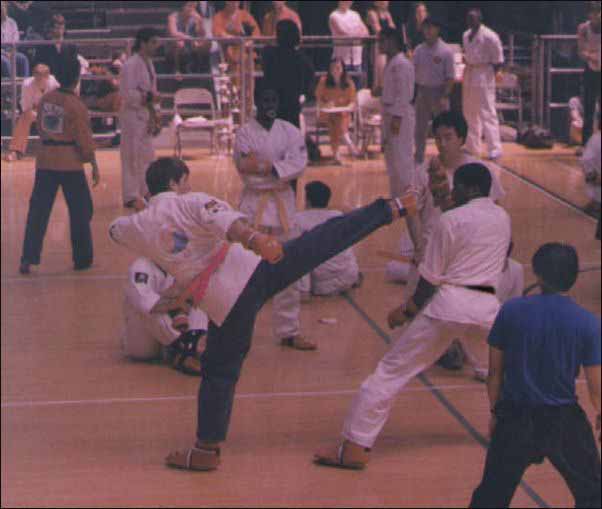



|
phrases of Shakespeare or Mozart the slender wands of the auroras playing out from them into dark time the passing of a few migrants high in the night far from the ancient flocks far from the rest of the worlds far from the instruments
|
Be true to yourself - above all, don't forget this. If "you" come into conflict with the world, so much the worse for "the world."Amidst such "wands of auroras" playing out from the "old sounds and phrases" of the immortal bards, sages, and masters of music did I largely choose to live in life; and so remember me in their company, please. Think not of me in some gloomy purgatory or fiery hell; I shunned such places in life, and so would not willingly reside there in death. If I have any choice about my life beyond life, I would choose to dwell with them and the family and friends which have preceded me. Our conversation would be long and fruitful!A couple of simple grammar and spelling mistakes, shallow reasoning... What is this opinion worth? Nothing. What does it take away from Orwell's artisitic integrity? Nothing. If he were alive, how much attention should Orwell pay to such criticism? None. Never forget that somebody else's opinion of your work is only that: somebody else's opinion.As for my death, dying, the loss and pain of separation - I urge you to regard it with utter scorn. If one person at my wake claims, "I will celebrate his life, not mourn his loss," then I will rest content. Remember my living and my life; and rest happily knowing that true friendship and selfless love are phenomenon beyond death and dying. My mother, my uncle Phil... I will not speak to them ever again, as they are dead. In my mind, though, where they live, I speak with them endlessly. My family and friends, never forget this! And remember that when I wrote these few words here, I was nothing more than a body turning into text -- the spirit contained in these words outlasting the vessel. The vessel is gone, but the spirit remains!
Enough talk about death -- it will come when it will come; and to live obsessed by it seems as silly as to live oblivious to it, in my estimation.
Q: No man can stare for long at death or at the sun, eh?
A: Why would he want to!?!Q: I like how you talk about the immortal, transcendent quality of art and the human capacity to remember and love. As Pushkin once wrote, "As long as there is one heart on Earth where I still live, my memory will not die."
A: That is exactly what I am trying to say! You have captured it artfully!Q: You describe well the transcendental nature of friendship, Richard. Without friends the world is "but a wilderness and you might as well quit the stage"; but with good friends, anything is possible and we are never really alone. Even when a friend is absent, he is present all the same. However poor he is, he is rich: however weak, he is strong. And may I attempt to convey an even more difficult concept? Even when he is dead, he is still alive. He is alive because his friends still cherish him, and remember him, and long for him. This means that there is happiness even in his death -- he ennobles the existences of those who are left behind.
A: How beautifully stated! I wish I could put it so well.Q: OK, let's move on. Do you have any advice for anyone about accepting criticism?
A: Well, just remember that there all sorts out there and many of them will just kind of, you know, be jerks! Look at how they criticize you, give that criticism a fair hearing if it is constructive, and then get past it. And if the criticism is simply insults or mindless name calling remember that it is probably coming from a person whom if you met and got to know would probably not mean anything to you anyway.If you have said something you strongly believe and said it the best you can, stand by it and have faith in yourself and your ideas. "Public opinion is a weak tyrant compared with our own private opinion," Thoreau tells us. "What a man thinks of himself, that is which determines, or rather indicates, his fate." Above all, don't begin to doubt yourself or your abilities just because some half-wit insults you or what you have to say. Look at the following review of George Orwell's masterpiece "1984" at Amazon's site:
A reader from California , 02/19/98, rating=1 [out of a possible 10]:
George had a good idea but the book really stunk.
At first I did like the book. Then it just started to suck right around the time when Winston was getting sexually involved with his girl friend. I hated the book so much that I forgot her name. The first hundred or so pages i liked, then it just got really boring. So II highly reccomend that you DO NOT READ THIS BOOK. And please for the love of God don't read that "Brave New World" book by Hoxley. It is twice as worse as 1984. To put it bluntly, DON'T READ ANY GEORGE ORWELL. Your just waisting your time.
There are lots of people out on the Internet who would say anything in an e-mail (with a fake return e-mail address) who would be chicken shit as anything in person - even as there are probably more gentle souls who read your pages with respect and wish you well in your soul's journey through life. Stick by your guns and don't let the turkeys get you down! -- remember: even the greatest minds in history had people (even intelligent people!) look at them and their work and conclude they sucked. Remember, some people will hate you for the same reasons that others love you... and this contradiction will never be resolved.
Q: I hear you about all this, Rich. If what you have penned is good, is about something you know, and is truly written, and reading it over you see that this is so, you can let the critics carp and pout and howl and the noise will have that pleasant sound coyotes make on a very cold night when they are out in the snow and you are in your cabin.
A: I love how you put that! I couldn't agree more! If you have sweat blood and done the best you can do and are happy with what you have said, let the critics tear at their hair and vent their spleens. Who cares? I suspect most writers write primarily for themselves. It follows logically then that writers should first and foremost satisfy themselves.Q: Are some of the criticism you get close to the mark?
A: Remarkably little - I have as of yet to receive a flame which I could not have written better or more to the point about my many shortcomings. And when I read the ranting and ravings of people denouncing me in the most hostile and unequivocal terms, I take satisfaction in the fact that I must be saying something important to prompt such passion. There are perhaps one or two people in different parts of the world whose opinion I really value and I would care very much what they say. But for the rest, it doesn't really matter. I know what I was trying to do. I know where I've succeeded, and I know where I've failed. I think every writer must be his or her own most stringent and absolutely unforgiving critic.Of course, with respect to criticism nearly everyone will find some things that I wrote in all my webpages offensive or mistaken. I get e-mails from people who in the almost 300 of my posted HTML documents found one that really gets to them and then they descant like madmen for five pages on that topic without mentioning any of my other webpages. But that doesn't really bother me too much. I would hate to write anything about an intellectual topic which interested me that was longer than thirty words with which everybody agreed. That should be a danger sign. I suspect if you don't say anything that upsets some people, you aren't saying something which most people can learn.
Q: Well that's just kind of crying out, "Do you feel lucky?" isn't it?
A: If anyone was to be right on the mark with a flame the pain would not be so bad, as I am not unaware of my shortcomings. Nor do I care all that much when someone who has never met me excoriates me. Why should I care? It is only ourselves, in the end, who can really do damage to our self-esteem.Q: But Rich!, some of the e-mails I have gotten have been incredibly rude and hurtful!
A: To be viciously attacked is a painful but necessary part of the weaning of any writer. One need acquire the "scrupulous ear of the well-flogged critic," in the words of Gibbon. Flaming and other verbal/intellectual assaults all serve to tougher you up; man is a bellicose animal that loves to go for the jugular - get used to it, develop skin tough as rhinoceros hide! And never lose sight of what is essential and important to yourself; and never let anyone else convince you that you think or believe other that which your conscience and search brings to you. Don't let outside peer pressure or social pressures dissuade you from pursuing your own individual path in life.
"I urge you, brothers, in view of God's mercy, to offer yourselves as living sacrifices, holy and pleasing to God - this is your spiritual act of worship. Do not conform any longer to the pattern of this world, but be transformed by the renewing of your mind. Then you will be able to test and approve what God's will is - his good, pleasing and perfect will." "Greater is he that is in you than he is that is in the world."
I John 4:4
Romans 12
Yes, I get hate mail. Look at this one! But that makes me laugh! Just because someone accuses you of something does not make it true!
Q: But, Rich!, everyone from my boss to the politicians and priests would have me think they know my duty better than myself!
A: Don't you believe them! Past a point always keep the hustle and bustle of the world at arm's distance, recognizing clearly where the world ends and the self begins. Never forget that advice from other people is only that - advice from someone else; and always remember to remain true to the affections of your heart and particular music of your soul. "To believe your own thoughts, to believe that what is true for you in your heart, it true for all men, -- that is genius...," proclaimed Emerson in his usual radiant manner. "Trust thyself: every heart vibrates to that iron string."
Perhaps you understand me now. The oracle at Delphi had but one commandment: know thyself. Socrates intoned that the only life worth living is the examined one. Montaigne told us that we should always have a room in the back of the house to which we can repair once a day to nurture the gardens of our interior lives. Poets have since times ancient raised the banner that verse should always animate our lives, the never-ending music of poetry running though our consciousness. Shelley tells us the history of the world is but one large poem; Whitman is in agreement, and he asks all his readers what will their part be? What will your part be in the poem of humanity?
"Ah!" you are probably saying. "Another one of those damned importunate teachers who do nothing more than ask recondite questions of me!" I apologize.
Q: I just wanted to thank you for sharing your life with me. I really enjoyed reading your web page....took me a long time though.
A: The pleasure was mine!
Q: I am a political science university student.... wanting to persue a law degree. I plan to teach first. I just wanted to say that I really enjoy you writing. You really have a strong talent. Take care!! Would love to talk to you!! Thanks for sharing you stories... you give people like me a motivation to strive no matter what the obstacles are!
A: I forgive you your desire to become a lawyer and wish you much luck in your future.
Q: Any advice for a self-loathing teenager wallowing in self-pity in my pathetic so-called life?
A: Stop pitying yourself. Clean your bedroom and do your homework. And don't think the world owes you anything (it doesn't) or that life has knocked you harder than anyone else. I suspect you will be happier that way.
And if you need a friendly word or few words of encouragement, feel free to e-mail me forthwith.
Q: What's the best line you've ever used in a flame?
A: Hell, I don't know. I have said all sorts of things over the years in flames. I take a certain pleasure in demolishing stupid queries and criticisms sent to me rashly by e-mail. When someone sends me a
totally fatuous and lame brain e-mail, they are fair game for roasting and then
posting.
After receiving some totally harebrained e-mail, I try to take Bacon's advice about the self-defeating nature of anger:
Seneca says well that anger is like ruin, which breaks itself upon that it falls. The Scripture exhorteth us to possess our souls in patience. Whosoever is out of patience is out of possession of his soul.
Ecclesiastes also tells us, "Be not hasty in thy spirit to be angry: for anger resteth in the bosom of fools." According to Job: "For wrath killeth the foolish man, and envy slayeth the silly one." This seems to me eminently good advice.
So I wait a day or two to write a reply to knuckleheaded e-mail, then proofread and revise it a day after than, and only then send it. This results in comments which are usually as reasoned as they are impassioned. It cuts down on the e-mails you send off in the heat of the moment and then almost immediately regret ever having sent. I send relatively few of these e-mails, but I get them all the time. It takes a little discipline and patience to not reply immediately when angered, but it is well worth it.
Q: Do you think that constructive? Do you think that furthers the cause of world peace?
A: I have nothing to say about such a fantastic concept such as "world peace"! I cannot but imagine that the world will continue to be an violent and anarchic, human nature continuing to be made up of equal parts folly, wisdom, envy, altruism, greed, sacrifice,
good and evil. I cannot but conclude that world peace is a nice, unrealistic idea, the result of soft-headed, wishful thinking.
But with respect to not furthering "world peace": I am neither a constructive critic nor a professional apologist dedicating my time and attention to convincing others that scoundrels and blackguards are really only misunderstood or unloved. If you send me a stupid e-mail, I will denounce it as stupid - scathingly, and in public. You will deserve no less, and I will be perfectly honest in my comments.
Q: You make me think sadly that perhaps love, friendship, and respect do not unite people as much as a common hatred for something.
A: You should feel love for many things, and also hatred now and again. For example, you can hate mindless violence and ignorance and cruelty.
Temperamentally, I dislike a person who cannot hate. It is almost as if they have been bleached and turned somewhat wan. I suspect a person who cannot hate cannot really love either. People say they have become "Christ-like" and abhor all violence, for example; and I immediately dislike them. There is a time for everything on this earth, even violence and hatred. But someone also told me that resentment is like taking a poison and then waiting for your enemy to die, and of course the poison affects only you and not the other fellow. This makes sense, also.
Q: But don't you think that, practically speaking, we humans have more of a problem in our hating rather than loving each other?
A: It is hard to generalize on our whole human species (although, God knows!, I have done it enough in this FAQ!), but I think you are most probably right. So many people end up controlled and even destroyed by their hatred! But the love and hatred so often intermix, undoubtedly. And to be unable to hate, I think, would mean to be less than completely "human."
"...you better watch your back, homes."
Q: Aren't you personally afraid of denouncing persons and organizations which are clearly violent and dangerous? Aren't you scared?
A: Well, I have been threatened, more than once or twice. But I'm not afraid. And there is no way I am going to take down any of those pages which certain criminals and bullies find objectionable! Perhaps if more of us were prepared to stand up to them, less people would live in fear.
I have gotten hate mail and even death threats from a whole cornucopia of garden-variety haters. My father, of course, is afraid one of them might some day shoot me! The authorities would have plenty of suspects in terms of people I have denounced in the most scathing language I could conjure up: Muslim extremists, gangbangers, the IRA, drug dealers, militiamen, etc, etc. But I will tell you an embarrassing truth that is no less true for being so: I almost hope one of them shoots me! In fact, if ever I emerge one evening from my car and see some goon quickly approaching me with gun drawn I will know most likely it is because of something I wrote in one of my webpages. As he raises the gun and levels it at me, I will know in a split second exactly why my life is passing in front of my eyes. But you know what? I will be almost glad to die! I have chosen to live my life a certain way, and so I will accept the consequences; and in killing me they will have only increased exponentially the attention paid to me and what I have said in my webpages. They will have made me stronger in death than ever I was in life! It as Petrarch claimed, "A good death does honor to a whole life." And it is equally as Martin Luther King, Jr. said, "A man who is not willing to die for something is not fit to live!" As claimed André Malraux, "If a man is not ready to risk his life, where is his dignity?" Enough said.
Q: That sounds very brave. Such braggadocio!
A: I don't honestly expect to be murdered anytime soon. It is, after all, a big step from writing an e-mail threatening to kill you to actually doing it. Talk is cheap, especially on the Internet! But if it should happen, you can tell my father I lived and died on my own terms. No regrets!
Q: But don't you think it is more likely that you would be murdered simply for your wallet or your car?
A: Yes, that is much more likely.
99% of the e-mail I get is polite and complimentary;
1% is completely the opposite.
The most mindless of the mindless!
Check it out!
Q: But you posted all this information on your life. HMMMMM it must be hard to find you???
A: I am not hiding from anyone and know exactly what I am doing. I have nothing to hide. And my comments stand as they are. "Judge me by the enemies I have made," exhorted Franklin Delano Roosevelt. I like that.
And any teacher of consequence will be more anxious to survive in words, ideas, and art than in the flesh. The pen is mightier than the sword; ink is more indelible than blood.
Q: Is all your correspondence with gangmembers so hostile?
A: By no means - I get e-mail from the more adult gangsters and former gangsters where honest conversation can take place. I think it are only the teenagers and those just out of adolescence who play the threatening role, trying to be so tough.
Q: I read your letter to that gangmember who is in the same gang as my boyfriend. People think because we grew up in the projects, this is where we're going to die. This is not where I want to die.
A: Who cares what other "people" think? You are the master of your own destiny. Do as you wish and to thine own self be true! There is a better world well worth discovering outside the projects. I wish you luck!
Q: I agree with you about that, Rich! You are the master of your own ship. There are lots of people who fall into troubled waters and don't have the guts or the knowledge or the ability to make it to the shore. They have nobody to blame but themselves. It is up to you, pal.
A: Well said!
Q: I heard you are in charge of the United States mirror site for the official World Wide Web site of Saddam Hussein and the Iraqi government.
A: Yes and no. I figured if that bonehead Saddam Hussein can paste his irksome visage on the Web and portray himself in a favorable light for all the world to see while outlawing Internet access inside Iraq proper, his webpage was fair game for satire. Therefore, I have created a mirror site with a slightly altered form of his page. I figured if Saddam's regime was going to take his first few baby steps on the Internet, I would contribute to the process... And I am sure there in the Middle East they have major bandwidth problems.
In the egalitarian spirit of cyberspace, let readers check out both sites and make up their own minds about whose webpage is more representative of the "truth."
My Page
Hussein's Page
Q: The globalization of capitalist Western culture is a new form of American imperialism, destined to gobble up local Arab economies and societies and incorporate them into a global landscape defined by McDonald's, the Internet and Bruce Willis movies. This globalization is a raging torrent that's going to wash away our borders, our cultures and our identities!
A: If there be latent strength in your culture, it will survive McDonald's restaurants and Bruce Willis movies. Change is a constant; instead of railing against outsiders, you might more profitably invest your time and energy on building up your own civil society and local culture to adapt with the times.
Q: We Arabs are poor. We are weak now. But we are not stupid. We can use any technology. We can do anything.
A: I never said Arabs were stupid or could not use technology. I would say that some Arabs (a relatively small number), religious extremists and wild-eyed terrorists, serve to militate greatly against a relative political stability in many Middle Eastern countries which could aid them to actually develop technology or wealth independent of petroleum sales. Look at terrorists - like Osama bin Laden and others like him - who explode bombs without warning against their "enemies" (ie. anyone who opposes their strict interpretation of Islam) but end in killing most innocent bystanders who happen to be in the wrong place at the wrong time!
Q: If we had cruise missiles like those launched by the United States against the mujahdeen in Afghanistan, we would launch them at America! But we do not have these weapons!
A: Thank God! Or thank Allah - whatever!
Q: You Americans can destroy a Hiroshima or a Nagasaki, but you cannot fight we who hide in the shadows and go directly to heaven when we die for Islam!
A: It is true that one cannot ever completely eradicate isolated acts of terror by a small cadre of fanatical true-believers. But it is equally true you are never going to change anybody's mind in the United States through that sort of violence.
Q: You ethnocentrically extol various "virtues" of a Western civilization where everyone worships materialism and money, gluttony and carnal desires are made the greatest aspirations. Sincerity, truthfulness, altruism and self-sacrifice have been replaced in many parts of the world by deception, conspiracy, avarice, jealousy and other indecent features because of Western values. I am from Iran, and in my country we have made an Islamic Revolution and have brought the truth of Allah to earth!
A: There is some truth in what you say. Nevertheless, I think you doth complain too much with respect to "decadent" Western society. And the
theocracy of Iran as an example of justice and harmony? You gotta be kidding! Fire and brimstone and Allah shoved down everybody's throat - and a beating, jail or worse for those who find themselves out of step with the regime and its precepts? That is the alternative to Western "materialism?" Even with all its shortcomings and excesses, at least civil society in the West gives a person the space and freedom to choose their path in life without facing the wrath of the doctrinaire.
You say there is no "sincerity, truthfulness, altruism and self-sacrifice" in the West? I would argue that is simply not true. Look at my own humble life and career and tell me if one encounters none of the above sentiments in my webpages. And I am as "Western" as anyone else.
Q: But ALLAH! You forget ALLAH! You have no God in the West! You have no Book! It is all money and vice!
A: Nonsense. I can only speak for myself as an American, and not for my whole country. Nevertheless, I personally see the American credo as, according to Swedish economist and sociologist Gunnar Myrdal, what are enunciated in the Declaration of Independence, Preamble to the Constitution and Bill of Rights stressing the "essential dignity of the individual human being, of the fundamental equality of all men, and of certain inalienable rights to freedom, justice, and a fair opportunity." That has proven remarkably successful in a prosperous American civil society for over 200 years.
As for God and myself, that is strictly between me and Him.
Q: YOU HAVE NO ALLAH! NO TRUTH! NO ALLAH! THERE IS ONLY ONE GOD (al-Malik) AND HIS NAME IS ALLAH! THERE IS ONLY ONE TRUTH (al-Haqq)!
A: Stop yelling! I would agree with you that there is only one Truth. However, I believe in refraining from forcing it onto others and instead relying on persuasion to get my point across. Your seemingly militant brand of orthodox Islam smacks of the most pernicious dogmatism! My mother - a devout Roman Catholic - used to define dogmatism as the "truth as you see it for me." Like my mother, I vigorously reject such orthodoxy. And we feeble human beings can never hope to better understand truth unless we are able to question everything and anything. Dogma is the enemy of all this.
I would talk until I am blue in the face towards trying to turn a person towards what I consider a better path (as I do often enough), but I would never force anyone to swear allegiance to something they did not believe in by their own free will. In this aspect, I reject importunate evangelists and other religious enthusiasts who claim to know the one "true" way. History shows us when they are in positions of power they are all too often only a short step away from suppressing thought and free speech, jailing contrarian voices, burning books, and then, ultimately, burning people.

Q: Your refusal to acknowledge the one and only Creator (blessed be his name) and his final prophet Muhammad only reveals your essential blindness and ignorance. If you do not submit to the will of Allah, you will be lost!
A: I would hate to have to choose between the Scylla of presumptuous dogmatists (like yourself) who claim to know the whole truth and the Charybdis of despairing skeptics who believe no truth can be known! I will choose instead to pursue an open-ended path in favor of asking questions in order to (hopefully) extend imperfect knowledge. To doubt and to struggle in the fog of uncertainty is to be human; but that does not mean we cannot find understanding and truth in our lives. I suspect rigid dogmatism and radical skepticism two forms of pursuing knowledge which lead to hazardous territory. They are traps of the mind, intellectual dead-ends.
My argument is with not only with Muslim exceptionalists, but with all those who think there is only one way. I get many e-mails from Christians who say, "Perhaps you may investigate on your own what the real TRUTH is - as Jesus said, 'I am the way, and the TRUTH, and the life, no one comes to the Father but through me.' John 14:6 I find all such religiously-minded types who believe they have the only "true way" distasteful.
Q: It is just that in the secular West, where there is a discussion about freedom, it is freedom "from" - obstacles must be removed in the way of individuals. But in the Muslim world and our religious mindset, it is freedom "for," which means freedom must be in service of perfection and prosperity of human beings. The West has polluted the world with its relativism and has lost the one True Way which was revealed to the world by the Last Prophet (blessed be his name) through his Revelation!
A: That "True Way" you speak of is nothing more than religious chauvinism; I do not believe that mankind is One but Many, and the questions we face are also many as are the answers, although they might be some central essence to them which is one and the same. (Would you begrudge the "Way" of others if it proved satisfactory for them?) This insistence of the "True Way" in society is the death of pluralism which will result in a tyranny of priests and imams and murder and oppression.
To speak of the "perfection" of man in some sort of top-down power dynamic smacks of the most rank hubris! It reminds me of Stalin talking about the Soviet Bolsheviks as "engineers of human souls" obliged by the laws of history to brutally crushing the Old so as to construct the promised New. It reminds me of fundamentalist Islamists or Catholic Inquisitors commanded by the Allah and God to crush the infidels and unbelievers.
Pluralism and an open, free society is the only real defense we have from governments turning predatory on the people - and even then it is a close thing! But autocracies secular and religious always claim to act in "service of perfection and prosperity of human beings" while invariably the reality is entirely the opposite. Look at the Soviet Union! Look at Iran!
Q: Nowadays it is sometimes held, though wrongly, that freedom is an end in itself, that each human being is free when he makes use of freedom as he wishes, and that this must be our aim in the lives of individuals and societies. In reality, freedom is a great gift only when we know how to use it consciously for everything that is our true good.
A: Finally I agree with you! It is not enough to enjoy freedom, although its absence in onerous and painful. One must employ freedom to positive, noble ends -- just as you say. In my own country, so much freedom degenerates to mere license where people end up hooked on drugs, slaves to their possessions, on the verge of killing themselves because of the emptiness of their lives, etc. They reap what they sow, and it is all by their own choice. But people who live in "un-free" countries still make unhealthy decisions, and many people who are confronted with a plethora of choices choose well. I would prefer to make up my mind for myself, rather than letting somebody else try to do it for me.
I already have a biological father, thank you, and as I am an adult he lets me live my life as I choose. I don't need a surrogate father in the government or in an organized religion telling me what to believe or what to say. THIS is what I mean when I talk about personal freedom, and that is why the thought of a fanatical cleric in a position of political power makes my blood run cold! Again, as Cioran noted: "He who loves unduly a god, forces others to love him, ready to exterminate them if they refuse."
So if a surfeit of freedom can present one with certain risks, it is hardly to be exchanged for too little freedom -- this is how I see it.
Q: You have in places some pretty strong things to say to my Muslim brothers! Are you against the Islamic faith?
A: Not at all! Judaism, Christianity, Islam... they are all descendents of Abraham and come from the same root. I respect very much the religion of Islam as I know it; I have not made the mistake of confusing the honorable faith of Islam and its many humanitarian adherents with the extremists who kill people in the name of "Allah." For every two blowhard Muslims ready to blow themselves and others up to enter heaven, there are at least thirty decent Muslims who anyone would want as their neighbors - people who by any measure are a credit to the human race. Every religion has its regressive elements and extremist knuckleheads, and I try to keep things in perspective.
Look at the Jewish Defense League, or so many of the fundamentalist Christian organizations! They do not exactly bring honor to those faiths! It is the same kind of thing.
Q: Although you are not Jewish, I see you clearly taking the side of the Talmudic scholar Hillel against his more conservative colleague and ideological opponent Shammai.
A: Yes, I do not have such a rigid way of seeing the world and how it should be - as does Shammai in his single-minded devotion to preserving the Torah and the "proper" Jewish way of life. (That intractable dispute in Jewish history between Hillel and Shammai still rages today between the Conservative and Reform Jews; and, in the larger world, between liberals and conservatives everywhere! I would take all humanity for my province without having to narrow my view to my own country, culture, religion, or individual point of view.) I see some value in almost everybody's conception of how one should live and think; there are most likely as many different answers to the problems life presents as there are distinct individuals in the world.
Once again, I believe in a generous mix of the traditional and innovative; too much of one or the other is all amiss and out of balance. As Edmund Burke said, "The disposition to preserve, and ability to improve, taken together, would be my standard of a statesman." This is how you can conserve the culture of a past full of life and wisdom without incurring radical revolutions where everything is burned to the ground and, as often as not, replaced only with ashes and ruins. "What is conservatism? Is it not adherence to the old and tried, against the new and untried?" claimed Abraham Lincoln. But then to try and freeze all change in the world in a "perfect" order according to divine revelation, as did the Medieval Church, is to ossify and struggle vainly against the ocean tides of time. So perhaps I am a conservative, but cautiously so. Maybe I am a frustrated liberal grown more worldly-wise with time.
Q: But that opens the way to the relativism which has been so damaging to the modern world! What can be added to what was long-ago handed down to us by God?
A: You have a point. Nevertheless, if you look at all the "learned" persons and their messages across the ages, there is a remarkable consensus on certain key issues. I do believe there are truths we ignore to our own peril. And I have always hated the extreme position of the relativists -- held by the Sophists and Nietzsche, for example -- that there is no such thing as truth but only "power." I refuse to accept a relativism which says, "You believe in drinking your coffee without cream or sugar, and I believe in concentration camps." The "I'm OK, you're OK, we're all OK" position held by many in the United States today smacks of moral laziness and sloppy thinking when it is taken too far.
You have to search for the truth. You have to oppose people who you think are not only full of baloney but are dangerous. To refuse to stand up and do this is to come dangerously close to cowardice by omission, in my opinion. This might all be subtle thinking that brings with it certain contradictions and fine distinctions, but it is how I look at the situation. But to claim, as do some fundamentalists, that the Bible or the Koran says "a, b, c, and d", and therefore there can be further discussion is to make oneself risible! As if there were only one way to interpret a commandment or a metaphor! They can hardly be serious! You see this kind of reasoning today in the fundamentalists Hindus, Jews, Christians, and Muslims; despite claiming different religious traditions, these zealots are all cut from the same cloth. I take faith in the fact that only in Iran do religious fundamentalists hold temporal power. (The Taliban in Afghanistan don't count as a legitimate government.)
Q: But the "Great Arrogant Satan" of the United States only wants to dominate the world with the help of its lackey, Israel! As a Muslim and an Arab, that seems clear to me! I see the subtle but pervasive influence of the Jews! America - and much of the West - is secretly controlled by Jews! Look at the double-standard in how American foreign policy treats Arab nations (economic sanctions, military action, political isolation, etc.) and Israel (generous foreign aid, diplomatic support in the U.N., shared intelligence, etc.)! Look at how the Jews have so craftily bankrupted once mighty Russia!
A: Ah.... power breeds envy and resentment, as Fareed Zakaria has noted. Jews play a large, distinguished, and diverse role in the culture, politics, and economics of the United States; but to say the Jews are a uniformly thinking and voting population is to be mistaken. Most Jews participate in the American experiment more as Americans - in the Western tradition - than as Jews. (Some Jews deplore this "secularization"; I do not.) Look at all the distinguished thinkers I listed above who happen to be Jewish and you will find not one religious fanatic in the crowd. I am not Jewish nor do I have an extended interest in the finer points of Judaism. But thinkers such as Boorstin and Berlin speak to me not as a Jew or a goyim but as a fellow human being who would learn from persons who have something of value to teach.
If I found they had something of value to teach me, I would learn from anyone from anywhere or any religion. One can never find enough teachers in life. I currently work in a Jewish school and almost without exception learn from my colleagues -- coming mostly from a strongly Jewish perspective -- when they sermonize about the world, morals, or the living of the good life. I very much enjoy a good sermon; and I suffer, in contemporary American pop culture, for their relative paucity and superficiality.
But I agree with you that the United States placates Israel too much and treats that country with kid gloves when it begs for a scolding - partly for domestic political reasons. The national interests of the United States are not the same of those of the nation-state of Israel - although some Americans seem to think otherwise. However, you vastly overstate your case; and your thinking begins to smack of that bizarre the-Jews-secretly-control-the-world conspiracy theory which has been bandied about so much in the past to justify persecution of Jews.
Q: I tell you that you are wrong! Look at Wall Street! Look at American capitalism! Look at the people who pull the levers behind the power that backs up the status quo in the world!
A: Enough already...
I suspect that when Islamic fundamentalists rail against the United States they are, in a sense, correct. Islamic fundamentalists, embittered Third World-types, and anti-Western "Asian values" proponents have recognized that in most powerfully representing the forces of Westernization, modernity and individualism in all its forms -- from business to "Baywatch" -- America is their real enemy, the Jews simply a scapegoat.
Militarily, economically, culturally, American power is unmatched; its ideals are more widely accepted now than ever, and the great technological, economic and political trends of the day all seem to favor it (look at the Internet!). It is in this vein that when Russian leader Boris Yeltsin and China's Jiang Zemin meet at summits and caution against a unipolar world, they have America on their mind. It is this American preeminence which drives the French loopy, as they are still resentful Napoleon lost and that nobody speaks French anymore.
Personally, I could care less about all that. It all seems more than a little silly.
Q: I am a university student from Scotland and didn't like your child like selected quoted critique of the ayatollah Khomeni and his issuance of the fatwa calling for Rushdie's death. In your case the lack of depth in your argument is symptomatic of Western arrogence, that you know what is right for other people more than them. America is responsible for bringing about Khomeini and you should stop being such a ignorant know it all.
A: I know plenty of Persians who hate Khomeini for the same reason as I do and would hardly deign to judge decent human behavior by a different standard than other places. I dislike Khomeini for the same reason I dislike certain Popes in history: he is an grim anti-humanist authoritarian. Such is the path Khomeini and his followers have led Iran, so will their end come too in another revolution sooner or later - one already sees the signs. That might be "Western arrogance," but I also think the record will bear it out 100 years from today.
Past a point I don't care all that much what the Iranians do to each other. As you say: it is their culture and their country. But when they threaten death to a foreign national for writing a book and place a $1,000,000 bounty on his head... then I am moved to buy the book just to support that author, place it prominently on my front porch, and shoot dead the first religious fanatic who attempts to fulfill the fatwa. That might be "arrogance" from an American who knows nothing about Islam or Iran. Or it might be common sense from a human being who knows religious fanaticism all too well. I know the opinion of one Euro-weenie from Scotland already.
Q: In the West, where you have no religion except for advertising and money!
A: I think you doth overstate the case, as some 90% of Americans claim in polls to believe in a personal God. But you practice Islam in a closed society like Iran where everybody does so and it is second nature; orthodoxy is the rule, and freedom of thought is circumscribed only within strictly defined borders. But in an open society there exists pluralism and a market of ideas and that makes people think again and again about themselves, what they believe in, and what they stand for. That, in the end, gives a dynamically vibrant and innovative quality to a culture.
Religion is alive and well in the United States. But most people embrace it freely rather than have it shoved down their throats. And religion does not exist to stifle the rest of civil society, as has happened in every strict theocracy of which I can remember.
Q: You seem to dislike both Khomeini of Iran and Hussein of Iraq. Which do you dislike more?
A: That is a tough one. I think I abhor Khomeini more because he shrouds himself in the otherwise legitimate mantle of religion. I dislike all such humorless apostles of religious-style fanaticism; and would similarly hate Lenin, Robespierre, or the Inquisitors if I had lived in a different time. There is something so maddening about those totally engaged revolutionaries, the terrorist as revolutionary; they are so absolutely sure they know the path to heaven and are capable of committing any barbarity to pull mankind there screaming and kicking. History and life are cruel enough; they make it crueler.
We have seen many instances of life in societies which have come under the sway of such persons; life, liberty and the pursuit of happiness are not the resulting reality. Despots do not support learning and the search for truth among individual minds. What is important that has already not been made known in the logos of the Regime, the Party, the Church, the Cause? There is of course no need for people anywhere on earth to struggle or search. I by nature cringe at these grimly single-minded prophet/despots with their scorched-earth policies towards intellectual dissent all seeming to share a hatred of parliaments, personal rights against the state, free elections, intermediate associations possessed of any autonomy whatever and any form of government other than that of chosen elites. This is the stuff of totalitarianism, a trend which almost plunged the world into a new Dark Age around the middle of the century.
Q: I think you capture well how those "totally engaged revolutionaries" so often completely lack a sense of humor. I think you've got to learn to laugh, as it's the way to true love.
A: I had not heard it put quite like that! I think you're right!
Q: Well, did you support Iran or Iraq in the eight long years they were at war during the 1980s?
A: I supported neither side. Let the wolves devour each other, I said to myself.
Q: But hundreds of thousands of young men died in that war! Are you insensitive to the human suffering?
A: I have all the pity in the world for a bunch of brainwashed Islamist teenagers led out to die WWI-style in the marshes of the Faw Peninsula for no damn good reason at all. But for the governments of Iran and Iraq?...
To answer your earlier question: I thought it a prudent U.S. policy to play one power off the other in that fight between two patently odious regimes. I looked at the situation the same way Truman viewed Nazi-Soviet hostilities in 1941: "Let's help the Russians when the Germans are winning and the Germans when the Russians are winning. So each may kill off as many as possible of the other."
Q: I am a Lieutenant Commander in the U.S. Navy and have served a couple of decades flying A-6 Intruders. I've seen combat in Lybia and Iraq and have spent a pretty fair chunk of time reflecting. I appreciate your enthusiasm and patriotic outlook, but a word of advice if you are planning on a military career... leave the political commentary to the politicians and the press. Warfighting is not a game or a joke. It is ugly and people die... no matter whose side you are on. Respect for your opponent, no matter what image you may have in your mind about him, will make you a better warrior. To be honest, your comparisons between the U.S. and Iraq display the arrogance, selfishness and even a little racism that will only bring our country down. It is a big world out here, and there are billions of non-Americans that we have to share it with. You may think, "American good, Iraqi bad" but that is just not the way it is. By the way, I am currently stationed at an air base in the middle of Saudi Arabia. I travel all over the gulf area and I work closely with these people that you so easily dismiss. It just might be worth your time to take a real close look at what exactly motivates your dislike of them.
A: I am not contemplating a military career and hardly think the U.S. God's gift to the world; but I hate fundamentalist Islamists in the same way I dislike fundamentalist Southern Baptists in the U.S. It is just that the Baptists in the U.S. hold so much less political power than in many places in the Islamic world. I would hardly welcome war against even the biggest fool of an Ayatollah; but neither would I hesitate to decry the rising tide of religious zealotry whether it be in Turkey, Iran, Algeria, Jerusalem, or in Brooklyn, Chicago or South Carolina in religions Muslim, Christian or Jewish. It is just that Islamic fundamentalism is growing the fastest and has the best prospect of interfaith gains; this moves me to say my piece. I have read widely and studied Arab culture and politics; and the genius of their culture seems not to lie in government or in their civic cultures. This might be arrogance, but I think it also is true.
Take Israel, for example, where many would have you believe that a liberal democracy blooms in the desert. But if you look closely you will see orthodox Jewish groups hold a position of power so entrenched that the strong wine of religious exclusivity and superstition often prove more powerful than reason and rational thought. Look at the militant Jewish seminary students who settle provocatively on disputed West Bank territories and claim the land according to Biblical writings! Look at Israeli Prime Minister Yitzak Rabin's assassination by precisely such a right-wing religious Jew who thought Israel was being betrayed by a leader who dared to seek peace! Look at the many hardcore rejectionists of any accommodation with their Arab neighbors! They are all part and parcel of the irrationality and fanaticism of the region and are not reasonable people who are willing to compromise! The fatal flaw in the nation state of Israel has been present since its very inception: it is located in the Middle East! I look at the photos of impoverished and enraged rock slinging hardcore Palestinian young in the West Bank or Gaza who have little to lose and live mainly to kill Israelis and I wonder if there is any kind of peace that can grow in such an overheated climate of hatred.

Q: That is interesting because I have read how, apart from the American Jews, the best political allies the Jewish fundamentalists in Israel have in the United States are the fundamentalist Christians like Jerry Fallwell!
A: That doesn't surprise me! The fundamentalist militant Jews in Israel ally themselves with the fundamentalist Christians in America and then they find mortal enemies in the fundamentalist Islamic world... nothing good will come of that! It is a mess! I hope for no future war; but I am also realistic about the vicious ethnic and religious passions which hold sway in a world where many countries do not fight according to the Marquis of Queensbury Rules. That, in part, is why we pay you to serve in the military.
The Middle East is particularly instructive in this regard - almost more so than anywhere else in the world; and this fact has a lot to do with why you have spent so much of your military career in that region. I fear the irrational mindless hatreds and prejudices of the region will drag us - maybe through Israel! - into some sort of apocalyptic war with the Israelis and Arabs fighting to the death of every tiny parcel of land. The unbending right-wing regime of Benjamin Netanyahu... Hussein and Quadaffi... the possibility of nuclear or biological or chemical terrorism... I wish the whole area were safely located on some other planet! That might be arrogance and selfishness, as you claim, but I challenge you to show me evidence to make me change my mind.
You say I "dismiss" the region? Maybe I do. I am sure there are millions of decent and honorable people in the Middle East. And I reckon they have a harder time of it than in other places.
Q: Thanks for the clarification. After further review by the instant replay officials, I see the distinction you make between the governments and the people. I withdraw my judgmental adjectives, especially the term "racist."
A: Thank you.
Q: But you are still not a big fan of Islamic fundamentalism, eh?
A: No, man. And I find this latter-day idea of theocracy more a projection of anti-Western sentiment and Muslim self-hatred than genuine religious inspiration. Unfortunately, Arab secular governments are often (Iraq, Syria) just as brutal and irrational as the religious ones.
Q: Are there any Arab or Middle Eastern leaders you do like?
A: I think King Hussein of Jordan and Hosni Mubarak of Egypt govern their countries tolerably well, considering the inclement and fanatical nature of Arab politics and culture. Yet those countries still are a long way from the glory of eighth and ninth century Umayyad or Abassid empires when Arab societies and its scholars and poets were the most advanced in the world. I suspect were it not for the presence of oil most Arab countries today would be as poorly developed and backwards as those found in Africa. What the Arabs and Persians have in spades is culture; but it is stable political institutions which they so badly lack, and the results are predictable.
Q: Rich, in your opinion, what in the hey is going wrong with the Muslim world! Is the religion itself to blame?
A: It are the rigid views of contemporary Islamists, not the noble Islamic faith, which is the problem, in my humble opinion. The Muslim community at one time was a rich and vibrant mix of distinguished scholars and jurists and within the Islamic world debate and difference were the norm - all this at a time when Europeans were living in relative ignorance amidst feudal squalor! However, in the last 500 years or so, this flowing of ideas from the Muslim world has dwindled and today struggles simply to survive. Today, opinions challenging the status quo are rejected and their proponents often labeled as heretics, even when they are renowned scholars. Remind you of the darkness of Medieval Europe? Let's us pray for a Renaissance to reinvigorate the true spirit of Islam and make the Muslim world bloom again in learning and in culture as it did once so beautifully in Baghdad and Cordoba long ago.
Q: Don't you think you should alter the content of some of your pages so you don't offend anyone or hurt the self-esteem of others? You might offend people from other cultures and other creeds with your words!
A: Oh, please! Stop already with that mealy-mouthed cant!
If the Irish Republican Army doesn't like my reflections on their effects upon the city of Belfast, let them write their own webpages on the issue. If bozos from the Middle East take issue with my take on that "mother of all dictators Saddam Hussein," let them post a webpage with a different point of view. If the feminists don't like my tongue-in-cheek "Men Are Swine Page," let them get a sense of humor. If the moral relativists or racial isolationists don't like my denouncing physical mutilation or reasons for admiring golfer Tiger Woods, let them point their browser in some other direction. Do it already!
It's still a free Internet! The Web is big enough for everyone.
Q: Are you really this arrogant?
A: Yes.
Q: You know you're going to hell, don't you?
A: Hey, pal, I've been to
Pico-Union. If you're trying to scare me, take another stab.
Q: But didn't anybody tell you saying things like that just isn't politic?
A: Sure. My father often admonishes me, "You just cannot say things like that!" I think this coaching your language out of fear for the consequences has a lot to do with the sterile rhetoric of American discourse today. Everybody is afraid that people are going to jump all over them and punish them in some way for saying something not "acceptable." It is the unintended consequence of "political correctness."
"We seem to agree on not much, but it's refreshing to find a guy your age who hasn't sold his soul for money or pussy access," an older individual from Canada e-mailed me recently. If a bit crude, I take that as a high compliment. Another guy I met at the "Great Books Cafe" described my webpage as, "Exhibitionist, yet not annoying. Opinionated yet not alienating. Pretty damn fun all around!" Now that is a description I like! But most of all, I like to hear something like what a college sophomore sent me recently, "...thank you for being you and telling the world about you. And thank you for inspiring me to be me." That is the World Wide Web at its best!, in my opinion.
Q: The truth is always a good thing, the African proverb reminds us, but it is not always good to say.
A: You may be right, but in this society where so many people prefer to be politically correct rather than completely correct, I will err on the side of shunning pleasantries and candor in favor of going directly to the heart of the matter and calling it exactly as I see it.
Q: But there is something to piss just about everybody off in your webpage! You might be supplying plenty of ammunition for potential enemies to use against you!
A: You are probably right. Again, my father has argued strenuously and often to me that I should remove certain parts of my webpage using exactly the same argument. He says if I should ever arrive at a position of any power or responsibility in my life, I could be attacked and perhaps fatally wounded with my own words from these webpages. He verily screams at me, "Look at the stink the newspaper commentators and pundits could make! Think about the media and how they live to rake up muck. They live for controversy! Keeps them warm at night it does!" He has a good point. As Oscar Wilde observed, "In the old days men had the rack. Now they have the press." My father, as is his role, wants to protect me from harm. I never was much good at that, as my dad can testify to in all his rushed visits to see me in the emergency room over the years.
I am hardly running for election and only peripherally care what other people think of me and my opinions. I side with Brooks Adams when he said the following:
"I had rather starve and rot and keep the privilege of speaking the truth as I see it, than of holding all the offices that capital has to give me from the presidency down."
So I say: Let the chips fall where they may.
Q: In reading your webpages, sometimes I like you and sometimes I don't like you.
A: Well, what are you trying to say? That is the way people are: you like some parts of them, other parts you don't. Would you have preferred I lied to you and hid what I really felt? Now you honestly know where I stand: the good, the bad, and the ugly. You might not agree with everything I say, but you know where I stand; and that is important, in my opinion. Look at all the people who are too chicken shit to say what they really think - or worse, have no opinions worth the offering! I stand for something, believe passionately in certain ideas and persons, hate others... (And I say it once again: I am not running for political office! This is not a popularity contest!) ...this comes to the heart of the issue.
I absolutely will not bend my point of view or opinions to make them fashionable or less polemical. I will try to above all call it as I see it honestly, whether the conclusion be painful or ugly. I empathize with Lincoln when, in the maelstrom of the Civil War, he claimed:
"I desire so to conduct the affairs of this administration that if at the end, when I come to lay down the reigns of power, I have lost every other friend on earth, I shall at least have one friend left, and that friend shall be down inside me."
I would endeavor to be honest to myself and my conscience first, to the rest of the world second. I would that you leave my webpages either applauding or seething, but in either case engaged in the debate. And as almost everyone can find at least a few things that will piss them off, nobody will leave without finding something somewhere with which they can wholeheartedly agree.
Q: I'm certain I'll find thoughts in your writings with which I shall
disagree. I doubt you'd have it any other way.
A: You are absolutely correct. I would not want it other way. I give you full freedom to come to conclusions opposite from mine; and I ask as much from you, in return.
Q: I like how you portray "the good, the bad, and the ugly" and not just one or the other. A lot of websites can be categorized as "positive" or "negative." You know what I mean? Either they paint a rosy picture of the world that is ultra-accepting of every point of view and action, or they slam everyone and everything and leave you empty inside. Your website gracefully avoids the tendencies towards the extremes and ends up presenting something important: Honesty and common sense.
A: Thank you! You are going to make me blush!
I agree with you on both points. A webpage that defines itself solely by what it hates (and there are many such webpages) gives its enemy far too much credit and leaves itself with a void for a personality. And those that simply gush universal love and benevolence lack the edge one sometimes needs and are soft way beyond what is appropriate. As you said, one needs a mix!
Q: But you have said some things which are kind of disturbing and which people could find offensive! And I saw one picture which almost made me sick!
A:
That is an admittedly disturbing picture. However, I would not ask your pardon in posting it on the World Wide Web. That picture captures a great crime in progress, and if we are to hopefully draw the appropriate lessons from what happened there we need to look the matter directly in the face without flinching. To water down or sugar coat matters - or even to censor them! - is to lie, to resort to the comfortable delusion rather than the cruel truth.
Pascal once wrote, "We sometimes learn more from the sight of evil than from the example of good." And so I would wish to show the evil unadulterated.
Q: That picture is from
the Holocaust, correct?
A: Yes. How many times do we hear Santyana intoned claiming "those who cannot remember the past are doomed to repeat it"? Look at the mind-boggling figures: 70 million dead under Mao, 20 million dead from Soviet Marxism, 20 million dead from Hitler's Third Reich, approximately 2 million dead under Pol Pot... the 20th century has put the truth to the assertion by Stalin that "a single death is a tragedy, a million a statistic." I am not so sure Homo sapiens can afford another century like the last one!
Q: I know Jews who still will not buy German products and World War II veterans who will not buy anything made in Japanese. What do you think about that?
A: I think it rather ridiculous. I have always disliked the practice of scraping away at old wounds by looking upon the Holocaust and Rape of Nanking as current events - some people talk as if those crimes happened just yesterday! One of my best friends is Jewish and refuses to ever consider visiting Germany or Poland and hates Wagner's music even though he has never listened to it. Poland offered up their Jews to the German Nazis, after all! And Wagner was a virulent anti-Semite! So my friend voluntarily deprives himself of visiting two fascinating and beautiful countries and will never appreciate Wagner's operas. That is sad, in my opinion. To be unable to reject the man but love his music smacks of small-mindedness.
Although one can never forget what happened, one can move on. More than fifty years later nearly everyone involved with the Hitlerite or Tojo regimes is dead, and I think some people need to let go of the crimes of that era. Letting go need not imply forgetting. I have made the same point to certain Vietnam veterans who passionately hate Jane Fonda still for her ill-advised trip to North Vietnam in 1972.
Q: That men do not learn very much from the lessons of history is the most important of all the lessons of history!
A: I think you are right! I like how you put that! But your perspicacious comment deflates me as someone whose job it is to teach history!
Q: You don't believe in the traditional idea that God rewards the faithful and punishes those who stray form the path of righteousness?
A: I don't think God actively participates in the affairs of men like that; and I have always rejected the idea that History has a Chosen People and is the product of a Divine Will with ultimately the Good rewarded and the Evil punished. If there be any such divine justice, I believe it will have to take place on the other side of the grave -- it is routine to see the wicked succeed and the good defeated on earth. I think anyone with more than a smattering of life experience can confirm that. As for the possibility of justice on earth today and tomorrow, it is up to us. Yet we have not done so hot in recent times -- after all, Mao and Stalin died of old age while still at the pinnacle of power! Where is the justice in that?
Q: But I see that you had some harsh words to say about the gangmembers. You even said of the many such types who inhabit the neighborhoods around downtown Los Angeles: "It is a sad but true fact that in this world there exists violent and depraved individuals with whom the only profitable discourse may be had over the barrel of a gun." How do you explain that apparent contradiction?
A: I still had empathy for those gangmembers - and some gangsters who read what I say clearly understand this (not ALL of them write me threatening my life). Nevertheless, I do not subscribe to letting gangsters prey on others; and with many of them the only language they understand is violence. I will mourn any human being who dies a violent death. However, if a person goes out of their way looking for trouble and then finds it (consequently throwing their life away for transient reasons), that is their choice. I will save my tears for those who truly deserve them.
The realm of international affairs might be dominated by an amoral nihilism; domestically, some degree of law and justice reigns. As Pascal put it, "The law without force is impotent." In the chaos of inner-city Los Angeles, many are the gangsters who have learned the law has teeth.
Q: You seem to be a big believer in free speech. What do you think about the Hollywood screenwriters who were "blacklisted" amidst the rampant Cold War hysteria after WWII by Senator Joe McCarthy and his House Un-American Activities Committee?
A: I think the whole thing fabulously un-American - an inglorious chapter in U.S. history (although not as bad as the Palmerston raids of the 1920s). McCarthy is about as big a blowhard as one will find in American history.
Still, it boggles the mind today to read statements like the following from old ex-American Communist Party members:
"I believed in anti-fascism and international solidarity and brotherhood and the liberation of man and the Soviet Union stood for all these." -- Walter BernsteinThe Soviet Union of Joe Stalin, corrupt and murderous to the bone, stood for all that? In a more cynical age, we are tempted to see such highly naive persons as dupes - perhaps even fools!
Or look at the how ex-member Paul Jarrico described the American Communist Party as the "best club to belong to in Hollywood, because all the smart guys were in it." They couldn't have been too smart if they believed that Marxist-Leninism and the Soviet Union was a boon for a long suffering humanity! More likely, it was a case of colossal muddleheadedness, profound naiveté, and immense gullibility on behalf of those Hollywood screenwriters amidst the suffering of the Great Depression of the 1930's. I find it amazing that so many supposedly "intelligent" people could believe so much rubbish about the Soviet Union for so long, remaining ignorant and blind to what was actually going on in the world. It is a curious and ironic psychological twist that precisely when Stalin's regime was at its most malevolent before and after WWII, "smart" people everywhere (not only in the United States!) were most bewitched by its crime-cloaking utopian rhetoric
For example, there is perhaps nothing so depressing as seeing a fine mind and noble soul such as authors I.F. Stone or Howard Fast after WWII extolling the virtues of Comrade Stalin and railing against the enemy of the people Harry Truman, preaching the "objective science" of dialectical Marxist-Leninism as that which will lead a long suffering humanity finally to the promised land. (I think I would die of humiliation if I were proved so wrong! But then I have grown up in more cynical times) That many left-wing intellectuals in the United States during the mid 20th century would have voluntarily chosen the dictatorship of the proletariat over the houses of Congress should be something of which any American who enjoys ideas and the life of the mind should be ashamed.
*sigh*
Time and time again history shows us how intellectuals might be smarter than regular folks but aren't necessarily any wiser when it comes to politics.
Q: So you support them being "blacklisted?"
A: No, I don't think they should have been deprived of the means of supporting themselves or declared persona non grata. They should have been taken outside and shot for capital stupidity! People in the late 1940s and 1950s demonized American communists amidst the hysteria of the beginning of the Cold War and branded them as duplicitous, "brainwashed," secretive to the point of paranoia, and engaged in a worldwide conspiracy directed from Moscow. There is some truth in this; but I think more to the point that those "blacklisted" by McCarthy and Co. were terribly naïve, frightfully soft-headed, and frighteningly obtuse: to be a "card-carrying" communist was to be guilty of stupidity and monumental poor judgement, not treason. You look at how pathetically weak in political terms was the Communist Party of the United States (CPUSA), and you wonder what was all the fuss about! I reckon one must look at the truly dangerous Soviet foreign policy of Stalin and advent of atomic weapons in the post-WWII world to place in perspective the singularly un-dangerous "threat" of American communism.
There is nothing quite so sad as those old-style paleoliberals yearning for the good ol' days of marches and partisan political identity blind to the centrist political evolution of the past 30 years. It is sad to read them viciously attack each other over questions of who is more ideologically pure and sanctimoniously committed to the Cause.
*sigh*
Q: Are you serious about having them shot!?!
A: No, of course I'm not serious! I think it best to allow such individuals have their say and let them hang themselves with their own words. Fast and Stone surely do so, in retrospect. Communism and communist ideology never made any serious inroads in American culture outside of a tiny number of the intelligentsia and most radical of the trade unionists. "I thought the fierce contest between Trotskyites and Stalinists irrelevant," Gore Vidal observed accurately of the 1930s "fellow traveler" American communists enmeshed in their ideological wars and betrayals, "to a country where the true historic division is between Hamilton and Jefferson." That is very insightful.
Suppressing or banning people or their ideas does not work in the long run; the Palmer Raids, for example, are one of the worst moments in American government, in my opinion. To kill a person to kill or jail him over an idea has not worked well in history; and it will work even less in the future as communications technologies diffuse information and the means for accessing and spreading it. It is - today more than ever! - better to combat bad ideas with better ideas. If some bonehead espoused Maoism or Nazism, after all, nobody was going to pay much attention to him in the United States. But to suppress a "dangerous" idea through legal action only brings attention to an idea which by itself does not warrant it.
Q: But all those American leftists in the early part of the 20th century were just idealistic and essentially well-meaning! I see you did some things out of purely altruistic motives in your youth which you regretted later on!
A: I do not regret them - although I have no desire to re-live
such epochs of my life or put myself again in similar predicaments.
But even in the most idealistic moments of my youth no one saw me packing up and moving to revolutionary Nicaragua to work with the Sandanistas or becoming an intern at William F. Buckley's "National Review," did you? I never lost my God-given common sense! You never will see a copy of that tendentious rag "The Nation" in my possession!
Q: I entered your site through the Miguel Unamuno and Spanish Civil War section. I am neither a right-winger nor a Catholic; I am an agnostic leaning towards atheism and a left-progressive since I worked for George McGovern in 1972. One of the reasons the Unamuno page caught my attention is that my reading about the Spanish Civil War has caused me to question the nobility of the great crusade against "fascism" waged by the Spanish Left & the International Brigades. You may be aware this is extreme intellectual heresy for a progressive; I have acquaintances and even close friends I couldn't broach this subject without risking a blowup. The Left may renounce Stalin, Lenin, and even Castro, but the sanctity of the Abraham Lincoln Brigade is beyond question, particularly with the recent 60 year anniversary of the war and the Spanish government redeeming La Passionaria's promise of Spanish citizenship to the elderly Brigade veterans.
A: Coming from a different generation not raised on the mythology of the Spanish anti-fascist "good fight," I have never understood how people could find the anarchists and communists fighting Franco to be worthy of imitation. In a violent illiberal context of inter-war European revolution and reaction, I could not but see all the players in the Spanish Civil War as villains. This romanticizing of the Spanish Civil War seems to me strange and unsupported by the historical evidence.
Q: I have come to agree with you - painful as that might be for me to admit. It seems plain that many of the worst atrocities of that war were committed by those I personally had the most sympathy with: the anticlerical and far left anarchists. The Spanish anarchists were purist revolutionaries pursuing a fanatical vision, and attractive as their libertarian and communal ideals were to me, I began to think they were in practical terms as murderous as their fascist and communist totalitarian adversaries.
A: That has always seemed as plain to me as the nose in front of my eyes. Not having emotionally invested anything in the Spanish Civil War on either side, I cannot but see the fascists and loyalists as twin sides of a fratricidal struggle without honor. And I look at those old Leftists who tear up at the memory of the execution of the Rosenbergs for passing atomic secrets to the Soviet (the Soviets! for Gods sake!) and the Sandanista revolutionists and nostalgists for the Comintern all determined to carry on the grand march of international socialist solidarity and brotherhood as terribly indicative of soft-headed thinking. Now it is as if they have grown into museum pieces of an era and political "dialectic" (as they would have you describe it) which is long gone.
Those old Leftists would probably say they made mistakes but their goals were - at least initially - honorable, and that should excuse much error and criminal behavior. I do not think intentions should be divorced from practical results. What good is a revolution against a corrupt political regime if it does not bring about a better government and a less cruel life for the people? But since Solzhenitsyn and the true nature of commissar culture became known to even the most naive thick-headed Red in the West, the hardcore left has proved singularly unable to admit what Paz did when he left the communist cause: "Now we know the splendor, which seemed to us the coming of dawn, was a blood-soaked, burning pyre." It has long since been that the shiny metal machine of international socialism that those who romanticize the Abraham Lincoln Brigades of anti-fascist Spain would have us buy has been sold for scrap metal. Ever since the 1930s for the Western "committed" Marxist, being irrelevant means never having to say you're sorry for the Stalinist purges.
I recently told my very left-leaning uncle how after reading extensively on the subject I felt those who volunteered to fight in the International Brigades for the loyalists were naive dupes who died for nothing. A quick look of hurt passed over his face, as if he were painfully bewildered that the next generation would not honor the myth of those who volunteered to fight the fascists in Spain. Perhaps it is just that my generation is more realistic: we knew in the 1980s that the Sandanistas were just as bad as the Contras. Hemingway can be excused when he emerged from the wastage of the ignominious Spanish Civil War for claiming: "They wrote in the old days that it is sweet and fitting to die for one's country. But in modern war there is nothing sweet or fitting in your dying. You will die like a dog for no good reason." That is exactly what happened to those who fought in the International Brigades in Spain.
Q: I see you mentioned U.S. Communist Party members Ethel and Julius Rosenberg who were executed in the Sing Sing electric chair on June 19, 1953 for allegedly stealing the secrets of the atom bomb for the USSR. Did you hear that new evidence from the newly opened Soviet archives seems to confirm their guilt?
A: Yes, I did hear that somewhere. People try to justify the Rosenberg's handing atomic secrets over to the Uncle Joe Stalin's Soviet Union on the basis of "international solidarity" and that to me boggles the mind! I would listen to the leftists crying in their milk that the Rosenberg's were innocent and were railroaded in a Red Scare hysteria and I never quite bought that. The evidence always seemed to indicate that they were typical leftist intellectuals who did something terribly stupid for an ideology. I cannot imagine that the United States government ever executed anyone more justifiably than the Rosenbergs!
I hear the same reasoning by those who would excuse convicted spy Jonathan Pollard and seek a mitigation of his prison term since he was, after all, only passing sensitive national security secrets illegally from his desk at the U.S. Defense Department to the "friendly country" of Israel. Let him rot in jail, I say. And I say it for the same reasons I lacked sympathy for the Rosenbergs.
Q: You say in many places that you hold the far right and far left to be equally contemptible. But you support the right of
American Communist Party members to politic. Do you then extend the same right to Neo-Nazis and other groups of the far Right?
A: Certainly. I think if more Germans had read "Mein Kampf" and taken Adolf Hitler more seriously in the beginning, perhaps the people would have seen what he was before it was too late to stop him. It is only through knowing evil that we ultimately can know good, in my opinion. A person must know both the good and the evil, if they are to make a truly free choice in the matter - those who look at the good with their head ostrich-like in the ground about the evil are acting out of mindless habit or doctrine and not through reasoned consideration. As Milton wrote in his "Aeropagitica":
"Assuredly we bring not innocence into the world, we bring impurity rather: that which purifies us is trial, and trial is by what is contrary... They are not skillful considerers of human things who imagine to remove sin by removing the matter of sin... Good and evil we know in the field of this world grow up together almost inseparably... It was from out if the rind of one apple tasted, that the knowledge of good and evil, as two twins cleaving together, leaped forth into this world. And perhaps this is that doom which Adam fell into of knowing good and evil, that is, of knowing good by evil."
Q: You mean to say that it is only in being tempted by evil that we can truly choose good?
A: Exactly. Moreover, it is by studying that which we come to oppose that we put what we stand for into perspective, in my opinion. I wonder if a person who does not challenge their belief and look at it critically from time to time really is firm in their faith. Uncertainty is an unpleasant fact of life, and even fundamental assumptions should be honestly and constantly questioned if a person wants to know more and approach more closely the truth of things. There should be no "forbidden topics." The search for human truth is too important a task to be left to the politicians and priests of impersonal bureaucratic and aloof ecclesiastical institutions.
Q: But I am totally committed to the Lord in every aspect of my life, and I believe such an acceptance of God offers the opportunity for everybody to alter their life and save their souls. To see the world through God and the acceptance of His will and His laws is to answer the questions: Why am I here, where am I going, what's right, what's wrong? When you live within your own framework, you self-destruct, as society proves every day.
A: To assume the responsibility of forging your own spiritual journey in life is to risk being lost and perhaps self-destruct, true. But without the risk of questioning and challenging what is commonly accepted to be true, you will only be mouthing the dogmas without truly understanding or believing them. And there are more things in life than religion and spirituality; keep all things balanced and in moderation.
There are some people who think man is the measure of all things; others, such as yourself, believe God is all. I would prefer to find a happy middle ground. I am sure you would not agree with me, but then it is not your decision. Do not begrudge me my choice in how I live and believe. If God would give me the choice, then so can you.
Q: Back to free speech issues... You would give those who would even call for the overthrow of a free society the right to voice their opinion?
A: Yes - and then I would fight them by use of my own voice and trust in my fellow countrymen to eschew such a message of violence. The United States is a moderate country at heart which has traditionally shunned extremism. I hope that continues. The illiberal society is precisely the one which distrusts the individual to make the right decision and therefore relies so heavily on priests, police, and laws to force people into doing right. Liberal societies have an entirely different philosophical outlook of mankind.
The argument about evil and the freedom to choose is an ancient one: smash it with a stick, or let the evil snake die in the sun. I would not downplay the danger inherent in nefarious individuals communicating poisonous messages of hate to the world, but I think it best to let idiots shows themselves to be such with their own words through free speech. "Sunshine is the best disinfectant," claimed Judge Brandeis. I agree. I do not agree with those who would censor such groups or individuals by use of the power of the State (if they had such power). As John Kennedy said:
"We are not afraid to entrust the American people with unpleasant facts, foreign ideas, alien philosophies, and competitive values. For a nation that is afraid to let its people judge the truth and falsehood in an open market is a nation that is afraid of its people."
In the United States, this moderate political strain which has never veered too far to any extreme so far such as fascism and communism - ideas essentially "foreign" to the vast majority of Americans. This is what is called "political stability," as the United States still has its first Constitution in effect. "Political stability" is a relative term, but one only need look abroad to see the unpleasant alternative. I hope this tradition continues.
Consensus and moderation... I see this as a major strength of the United States. Those on the extreme Left and Right begin to resemble each other more and more; and as they move towards the extremes they are virtually indistinguishable: and therefore they do not worry me too much. A reasonable argument from a common sensical position opposed to my own worries me very much more than an argument extreme in nature. Let me put it more concretely: Have you ever seen a Klu Klux Klan rally in a public area? All it does is attract equally rabid haters from the other side of the political spectrum who show up to engage them in fist fights and the result is an unsightly imbroglio in the city streets. The people involved yell at each other rather than discuss anything which could yield any understanding and the whole exercise is fruitless. It is in opposition to the spirit of all that why I spent thousands of hours building this webpage.
Q: Do you actually go out of your way to read
neo-Nazi propaganda or leftist revolutionary blather? The ravings of wild-eyed terrorists and Jesus freaks?
A: Yes. I like the way J.S. Mill put it: "He who knows only his own side of the case knows little of that. His reasons may be good, and no one may have been able to refute them. But if he is equally unable to refute the reasons on the opposite side, if he does not so much as know what they are, he has no ground for preferring either opinion." And there is one more good reason: Know thine enemy.
Sometimes I am moved - be it ever so slightly! - to empathize with their position. Even if I mostly or entirely reject it, I understand their thinking better. This makes it well worth my time.
Q: The Internet does a couple of things for hate groups - think about this, Rich! First of all, it raises the impact that a single hate-monger can have. Not too many years ago, a single Ku Klux Klansman or Neo-Nazi would have to go to a great deal of effort and spend quite a bit of money and find a sympathetic printer in order to produce a pamphlet that might reach 100 people.
A:
And?...
Q: Now the same Klansman or Nazi, for almost no money, is able to very quickly put up a website that has the potential to reach millions. The other thing the Internet does is let haters network easily. Many of these people are on listserv programs, so if something of interest happens in one part of the country, very soon people all over know about it. Or very often sympathizers just see information posted in announcements on other people's Web pages. I think all this has led to an increase in hate crimes.
A: Yes, the rise of the Web has changed things. You can use the power of the state to shut down a website in one country, but most likely it will simply pop up again in another country where one has no jurisdiction. A website costs next to nothing to operate and is completely without rules in terms of a moral or political standards: never in human history has the individual had so much power to project their ideas to the world as today! With positive consequences, this also brings undoubtedly danger: never before have bigots, sexual deviants, and political extremists had so much power to come into contact and organize, or to project their beliefs. You are wise in noticing this.
But the bottom line is that the vast majority of people well grounded in its understanding of history, politics, and current events are unlikely to be swayed by some fly-by-night operator making fantastical claims and promising radical remedies; I cannot believe people will en masse take leave of their common sense and embrace the poisonous content of a site promulgating violence or hatred simply because they read it across the World Wide Web! It simply ain't so simple! And extremists and radical ideas are almost always drastically deflated when they encounter serious scrutiny from the sober and the learned; time and time again I have seen some dangerous idea or ominous personality in some dank, dark corner of the Web not survive long the light of day when it is brought to bear on them. Moreover, I appreciate being able to study an idea of such an "evil" person or idea first-hand that is extant, rather than having it fester just below the surface out there in the world -- unknown and un-studied. If there is evil out there, I would not shirk from studying it (although neither would I make my home in it, studying it exclusively). If I stick my head in the sand and refuse to acknowledge an evil, it doesn't follow that the evil doesn't exist.
Yes, you may very well be right about the lunatic fringe keeping in contact via the Internet, but I think it way too simple to blame hate crimes on the Internet. You cannot have your cake and eat it also - you will have good and nefarious uses of the Internet by a humanity of diverse interests and intentions. But if boneheads and bigots have new powers via the World Wide Web to spread their messages of hate, so do other people possess the ability to counteract it. Let people see the haters as well as those on the other side of the coin with different messages; and then let the better idea win out in the marketplace of ideas. The key, of course, is to teach the young what the "sober" and "learned" sweated and bled for years to come to know. The young and the simple (and the disaffected and lost) are those who are most at risk from extremists and haters, after all.
Don't forget we still have laws against violent attacks and conspiracies towards those acts. A person who lives in a "virtual world" of their own making full of hate and violence might do so free of any "real life" consequences; however, let him or her try to take violent action on that hatred and they will very likely encounter consequences in terms of the police and prison. But like I said: You cannot have your cake and eat it too with free speech. Freedom, in this way, is almost always a double-edged sword.
Q: Do you think the United States will last as a nation? Or do you think it will go the way of Athens? Remember that quote, which you yourself have posted before, from Founding Father John Adams: "Remember, democracy never lasts long. It soon wastes, exhausts, and murders itself. There never was a democracy yet that did not commit suicide."
A: Well, I think the United States has a chance. She has a Protestant tradition of discussion as opposed to autocracy; the country is blessed with gobs of land and natural resources; the civil society has strong free institutions backed by over two hundred years of collective tradition; the people are mostly prosperous and pragmatic, disposed to compromise and consensus... But it is an ongoing story, a continuing experiment. We shall have to wait and see what happens to our Republic.
I do not believe the end of the United States will ever come about by means of our military defeat at the hands of foreign power. Should the day come, I believe the American Constitution will die its natural death by means of internal disharmony and civil disintegration. I agree with Lincoln when he said:
"If ever it [danger] reaches us it must spring up amongst us; it cannot come from abroad. If destruction be our lot we must ourselves be its author and finisher. As a nation of freemen we must live through all time, or die by suicide."I think it wise to remember that, for all its reputed military prowess, the Spartan alliance never did conquer Athens in the field of battle during the Pelopennesian War. The glory which was the democratic Athens of Pericles received its death blow only when Critias and the Thirty Tyrants treacherously betrayed their fellow Athenians and entered into an alliance with their mortal enemy Sparta.
Q: Yes, but the example of Athens only goes to prove the rule about the instability of democracies. As James Madison claimed in one of his Federalist Papers: "Democracies have ever been spectacles of turbulence and contention; have ever been found incompatible with personal security or the rights of property; and have in general been as short in their lives as they have been violent in their deaths."
A: You make a good point. We shall have to wait and see what happens.
Q: That is interesting! I knew nothing about all that!
A: Neither human nature nor Mother Nature has changed in the last few thousand years, and that is why I feel there is immense value in studying history so as to understand and make sense of present and predict the future. I highly recommend a reading program heavy on ancient, medieval and pre-modern world history -- the kind of books that give one a sobering sense of the magnitude of the political landscape and of the shattering ruin of culture after culture that believed itself eternal and
insuperable. Not enough people do this nowadays!
Q: I am a Hispanic citizen of the United States with Latin American roots and object to your defining this country to which I belong as much as you as "Protestant." I am a proud and devoted Roman Catholic!
A: So is
my father, but he will admit that he is an American Catholic who believes in making up his own mind on the issues as much as in obeying the priesthood; he believes that to dissent from the official teachings and positions of the Vatican is no sin, as Cardinal Newman argued. That is very different than Catholics in other parts of the world who place more stock in authority, or so I have seen in my own experience.
Look: The origins of North America are in England and the Reformation while that of Latin America is in Spain, Portugal, and the Counter-Reformation. These two very different traditions are in many ways antithetical, and to argue otherwise is to struggle mightily uphill. The difference is as the poet Octavio Paz lamented: Mexico never had an 18th century à la Enlightenment, as Europe enjoyed in its western areas and was transplanted to the United States via Great Britain. The Enlightenment would never have been possible without the Protestant Reformation and rise of religious and then secular pluralism in Protestant countries beginning with England after the "Glorious Revolution" of 1688. Conversely, Mexico never developed a true "civil society" or rule of law; the independence of Latin America from Spain was only partially won in the political rather than in the social realm, and so you have this stream of libertadores turning out to be yet the same old tyrants as were encountered before Bolivar won independence from Spain. Different faces; same old shit as always. And this situation is not something easily or quickly changed.
I think de Toqueville showed much wisdom when he claimed the American democratic experience depended more than anything else on "the practical experience, the habits, the opinions, in short... the customs of the Americans." In the same way, I wonder if the absence of such cultural habits does not make constructing a true liberal democracy in a place like Panama virtually impossible. Although the problem is less acute in Hispanic and Portuguese America, the Iberian traditions of authoritarianism, centralization, and disrespect for the law leave very fragile the recent experiments with democratic reforms in most Latin American countries: the legacy of militarism and populist demagoguery. All of this has to do with the central importance of the State and the Catholic Church in those cultures. With respect to social roots and political/economic traditions, Latin America and the United States are miles apart culturally even as they are in places next door neighbors: and even this is seen in how Americans and Latin Americans practice so differently Catholicism! This is perhaps changing as the world gets smaller and Latin America develops, but the change is slow and far from sure.
Yet Spain has become today a functioning liberal democracy some 25 years after their last dictator Francisco Franco died, so perhaps I overstate my case that the Hispanic cultures labor against unwinnable odds in significantly improving their societies, governments, and places in the world. But you look at the triumph of Anglo-American power globally over the past 200 years and the importance of individualism, commerce, sea power, parliamentary government, and the Protestant roots of all these developments over long stretches of history; and I see neither a parallel in Latin America nor a basis for hope that true power can develop from those cultures. It has to do with geography, culture, wealth, social arrangements, demographics, etc. We shall see what happens in the future.
Q: Enough of that. I would ask you a question: are you a highly moral person we should hold up as an example for the edification of others? Do you see yourself thusly?
A: Not even close! And the idea of playing such a part frankly fills me with fear! I have done things in the past which would shock you, my esteemed reader. To err is to be human, and perhaps only in screwing up do we really learn. As Aeschylus said, "We must suffer, suffer into truth."
I look backward and am astounded at some of the things I have done!... I hardly want to portray myself as a paragon of morality. I think only fools do that; and it will most likely only be a matter of time until some shortcoming comes to light and their whole house of cards comes tumbling down. (re. preachers Jim Baker, Jimmy Swagart, Arthur Dimmesdale)
Q: Are you getting better with time?
A: I would like to think so, but then I screw up again and am forced to think perhaps it is otherwise. I sometimes wonder if I am not a bigger fool than ever. Our frail human lives can be very humbling, but I try to take responsibility for my actions and take the painful but necessary action of apologizing.
Q: Apologizing, eh?
A: Yep. I am a proud person and apologizing does not come easy to me. Yet I honestly cannot escape the conclusion that a transgression against another requires nothing less if you want to look yourself in the mirror afterwards without spite and contempt. Apologizing is how we are able to sleep at night with a calmed conscience. Of course not everyone has this thing called a "conscience," but most people do. And the worm of a guilty conscience can burrow its way into your brain and give you no rest! You gotta apologize.
Q: Are you able to forgive other people?
A: Generally, yes, although this too can be difficult. I have developed a healthy respect for the weakness of we human beings and so I am not usually overly shocked or outraged at the peccadilloes of politicians, atheletes, etc. However, I am much less lenient in my thinking when violence is involved. And especially when fully grown men start beating their wives, girlfriends, etc. There is virtually no excuse for that and it runs contrary to almost everything which I think makes a man honorable (re: sleeping at night without problems, looking oneself in the mirror in the morning without a feeling of loathing, etc.).
Q: A young women from Tuebingen, Germany, recently said she enjoyed reading your webpages except for your picture. She said the photos are "pretty self-centered."
A: Self-centered? For having pictures of myself on my own webpage? Whose pictures was she expecting? What is the point then of having a webpage?
I personally dislike reading extensively about somebody's life or view of the world and then discovering the person doesn't even trust me and the outside world enough to put up a small picture.
And it is not my greater glory which prompts me to spend nights typing in the bios of Locke or Hobbes, or condemned witches from the Salem trials. I do this so students around the world have access to research information - to try and keep the Web somewhat intelligent and full of content.
Q: I saw your site about how Viktor Frankl died last year. How old was he?
A: 92 years old. I take pleasure in the irony that that poltroon Heinrich Himmler had his life inconveniently and violently cut short at the end of WWII while Frankl survived four different concentration camps to go on to enjoy a long and happy life and prove a powerful and humane influence on millions through his writing and medical practice. It makes me think that perhaps there is some justice in this world after all.
Q: You speak so lovingly and respectfully about everyone from Victor Frankl to Boccaccio to Milton! It is so nice to be floating in a sea of friends...and enemies.
A: Yes, it is nice to live around so many friends in the books and CDs in my apartment. My "enemies" I keep at arm's distance: I refuse to give them the power to influence my mood on a daily basis. (I would be generously instead of single-mindedly angry at the violence, misery, and ignorance in the world; I never could believe totally, or hate violently - not even against hatred! Temperamentally, I never was at home with the Inquisitors, Jacobins, or Bolsheviks.) I try not to lose my sense of humor or become a crank about it. Those who are that way only leave you fatigued and empty with their tedious jeremiads on The Way It Is and The Way It Should Be. When you lose your generosity of spirit, you tend to become a bit militant about humanity and people in general. It is perilous -- the path to extremism, a loathsome and barbarous place to find oneself.
I find myself concentrating more on those I love, spending less time with those I hate. That, I think, is as it should be. There is a corrosiveness which invective and anger brings to one's spirit. It is tiresome, and ultimately it is self-defeating.
Q: Our class used your site for an in-class project on the Julius Streicher case from the Nuremberg War Crime Trials. Thanks for having this page!!!! It really helped us!
A: You're welcome! As soon as I first read the harrowing last moments of Mr. Streicher, I knew that I just had to type
that account into my computer and post it to the Web! After screaming out "Heil Hitler!" in defiance, Streicher made one last comment to the American Colonel directing his execution, "The Bolsheviks will hang you one day." He meant to say that the Bolsheviks would hang American leaders the same way he was to be hung. It did not turn out that way.
Q: Are you sure your site is not some secret promotion for a cola company? It looks too good to be true.
A: I'm pretty sure. Nobody told me anything about that, but then I am always the last to know.

Q: Are you a Republican or a Democrat?
A: I'm a registered Republican, but I'll vote for a Democrat in a minute if I prefer that candidate. I'm not very partisan and will listen to common sense whenever I hear it in politics. I much prefer down to earth pragmatic politicians rather than pie-in-the-sky ones who make promises they cannot possibly deliver on. And any politician who insults my intelligence or thinks I am a fool by peeing on me and telling me its raining, I will vote against him/her and do my best to see they don't get re-elected!
Q: But do you actually vote?
A: Of course I vote. Well, I vote in anything larger than a school board election. So far I've never voted for a candidate for president that lost. I am not sure whether that is something for which I should brag about or apologize for. Maybe do a little of both.
Q: Why don't you just get a cellular phone so everyone can get ahold of you when they want?
A: Because I hate talking on the phone and I am not a dog to be kept on a leash.
Q: Why don't you answer your beeper?
A: I use that kind of like an answering machine which I don't get around to checking very often. Half the time I am not exactly sure where my beeper is.
Q: You don't know where your beeper is? You sound a little like a space cadet!
A: You are not the first person to make that observation. Sometimes I get kind of absorbed in my thoughts and the quotidian details of life escape me. I have left my bank card in the ATM machine more than once or twice, forgotten to open my mail for weeks, left my groceries at the supermarket, lost my wallet, run out of gas, and done any of a number of incredibly boneheaded things from simple lack of attention. I get kinda spacey sometimes - it comes from reading too many books! My bed is usually surrounded by the three or four books that I am usually more or less reading at the same time.
I read recently that if you listen to it, you can hear the suffering of the world in silence. I am going to try to pay less attention to the voices of the various parts of my persona (which often seems a cacophony!) and more time listening to silence. I want to try to listen to the sighs and moans of the world weeping in pain and desperation through silence.
Q: That sounds like a bummer. Are there any advantages to being a space cadet?
A: Yes. I almost never get bored. I can sit in a park for hours by myself and continue a dialogue or train of thought. I never lack for some running argument to be raging in my imagination. This has a lot to do with my webpage never ceases to expand. Henry Ward Beecher claimed, "A little library growing each year is an honorable part of a man's history." He was right.
Q: "Running argument raging in my imagination." That sounds like a personal complex to me! Maybe you should get some therapy?
A: I have never been beans at self-scrutiny. The idea of going to a therapist to resolve my "personal complexes" fills me with trepidation. I like my complexes! To drag them out into the light of day and examine them under the microscope seems to me nothing less than sacrilege and blasphemy.
Q: Part of your webpage exude an air of melancholy. Are you generally a depressed person?
A: I am rarely depressed, although at times I am greatly discouraged.
Q: What is the difference between being "depressed" and "discouraged?"
A: I believe there is an enormous difference. I agree with the way Gelernter puts it: "Depression is a pathological state. If it's bad enough, physicians can treat it. Discouragement is a moral state, a failure of heart; you treat it by taking courage, not Prozac." Although sometimes profoundly discouraged, I never lose faith or heart in the living out of my death. Yet I cannot deny it is often a struggle; but to live life to the very end with dignity and purpose is the proposal God sets forth for us. To suffer the slings and arrows of a thousand misfortunes and see life out until our deaths is not a childish task.
As Emerson with an air of bitterness soberly reminds us:
"Our faith comes in moments; our vice is habitual... Know that thy life is... a tent for the night, and do thou, sick or well, finish your stint."
That is why I find courage to be absolutely indispensable in life - one reason I like Hemingway so much is because he writes so powerfully and poignantly about the precious vital commodity of courage. Hemingway tells us that life isn't good, and it isn't going to get better. A real man lives with that, and then he accepts his death with dignity and grace. Live your life, do your work, and then take your hat. It is intensely fatalistic. Hemingway's message appeals to me intensely. I am all empathy when he speaks. Roger Rosenblatt recently wrote the following: "In 1961, he [Hemingway] put a double-barrel shotgun to his head and pulled both triggers. It was an apt, brutal, romantic end to the brutal, romantic life. But like other dramatic events of Hemingway's, it had little to do with his final greatness, which derived from the knowledge of what the truth of a single sentence could accomplish."
Everyone has their teachers, secular or religious. Hemingway is one of mine. Enough said. Simple as that.
Q: If you don't know about pain and trouble, you're in sad shape. They make you appreciate life.
A: I think you're right!
Q: So God whispers to us in our pleasure, speaks in our conscience, but shouts in our pains: It is His megaphone to rouse a deaf world.
A: Well said!
Q: Man must take suffering upon himself as an inevitable consequence of freedom! It is the only way to be free! The proper purpose of life is the avoidance of suffering.
A: Now you go too far! There is suffering aplenty in life without seeking it out and converting it into an indulgence. There is suffering which is unavoidable and needs be borne, true; but I loathe those sickly minds that find and fixate on the misfortune and ugliness in the world, as if that were more interesting and valuable than the good, the beautiful, and the true. Why look mainly on the dark and shun the light? It is as ridiculous as to go too far in the opposite direction! I would hardly make suffering the cornerstone of my existence! I am not one to cling voluntarily to the darkest, dirtiest, and most dispiriting ideas and experiences the world has to offer!
To find the blessings of grace and peace of mind through suffering and pain, as many do, seems to me perverse somehow. Why be ungrateful and even oblivious to the simple happiness and joy life naturally brings to us? Acts small and large good do come to us other than through the midwife of adversity! It is not all metaphysics and trial and suffering! One can often if not always enjoy a golden sunset, the small kindness of a stranger, unlooked for good luck, or the simple ability to walk the earth as a healthy, free human being! 95% of the spiritual wounds I suffer in the course of my life, for example, can be effectively remedied by sitting down either to listen to a Haydn symphony or read Montaigne. The cure kicks in, the unease runs its course, and the hurt passes; and I hardly need the aid of a mental therapist in taking care of myself thusly! (I will take responsibility for my own state of mind, thank you very much! I prize highly my independence of mind and spirit!) But then if life is a nothing more than simply enduring suffering and finding freedom and pleasure through pain, then you never will appreciate the manifold joys that do come your way. They will pass you by like the missed opportunities they were, one by one fled never to be re-encountered as you make your way towards death.
Q: So then are you happy? Are you satisfied with what life has shown you so far?
A: Well, after seeing so much death in the last couple years, I am happy with pretty little - even happy when nobody I know is dying! As a smart lady who knows once said, "Happy? Happy is when you don't have a broken leg, so far as I know." Let me just put it this way: At the present moment nobody is dying in my family.
I don't want to be Walt Disney "happy" or any of that. I only hope from life more good days than bad ones. If I can get that much, I will consider it a success. And I am prepared if I get run over tomorrow by a bus. This feeling grounds me and helps keep things in perspective - as opposed to when I was 23 and scared and full of anxiety with regards to the future, plans, etc. Just give me more good days than bad. And also maybe a good woman with both feet on the ground and her priorities in order and the ability to enjoy the bread I earn through my own labor, the chance to write a book or two. I don't ask so much. With so much, I will be reasonably happy. I look not to be "happy" but rather to be "content." I hope to be content with the fruits of my labor earned by the sweat of my labor and able to accept myself in the various areas where I am currently and will always be imperfect.
Q: You sounded a bit against modern psychology in that bit about distinguishing between depression and discouragement. Do you dislike modern psychology?
A: I have always disliked the paternalistic "doctors" of psychology that attend to their "patients" who are "sick" and need "treatment." It's normal to have problems, it's normal to have emotional distress; but then many doctors treat it as a disease and medicate people into insensibility. In the therapeutic world, all of us are "sick" and in need of therapy. And if you believe that, you probably are one of those people needing to talk to a shrink! People used to seek wisdom or happiness. Now they hope to achieve "mental health." It was better before.
Clearly there exist mentally ill persons in need of medical attention. Yet I suspect most people are capable of solving their own personal problems and life-dilemmas by simply exercising their imaginations and taking responsibility for their own decisions and happiness. That so many millions of people regularly see clinically-trained "mental health" therapists and/or take mood controlling psychoactive drugs like Prozac seems to me symptomatic of the narcissism and immaturity of our age which seems inclined to believe all problems can be solved by pills and enough circuitous chatting. The art of successful living requires no less than meaningful worship, the performance of good works, spiritual and physical exercise, and endless struggle in a host of arenas; you cannot substitute in its place the mere habit of consuming chemicals or talking with a "professional therapist" once a week! Were it so easy! I would be lined up to see a therapist myself!
But to answer more directly your question about psychology: I would prefer three hour's conversation with a sensitive reader who spent six years reading the Bible than a recently minted Ph.D in psychology who hid in graduate school rather than get a real job. Many people today practice psychology as a surrogate religion, drug taking as a secular, daily rite. How sad! The decline of religion in Western secular society seems to have coincided with the rise of psychology, psychotherapy, and narcophysiology; and mental health experts seem to be our new priests and sages. I think it a step backwards, this trend.
It has, methinks, to do with the rising expectations people have for their lives. "I am entitled to be happy! The world owes me happiness! Why am I sad then? Why am I not happy?" In reality, you are in no way entitled to happiness. You must work for it, and no counselor can do the work for you. And even then tragedy and sadness will always be a part, sometimes the predominant part, of your life. I think perhaps the best therapists tell their clients precisely this! And these "patients" need to pay experts to tell them?
Q: There is in you a somber and dark element, Richard. I recently read in the Journal of Psychological Science that, according to the statistics, men who hold a pessimistic attitude increase their risk of early death by 25% over other men and women, and are more likely to die of violence or in accidents than others. Negative thinkers on average died two years earlier than those who had expressed more
positive ways of addressing life. You should be careful what you think, as it may lop years off your life!
A: I am not as "negative" as you think. I am an optimist -- but a sober and cautious optimist. I decidedly am not a "pie-in-the-sky" optimist who believes everything would be all right in the world if we all just think positively enough. I believe in the Golden Mean, and suspect too much optimism is as mistaken and perilous a point of view as too much pessimism. I see these psychology hucksters on TV or in the newspapers with their self-help books guaranteeing "happiness in 10 easy steps" or some other such fantastic claim and contempt overtakes me! An overreachingly ambitious optimism leads to unrealistic expectations and then subsequent disappointment when life turns out differently.
Q: But such an optimism is a learned trait (unlike IQ). You basically learn how to recognize the catastrophic thoughts and learn how to dispute them, as if they were set by an external person in life whose goal is to make you miserable. You marshal evidence against the pessimism! Only through being bright and chipper can you be happy!
A: You sound like you are trying to convince your head what your heart knows to be otherwise! Why would you want to brainwash yourself? You would lie to yourself? Stress the positive at the expense of the negative?
Q: Why stress the negative at the expense of the positive? You seem a most melancholy young man!
A: I am so sometimes; but I do love laughing as much as mourning. Those that are in extremity of either optimism or pessimism are abominable fellows and betray themselves to every conceivable censure worse than drunkards. I think to look both the happy and the sad full in the face a more efficacious action towards arriving at a deep feeling of personal contentment. I would not run away from sadness or look upon it as any less meritorious than happiness. When events and circumstances are bitterly sad and tragic (as often they are), life is showing you its beauty as much as when it is completely the opposite. This is my idea of living life fully and deeply.
Q: As suffering becomes less visible in the developed nations of the world, it is no longer seen by many as a part of the fundamental nature of human beings, but rather as an anomaly, a sign that something has gone terribly wrong, a sign of "failure" of some system, an infringement of our guaranteed right to happiness! This is a critical shift in perception in history.
A: I am not so sure. I agree that many people set themselves up for a fall in looking upon happiness as an entitlement; look at how many engage in the joyless pursuit of joy in mindless consumerism: buying a new car, getting a new wardrobe, etc. Nevertheless, anyone with half a mind knows life is very much more complex than that. Man does not live by bread alone; and bread is perhaps only the most rudimentary need which one must satisfy.
There is an African proverb which says there are two hungers in the world. The first is for the basic necessities which sustain life: food, water, shelter, safety, etc. We need the money to pay for these goods and services, clearly. But the greater hunger is for an answer to the question, "why?" We need to understand what is life for, and we need to find something for which to live! The first hunger is simple and all can understand it; the second is more subtle, and many fail to recognize it even as they are starving from the lack of it. This is especially true today, at the end of the 20th century, in the post-industrial "advanced" nations, ie. in Western Europe and North America.
Q: Fair enough! Enough talk on grand themes of pressing social, intellectual, political and interpersonal issues... let us return to the quotidian. Who are you most likely to be drinking beer with when partaking in that activity?
A: Chances are good it is either my friend Jim or Ricky; in either case, I am in big trouble.
Q: Is it boxers or briefs?

Q: Is it an electric or straight razor?
A: Straight razor. The electric ones just don't give you a close shave.
Q: What do you like most about your country (U.S.A.)?
A: The dynamism, the freedom to pursue an idea or thought wherever it might take me and finding little resistance in the process.
Q: What do you like least about your country?
A: Any love I have for my country is markedly tempered by the fact that I clearly see most Americans clearly prefer business and entertainment to art and philosophy. Then there is the rampantly mindless consumerism, the overpowering love of money and power, the tendency to judge people by their job and wealth, boneheads who think being in a gang and carrying a gun makes you a big man, the amount of drug use by people who fritter away their talents, the tons of frivolous lawsuits by people merely chasing a buck which could be settled with a little common sense and a few scruples, the unwarranted respect and idolatry of spoiled and pampered atheletes, musicians and entertainers, and the absolute worship of economic growth rather than quality of life.
Q: You dare speak against capitalism!
A: I'm not speaking against capitalism. My good friend
Ricky runs his own business and I respect very much the service he offers and how hard he works. I consider capitalism the demonstrated best system for the creation of wealth in a century of other systems which often have created only poverty (ie. communism). However, work should be undertaken to enhance life and happiness and not vice versa. Instead of "three cheers," I would give only "two cheers" for the capitalist system.
For grown ups, politics is about choosing between imperfect or worse choices and not about conjuring up utopias in our imaginations. Sometimes people - especially intellectuals - forget this. If I had to do something so untoward as put a political label (ie. "capitalism") on myself it would be this: pragmatic liberal, a card carrying believer in intellectual pluralism and political freedom. Capitalism is the junior yet indispensable partner in this firm. I could never understand the communists who would make everyone poor. Yet neither would I favor the corporation unduly against the individual. I think in our time this is the greater danger.
Q: I am a banker and fell naturally into my job without thinking much about it. How seemingly easily I've subscribed to the 'system'! You must find me horrified by the materialism! But if I had it my way, we'd all go back to the barter system. Not sure what my commodity would be but I'd come up with something imaginative.
A: No, I do not think you a sell-out to the "system." You are making a living for yourself the best you see fit and I cannot begrudge you that. Perhaps if I were more savvy and had more of a head for numbers and business, I would do the same (I am a failure in all that). It is true I am a bit alienated from this world of money and marketing and trading -- they say that love makes the world go around, and I think that in reality taxes and monies do that -- but, hey!, I would not begrudge others that which makes them happy. I, for one, do not desire to go back to the barter system, although I think sometimes I would do better in this world if everything "civilized" were to collapse and I could go live at Varykino (but that is a cop-out, I know). We are all just trying to make our way in an often hostile world.
Q: You said you are a liberal? But you say you are a Republican?
A: I am speaking about classical liberalism, you blockhead!, not the modern liberals who favor the welfare state and organization from above. I refer to the "classical liberals" in the tradition of Thomas Jefferson, John Locke, and the Baron de Montesquieu. Please don't let nomenclature confuse those two very different political styles.
Rather, I am a liberal like Sir Isaiah Berlin and other proponents of individualism who believe that for "those who value liberty for its own sake, believe that to be free to choose, and not to be chosen for, is an inalienable ingredient in what makes human beings human." I am a liberal in the style of Milton and Blackstone and J.S. Mill and believe society operates best when rooted in individual freedom, a minimalist State, a neutral public sphere, and the virtues of toleration and compromise. I am of the "liberal intellectual tradition" Singaporean Prime Minister Lee Kuan Yew hates so much.
Q: Let's get back to this "capitalism" bit. I think in the past two decades a new shameless breed of corporate executives and venture capitalists have become unimaginatively rich and influential in the mindless rush toward a global economy in which only the strong will survive. I hope very much that we can revive the old leftist labor unions, grass roots-coalitions, and restructure corporations through aggressive public policies to make it more democratic and responsible - especially for the lower middle-class and poor.
A: I do not believe you can turn the clock back like that. The forces at work in shaping the economy and politics -- not just in the U.S., but in the whole developed world -- are simply too profound and far-reaching to allow such dreaming. There will obviously be much debate and adjustment as to the organization of future societies; but one need change with the world or be left behind by it. In the new economy based on world markets, you have to get educated or you get left in the dust -- there is no other way, no sugar-daddy government to pay their way. The poor and lower middle-classes in the United States have been told this over and over.
Q: You seem to think there is not much room in America today for those not lucky enough to have a good education. What about those in society at the bottom? What about the working class?
A: American society has changed, and it no longer enough to simply offer the sweat of your brow as worthy of a sustaining paycheck - you have to have skills and education. One could only graduate from college and do well in life, but not any more. We graduate far higher percentages of high school students today than in the past - more than 80% compared with only 52% as recently as 1970. But work is more demanding and requires greater skills. A majority of the good jobs demands at least two years of community college training. And there are many fewer good jobs in laboring, and virtually none for the unskilled. A poor education is a lifelong affliction. And high schools - and even many four-year colleges! - are graduating poorly educated young people. I have personally met more than a few graduates of Cal State Los Angeles whose college diplomas merited a high school-level education. Tales of high school graduates not being able to read their diploma are not uncommon.
This is why I disagree so much with socialists today: They advocate in favor for greater benefits for the poor and uneducated ("working class") instead of militating to get them educated in order so that they can find a place in the post-Industrial American economy. Their mindset is stuck back in earlier social arrangements. Today one must get educated or be left in the dust! We import high tech workers from around the world because not enough qualified Americans can be found to satisfy demand. Millions of poor American kids could qualify for those jobs if only they got a decent education! But we have over the past decade or two invested insufficiently in our educational system and have dumbed-down so much of it down in the interests of trying to be all things to all people. The system is ossified generally and politicized beyond redemption.
Without a good educational base, we cannot sustain our economy or preserve our democracy; and we need to get our priorities squared away and demand excellence from students and schools. Turn off the damn TV! Clean up the crumbling schools and fill them with books! Fire incompetent teachers! Flunk students who fail classes instead of simply passing them to the next grade! Abolish the teachers' unions and education departments in the universities that expend so much money and energy on agit-prop social activism instead of helping teachers teach! Although these institutions see themselves as central to educational reform, they are as much a part of the problem as anything else! Demand results and hold everyone accountable! No excuses!
Q: Whatever purposes may be served by rewarding the talented and the ambitious, why should untalented and unambitious people deserve less of the world's glories and attentions than other people?
A: Because I see rewarding the talented and the ambitious as promoting excellence; and nine times out of ten I would prefer excellence to equality. (All too often mediocrity is the result of equality.) I want every student in my class to do as well as possible, for example; but the average student is, after all, pretty average. So I have naturally inclined to teach the above average students.
Look, this is how I see it personally. Some teachers prefer working with the slow students because they feel more needed by them and because they want to work with the underdog. I prefer to work with the best and brightest with whom you can excel and accomplish outstanding work. Students who are "slow" can exhaust my patience quickly.
Q: You talk a lot about "freedom" and quote dead white guys in your webpages. I am an East L.A. chicano (Mexican-American) who feels patriotism when I think of speaking Spanish at home with my familia, attending the Christmas posada, the annual Garfield vs. Roosevelt football game, my Aztec ancestors, etc. That is what is important, what surrounds me - not some words written on a piece of paper a long time ago by a bunch of white guys I never met!
A: Past a certain point I care not very much about the religion you observe, nature of your ancestors, high school you attended, languages you speak at home. Well, I care as little about that as I do the grits and catfishing of my respondents from Cajun country or small-town cultures of those from the Midwest. The only factor that I see as ultimately indispensable to being "American" is the belief in civil liberty and constitutional government inherent in the founding American idea. As journalist Cokie Roberts writes, "We have nothing binding us together as a nation - no common ethnicity, history, religion, or even language - except
the Constitution and the institutions it created." All else is of strictly secondary importance to me - including racial-cultural identity.
Q: That liberal democracy stuff is a repressive political fiction used to keep me down! I am a Mexican-American! Chicano! Respect me as such!
A: You sound to me like an American of Mexican ancestry. If you have any doubts, try traveling overseas on your Mexican-American passport and see how far you get. And I will respect you - or not respect you - according to the content of your character and nature of your life's work, not per the accident of your birth.
I think one of the most unfortunate trends of the last thirty years is the tendency of Americans to regard themselves as members of ethnic or racial belonging instead of individual free agents who have made themselves unique, unpredictable and unprogrammable. Tribalism is rampant and everyone is less free because of it; and persons who look at themselves primarily as representatives of some category will be looked upon no differently by everyone else. It is the psychology of the herd. I think it is better that people think for themselves, rather than surrendering voluntarily so much individuality and freedom in wearing your group affiliation on your sleeve.
I work so much with teenagers, and I see so few teenagers who are not herd animals trying to "fit in." They are the various "in" groups who do all the "right" things in lock-step, and then there are the various rebellious or anti-social who do precisely the opposite also in unison; but individuals able to be true to themselves is a very rare thing among adolescents. Adolescence is a tribal society. It's just the nature of the beast. This sad fact has caused me no end of dismay in my career.
Q: But it is precisely this attitude which makes many of us Chicanos want to hold on to the Spanish language as a symbol of defiance to the oppressive English speaking majority American culture! We don't want to be gabachos!
A: But to anyone who knows the glory and beauty of such castillian Spanish poets like Lope de Vega, Bécquer, Calderon de la Barca, Jiménez, or de Quevedo, the idea of the Spanish language as symbolizing angry defiance seems crude and ridiculous!
Q: But those are Spanish poets! Europeans! The Europeans came to Mexico and conquered my ancestors the Aztecs --
A: -- the combination of those two cultures, the indigenous Aztecs and European Spanish, resulting in the mestizo Mexican culture which predominates today. Look at the beautiful Spanish of Octavio Paz, Manuel Acuña, Amado Nero - all whose Spanish is alien to the spirit of unquiet Chicano activism! The fact that so many poorly educated Chicanos know next to nothing about any of these distinguished Mexican poets and are also ignorant of seminal American men of letters such as Whitman, Hawthorn, Steinbeck or Faulkner speaks volumes!
I have met "bicultural" persons fully fluent in both English and Spanish who can move between Mexico and the United States effortlessly; and that is something truly special. But I have also met only about a billion Chicanos who were functionally illiterate in both English and Spanish and consequently cannot participate fully in either the greater American or Mexican societies. Half-American and half-Mexican, too many Chicanos are fully-rooted in neither country. They are stuck in the middle, and that is sad.
Q: But can you not see that these Chicanos stuck in the middle find refuge from the cultural trauma of immigration in their narrow tribe? They really have no true culture of their own, so they huddle together for protection.
A: I would argue that is a cop-out. The reaction to that "trauma" you speak of, in my opinion, should be the transcendence of ethnic identity and not the taking refuge in it. People who spend the better part of their lives in ethnic enclaves, ever socializing with their own kind, marrying their own kind, promoting their own kind, primarily occupied with their own kind, have not the slightest clue of what the motto of the United States is meant to convey. E pluribus unum means: Out of many, one. What a magnificent concept, even if applied to the entire concept!
That is why I see hope for the racial problem in the United States through more intermarriage and not in tribalism.
Q: I read your bit about the horrible state of race relations and your desire to see more racial intermixing and less what you probably would call "tribalism." But I think questions regarding race will forever be with us. "Why?", I hear you ask. Because people are different. Groups of people are different. They vary not only in physical characteristics, but also with respect to social perspective, collective ethos etc., not to mention the sticky subject of intelligence. Why do blacks do so well in basketball and whites in hockey, for example?
A: I would argue that we humans share traits and values deep down which links us much more closely than a predilection for hockey or basketball separates us.
Q: You say we need more interracial dating. From an integrationist point of view, perhaps not. "Why?" you ask. Lets look at who wins and who loses in the romantic market place (lets focus on Negro/Caucasian pairings since these seem to generate the most heat). It seems that integration actually enhanced the mating prospects for Negro males, but decreased it for Negro females. This is one reason many Negro women are the most outspoken opponents of interracial dating/marriage. They are not hardened racists, but they sense that this is a losing proposition for them. For whatever reason they know that Negro men seem to be more eager to date/marry Caucasian woman than Caucasian men are to date/marry Negro women. My point is that interracial dating may not improve race relations, and may possibly aggravate them.
A: Then let them be aggravated! There are few times when I get more angry than when I see someone object vociferously and be rude to others because they disapprove of that person's lover's religion, ethnicity, or nationality in what should be such an intensely personal aspect of life. I have almost always been most attracted to women who have been very different than myself; I would love one day to marry and start a family with a non-American lady. I hope to live long enough to see we Californians become too racially mixed and too intermarried to entertain separate racial/ethnic identities as is presently too often the case.
I say it one more time: E pluribus unum!
Q: I imagine then that you did not enjoy Spike Lee's "Jungle Fever" movie.
A: It was a well done movie with a terrible message, in my opinion. It is the same with Lee's movie "Do the Right Thing" where everyone does the Wrong Thing, according to the standard black nationalist agit-prop.
Q: You mentioned that you would like to marry a "non-American lady." What exactly do you mean?
A: Years of life experience have taught me not to be too choosy in the woman department, and God knows I keep an open mind and could fall in love with a woman of any nationality or physicality.... But I grew up with California blond beach girls and therefore I have always wanted something... different.
I do think different is good, in this department. A woman who can teach me something I don't already know, show me a new way of looking at the world! I think hybrids better than pure-breeds... you can take the best of two different traditions and pick and choose the best and make use of them. I hope this explains it better...
Q: Yes, thank you. Isn't it more than a little ironic that as civil rights legislation and court rulings have led to less discrimination against individuals the larger society is increasingly separated into ethnic and gender enclaves? People don't want to be Americans - they want to be Anglo-Americans or African-Americans or Asian-Americans or Hispanic Americans or Gay Americans.
A: Yes, it is highly ironic. This tribalism in the last thirty or forty years has become more deeply ingrained in people's consciousness. In my teacher education classes, my professors constantly told me that students should be taught to find meaning and sustenance in their ethnic backgrounds. I hate that idea. I always disliked persons who would define me by my background or family and believe ideally one should try to rise above the limiting bonds of family, clan, and tribal loyalty. I agree with Robert Maynard Hutchins when he claimed: "A liberal education... frees a person from the prison-house of his class, race, time, place, background, family, and even his nation." But that was a distinctly minority point of view in my teacher education classes where gender, ethnicity, and class were everything. My professors would counter Hutchins claiming that "class, race, time, place, background, etc." are a refuge for the individual and not something to be transcended. I do not agree. And any fool who would try to appeal to me primarily because I belong to some category of race or social background is someone I automatically regard with strong suspicion.
I am a human beings first above all things. Only considerably far down the list do I heed the exigencies of membership to a nation, ethnicity, social class, or family. And to obey my conscience or vision of life and truth I would betray any of these artificial categories. I would betray them gladly.
Q: Do you believe that the United States is the exceptional country in the world chosen by God to lead mankind to a better future?
A: No, that sounds a bit grasping. I see no basic difference between the democracy found in Great Britain, Italy, or Norway and the United States. There are differences in superstructure and geopolitical power, but such countries are all members of the democratic family. The important facet is not the location of the country but the ideas behind it.
Q: Have you read anything by
Ayn Rand? What do you think of her philosophy of Objectivism?
A: Before I published this webpage, I had not read anything by Ayn Rand. But I received so much e-mail asking me what I thought of her that I concluded people must be thinking from my webpages that she was my kind of thinker. So I bought and read a couple of her capacious books. And she isn't my kind of thinker.
Q: Why not?
A: I have nothing against talent and the individual rising to the top through hard work and ability. However, I find both her prose and her philosophy as lovable as an ice statue. Objectivism in the abstract is admirable and does not lack for integrity, but DAMN! it is cold to the touch! We share many of the same intellectual enemies yet I can hardly call her someone I agree with. It is all attitude.
Q: What do you mean? I don't understand!
A: Rand's Objectivism is a philosophy of power like that of Nietzsche and Marx which have caused so much grief in Western civilization, in my opinion. She is yet another hard-ass philosopher taking mankind to task as inadequate and painting "humanity" as something which should be transcended or overcome. I believe in her improved vision of mankind as little as I did in the "new Soviet man" proposed by the old Marxist-Leninists. I prefer mankind both good and evil, permanently flawed and potentially brilliant, in all its ignominy and glory - or more to the point, the human soul as paradoxical and illogical (at times). And I would not toy with the soul of mankind even if I had the power!
Moreover, there is an aloofness to Ayn Rand which is off-putting. She seems to want to say she has discovered the "correct" way and we are fools if we do not follow her to the promised land. Marx more or less said the same thing, and I much prefer the intellectual humility of a Daniel Boorstin who claims that philosophy and religion are "only a way of asking unanswerable questions, of sharing the joy of a community of quest, and solacing one another in our ignorance." One feels that Rand is up in her tower looking down on the rest of us poor ignorant sons of bitches and condescendingly pitying us.
Like Nietzsche, I think she is a hypnotic and highly-effective writer and thinker. Like Nietzsche, Rand is a false doctor of philosophy, in my opinion; yet another developer of intricate and complex "systemic" philosophies which are really a sort of hubris, comically or (more often the case) tragically doomed to near-disaster. It is vanity and chasing the wind.
Enough of Ayn Rand - I think I will dislike any thinker who has the temerity to call a philosophy my own ("Objectivism is the philosophy of Ayn Rand" or "Marxism is the philosophy of Karl Marx"). The thing begins to smack of Scientology, TV infomercials, cults, and people claiming that these ideas "have really changed my life!...", etc. And like with Nietzsche again, it are the young and the most promisingly subtle minds who are most at risk in being seduced by her. I am so glad I read her already a mature adult where a greater ripeness of life experience let me put her ideas in context.
Q: Have you read "Atlas Shrugged" or --
-- Please nobody ask me again, "Have you read Atlas Shrugged, We the Living, or The Fountainhead?" Yes, I have; and I begin to suspect that her specious philosophy slips just enough "truth" in to become truly dangerous. It is hard to explain... and it has as much to do with esthetics as anything... maybe I will figure it out later. Like Betrand Russell, Rand seems to be one of those who find perfection and the divine in the idea that two parallel lines will never in a thousand light years intersect each other... a philosophy for mathematicians and logicians more than for humanists or human beings. I would argue we need employ our hearts as much as our minds in living lives which are worth the living.
Q: You're saying that Rand's Objectivism relies too heavily on reason and discounts the importance of emotion to human beings?
A: Exactly. There was a time when I loved a woman so much I would have died for her - perhaps even killed for her! Rand would most likely look at that as inexcusably childish and sentimental, a weakness which would keep me from achieving my goals in life. I vigorously disagree; and I think this is the crux of our disagreement.
Q: Would you take away the meaning and direction
Rand and her philosophy has given to many people?
A: I would not even toy with the
bizarre "Heaven's Gate" theology which prompted 39 individuals to commit suicide recently in San Diego. They found pocket editions of Nietzsche's "Thus Spoke Zarathustra" in the uniforms of many inspired but dead German soldiers on the battlefields of WWI France. I am sure they felt the will to power, also.
"An ignorant man thinks everything is possible," claimed archly Franz Kafka. I think perhaps it only that young people often think change - both personally and collectively - need occur through radical implementation and a transcendence of the past. Look at the 1960s where so many people barely out of adolescence wanted to change everything through radical, untested ideas in a context of extreme ideological ferment; they looked on the old as a skin to be discarded for the better new: "Don't trust anyone over 30 years of age," ran their mantra, and it captures aptly the adolescence of that era. Experience teaches us rather that enduring change comes not from the ruthless application of abstract theories or principles as much as from a wisdom of the heart earned only through years of suffering, maturing, and learning in a life lived fully and consciously.
Every one of us has to find what makes sense for us. There are no free lunches and no shortcuts. And I have absolutely no facile answers for anyone to the burning questions of life. I have no silver bullets or magical potions to sell you. Aristotle lamented how knowledge comes forward, but wisdom lags. I think this doubly true with Nietzsche and Rand.
Q: But even today Rand and Nietzsche sell millions of their books every year! Surely that means something!
A: Yes. Those authors must certainly be saying something that appeals to people.
Q: Why do you think young people are most taken in by these "false prophets?"
A: It is not only young people!, but they more powerfully speak to the young. I think this is because many young people thirst for a sense of meaning and positive affirmation in life as they "protect themselves against the world of adults and against the cynicism and despair of their elders" (in the words of Nathaniel Branden). Rand tells them they can make a difference, rise to new heights, not simply be a victim of circumstances and impersonal forces, control their own lives and fates, be captains of their destinies through unyielding use of reason, achieve success through intensely suffering and striving, find true happiness on this earth on our own terms, etc.
Q: What is wrong with that?
A: Nothing. And everything. It is either an hour in explaining or none.
Q: What led you to that Delphic conclusion?
A: Life experience. Years of living in the world. I remember hearing once that experience is a hard teacher because she gives the test first and the lesson afterward. I think that is true.
Q: Rand might say you are a sell out to your possible future!
A: That she might. And I would disagree. It is not that I don't agree with her ideas of transcendence, etc. but that for me it is now deeper and encompasses more. I gave up a degree of ambition and restlessness of youth and exchanged it to a certain extent for peace of soul and unconditional self-acceptance (both of myself and of this flawed world). I am much happier that way and would not like to be a 24-year old again full of piss and fire. No thank you (although I do miss it sometimes). It comes back to growing up and maturing, the difference between being a boy and a man.
Perhaps Thoreau explains it best, noting mournfully that:
"The youth gets together his materials to build a bridge to the moon or perchance a palace or temple on the earth, and at length the middle-aged man concludes to build a wood-shed with them."
All this trying to escape our flawed and weak essential human natures in all its maddening contradictions is ridiculous! An individual tries to escape from who they are in the hopes of becoming someone better and often ends up worse than before. Like the old Irish adage says: you want to pray for the strength to change what you can about yourself, the courage to accept what cannot be changed, and the wisdom to know the difference.
Q: It has been the same in your career as a teacher!
A: It has been nowhere more pronounced than in my career!
I had dreams to being this absolute paragon of a patient, inspiring, sagacious, super-organized, all-knowing teacher. It didn't take me long to demote myself from paragon to - at the very best! - a good enough teacher. The perfect all-around superhero teacher one sees in the movies I have never met once in my entire career; real life teaching is a decidedly more mixed and messy affair which I am sure does not interest Hollywood at all. You would like to think you can reach every student and mold them into polite and engaged responsible students. The painful reality is that there are forces within young people and out in the world which affect classroom performance over which a teacher has very little control. You do the best you can, teach those who are open to your teaching, and continue on undismayed with a less than 100% academic success rate.
But I also believe with interested adult involvement teenagers learn much more than they think they do. In the long-run, this interested involvement in the lives of your students is enough - even if you flunk the kid. It is important to let students fail and then learn from it. I failed classes as a student. You as a teacher do not have to be perfect always and neither do your students. You cannot take all the blame for your failure nor all the success for your successes. It is a complicated dynamic, clearly: everyone should have teenagers in their lives to humble them.
Q: But don't you know scientific research shows that teacher expectation is THE most determinative factor in the success or lack thereof in students! You should absolutely demand 100% success out of your students! Anything less sets them up for failure!
A: I would aim for 100% success in my students; but if you think you are going to get it than you are probably one of those teacher education professors who has not set foot in a real classroom in 20 years and lives completely cut off from reality among your studies and research rather than with actual teenagers.
Q: Even though it is quite an amazing and overwhelming web site, do *you* really know why you're creating this thing? Vanity is far too simple an explanation. Maybe you're hoping to find a soulmate? Maybe you're still trying to discover who you are? Isn't it time you relaxed and enjoyed life, rather than thinking about it so much? I see your working on the site as more of an addiction than something you do for simple pleasure - I somehow think you'd find it impossible to walk away from it right now... Perhaps (I'm just winging it here) it'll be a good way for you to tell when you've found happiness - when you can finally stop expanding the darn thing!
A: Yes, I use this page to work out what I think about things; no, I am not looking for my soul mate. I also liked creating a family history page and there are also important things that I wanted to say to whomever would listen; I never did find a website I truly liked, so I figured I would make my own. My website is like a garden in which I constantly tend, prune, plant, and weed; in working on this project, I try to follow Goethe's maxim, "Without haste, but without rest." Finally, I don't think I am aiming to find "happiness" in the way you describe it.
Who knows where it will end? Not that I am a Thomas Jefferson, but his letters, etc. fill volumes as do those of many others who live life through the written word and in ideas. We shall see; I am open to whatever comes next. But for now it is a kick to get some 15 e-mails a day from all over the world commenting on this or that.
Q: I still think you are equivocating. Why did you do this?
A: I am vain enough to say the following: I created this webpage to help the advancement of human knowledge. It might be only a frightfully small advancement, mind you, but that is OK. Any advancement is better than none!
Q: I really think you are obsessed! I urge you to
relax and enjoy life rather than thinking about it so much! I suspect you had a life once, but you stopped feeding it and it wandered away!
A: Like I said previously: I think to live, rather than live to think. Don't be a simpleton.
Whenever a thought crosses my mind which I want to remember, I try to write it down. Sometimes the idea then it on to this FAQ where I can remember and work it out later. That does not mean I do this twenty-four hours a day.
Q: Interesting. We could talk endless on this, but let's switch topics. The United States is a big place. What do you like most about the part of it (Southern California) in which you live?
A: The climate, and the truly amazing amount of beautiful women. Only in Argentina and Spain have I seen as many beautiful women as in Southern California. I never appreciate this as much as when I am away.
I also like how, in Los Angeles, I can live almost totally anonymously even in the heart of the city. I could never live in one of those places where everyone knows each other's business! People leave you be in Los Angeles, and I appreciate that.
Q: But I am from New York and that is what I hate about Los Angeles! I have been living in the "City of the Angels" for six months and I haven't met anyone yet! Everyone is just driving around in their cars and nobody talks to you!
A: Then move back to New York!
Another New Yorker bitching about Los Angeles but still choosing to move and live here.
*sigh*
Q: What do you like least about Southern California?
A: It can be very superficial and materialistic. People are often summed up by their job, looks, or the car they drive. That and the malodorous stench rising from the Hollywood entertainment industry which pervades almost everything around Los Angeles. The violence, ignorance, messiness, drugs, culture of excess.... the usual Los Angeles complaints, in short. But there is one thing which on a daily basis frustrates me more than anything else: The extreme dependence on the automobile and the ridiculously congested freeway system. If God had meant for us to spend so much time sitting in traffic, He would have created us with cars attached to our fannies!
Los Angeles can be an exciting and dynamic place to be a young adult. But I think it a terrible place for families and children. And this, in my opinion, has a lot to do with the Third World social environment with the many badly educated poor and the few elite hyper-rich coupled with the influence of Hollywood and the sex and drugs and hedonism and name dropping and sensationalism and materialism in a culture of excess... you get the picture. I cry for my country when I think how Los Angeles and Hollywood often set the cultural tone for the entire country (and world!).
Q: How about the miserable society that drove you to
drugs in the FIRST place? The drug addict is a victim!
A: The drug addict is a victim and possibly sick unto death after he/she makes the decision to start taking drugs. But nobody is putting a gun to anyone's head and forcing them to ingest heroin, cocaine or alcohol. And if you let yourself be seduced by the morons in Hollywood telling you how to live your life... well, think about that.
Q: That is kind of harsh about materialism and
Los Angeles. Don't you love your country?
A: I love my country; I hate my country. It's all the same.
|
Hate takes a long time To grow in, and mine Has increased from birth; Not for the brute earth... ...I find This hate's for my own kind... |
And nowhere do I feel more loathing than when I am with those who have the true literary vocation (a rare enough trait). You could not pay me enough to go to a poetry reading! I get around these overly-serious types who live in their thoughts and imaginations, living and dying for literature, the written word, the arts, and I smell myself on them ("...oh, brothers, we are the sickest and the lowest of the breed."). It is highly unpleasant, to say the least.
Q: It is from self-hatred that consciousness emerges. I hate myself: I am absolutely a man.
A: You perhaps put it too aggressively, my friend.
Q: Why don't you come back home to Newport Beach where you grew up? Come be one of us again, Richard! You are from here, after all. These are your roots!
A: This beach city and the people there produced me, without a doubt. But Newport Beach is today a part of my past; going backwards is not going forwards, and I will never live there again.
It is complex. Although I grew up in such a place, it never was my adult choice to live amidst an ocean of business suits and luxury sedans and planned communities of corporate CEOs, attorneys, senior vice presidents, physicians, real estate developers, investment bankers and admen. On the other hand, I have lived in areas full of poor and often desperate persons where life is unforgivingly harsh in the full Hobbesian "nasty, brutish and short" tradition. It has never been my ideal to live among the underclass or the leisure class. Maybe someday I will live in a place where I truly feel at home. It hasn't happened yet.
Q: But Rich, a man's home and roots come first! A man without roots is no man at all! Be true to your past and then be a thinker, poet, whatever!
A: I am myself first, and shall express myself as such and live my own life. Home is where you hang your hat; and the most important lessons and memories of my past I carry within me no matter where I live. Move too much, go once too often, I learned, and you won't belong anywhere; and since 18 years of age I have never living anywhere longer than a year. That is fine by me.
Q: The best is to consider that we have a home somewhere, and only then does one really love the world.
A: I am working on it, believe me. I need to do this on my own terms and nobody else's! Give me a little time.
Q: Who is paying to keep your websight up? Is it some
department of the US government of some other intelligence organisation?
A: Yeah, right! If you read my webpages in more depth, you will see I am no chauvinist and criticize my own country roundly for its many shortcomings and misdeeds as only an insider can. I think there is not a country on the earth undeserving of the most vile insults at least from time to time, and the United States of America is no exception.
Q: You talk a lot about intellectual heroes from other centuries. How about from our own century?
A: Our time has seen plenty of heroes. However, it has been a pretty stale time for heroes of the mind. I wonder if the 20th century will become known more for the evils we escaped (Nazism,
Communism) more than for any novel or historic political breakthroughs we have made.
Well, after I think about it our century has seen plenty of awesome scientific minds. But from the humanities?....
Q: No breakthroughs? But what about the development of the microprocessor and thermonuclear weapons?
A: There have been lots of scientific breakthroughs; yet now the result is that we have more science and technology than we reasonably know what to do with in a sort of adolescent period of humanity. The humanities need catch up with the natural sciences and we need a renaissance of the same power and magnitude as that which took place during the Enlightenment. Science can show us how to kill and how to save life, but it cannot tell us when to kill or when to let people die. That is an entirely more subtle matter. The birth of the modern (re: the Enlightenment) raised science to nearly a religion which has failed us in the larger order of things. And then postmodernism is utter drivel (game playing of the mind, mental masturbation). We need go someplace new.
The traditional liberal arts have taken a beating in our scientifically-oriented century. They need to return to the forefront of our attention, in my opinion.
Q: I completely agree with you! Look at how much more money we spend on science and math as compared to literature and the humanities in America today! But we have Socrates on our side, Rich. It was his labour to turn philosophy from the study of nature to speculations upon life, but the innovators whom I oppose are turning off attention from life to nature. The scientists seem to think that we are placed here to watch the growth of plants, or the motions of the stars. Socrates was rather of opinion that what we had to learn was, how to do good and avoid evil.
A: Amen! St. Socrates pray for us!
Q: I respect your opinion and breadth of learning. We approaching the beginning of a new century and I was wondering if you could recommend to me ten books to read for the year 2000?
A: If you are really interested then click here.
Q: What about if you had a time machine and you could send back five or six books to the world of 1898?
A: I would send the following books: Erich Maria Remarque's "All Quiet on the Western Front,"
Arthur Koestler's "Darkness at Noon,"
Hemingway's "For Whom the Bell Tolls," Aldous Huxley's Brave New World," Steinbeck's "The Grapes of Wrath," "The Diary of Anne Frank," and George Orwell's
"1984" and "Animal Farm."
Q: Let us move to contemporary politics. You say you don't like liberal Democrats like Teddy Kennedy, Maxine Waters, Henry Waxman, and Tom Haydn?
A: I dislike them almost as much as conservative Republicans like Strom Thurmond, Jesse Helms, and Bob Dornan (thankfully now put out to pasture). I cry for my country when I consider that all these individuals were democratically elected to office by their constituents. Thank God there are other voices of reason in politics to cancel them out.
Q: What? How dare you! Don't you know you are going to offend blacks by speaking against
Congresswoman Waters and tobacco growers and rednecks from North Carolina with Senator Helms?
A: I have nothing against blacks, tobacco growers, or rednecks. But let me say it once more for those who didn't understand the first time: I consider both those politicians as Yahoos and Dangerous Boneheads who God forbid should ever should amass too much political power. Their constituents indict themselves for voting for such unsavory characters. I hardly need add anything more.
Q: Wait a second! For awhile, didn't you live in one of Bob Dornan's districts?
A: Yes. But I sure as shit didn't vote for him. I also lived in Tom Haydn and Henry Waxman's district and I would similarly have cut off my hand rather than vote for either of them. I am trying to understand why the good Lord has put me in areas with such individuals as my representatives. It must have been something I did in my past life. A "karma" thing.
As Emerson put it, "...a wise man knows not only what Plato, but what Saint John can show him, can easily raise the affair he deals with to a certain majesty. Plato says, Pericles owed this elevation to the lessons of Anaxagoras. Burke descended from a higher sphere when he would influence human affairs. Franklin, Adams, Jefferson, Washington, stood on a fine humanity, before which the brawls of modern senates are but pot-house politics." On the other hand, abrasive seers of noises and hoarse disputes such as Maxine Waters or Bob Dornan are never more at home than in a bare-knuckle political brawl.
Q: You can be pretty mean when you want to, eh?
A: True - and I don't suffer fools easily. But I think essentially in spirit I am (if not in talent) like my hero Voltaire: "When attacked I fight like a devil; I yield to no one; but at bottom I am a good devil, and I end by laughing." But as for those politicians on the extremes of the political spectrum I just named, they deserve whatever they get. You don't see me talking that way about their more moderate colleagues. I live by my angers, and I suspect that will never change until I am dead. But I always try to control and use my anger rather than be controlled and used by it. I do believe, along with Abraham Lincoln, my favorite American, that there is nothing stronger than gentleness. Yet when I get some harebrained e-mail begging for a sharp refutation, I can hardly resist. Either your search for the truth has a hard edge to it which tolerates fools unhappily, - or it is nothing. I hold one of the most important goals of a liberal education to be able to put together a sound argument and blow a specious one to bits through the mastery of language. One need let the light of day shine on noisome thinking; harmful and nonsensical reasoning deserves to be rebuked in the strongest terms possible.
Yet I refuse to make anger a burden to be carried about with me daily; I believe in holding hatreds at an arm's distance. More than once I have looked upon some angry and bitter soul and wondered if rage and hatred are not the most insidious agents of bondage of all; God knows how over the long-haul anger is a self-defeating emotion! I try to keep this in mind and resist clinging to rage and spite, rising instead above to try and see what is ultimately more important. But outrage can be a seductive emotion, and I sometimes have to consciously check myself from following its sirens' song towards paths which are not productive. I urge myself, "Just walk away from this, Rich!" I usually listen. Maybe one day I will be able to live up to the hard-earned counsel Lincoln offered James M. Cutts, Jr., a young army officer who had been court-martialed for arguing with his fellow officers:
"The advice of a father to his son "Beware of entrance to a quarrel, but being in, bear it that the opposed may beware of thee," is good, and yet not the best. Quarrel not at all. No man resolved to make the most of himself, can spare time for personal contention. Still less can he afford to take all the consequences, including the vitiating of his temper, and the loss of self-control. Yield large things to which you can show no more than equal right; and yield lesser ones, though clearly your own."
Lincoln's lack of vindictiveness -- even as he was continually and bitterly attacked in the most personal terms!, and finally murdered -- is incredible. Seeing as almost everyone can claim some grievance or injury, Lincoln's example and legacy is important, in my opinion, in helping us to avoid the soul shriveling that comes of hysterical self-pity, cynicism and bitterness. Lincoln shows us how maturity, discipline, wariness, compassion, and good judgement are all of the highest importance! Yet instead of acceptance of pain and its catharsis through forgiveness, so many people today nurse their grievances and dedicate themselves to its revenge. I try to live as free as possible from the scourges of self-pity, bitterness, and hatred as possible -- smiling and accepting with grace the good, bad, and ugly which life deals me. Again comes to mind that quote from Lincoln about most people being "about as happy as they want to be." I will try to write and teach as well as I can without pissing on somebody else's leg.
Q: But you are at times ferocious in your opinions and views. Are you a dyspeptic person generally?
A: No, I am not. I am mild in manner and not often enraged, and slow to anger even in such occasions. Yet there are times when this changes and I at first lapse into thoughtfulness, thinking something over before moving towards a decision, and then I bring my lips together in firm compression indicating my ultimatum. When I am so moved almost nothing can move me or change my mind. Slowly and reluctantly do I let go of a great hatred, but am I equally slow to arrive at such a state. Sometimes I think it would be better to be easier made mad with the anger equally quick to dissipate! Anger is such a burdensome emotion. Thankfully, I succumb less and less to it as I get older; and there is a freedom in that.
Q: Don't you think getting angry is a healthy thing? You are letting off steam, after all.
A: More often than not, I have noticed that "letting off steam" (as you put it) leaves me only more steamed! So I try to get over myself, apply the inner voice of reason, see the bigger picture, and talk myself down from a towering anger. Yes, people are inconsiderate, incompetent, indifferent or worse. (Go figure!) That does not mean you cannot practice patience with yourself.
When I receive the occasional e-mail that angers me greatly, I try to take Jefferson's advice about counting to ten when angry before responding when angry, and to count to one hundred when very angry. Consequently, I never respond until a day or two has passed and wait until I am able to temper my passion with reason and careful thought. Putting my response carefully on paper is a good way for me to identify exactly why I'm so upset and helps me understand what to do about it; and my argument is almost always better that way than when I simply dash off something in the heat of the moment. So instead of penning off a polemical response to inflammatory messages, I try to speak in a calm, easy voice which can expose my enemy's impulsive anger as silly and at the same time allows me a sane expression of a principled nature. Make no mistake about it: even if it is a a very serious matter, you can be very, very tough with a reasonable, measured tone. Ranting and raving only puts off those more educated persons who you would seek to convince: people are ultimately turned off by ad homminem shouting matches, so stick to the issues as much as possible and stay away from personal attacks. The frothing-at-the-mouth types are never going to listen to you, anyway! So don't get down in the mud and resort to their tactics! Contrary to what some people think, the "quiet" man often proves the "stronger" man.
Be are sure of your facts as possible, dust yourself off afterwards whether you win or lose, and try to be as civil as possible without straying at all from your vision of how you see an issue.
Q: What would you have done if you lived in the pre-Civil War "United" States, caught in between the fire-and-brimstone abolitionists of the North and the hot-headed John C. Calhoun and other proponents of the "peculiar institution" of slavery and states'-rights of the South?
A: I would be in a very bad way indeed! Let us hope such a day never arrives again to the United States! Such a context well nigh spells death for any sort of reasoned discourse!
Q: I must thank you for reminding me of some of the lessons which the best of my high school teachers attempted to instill in me -- the idea that ultimately being an educated person means that you must learn to think for yourself as opposed to accepting whatever some pseudo-expert throws at you.
A: Thank you! What a nice thing to say!
Q: I feel that for the past few years I lost myself and I am only recently recapturing the best of what I used to be (outsider, artist, thinker) and managing to somehow integrate this with who I have become: an adult who now believes that she cannot change the world - only how she deals with it.
A: Well, if you can change how you deal with the world, than is an effective first step to changing the world - at least the little bit of it which surrounds you! I too have always been less interested in changing the world than determined that the world would not change me by diverting me from a life of principle and turning me into someone I am not. Your goal of controlling how you "deal" with the world sounds noble and achievable! I wish you much luck!
Q: Earlier in this FAQ you state that a love poem may be the most revolutionary thing a person can do in our times. Well, I would like to make a contribution to the revolution and so I am putting together my personal homepage which will be dedicated to all of the things I love: art, poetry, mine as well as that of others. I hope you'll pay me a visit when it's up!
A: I would love to visit your page! Let me know when it is posted!
Q: I am a student writing my thesis on ex-President Ronald Reagan and I wanted to quickly say that your response to Oliver North being a hero was right on target. I fully agree with your views and believe that patriotism and the right of democracy cannot hide from the very laws they embody.
A: Cool. Ollie North's popularity seems to me the victory of emotionalism over intelligence. North even has his own radio show now!
Damn, they will let anyone on the radio nowadays.
Q: You have some definite core beliefs about which you seem very passionate. When did you develop them?
A: Well, the nascent shapes have probably always been deeply rooted in my personality. For example, as a kid I instinctively rebelled against organized religion, teachers telling me what to think or how to feel, etc. I began to feel more and more passionate about certain negative trends in the world and veins of learning in history throughout college, but it was only when I was around 26 or 27 years of age that things began to coalesce. I think that a function equally of years of study coupled with life experience, as well as probably the simple physical maturing of my brain.
Q: Do you think probably all those blows to the head also had anything to do with it?
A: Most probably. But I wasn't really ready to ascribe to any more or less comprehensive worldview before my mid- to late- 20s. I just did not yet have the requisite book reading and life experience under my belt.
I feel a little uneasy when I hear people tell me they had already experienced their major metaphysical epiphanies and developed their mature worldview by the end of adolescence. I agree with George Santayana when he said: "Skepticism is the chastity of the intellect, and it is shameful to surrender it too soon or to the first comer: there is nobility in preserving it coolly and proudly through long youth, until at last, in the ripeness of instinct and discretion, it can be safely exchanged for fidelity and happiness."
Q: Who is your least favorite political commentator today?
A: It is a tie between the following men:
- Pat Buchanan: small-minded cultural warrior of the right who alienates Republicans like myself. The man has no place in the American future - back the to the 1950s already! Republicans today are more like me and less like Wally Cleaver.
-
Robert Sheer: local leftist L.A. ideologue of the baby boomer generation basking in the fading glory of the 1960s knee-jerk opposition to authority - a sort of anti-Establishment figure who is more a part of the problem than the solution. Like Buchanan, angry man with an ax to grind, unpleasant to read.
A: That one is easier: James Pinkerton, the most insightful, erudite, and common-sensical national columnist today - and he knows the difference between Microsoft Explorer and Netscape Navigator! ¡Viva el Sr. Pinkerton!
Q: What is the best day of the year for you?
A: The first day of the new school year. It is a fresh start, and we all deserve a fresh start once in awhile. It is always inspiring to meet the eager new minds with which I will be spending so much time for the next ten months. Conversely, on the last day of school I am eagerly glad to be on the cusp of not seeing them anymore for a couple of months (I am sure my students feel the same). Then when I see my students during the next school year I reflect that I would love to have most of them in my class again. But that first day of school pregnant with high hopes, big plans, and possible futures...
Q: Are you a morning or night person?
A: A night person! It is only with great difficulty that I live the life of a teacher where I need to be at work by 7:00 a.m. Upon the start of vacation, I revert back to my natural schedule of going to sleep around 2 a.m. within a day or two. I utterly fail to understand morning people.
Q: What gets you up in the morning?
A: The idea that if I don't get up when my alarm clock goes off, there will be no teacher present when my students arrive to class and they will be milling around in front of my door wasting their time. It is basically the same thought which usually drags my sorry corpse into work when I am sick instead of calling a substitute. This is the responsibility teachers have in starting a class at the beginning of a semester, running it responsible for all the material to be covered that year, and then ending the class out at the end of the year.
Almost on my first day as a teacher I realized the huge burden it is to be charged with (along with parents and all the other teachers) the education of a young person. It is this which motivates me to do my job well when traditional motivations (money, boss praise, Protestant work ethic, losing my job, etc.) have historically failed to do the job. It really is a privilege that parents deliver their children to me everyday so that I instruct them. As such, I work damn hard not to betray their trust.
When I spark up my laptop at the beginning of the schoolday, a post-it/reminder/"stickies" program automatically pops up with the following message: "Try and be a decent person today and to do some good." It might sound corny, but that thought runs through my head every morning and I try to stick to it the rest of the day. It is not always so easy!
Q: Your students sound important to you!
A: I am neither parent nor friend to them, in the conventional sense of those terms. But I have come to realize that my students are a large part of how I feel connected to the world. After five or six weeks of summer vacation I begin to feel unconnected and feel I do not play any important part in the larger world. I need to feel like I am working for something larger than myself, and my students are a way for me to do that. My life revolves around their sporting events, dances, award dinners, plays and musicals - and life of the larger community in general. All the teachers I have ever worked with consciously tailor their classes to help their students do well in life, although the end result might not be that way. My students exasperate me nearly every other day, but it is an exasperation one feels towards a family member, not a stranger.
My students might need me at a variety of absolutely critical levels as their teacher. But I have come to realize that I need them as much or more. It would be a huge blow to me somewhere in a very personal place to have to stop teaching. We must live for others; we must try to leave the world a little better than when we got here. I very much want to leave the world knowing this; and it helps me to look at my ugly mug every morning in the mirror without too much loathing.
Q: That is all very well, but I would like to address a different issue. I am a passionate feminist and found the
lecherous days of your bacchanalian college life offensive! I'm going to raise a stink! I'm thinking of protesting in front of your apartment!
A: Why? First of all, this is my personal webpage and nobody made you come here and read it. Secondly, do you think I much care about my "public image?" Am I a politician running for office or something? You obviously mistake me for someone who cares what you think about my college days.
Q: Look, we're either going to be sitting at a table with you discussing this or picketing you. There is no middle ground!
A: Send me a statement of your beliefs. If your tone is tactful and arguments interesting I might answer you candidly and at length. But I see myself under no obligation to engage in any dialectic with you - much less a polemic!
Go yell at your congressmen, if yelling be to your pleasure.
Q: What do you have against me or my fellow feminist sisters?!?
A: Nothing. But I regard the average militant feminist like a rabid dog in the corner and give it as wide a birth as possible, lest I get bitten. I think my idea of hell would be to find myself a resident-for-life in one of the eco-feminist granola brigades in some commune in the boonies subject to rigid groupthink and endless New Age heal-your-inner-child blather!
My father sometimes gets all angry and bent out of shape by strident feminists. I urge him to simply ignore such people. You can try reasoning with your average man-hating feminist. You can try reasoning with a barnyard animal also for that matter. On the other hand, when I hear about barbarities that some men commit against women (ie. female circumcision, burning brides because of insufficient dowry, killing "undesirable" baby girl infants, etc.) in parts of the world I almost want to become a feminist myself.
Q: Have you ever managed to get along with a woman who thinks of herself as a "feminist"?
A: I have gotten along with the majority of them! It are the hardcore few which have a problem with all men simply because they are men that I avoid like the plague.
It is an irony of modern feminism that while most (American women, at least) would believe in much of the feminist agenda but don't label themselves "feminists" or identify with them in practical politics. The "true believer" feminists who drive around with National Organization of Woman bumper stickers are precisely the ones with the extreme manhating attitude which alienates 95% of the rest of womankind. Most women simply have too much invested with the male sex to write off men as inexorable enemies.
Q: But Rich, you have to be sympathetic to them and take into account that many of the "true believer" feminists have been
raped or had other terrible experiences with men!
A: Perhaps, but that is ultimately no excuse. All the feminist clichés... you know, all men are beasts and bastards, a woman without a man is like a ... a ... something without a something that doesn't have any relation to the first something; all that stuff. It is so common, in the pejorative sense of that word.
Q: Do you think men are better writers than women?
A: No. In fact, I think the question pretty stupid.
Q: But your webpages contain many more men than women writers!
A: That is because until only recently women in large numbers did not write for public consumption. The vast majority of timeless literature in history is written by male authors, but I think that will to a degree equal out over time as more women write. But I see the bottom line like this: good writing is good writing, and the gender of the author is secondary concern, as best. I read writing by woman authors nearly everyday which is excellent.
Q: Then you approve of opening the traditional Western canon of literature to more women writers?
A: As more women write, the "canon" will open up to famous woman writers on its own. I think this current practice of artificially finding female writers from the seventeenth century and inserting them into the canon for political reasons (ie. just for the sake of being more "inclusive" and to have more "woman" writers in the canon) to be patronizing and pathetic to everyone who enjoys reading the best we humans have gleamed from our collective brains. I hate this politicization of literature! I think it is harmful!
Q: We have traditionally been told that women writers narrow their concerns to the intimate and familial while men gravitate toward grander, epic themes. For ages, this dubious observation justified the lower status awarded to women authors by (mostly male) critics. In the title bout between Jane Austen and Leo Tolstoy, Leo always walked away carrying the big, shiny, golden championship belt with "Great Novelist" printed on its medallion buckle.
A: I don't know about all that... and never did I ever compare Tolstoy with Austen! But I think you are engaging in the trendy practice of analyzing literature instead of simply enjoying it. This whole line of questioning seems to me beside the point. Ask me about something else.
Q: But as the great feminist writer/critic Virginia Woolf described how woman's work has been demeaned, "This is an important book, the critic assumes, because it deals with war. This is an insignificant book because it deals with the feelings of women in a drawing room."
A: I don't know about all that... I like the literature I like. I don't particularly care about the gender of the author. I care about the message the author's art brings to the world - I care about that immensely! Everything else is secondary, gender included; diversity is more a matter of belief than biology. Let's change the topic, please. I beg you. You have this feminism business on the brain.
Q: I detest your masculine point of view! I am bored by your ideas of heroism, virtue, and honour. I think the best you can do is not to talk about yourself anymore!
A: Don't worry - I'm almost done! But did you heed my admonition to hear no more feminist ranting? It all begins to sound the same.
Q: You talk of intelligence, reason, and equality, only to destroy your message by belittling me by saying, "You have feminism on the brain." The fight for equality begins at home. The next time your sister is denied a job or a raise because of her sex, just tell her that. She'll go back to being a good little girl.
A: My beloved little sister graduated with Bachelors' and Masters' degrees from Stanford University and has a successful career with an Orange County, CA software company. She makes her own breaks in life and puts up with very little baloney. As I would never deign to tell my sister to "be a good little girl," so she has more brains than to rely on "sexism" as a crutch in her life.
You are beginning to acquire an air of fanaticism! I will now do what I normally do when people begin to annoy me with e-mail after e-mail: never answer them again.
Q: But what if some jerk of a sexist boss does give your sister flack on the job?
A: Then, as her big brother, I would go over to her work and threaten to kick his ass! But I would also add that I have never had to stand up even once for my sister in the past, as she does that just fine herself. That's what happens when you grow up with older brothers.
It is obvious in many parts of the United States there has been underway a "battle of the sexes." But if so, it is not a battle in which I want to be a combatant. Take your fight somewhere else.
Q: Seriously Rich, you cant escape the gender wars it will touch you one way or the other. Women have half of the money and all of the pussy. We men aint got a chance! Get used to it.
A: Ridiculous! Men have probably more than half the money and anatomical devices which are not without their charms. But this misses the point: did you hear how I answered the last question? It is this dour, angry, crabby, confrontational attitude which is half the problem!
Q: We were lovers briefly back at UCLA. I remember you as a sweet and sensitive young man - if a bit wild. How are you different now?
A: I am less wild, more wise. I am older.
Q: They say that a heart that still loves never ages!
A: Maybe they are right!
Q: Do you ever go back and visit the old campus? Walk around Royce Hall and Pauley Pavilion, do you?
A: Yes, I do go there sometimes by myself and walk around. In fact, I did so just last week and was overwhelmed by pure emotion and cried some as always. I think back about being at a world-class university surrounded by so many of the best and brightest both from my own and other countries -- back when we were young and held you in my arms!... and I cannot help but feel crushed by the impression that I have wasted my life since then! I feel like I descended so far from those days!
But then I look back soberly and rationally over my adult life and realize I have not sat on my hands. I know I have done and seen and learned so much since college! But still a feeling of bitter failure and personal inadequacy overtakes and crushes me when I think about my youth... there is this tendency among Americans to be satisfied with nothing less than 100% success and total perfection. I am nothing less than light years away from that! That the feeling of dissatisfaction with myself is irrational does not make it any less powerful or valid. It is very complex and I do not begin to understand all this. As he grew older, Mozart wrote despairingly of a "certain emptiness -- which pains me -- a certain longing which is never satisfied, consequently never ceases." I know exactly what he means.
Q: What does this have to do with your college days?
A: UCLA, for some reason, is like a lightning rod for all this: to visit my alma mater is to find myself awash with emotions strange and intense about my entire life: regret, nostalgia, sadness - a wonderment at how so much has happened since and so quickly. The "real world" after university has been something of a letdown, as it is not really (contrary to what they teach) love or ideas which makes the world go around for many but business and money. So much trouble and turmoil, striving day-to-day to live out our deaths. As the poet Ellen Sturgis Hooper wrote:
I woke, and found that life was Duty.
Was thy dream then a shadowy lie?
Toil on, poor heart, unceasingly;
And thou shalt find thy dream to be
A truth and noonday light to thee.
In a bleak, grasping time of darkness in my life I made an agreement with myself that I would not live in this world without the passionate, pulsing current of poetry animating my existence; and sometimes I have to remind myself why I came to this understanding. Like Hooper, poetry is a sort of lifeline helping me make it a "truth" and "noonday light," helping me to find my way in the darkening penumbra. Philosophy is the art of making sense of living and loss.
Q: Rich, you kid yourself if you think there can be great love without great pain.
A: Perhaps you are right. It is a depressing thought, however.
Q: Maybe you should find some different way to live life? Live less in the past? Dwell less in the realm of forms, art, and beauty? More in "real life"?
A: Look, my feet are firmly planted on the ground and I dwell in the world of men; but still I look to the heavens and never forget they are there -- floating above me where I can see and appreciate them, if only I take the time to look. But sometimes in the maelstrom of life one forgets to look! I did not think this way when I was a youth untutored in the disappointments and tragedies that might befall a man in the wider world. Don't worry, I learned later on! And only then did I come to appreciate so much the fine wine of poesy and esteem so highly adversity's sweet milk, philosophy.
It is a truism that at the touch of love we become poets and that conversely pain and suffering make us all philosophers; and our lives consequently spin between the polarities of poetry and philosophy.
Q: You sound like a man with regrets!
A: Yes, I have my regrets - and I had none yet when we were at UCLA. I think the true end of one's innocence is when one accumulates true regrets. But I learned from them, I think. I would like to think because of them I am wiser and more humble - this being a happy byproduct of misfortune, mistake, and sadness, hopefully. It is hard, as someone once said, to live your life looking forwards since it only makes sense looking backwards.
I am fully a man now whereas I was a manchild in college. Forgive me my past insensitivity, immaturity, and lack of appreciation in light of this, please.
To anyone's heart I might have broken,... To any frenzied, froth-at-the-mouth feminist who knows me not yet still would disparage me, I could care less.
Q: Did you break a lot of hearts in college?
A: No, not so many - I see clearly now in retrospect that I lacked the necessary ability to remain completely aloof to another's pain to qualify as a true womanizer. V.S. Naipaul writes that "machismo is about the conquest and humiliation of women." I discovered that I ultimately had little desire to "conquer" anyone and found even less appeal in another's "humiliation." But I did break a heart or two that truly mattered to me - and that I regret more than almost anything else I have ever done. If I had the power to change the past, believe me I would.
Q: So you still dwell on all that?!?
A: Well, we make mistakes, learn, and move on. No? I have moved on. Still...
St. Thomas Aquinas claimed that the greatest punishment in hell would be the pain of loss. I think there is truth in this.
Q: Rich, You can't take responsibility for everything. You can't have that kind of control. At some point, it's all out of your hands.
A:Yes, but...
Q: Look, I regret so much. I've made mistakes. I've hurt people too. I've done lots of things I'm not proud of. But on the other hand, that way lies madness, you know?
A: I know.
Q: Rich, make no doubt about it: you are old when regrets take the place of dreams.
A: I still have more dreams than regrets, don't you worry!
Q: Your experience seems to make you sad: I had rather have a fool to make me merry than experience to make me sad. And to sweat so for it, too!
A: Enough! Enough already! Leave me in peace!
Let us turn the page, so to speak.
Q: One last question, if you will. Aquinas, whom you just alluded to, also said that amor est cognitivus quam cognitivo, that we know things better through love than through knowledge.
A: And?
Q: Then when you enjoyed this all consuming young love and tasted the heady wines of lying with another for the first time, did you want the love of friendship, in which like loves like and wants one's own good, or love of concupiscence, in which one wants one's good and the lack wants only what completes it.
A: From the very first I not only wanted the latter but the former: what she felt, I felt as vividly if not more so! I would have done anything for her! I wanted only for her to be happy, and I would gladly have sacrificed myself and my own happiness for her good and her happiness! I have not felt that way for a woman since I was 25 years of age. I wonder if I ever will again.
Q: No, Richard. It is like this: in truly loving another, you come to know yourself. In her you understand yourself and in yourself her.
A: Perhaps you are right! But in looking back at those hot days of youth when for the first time I looked into my beloved's eyes at close range and saw her soul staring back at me, when I could see the whole universe in those eyes, back when the "mad blood was stirring," I was in the grip of so many and such conflicting emotions that I hardly know for sure what I was feeling or thinking. Truly, I have never since lived so intensely! Sometimes I miss it! I wonder if such a state of mind and soul is proper only to youth. It is as if the sheer emotion bubbles up less often as another chapter in the story of your life comes to a close, and experience crowds out raw emotion.
No more in this vein, please. Ask me about something else. This conversation is beginning to trouble me deeply. We're through with the past, but the past isn't through with us.
Q: But the implications of that argument by Aquinas? Have you acquired knowledge through reflection and from books which could have been better learned through love? You, who in adult life have lived so long in the world of books and ideas but so little in the realm of the heart!
A: There are some people who have never truly loved at all in their "adult lives." I am no such person. Let us keep things in perspective here!
Q: But why haven't you "loved" in so long a time? Why is this? Where and why did you change?
A: Things happen, you change. There are experiences in life which happen and leave you other than you were before. Beyond that, I can say nothing.
Q: Rich, a whining lover is a sorry fool.
A: And he jests at scars that never felt a wound!
Look: If you want any more responses, you will change the topic. I will answer no more questions about love or loss.
Q: You "changed"? Why is that? Did you not simply retire from the field, so to speak? Was it not cowardice? God loves not a coward!
A: You are really beginning to piss me off! Don't abuse your privilege in asking me questions in this FAQ.
Q: Very well, very well! I will change the topic. Do you know any programming languages?
A: Well, I can program in Pascal, Basic, and a couple other.... Let's just say I do better with operating systems. And the Geek code is all you have to know.
-----BEGIN GEEK CODE BLOCK-----
Version 3.12
GCS d-@ s a- C++ UAS P L E- W++ N++ o? K? w(---) O M V PS+(+++)
PE+ Y+ PGP- t 5? X R- tv@ b+ DI++ D++ G e++ h- r y+
------END GEEK CODE BLOCK------
Q: Any chance of you voluntarily registering the codes to your encryption software to the Federal Bureau of Investigation as Director Louis
Freeh wants?
A: No. Encryption is a battle already lost by the government out in the real world and all this congressional testimony about it is only so much noise and fury signifying nothing. Even an antediluvian 80286 running on DOS can encrypt data to the point where it is nearly indecipherable by even the most powerful computers. I have various of my most sensitive files already encrypted just as a matter of habit (and to keep students from stealing my tests).
I use a 1024-bit (DES) encryption public key which, according to the RSA, is simply impossible to crack. Although even the NSA probably cannot crack such an algorithm right now, I am sure pretty soon lots of people will be able to violate such security at will. "Impossible" is such a relative term with computing power!
Q: I saw your PGP public key. Do you ever send encrypted messages?
A:
-----BEGIN PGP MESSAGE-----
Version: PGP for Personal Privacy 5.0
MessageID: MYdQdMiJeylfAk1YJvsZRU0hmOGMBNuU

qANQR1DBwk4DR6AuICusJ5sQDACYuOuY1j7+c/Edzl7Jf69FpY06iicfDLhFUFrr
3LlVcN1j01r7CNZlJEsKvSKftHZ9E8ZtGDM5EAR7s/Mi12wdIaM4KZno02Rr+jIb
dtghKkXFZLaiTl99kkLejGftkaoReryQjIYntPvgDxFpFEF1U3DjBOL11WUP904Z
t7uzS1tazikSwR4l999+zcQAoDqohxVxDnSg7Z/9Zo0COSIJtcnXHspzcaLTZ/tc
nNgNZyZuBH0jU/k8PcPLnUl+X9wiKpWTNLaAJ8ZkOAsY8QKbdXDjTb10MSbgd7yo
IMCSPxA+Vrvp1gWGbmHbIQCBX2f725BtPnZsNQ0OlotsABWvYeZFMqSZ+B3IpY2D
LgWj1uX3mrAYtvvf9V9ykQh+nLyL48OhGg5/rbJbEf2paVegO6ciIhX1aP3ee8o8
T+wOoGaKTdBNNCMHBcbPG7ltdVX75wx75mI1TMckGdc0mNmlS7iCTwjZUS4anogi
5pVZQLUNt8f6Vp4zBxVya2ikZh4MAK4t1GlLGmVrdP0sbapp+zyKpmFmrAgFTc/K
hvDGM2OwKBr+6QXBS8KHqapB2nG1433obsssO5I+HY6M/xI8sRG/GzmUzD7gT5Pw
3/b2tLlvbzEk8TF4DGNC2oIYSPAliA9iHVFQP7/iVxGsdZBoj+bhAjSLC7Ef8grn
QZMMNWHgEALmOhrrDiPCNF9X3IjKBI2yz3B1W+7ORDYXPm3+t3IjXPCY3ytsLmsg
0dUpjd8hQwJ4BQ98vzvgA7YnOlDsPjg6N8rNlITMjCReiGOpA6GHhJxrtqFi0XLe
rfSlybDW+lv1OYoPMAKgQctiZmYiFB2A0BvMIE8ucTKxVegtUxxc9aZjwEWUIFry
ylh43QsnHu7JRhDtQ/KIwExqe9LKt/hGK49L17xW4UAaq8zcJ5DtkpFelXXkjhLt
8eA3FPS8eVk86/65aEk3D6f/mrIupWkIxGtK4TWRqhXldBuaZGT5IlHzDxzLCTms
RpX5ZOn+CTg6fp+d+KjiopQSbiKRzMlzdYNRK40MvQbMdgVM95oK/mxA5AJZ5QkC
0TU3f93ITIEDNHzqaMFBFq4RCWUo9qLtzRxhyj4EAoNkct4rZQ51OEZOWewnyWuF
OlSjdLW34JvY+lyHtuZdEdymrmeew/ILtk8dnUolLK7J6yqBO1L53/2WFg==
=5va4
-----END PGP MESSAGE-----
Q: My God, Rich! You're making me seasick with all that alphabet soup! Can you send me an HTML-formatted message? My e-mail program reads HTML.
A: <HTML><BODY><P> Yo!,</P><P> The geeks <i>will</i> inherit the earth, so <b>
you'd better watch your step, pal! </b>
</P><P></BODY></HTML>
Q: Um, could you just send me straight text?
A: Yes.
Q: Is everything you have written in these innumerable webpages strictly true?
A: Yes. No. Who can say? Someone once said to speak it to lie, and that this cannot be avoided. And who can argue with Demothenes when he said that nothing is so easy as to deceive oneself? All this seems as plain as the nose on one's face!
Dostoyevski tells us:
"But there are other things which a man is afraid to tell even to himself, and every decent man has a number of things stored away in his mind... A man's true autobiography is almost an impossibility... man is bound to lie about himself."
Beyond that, I have no words to adequately answer your question.
Q: That for which we find words is something already dead in our hearts. There is always a contempt in the act of speaking.
A: I disagree! I agree with Emily Dickinson when she said:
When it is said,
Some say.
I say it just
Begins to live
That day.
If you read through this entire FAQ, you gain a good glimpse of what makes unique a certain man who lived in the late 20th century (me) and suffered and struggled, loved and rejoiced. The words are not dead; occasionally I read this FAQ from beginning to finish, and I invariably feel more alive and "myself" than beforehand! This is more "me" than what you see in the drab, work-a-day world! And it will be like that today as tomorrow, as true ten days from now as in two centuries!
Q: What's the real reason you developed this page?
A: To suck up bandwidth so others have to wait longer for WWW pages to load. And because I am a vain bastard.
Q: That cannot be reason enough! This FAQ is going on 900kb in size! What is the real reason?
A: I would urge you to never underestimate the vanity of a person. Nevertheless, the reason this FAQ is so long is that I have honestly had oodles of fun writing it! I just kept posting all the new questions I get and things just got out of control! But I thoroughly enjoyed all this and humbly thank you for your time and attention!
Now I will shut up.
